


Secondary sourceSculpture1996
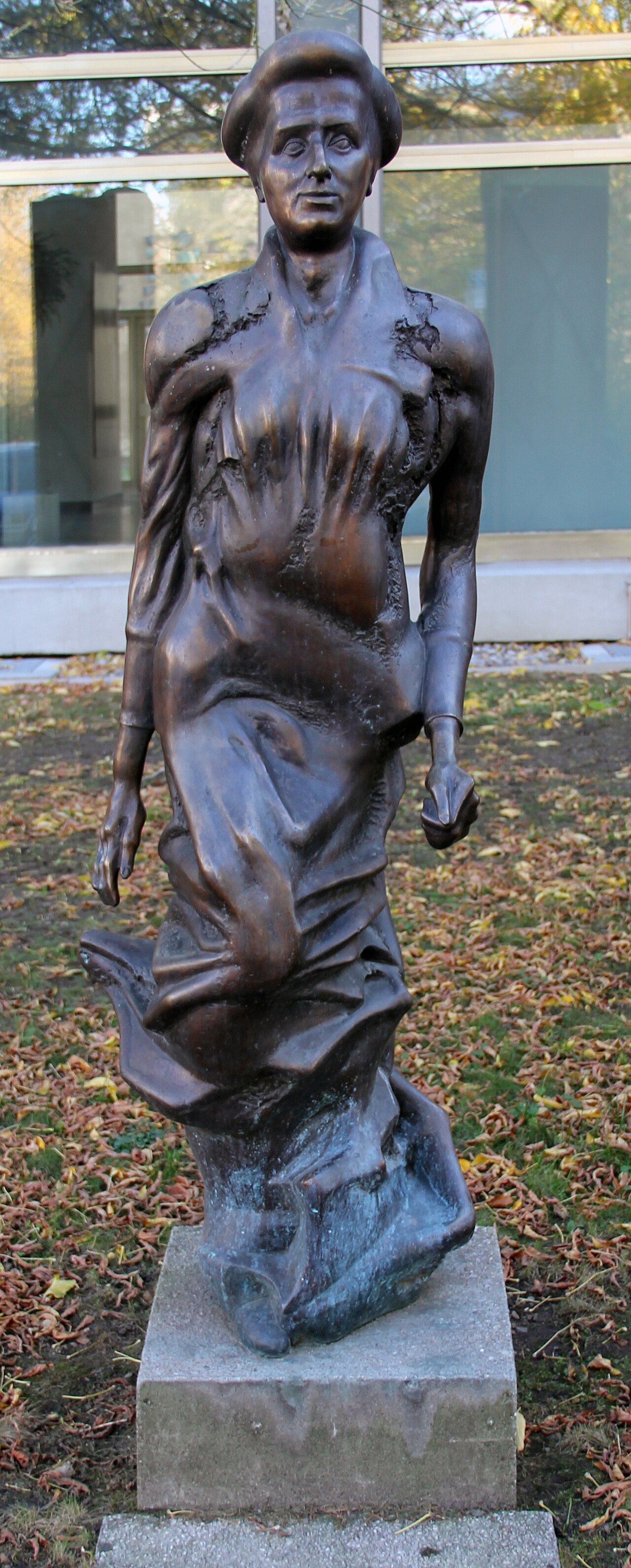
Rolf Biebl sculpture of Rosa Luxemburg, Franz-Mehring-Platz
Rolf Biebl · 1996
A bronze statue of Luxemburg by Rolf Biebl, made in 1996 and standing on a concrete plinth at Franz-Mehring-Platz in Berlin-Friedrichshain.
Shows a 1996 Berlin statue of Luxemburg by Rolf Biebl, a later public image of the revolutionary.
About this source
What it is
This photograph shows a bronze statue of a woman in a long draped coat and a close-fitting cap. She stands on a concrete plinth on grass covered with autumn leaves, with a glass building behind her. The Commons record gives the title Rosa Luxemburg, by Rolf Biebl, 1996, at Franz-Mehring-Platz 1 in Berlin-Friedrichshain. The photograph is credited to OTFW, Berlin.
Why it matters
Luxemburg (1871–1919) was a Polish-German Marxist revolutionary murdered in Berlin in 1919. Statues of her, such as this one from 1996, show that her image was chosen for public spaces in the decades after her death. The long coat and cap give the sculpture a historical look, which invites viewers to connect her with the period of her political life.
Look closer
- What clothing does the statue show, and what does it suggest about her time?
- Why might a statue stand on a plinth rather than at ground level?
- What does a single statue leave out about the people she worked with?
This sculpture is part of the curated material that grounds the AI version of Rosa Luxemburg on Humy.ai — when students ask about related events, the AI can quote it and cite it.
More Rosa Luxemburg sources
Browse all 94 →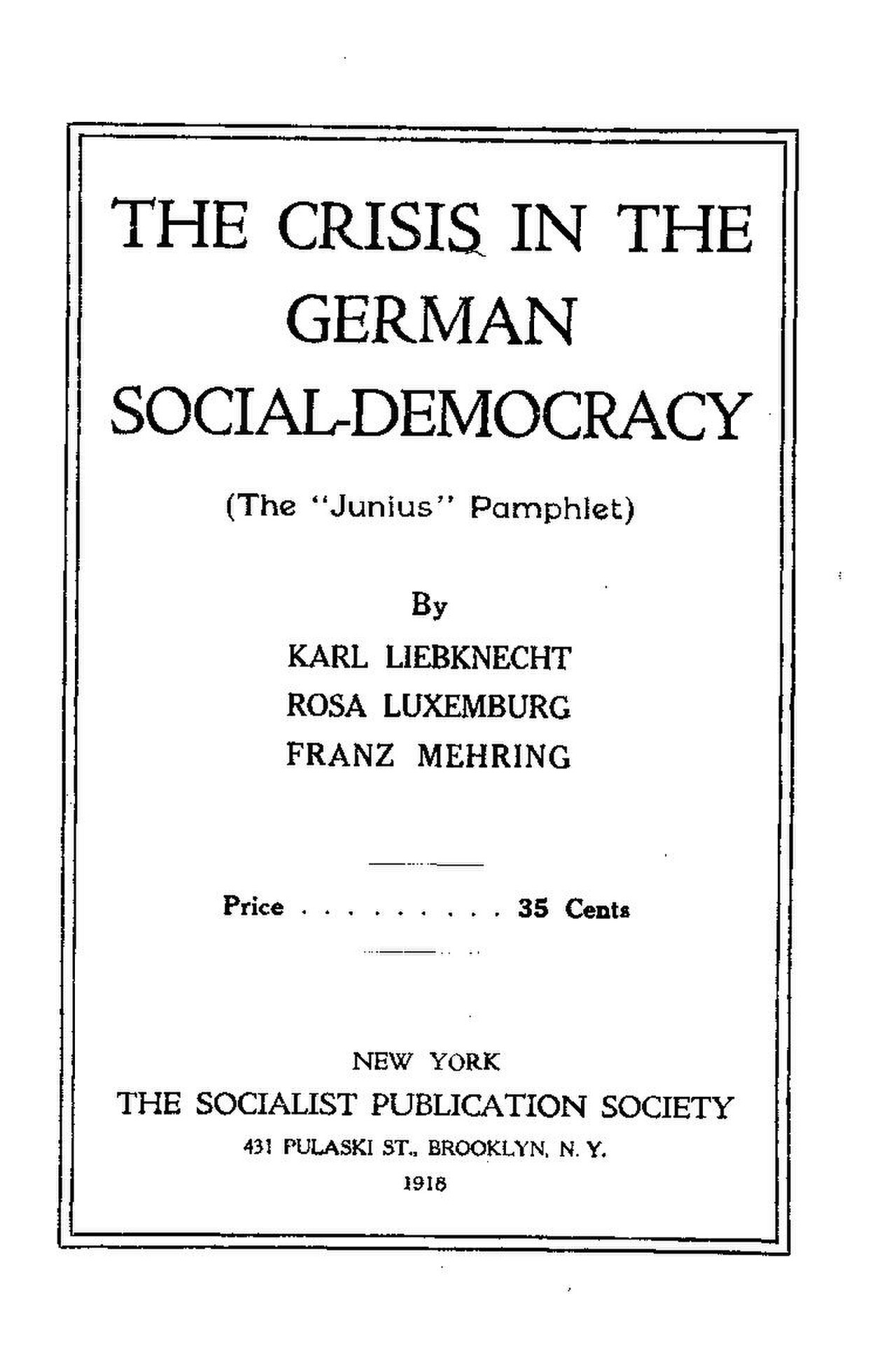 Book
Primary source
The Junius Pamphlet
Rosa Luxemburg · 1915 (published 1916)
Primary source
Was will der Spartakusbund?
Rosa Luxemburg · December 1918
 Book
Primary source
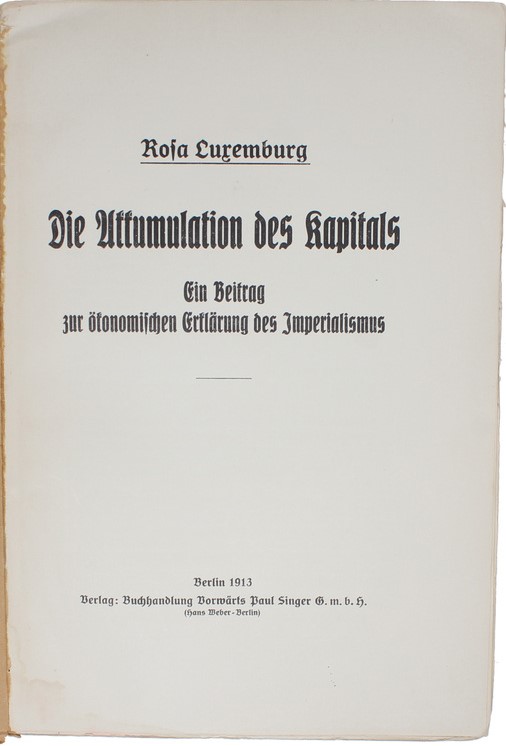
The Accumulation of Capital
Rosa Luxemburg · 1913
 Photograph
Primary source
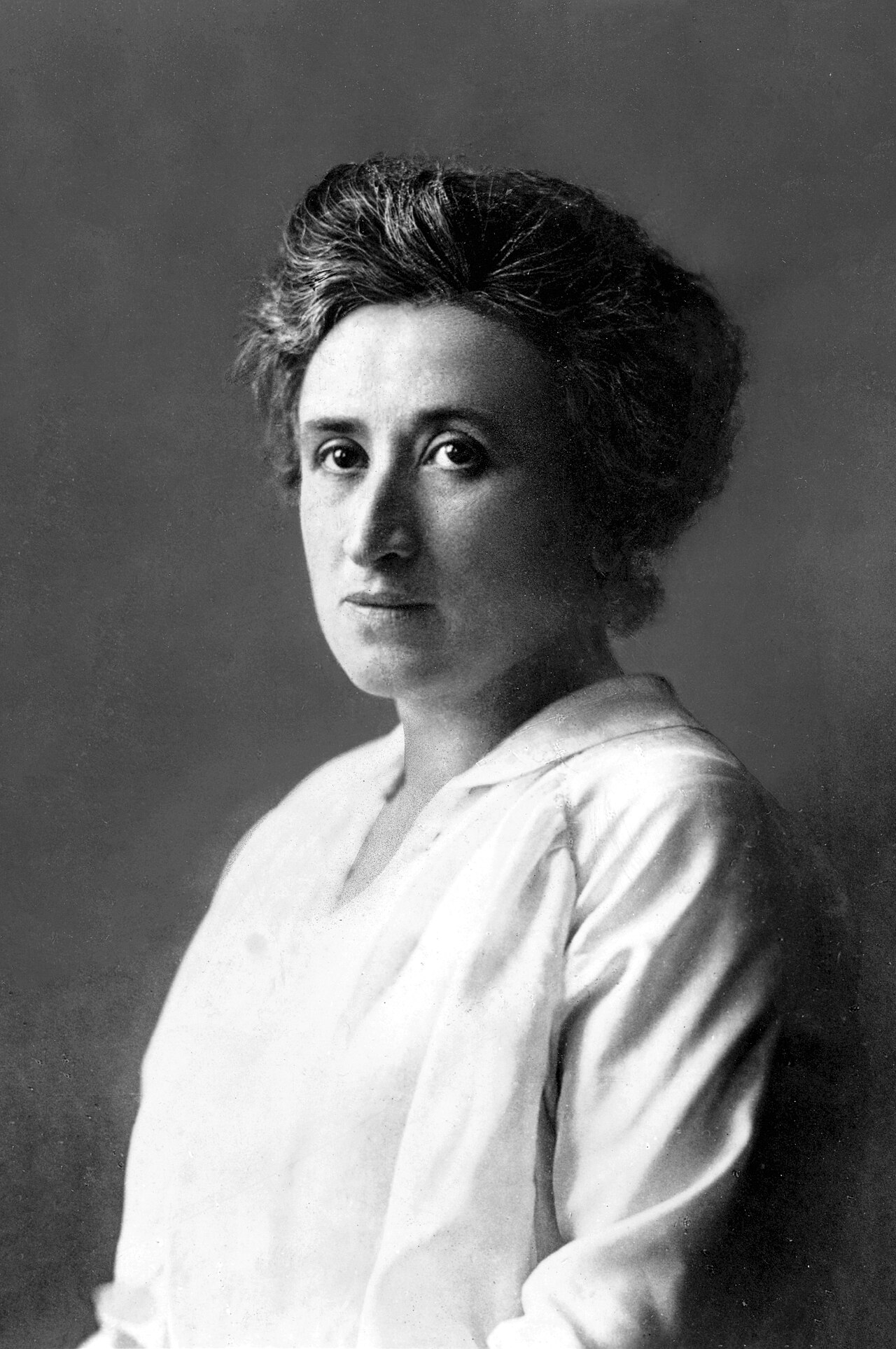
Portrait of Rosa Luxemburg
Free account
Read every Rosa Luxemburg source
Sign up free →
Ready when you are
Start chatting with Rosa Luxemburg now.
20 messages free · No credit card · Available in 50+ languages.