


Primary sourceDocument1971
Rosenbloom v. Metromedia, Inc. Concurrence
Hugo Black · 1971
Hugo Black's concurring opinion reaffirming his absolutist view that the First Amendment bars libel judgments against the press.
Black's concurrence reaffirms his lifelong absolutist stance on press freedom under the First Amendment.
About this source
What it is
This is a concurring opinion by Justice Hugo Black in Rosenbloom v. Metromedia, Inc. (1971), a Supreme Court case concerning defamation and freedom of the press.
Why it matters
Black restates the position he first set out in his concurrence in New York Times Co. v. Sullivan: that the First Amendment does not permit libel judgments against the news media even for knowingly false statements. Written near the end of his long judicial career, it shows the consistency of his free speech philosophy across decades of cases.
Look closer
- Why does Black repeatedly refer back to his earlier opinions rather than writing a fresh argument?
- What does his insistence on an 'absolute' rule reveal about his approach to constitutional interpretation?
- How might a journalist or a public figure view this opinion differently?
This document is part of the curated material that grounds the AI version of Hugo Black on Humy.ai — when students ask about related events, the AI can quote it and cite it.
More Hugo Black sources
Meet the AI Hugo Black →Primary source
New York Times Co. v. United States
1971
Primary source
Tinker v. Des Moines Independent Community School District
Abe Fortas · 1969
Primary source
Youngstown Sheet & Tube Co. v. Sawyer
Hugo Black · 1952
Primary source
Everson v. Board of Education
Hugo Black · 1947
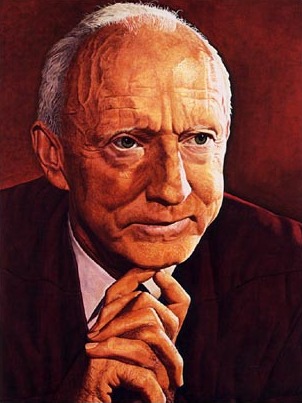 Painting
Secondary source
Hugo Black
John Black
Ready when you are
Start chatting with Hugo Black now.
20 messages free · No credit card · Available in 50+ languages.