


Secondary sourcePainting1567
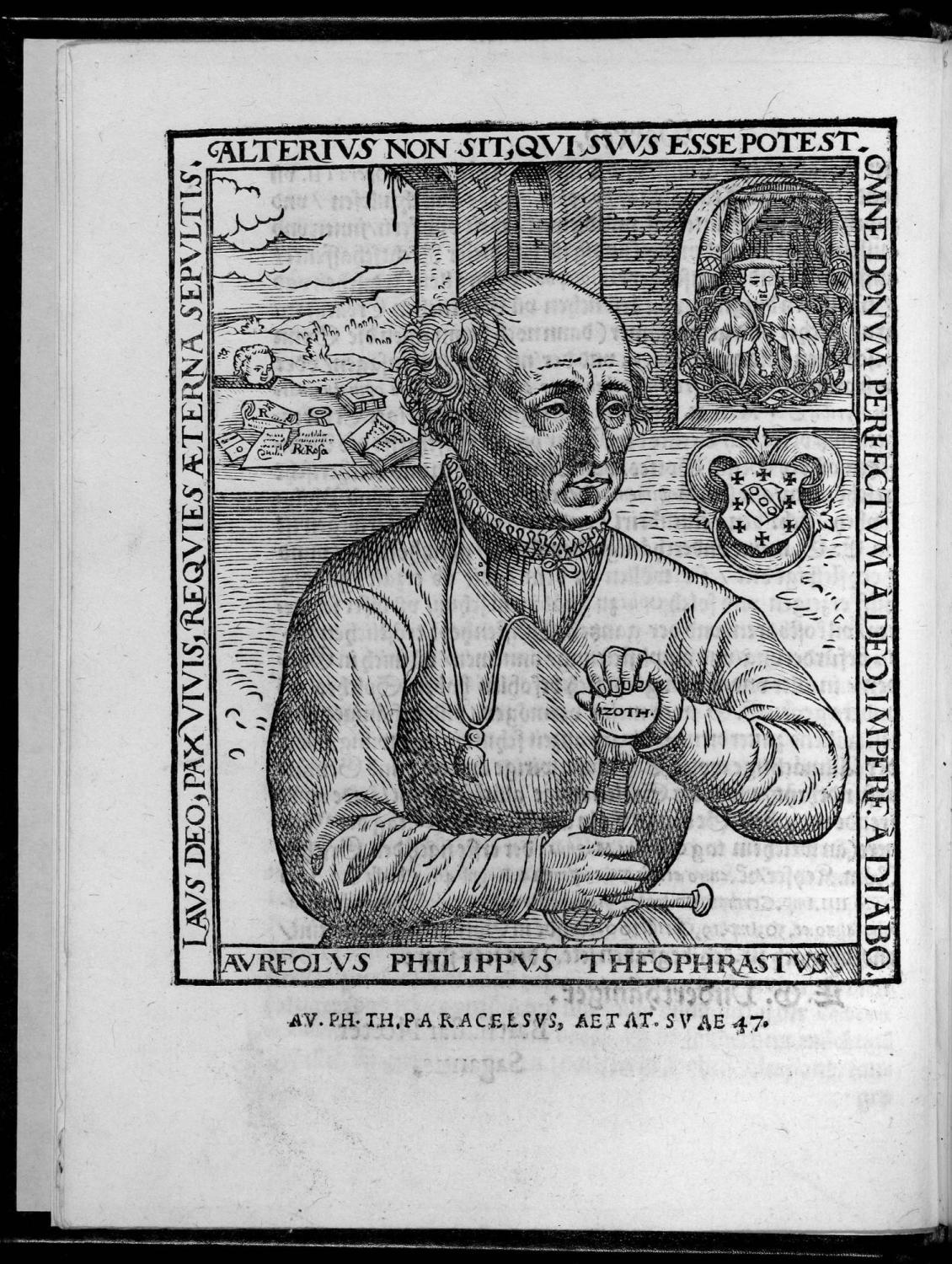
Rosicrucian Portrait of Paracelsus
Heirs of Arnold Birckmann · 1567
A famous 1567 print showing Paracelsus holding a sword inscribed with 'Azoth', based on an earlier 1540 portrait.
This later idealized portrait shows how followers reimagined Paracelsus decades after his death.
About this source
What it is
This woodcut, published in Cologne in 1567 by the heirs of Arnold Birckmann, shows an elderly bald, bearded man in a ruff collar holding a seal. It modifies an earlier 1540 portrait of Paracelsus and may have been made by Frans Hogenberg under the direction of Theodor Birckmann. It appeared in the Paracelsianist work Philosophiae magnae Paracelsi.
Why it matters
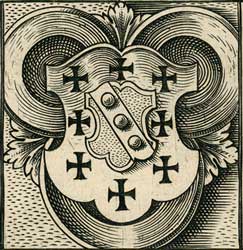
Made decades after Paracelsus's death, this image was the first to show his sword inscribed with the word Azoth and the first to show his attributed coat of arms. It reflects how followers in the Paracelsian and Rosicrucian traditions reshaped his image, adding symbols of rebirth and mysticism, long after he was gone.
Look closer
- What symbols were added to this portrait that are not in the earlier 1540 image?
- Why might later followers want to add mystical symbols to his portrait?
- What does this tell us about how Paracelsus's reputation changed after his death?
This painting is part of the curated material that grounds the AI version of Paracelsus on Humy.ai — when students ask about related events, the AI can quote it and cite it.
More Paracelsus sources
Browse all 93 →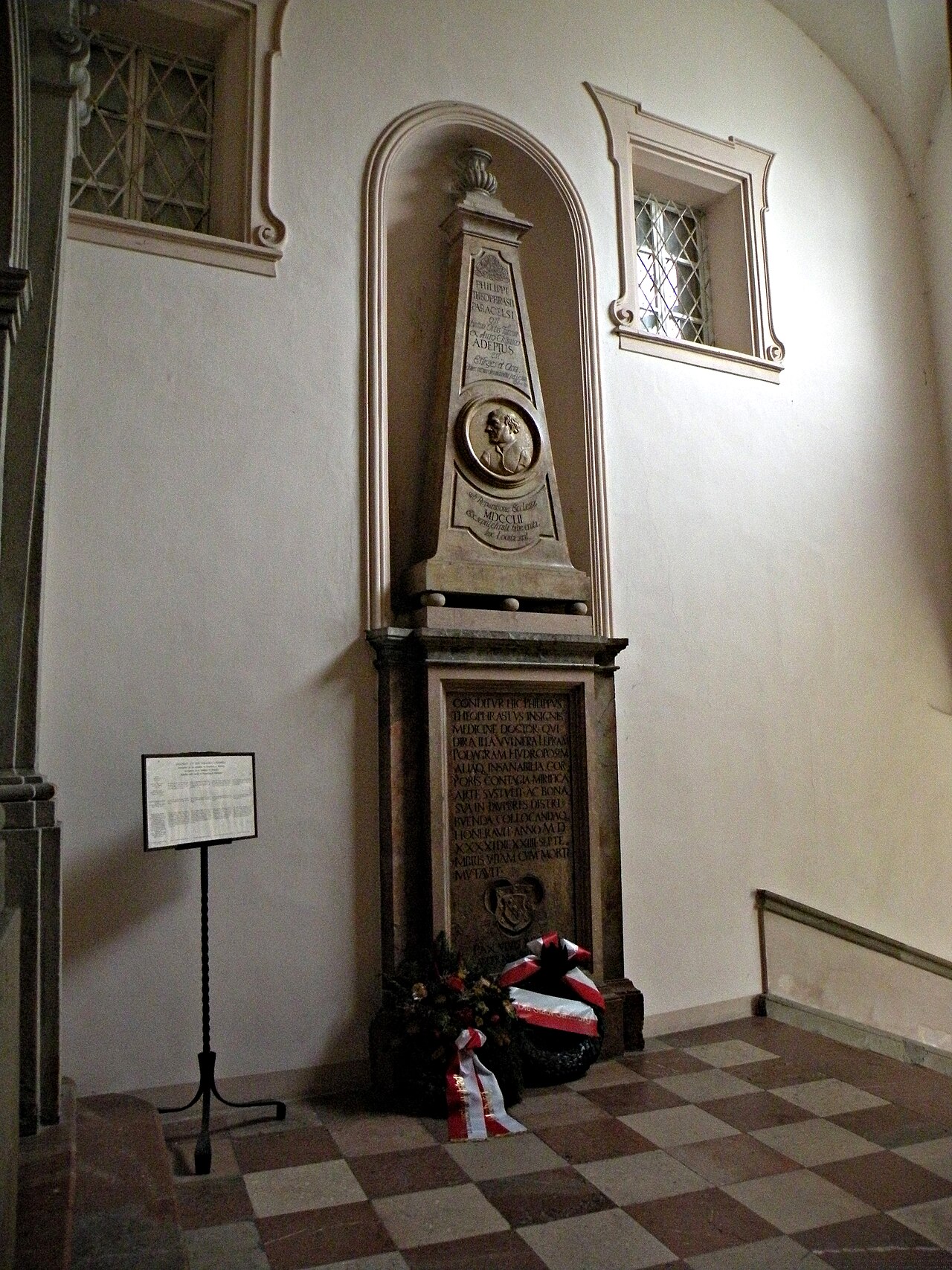 Artifact
Secondary source
Grave of Paracelsus
 Book
Secondary source
Kleine Wundarzney
Benedictus Figulus (editor), Paracelsus · 1608
 Painting
Secondary source
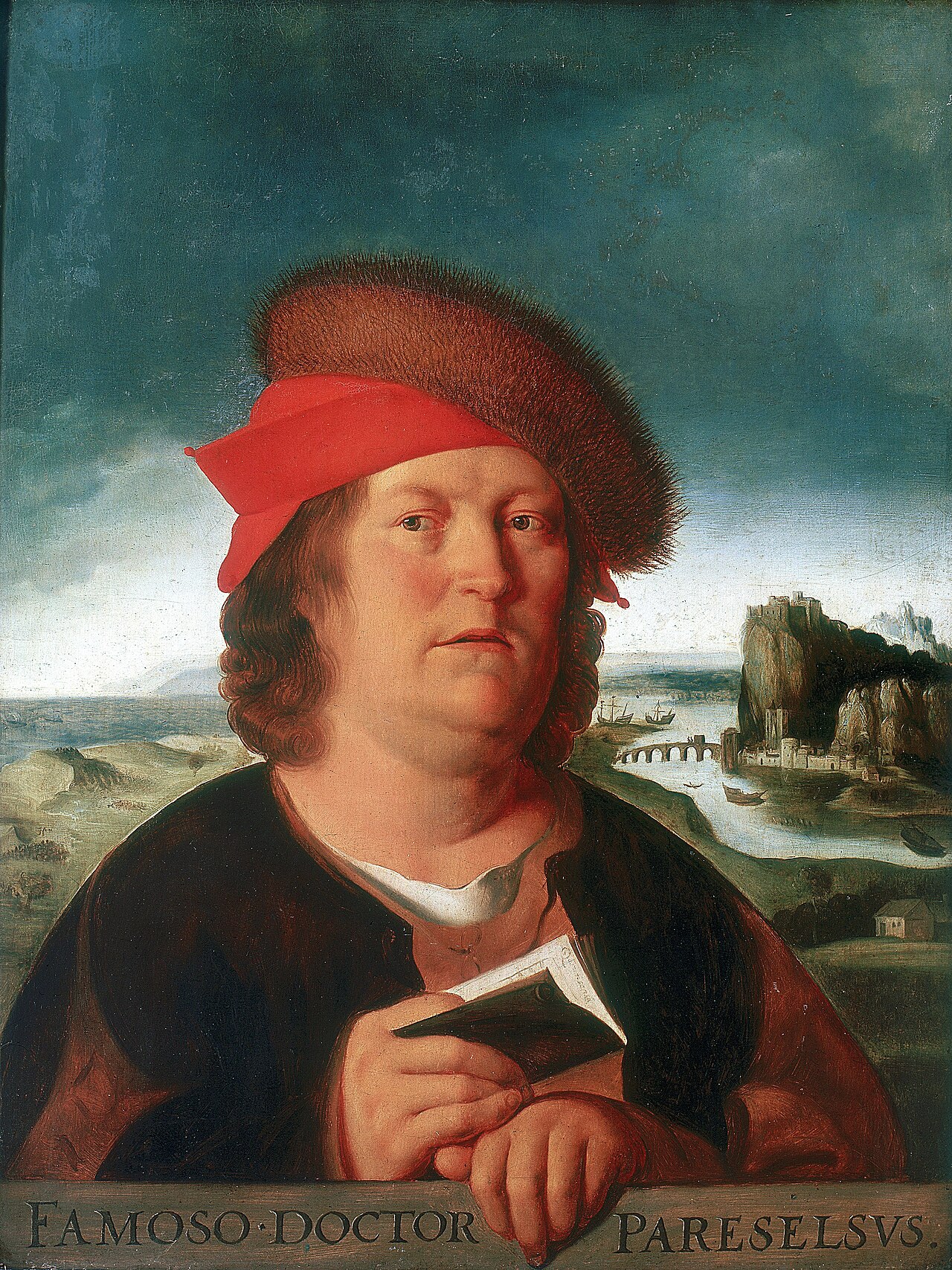
Portrait of een man voor een landschap, zogenaamd de arts Paracelsus
1650
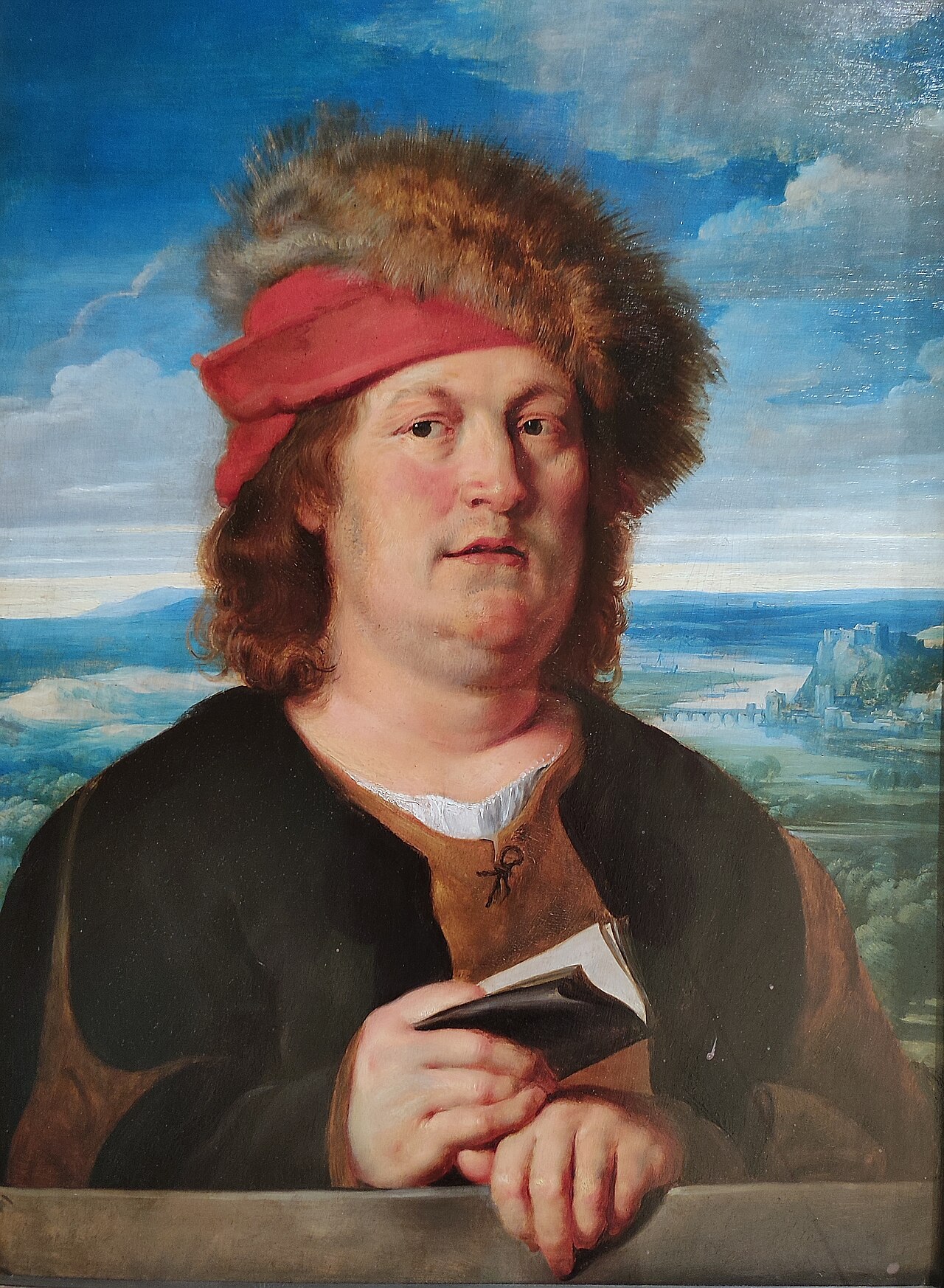 Painting
Secondary source
Portrait of Paracelsus
Peter Paul Rubens · 1625
Free account
Read every Paracelsus source
Sign up free →
Ready when you are
Start chatting with Paracelsus now.
20 messages free · No credit card · Available in 50+ languages.