


Primary sourceSculpture1925
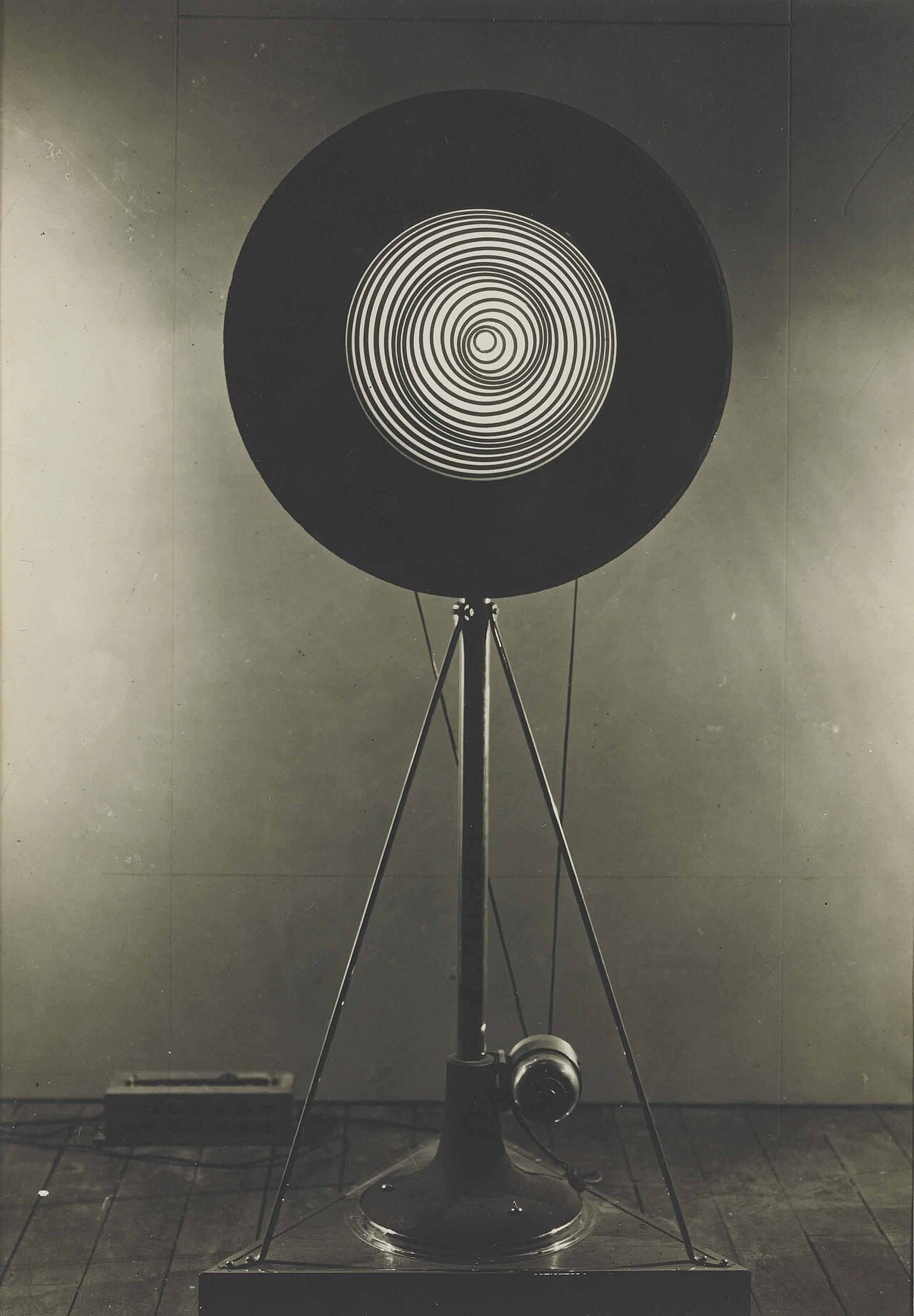
Rotary Demisphere
Marcel Duchamp · 1925
A 1925 motorised optical sculpture by Marcel Duchamp that spins to create a pulsating spiral illusion, commissioned by collector Jacques Doucet.
Built by Duchamp, this motorized sculpture reflects his optical experiments and his alter ego Rrose Sélavy.
About this source
What it is
Rotary Demisphere (Precision Optics) is a 1925 kinetic sculpture by Marcel Duchamp, now held by the Museum of Modern Art. It consists of a globe cut in half, painted with a spiraling pattern, mounted in a copper and plexiglass dome on a stand with a motor. When switched on, the dome spins and the spiral seems to pulsate. The copper ring is engraved with a nonsensical French wordplay phrase signed by Duchamp's alter ego, Rrose Sélavy.
Why it matters
Duchamp built this piece while working for dressmaker and collector Jacques Doucet, who commissioned it on the advice of writer André Breton, during a period when Duchamp was focusing on chess rather than art. It was part of his experiments with motorized optical illusions, related to his rotoreliefs and his film Anemic Cinema, and is seen as an early forerunner of kinetic and Op art.
Look closer
- What happens to the spiral pattern when the sculpture spins — why might that interest an artist more than a still image?
- Why do you think Duchamp included wordplay and his invented persona on a scientific-looking machine?
- What does this sculpture suggest about Duchamp's relationship to art versus 'useful' or scientific objects?
This sculpture is part of the curated material that grounds the AI version of Marcel Duchamp on Humy.ai — when students ask about related events, the AI can quote it and cite it.
More Marcel Duchamp sources
Browse all 69 →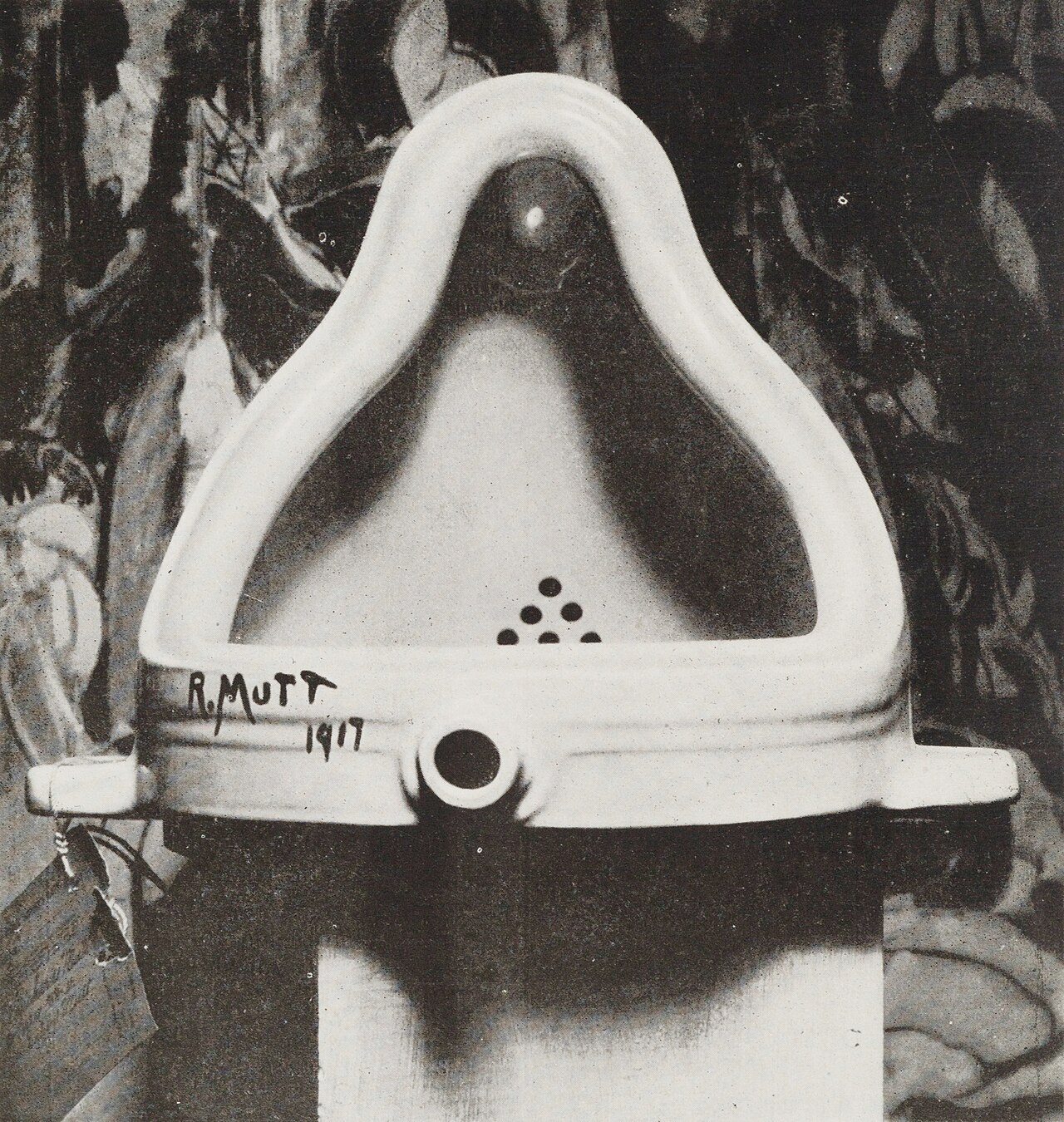 Sculpture
Primary source
Fountain
Marcel Duchamp · 1917
 Sculpture
Primary source
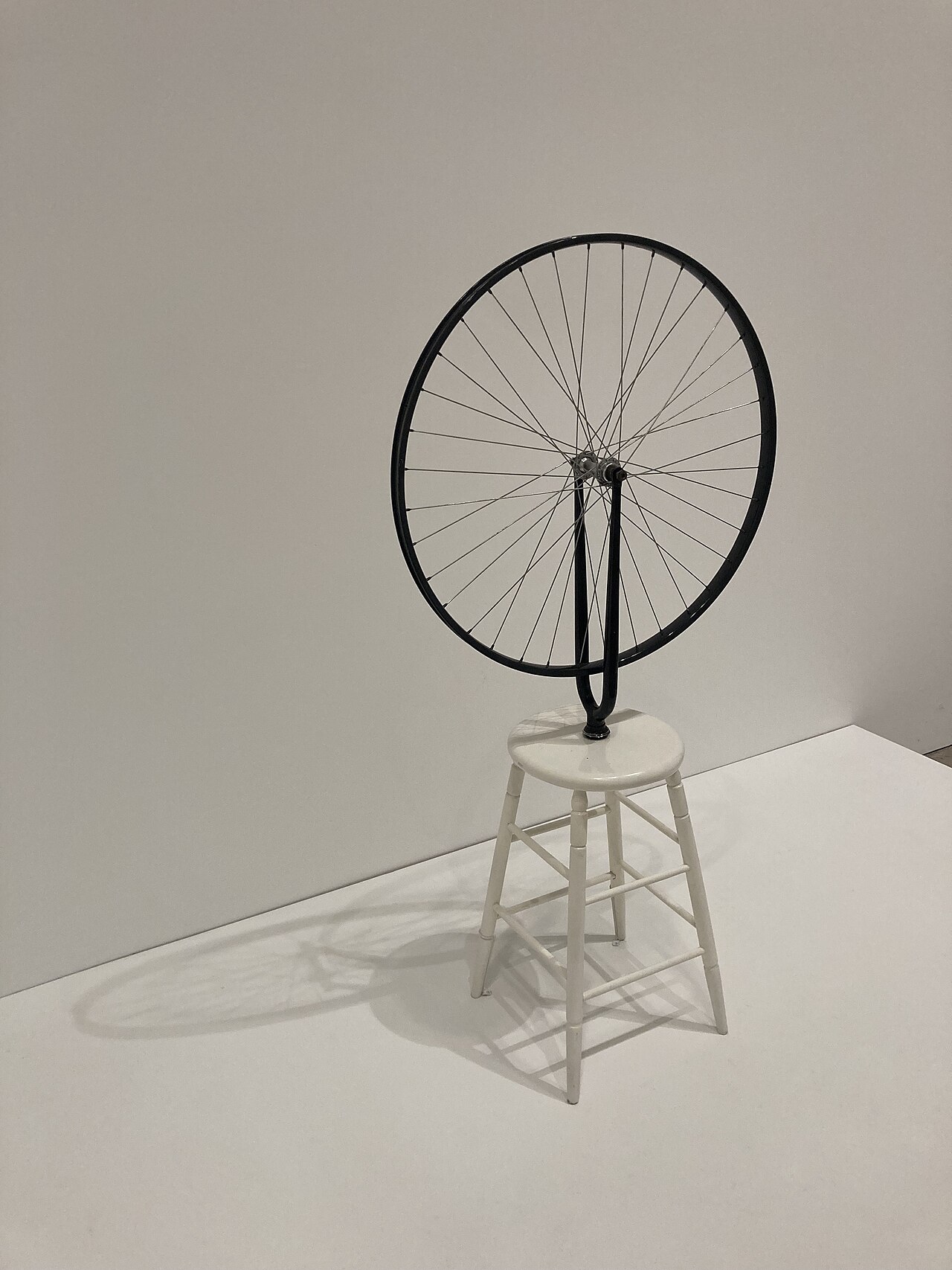
Bicycle Wheel
Marcel Duchamp · 1913
 Photograph
Primary source
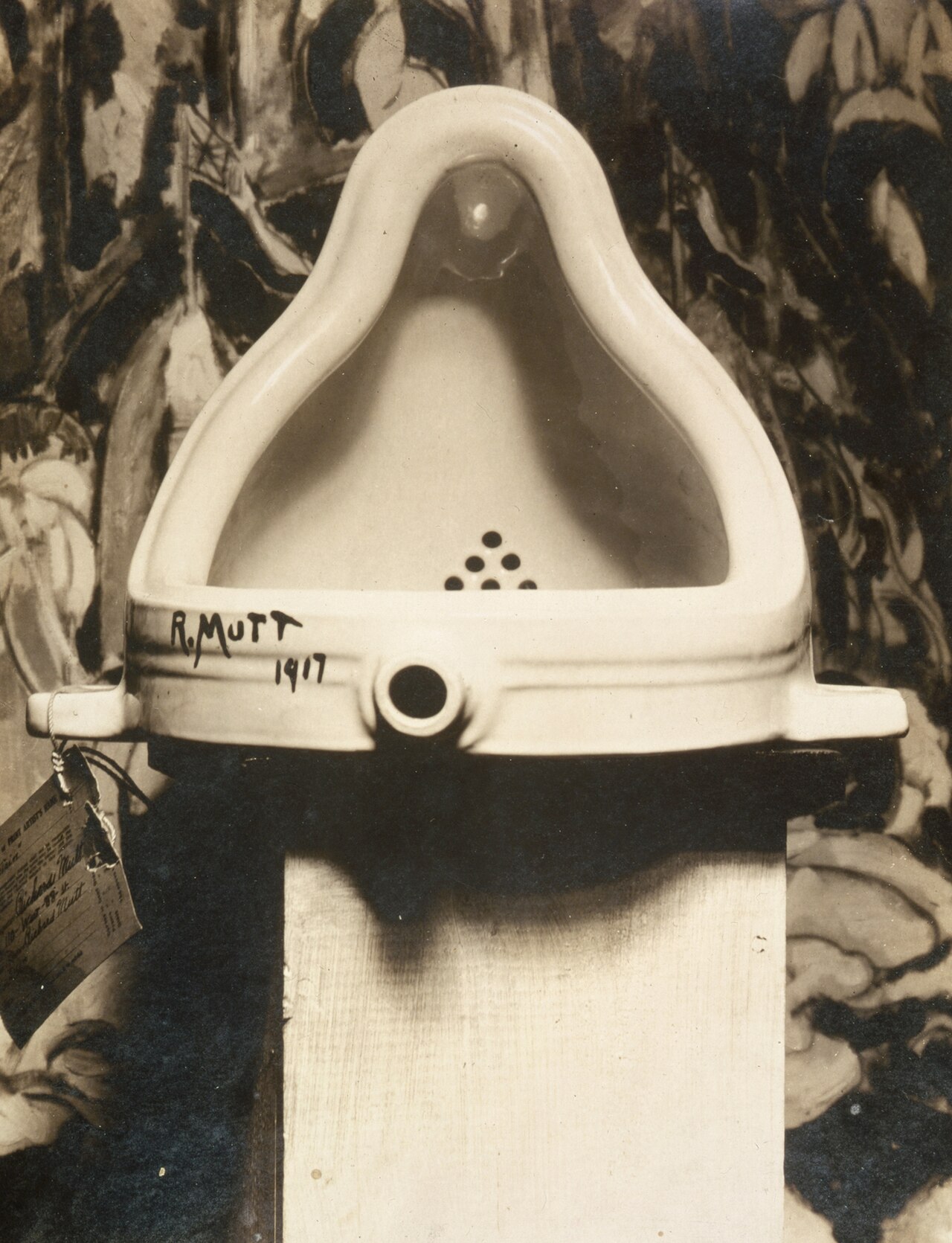
Photograph of Fountain by Alfred Stieglitz
Alfred Stieglitz · 1917
 Artifact
Primary source
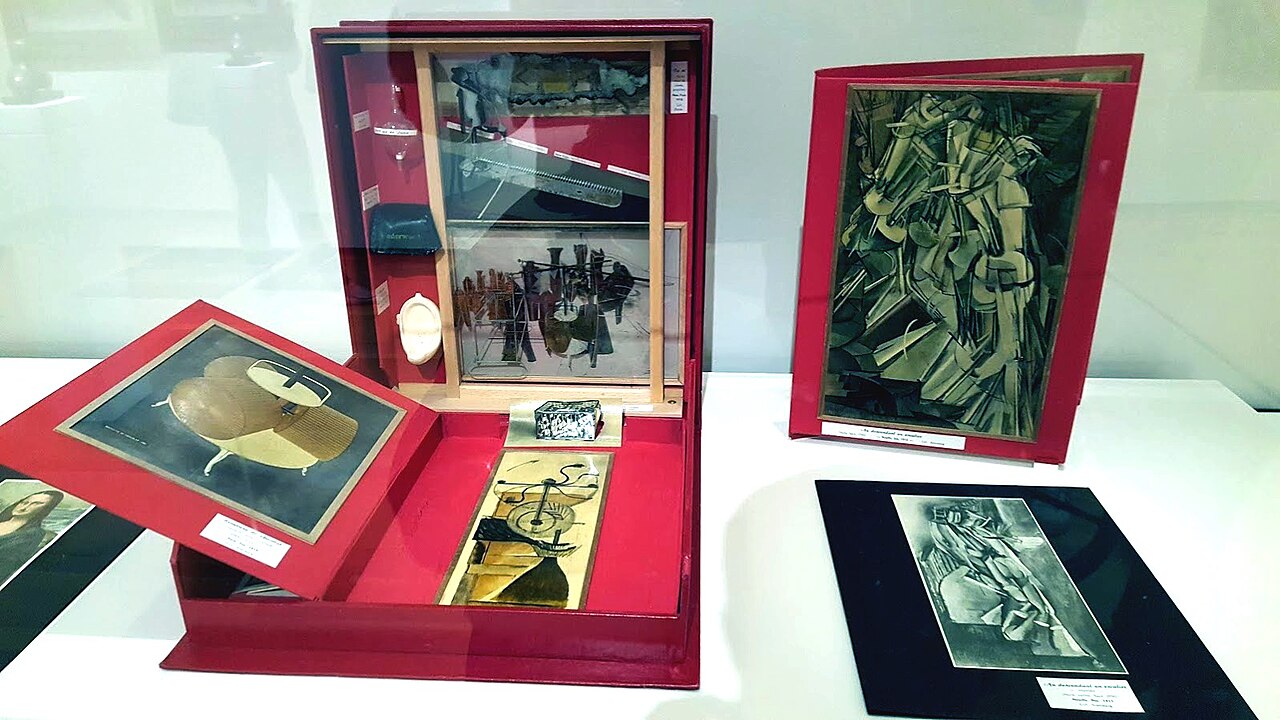
Box in a Valise
Marcel Duchamp · 1936

Free account
Read every Marcel Duchamp source
Sign up free →
Ready when you are
Start chatting with Marcel Duchamp now.
20 messages free · No credit card · Available in 50+ languages.