


Primary sourcePainting1907, repainted 1911
Rudolf Steiner's Apocalyptic Seals
Clara Rettich, after sketches by Rudolf Steiner · 1907, repainted 1911
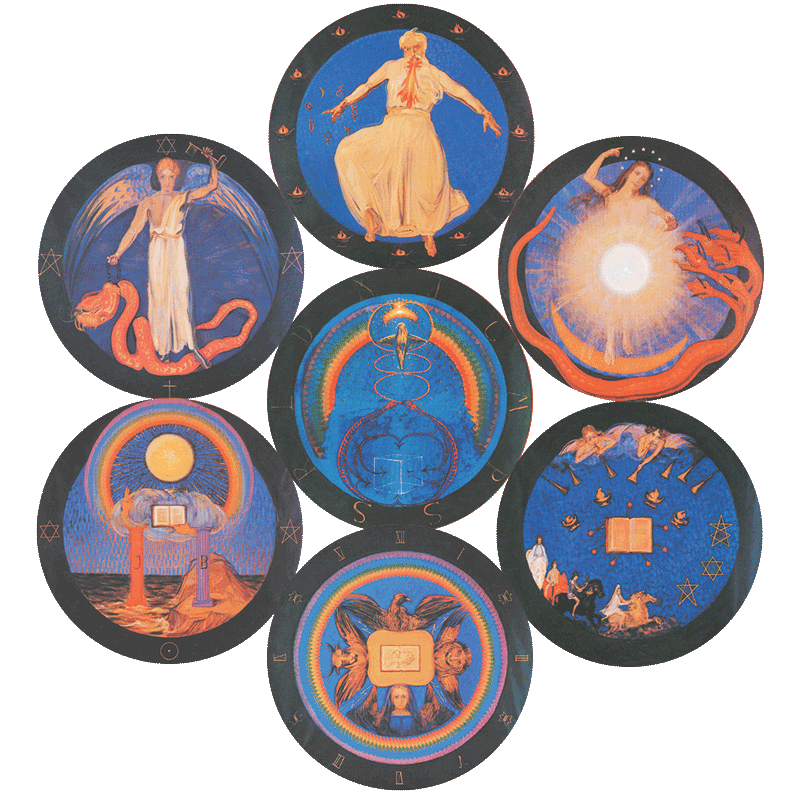
Seven esoteric seal designs sketched by Rudolf Steiner for the 1907 Munich Theosophical Congress and painted by Clara Rettich.
Steiner designed these esoteric seals in sketch form; Clara Rettich executed the paintings based on his designs.
About this source
What it is
This image shows eight circular painted panels arranged around a central disc, featuring angelic figures, a sun with a serpent, rainbows, an open book, and eagle and sun motifs on blue and dark rings with star-shaped symbolic markings. These are the 'Apocalyptic Seals,' designed by Rudolf Steiner as pastel sketches in 1907 and painted in oil on canvas by Clara Rettich in 1907 and again in 1911. Some of Steiner's original sketches, for the first, fifth and sixth seals, have not survived.
Why it matters
Steiner created these seals for the 1907 Munich Theosophical Congress, drawing on the imagery of the biblical Book of Revelation. The designs were clearly influenced by earlier seal illustrations by the esoteric writer Eliphas Levi. The work shows how Steiner blended Christian symbolism with existing occult traditions in his early esoteric art, and his collaboration with the artist Clara Rettich who executed the final paintings.
Look closer
- What symbols can you identify in the panels, and what might they represent?
- Why might Steiner have based his seals on an earlier esoteric writer's designs rather than inventing wholly new ones?
- What does the division of labour between Steiner (sketches) and Rettich (paintings) suggest about how this artwork was produced?
This painting is part of the curated material that grounds the AI version of Rudolf Steiner on Humy.ai — when students ask about related events, the AI can quote it and cite it.
More Rudolf Steiner sources
Browse all 96 → Artifact
Primary source
Goetheanum
Rudolf Steiner · 1925-1928
 Book
Primary source
Occult Science: An Outline
Rudolf Steiner · 1910
 Artifact
Primary source
First Goetheanum
Rudolf Steiner · 1913-1920, destroyed 1922-1923
 Photograph
Primary source
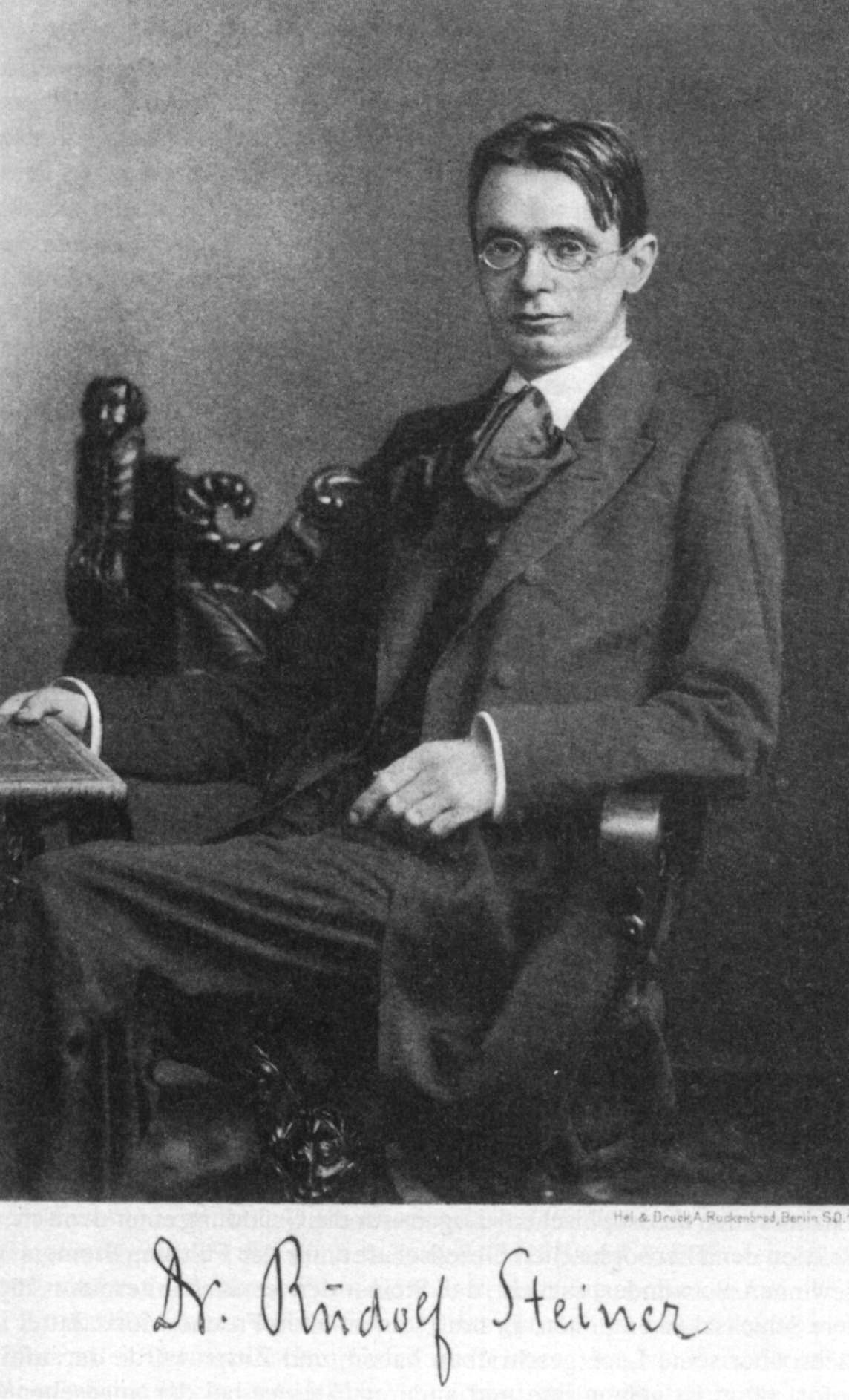
Rudolf Steiner in Berlin, 1900
1900

Free account
Read every Rudolf Steiner source
Sign up free →
Ready when you are
Start chatting with Rudolf Steiner now.
20 messages free · No credit card · Available in 50+ languages.