


Primary sourceDocument6 May 1906
Russian Constitution of 1906
Nicholas II of Russia · 6 May 1906
The 1906 revision of Russia's Fundamental Laws, issued by Nicholas II, which created a parliament but preserved his autocratic power.
Nicholas II issued this constitution, which formally limited but largely preserved his autocratic power.
About this source
What it is
This is the Russian Constitution of 1906, a revision of the 1832 Fundamental Laws enacted on 6 May 1906, just before the first State Duma opened. It created a bicameral parliament but was issued under Nicholas II's authority as emperor.
Why it matters
Granted under pressure during the 1905 Revolution, the constitution still declared that 'supreme autocratic power' belonged to the emperor, limiting how far the earlier October Manifesto's promises went. Nicholas II disliked the restrictions it placed on him and later dismissed Dumas that displeased him, showing his continued belief in his own unlimited authority even after formally sharing power.
Why it matters
Look closer
- Why might Nicholas have agreed to a constitution while still insisting his power was 'autocratic'?
- What powers did the Tsar keep for himself, and what did the Duma actually control?
- How does this document help explain later conflicts between the Tsar and the Duma?
This document is part of the curated material that grounds the AI version of Tsar Nicholas II on Humy.ai — when students ask about related events, the AI can quote it and cite it.
More Tsar Nicholas II sources
Meet the AI Tsar Nicholas II →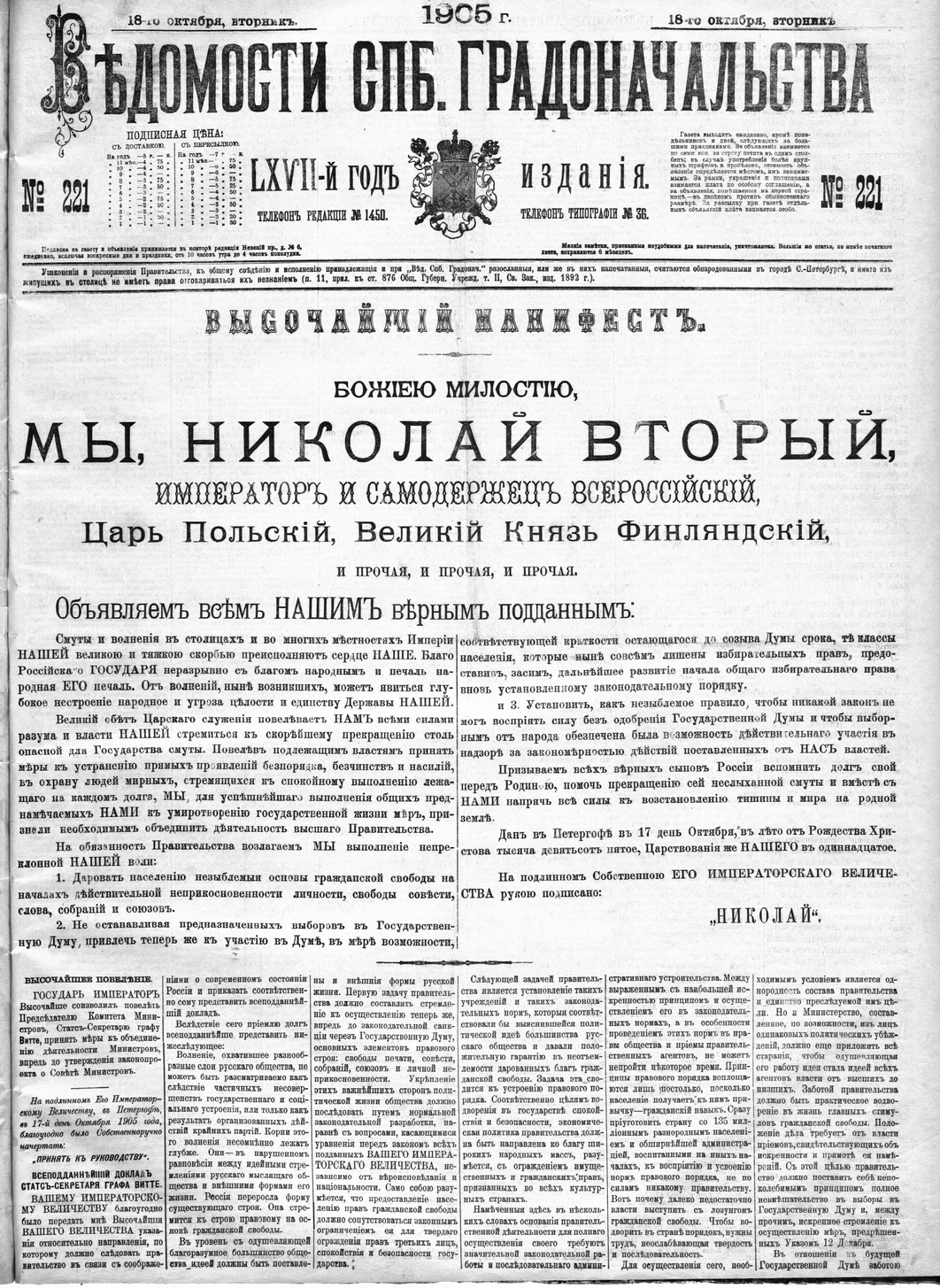 Newspaper article
Primary source
October Manifesto
Nicholas II of Russia · 30 October 1905
 Document
Primary source
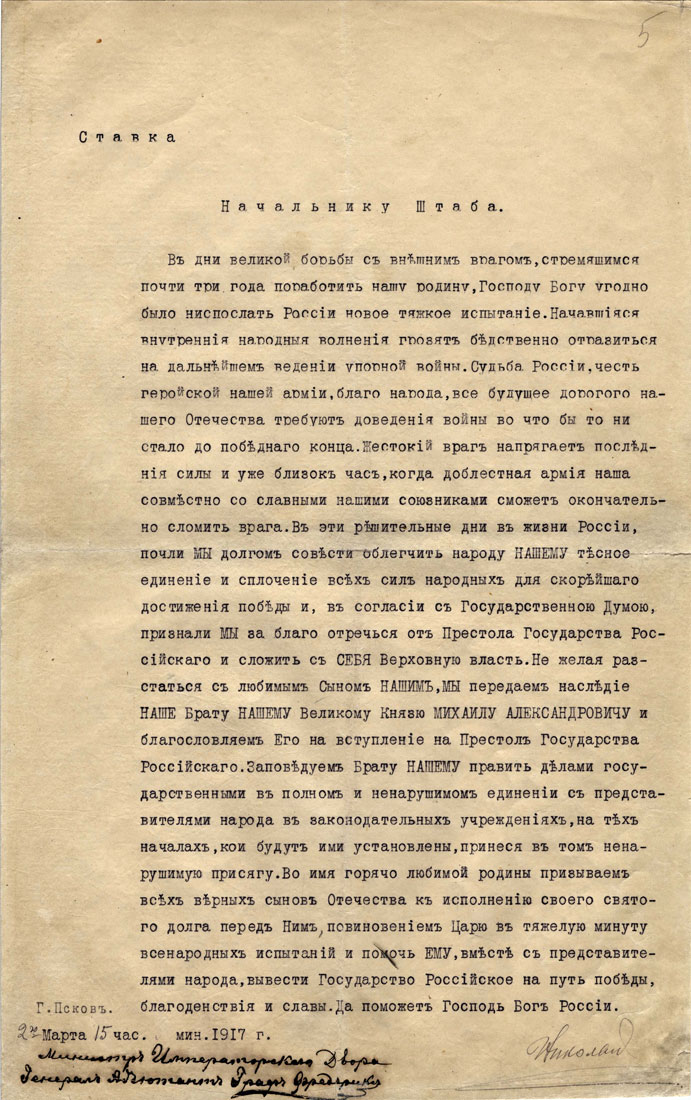
Nicholas II of Russia's abdication
Nicholas II of Russia · 2 March 1917 (O.S.) / 15 March 1917 (N.S.)
 Document
Primary source
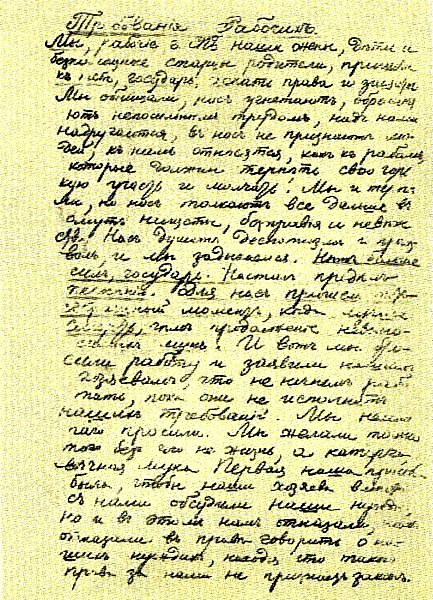
St. Petersburg Workmen's Petition to the Tsar
Georgy Gapon · January 1905
 Letter
Primary source
Willy–Nicky Correspondence
Nicholas II of Russia and Wilhelm II · July–August 1914
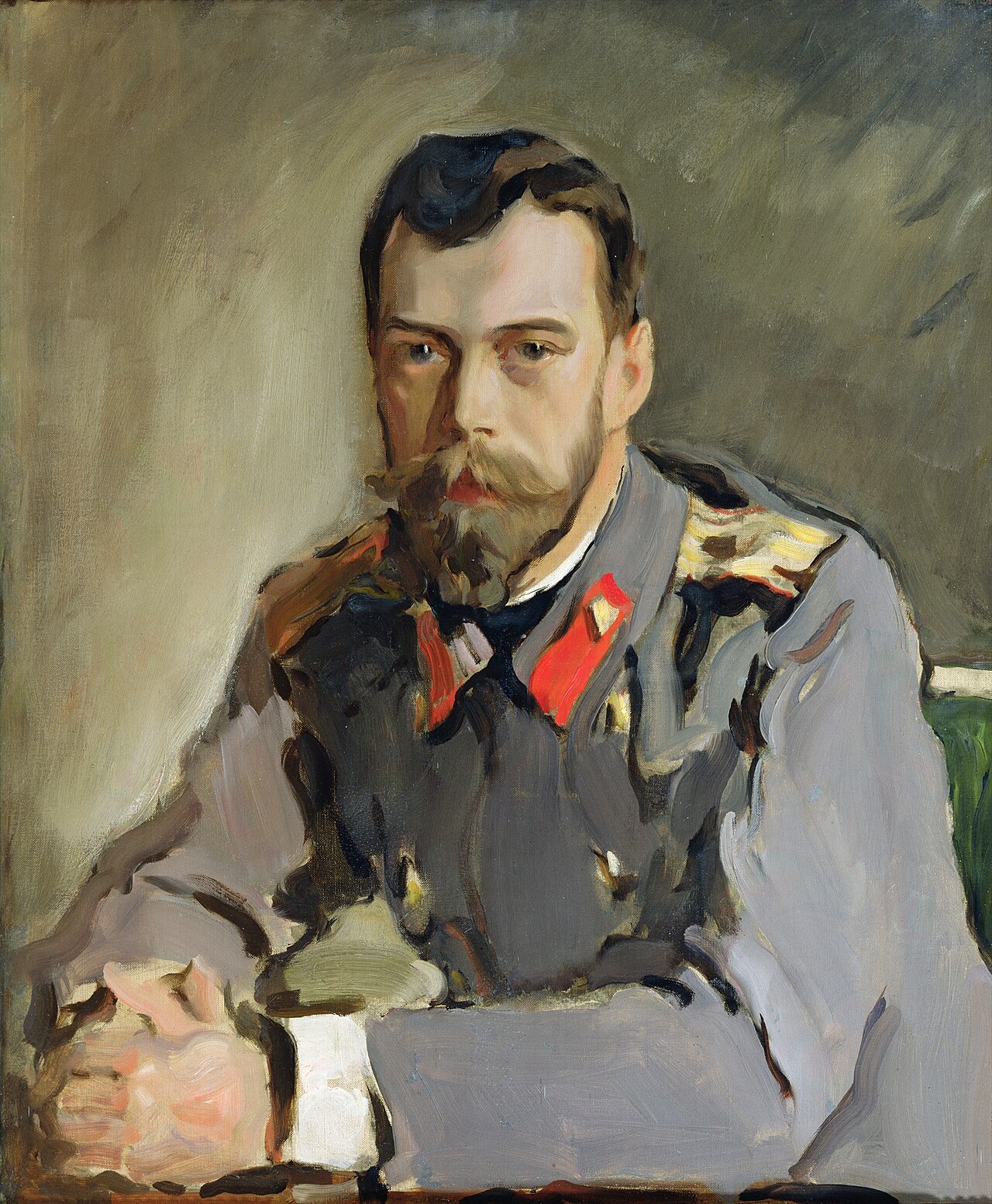 Painting
Primary source
Nicholas II of Russia
Valentin Serov · 1900
Ready when you are
Start chatting with Tsar Nicholas II now.
20 messages free · No credit card · Available in 50+ languages.