


Secondary sourcePainting1622
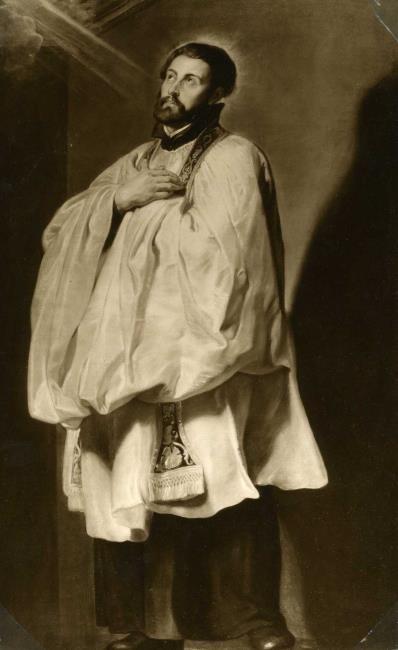
Saint Francis Xavier
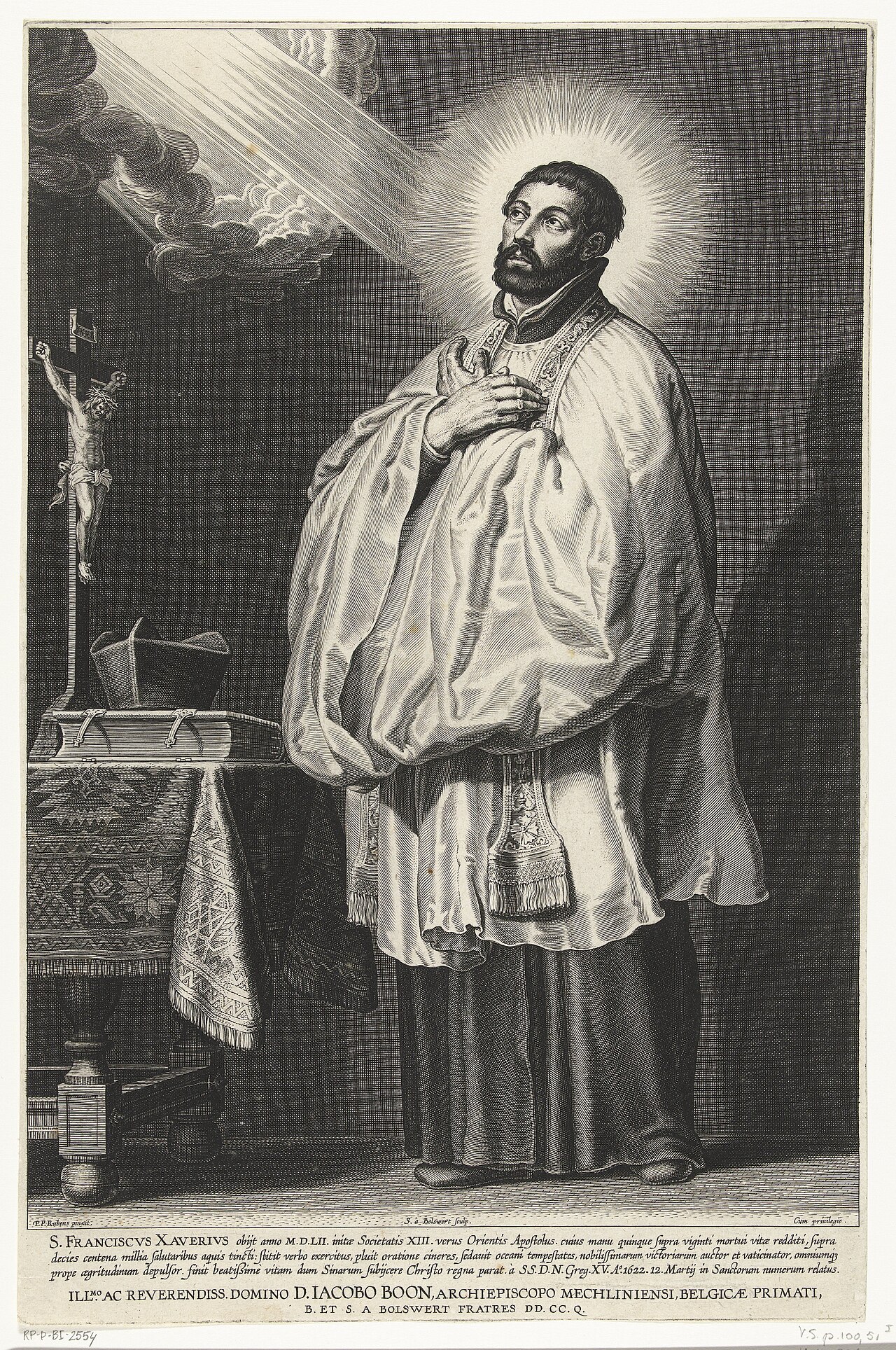
Schelte a Bolswert (after Peter Paul Rubens) · 1622
A 1622 engraving after Rubens, made to spread Xavier's image widely in the year of his canonization.
Made in Xavier's canonization year, this print helped spread his image as a newly recognized saint across Europe.
About this source
What it is
This engraving by Schelte a Bolswert, made after a painting by Peter Paul Rubens, dates from 1622, the year Xavier was canonized. It is held by the RKD and shows the saint in white vestments with a halo, hand on his chest, gazing upward, beside a crucifix, book and hat on a draped table.
Why it matters
Prints like this were cheap to produce and distribute, letting the new saint's image circulate across Europe quickly after his canonization. It reflects how the Catholic Church and Rubens' workshop promoted Jesuit saints to a wide public.
Look closer
- Why would the Church want many copies of a saint's image made right after canonization?
- What symbols (crucifix, book, halo) are included, and what do they suggest Xavier represented?
- How might an engraving made for mass copying differ from a unique painted portrait?
This painting is part of the curated material that grounds the AI version of Francis Xavier on Humy.ai — when students ask about related events, the AI can quote it and cite it.
More Francis Xavier sources
Browse all 85 →
Ready when you are
Start chatting with Francis Xavier now.
20 messages free · No credit card · Available in 50+ languages.