


Secondary sourcePainting1681
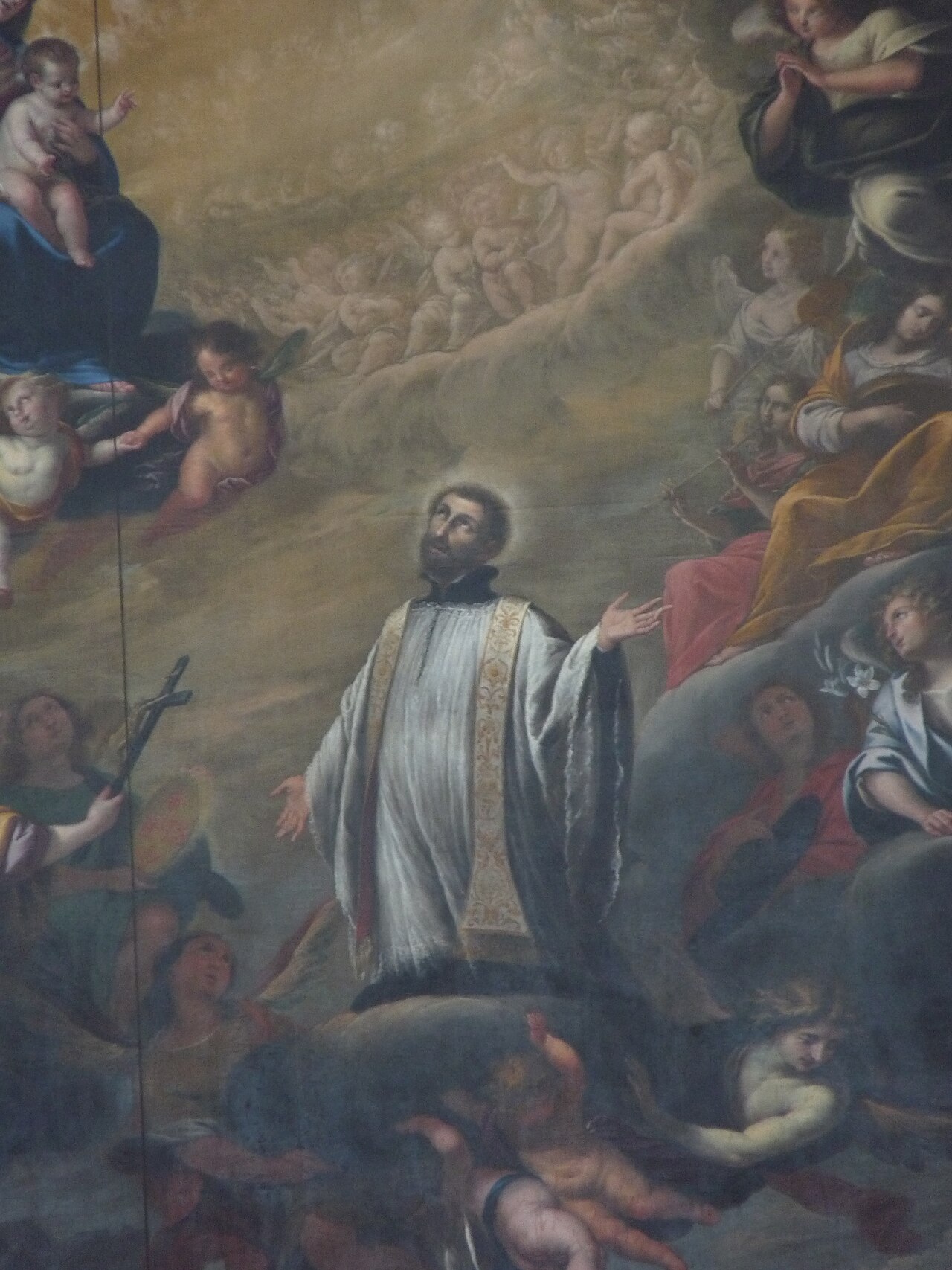
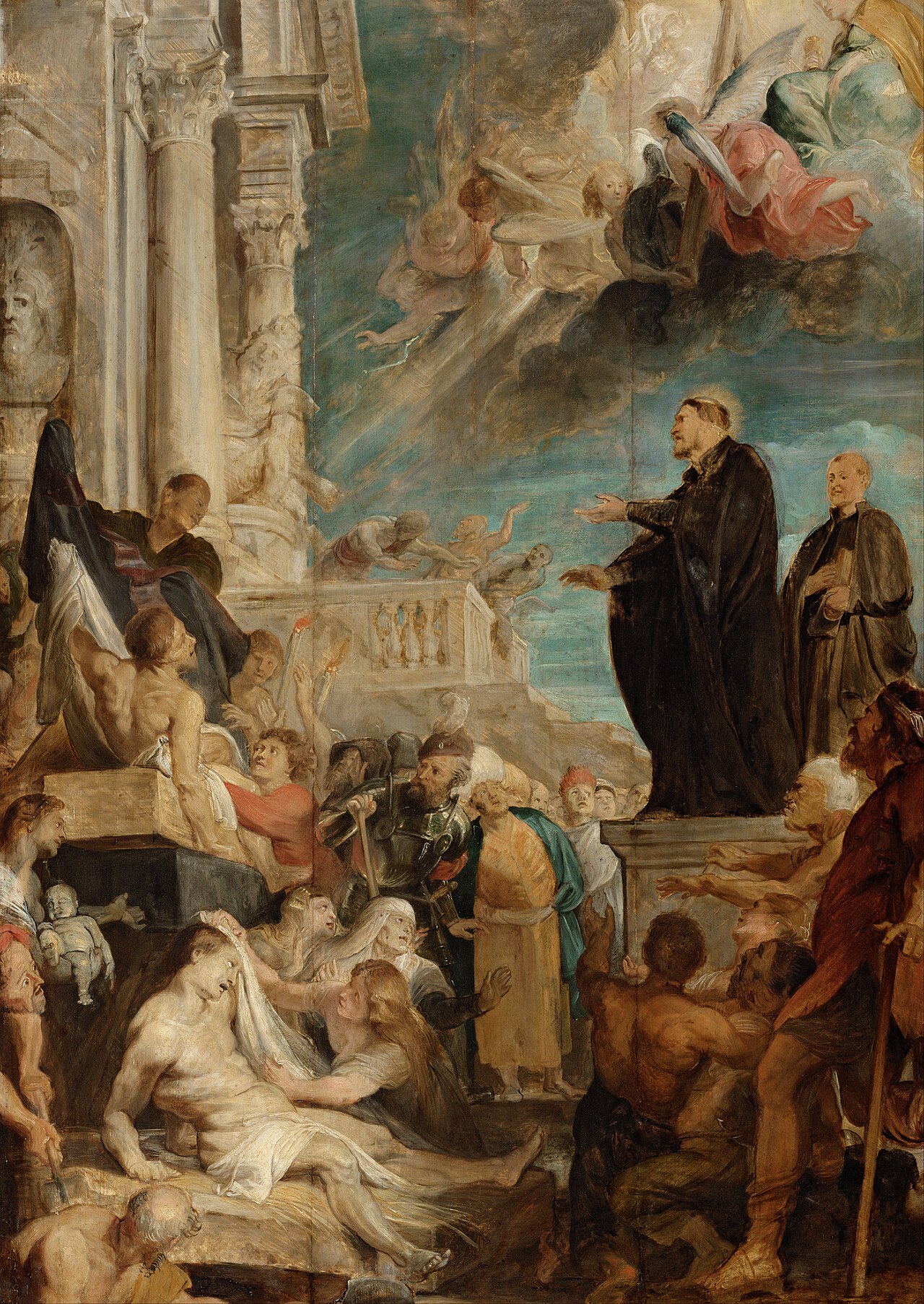
Saint Francis Xavier, altar painting
Torriani · 1681
A detail of a large baroque altar painting by Torriani, dated 1681, showing Xavier raising his gaze amid clouds, with the Virgin and Child and angels above.
Shows Xavier as a saint honoured on a church altar more than a century after his death.
About this source
What it is
This is a detail of a large baroque altar painting by Torriani, dated 1681. It shows a bearded man with a halo, in white vestments with a gold-embroidered stole, raising his gaze upward with one arm outstretched amid clouds. Above him appear the Virgin and Child and many putti and angels. Below, figures sit in clouds.
Why it matters
Altar paintings like this one were made to inspire prayer in churches. This painting was made more than a century after Francis Xavier died in 1552, so it shows how later artists honoured him as a saint. The painter, Torriani, is the name given for its creation, and the work reveals the style and religious feeling of its time.
Look closer
- What do the upward gaze and outstretched arm suggest about Xavier's faith?
- Why might the painter have placed the Virgin and Child and the angels above him?
- What can this single detail not tell us about the whole painting or its place in the church?
This painting is part of the curated material that grounds the AI version of Francis Xavier on Humy.ai — when students ask about related events, the AI can quote it and cite it.
More Francis Xavier sources
Browse all 85 →

Ready when you are
Start chatting with Francis Xavier now.
20 messages free · No credit card · Available in 50+ languages.