


Secondary sourceArtifactc. 1200-1210
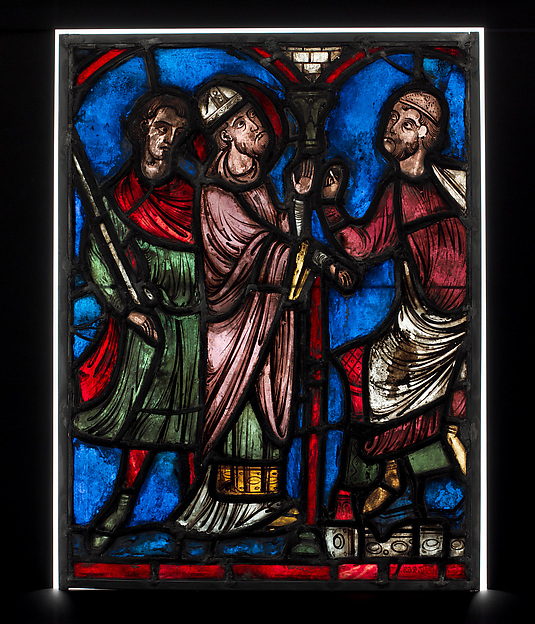
Saint Nicholas Accuses the Consul
c. 1200-1210
A medieval French stained-glass panel from a series on the life of Saint Nicholas, showing him confronting a consul.
This panel is part of a medieval cycle depicting episodes from Saint Nicholas's legendary life, showing him in a role of moral authority.
About this source
What it is
This stained-glass panel was made in France around 1200–1210 from pot-metal glass and vitreous paint. It is part of a series of panels telling scenes from the life of Saint Nicholas, and shows three standing robed figures, with a central figure holding a staff-like rod and gesturing, lit against a dark background. It is held by The Metropolitan Museum of Art's Cloisters Collection.
Why it matters
This panel is part of a larger storytelling cycle, the kind of narrative art used in medieval churches to spread stories of saints to people who could not read. It shows Saint Nicholas not only as a kindly giver of gifts but also as a figure of moral authority, confronting wrongdoing.
Look closer
- What does the central figure's gesture and staff suggest about his authority?
- Why might glassmakers have created a whole series of panels about Nicholas's life?
- What is missing from this single panel that the full story might explain?
This artifact is part of the curated material that grounds the AI version of Saint Nicholas on Humy.ai — when students ask about related events, the AI can quote it and cite it.
More Saint Nicholas sources
Browse all 91 →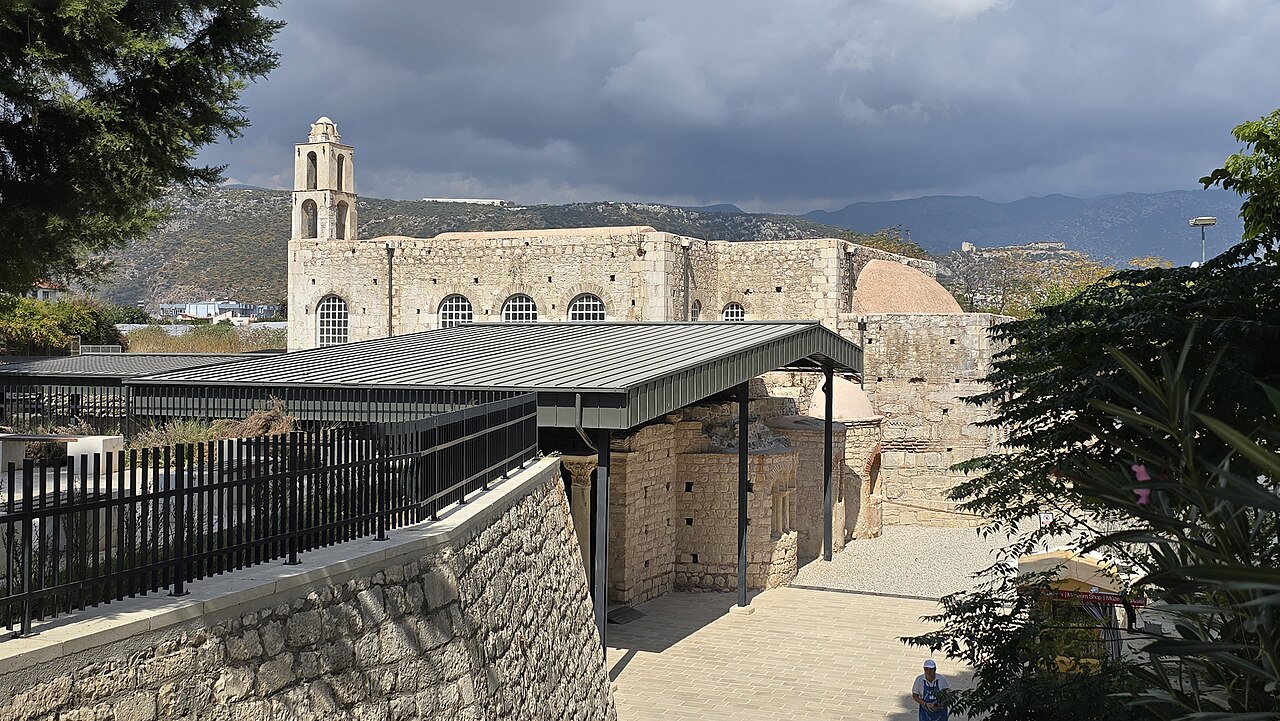 Artifact
Secondary source
St. Nicholas Church, Demre
6th century AD (rebuilt; ruins visible today)
 Artifact
Secondary source
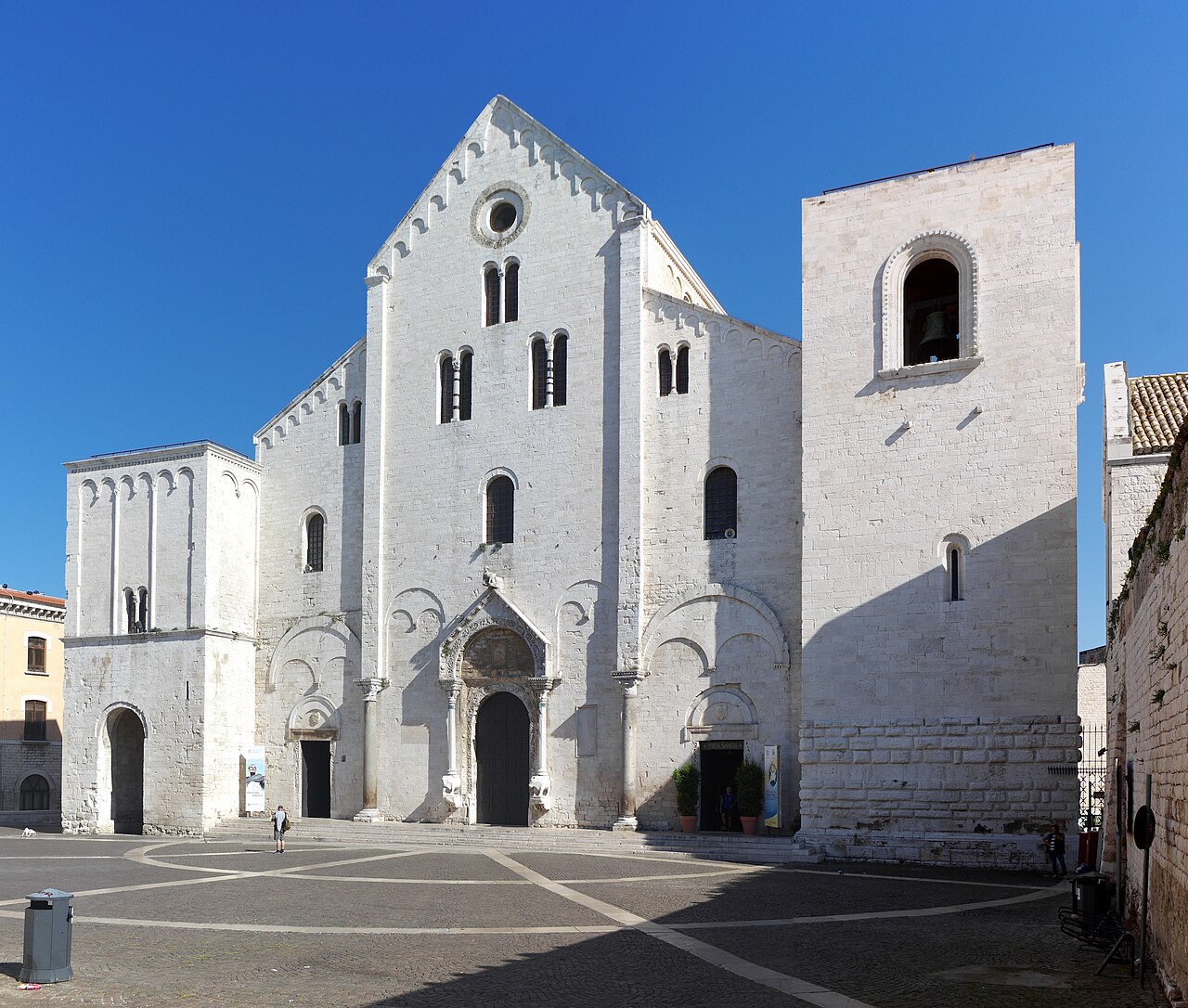
Basilica of Saint Nicholas, Bari
1087–1197
 Painting
Secondary source
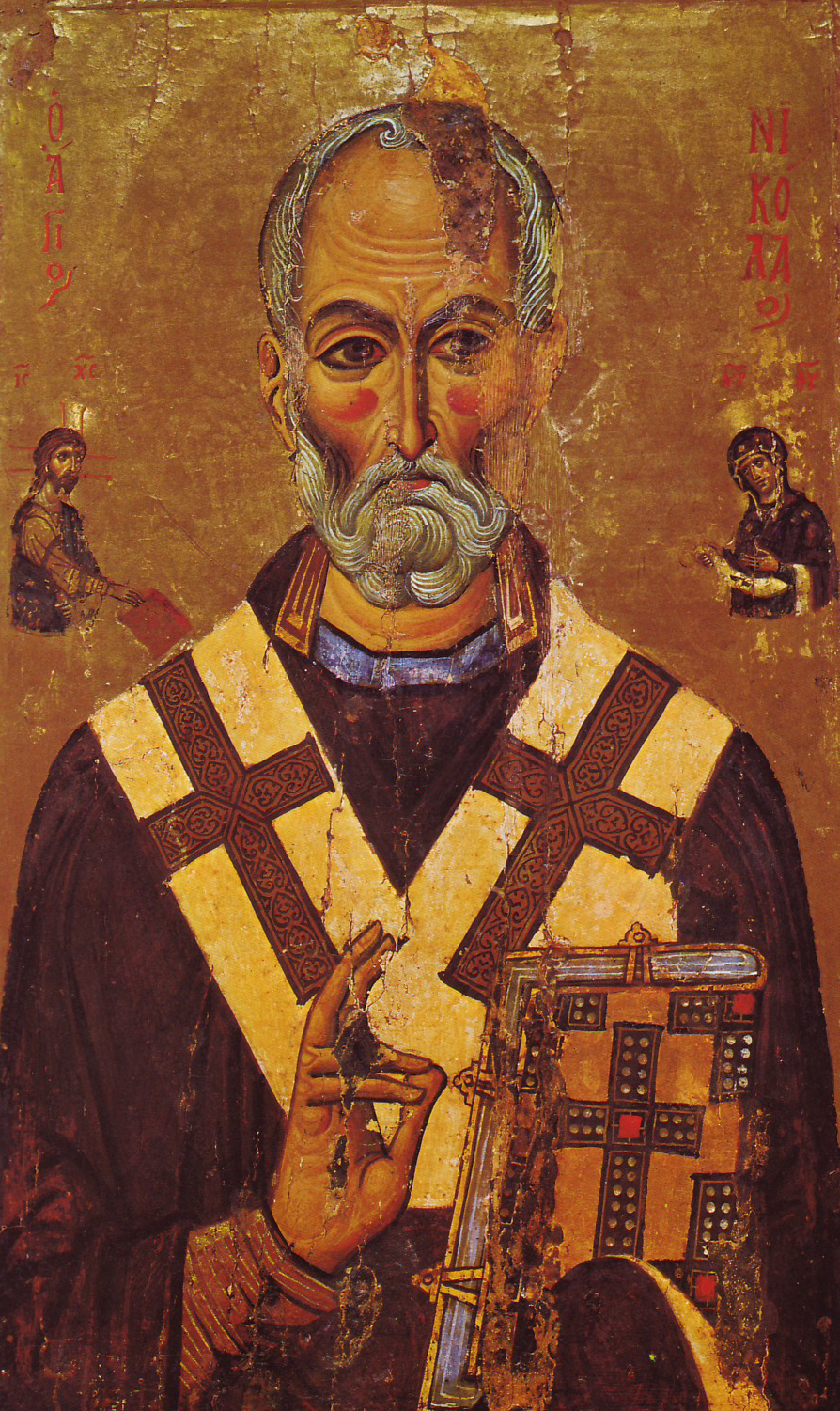
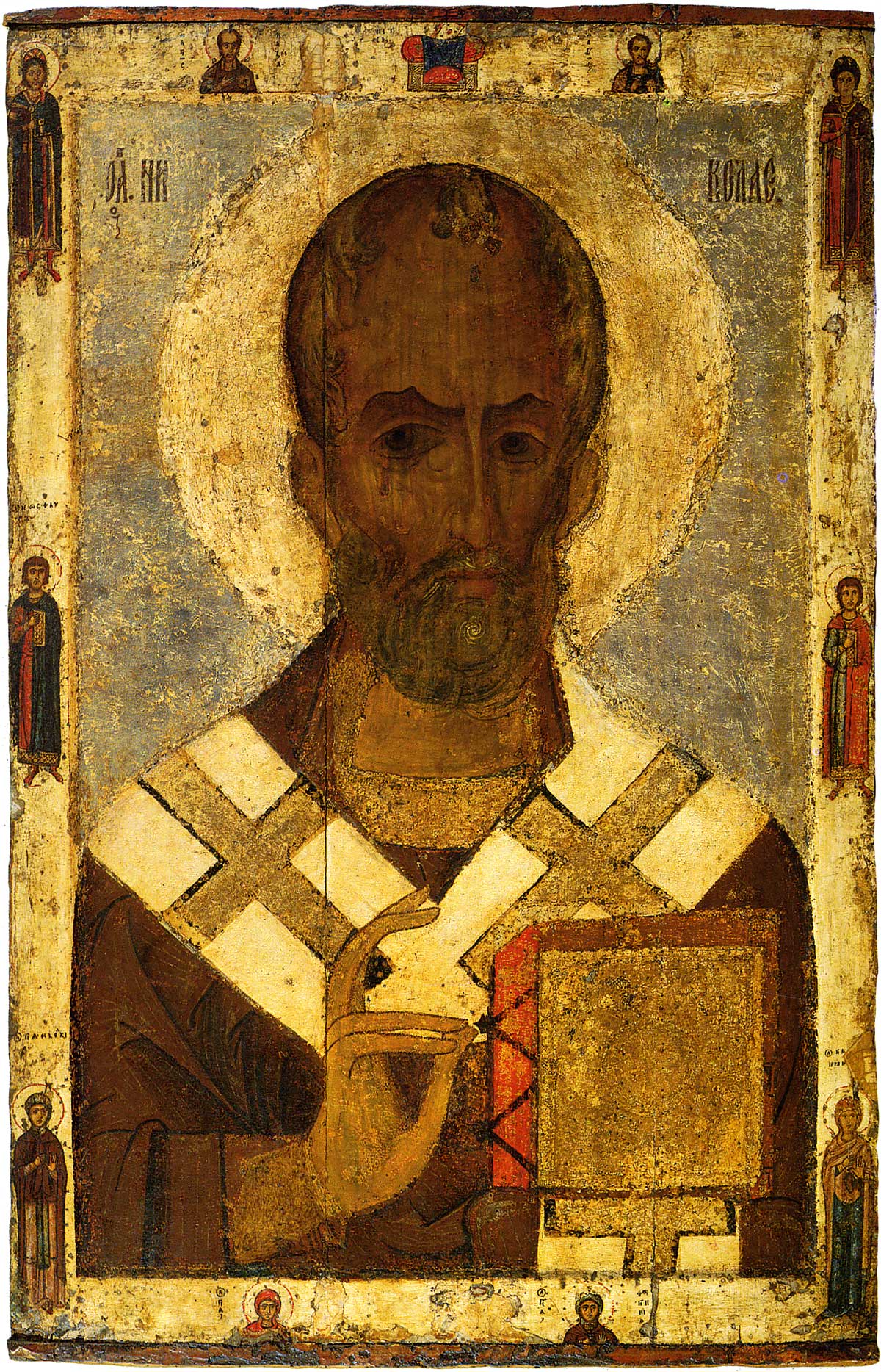
Portrait of Saint Nicholas
first half of the 13th century
 Document
Secondary source
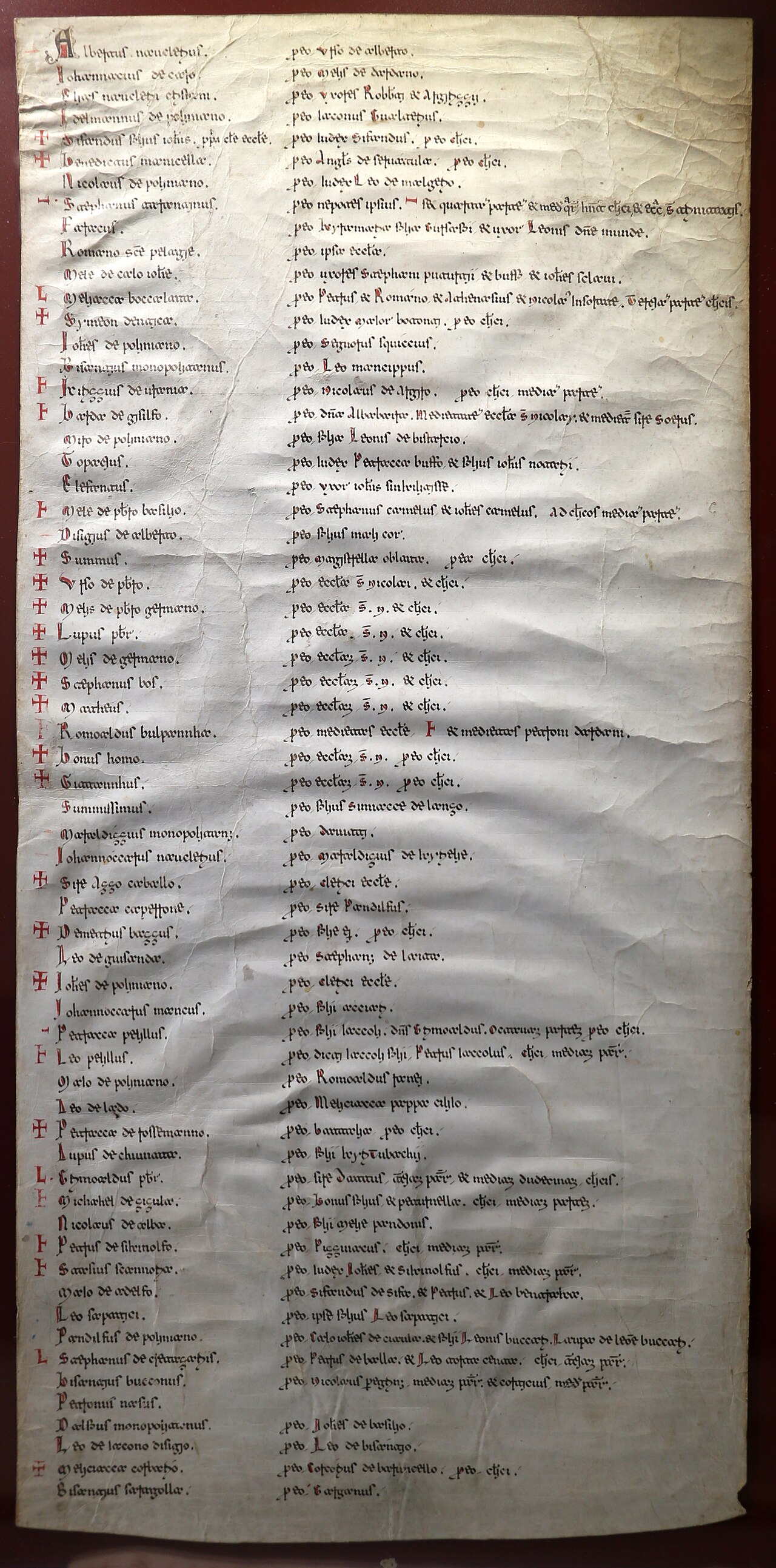
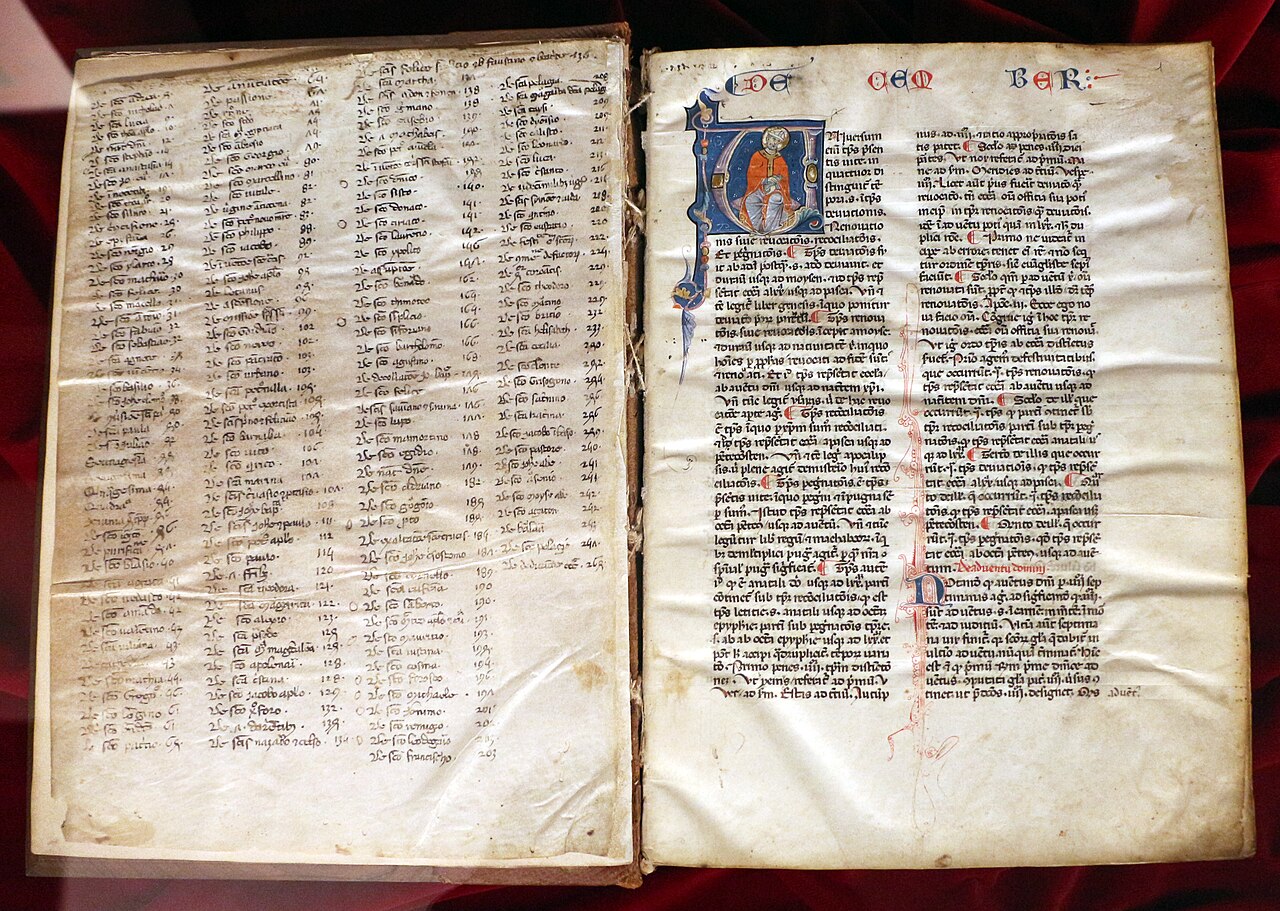
Parchment of the 62 Sailors Who Carried Saint Nicholas's Relics to Bari
c. 1175
Free account
Read every Saint Nicholas source
Sign up free →
Ready when you are
Start chatting with Saint Nicholas now.
20 messages free · No credit card · Available in 50+ languages.