


Primary sourcePaintinglate 15th century
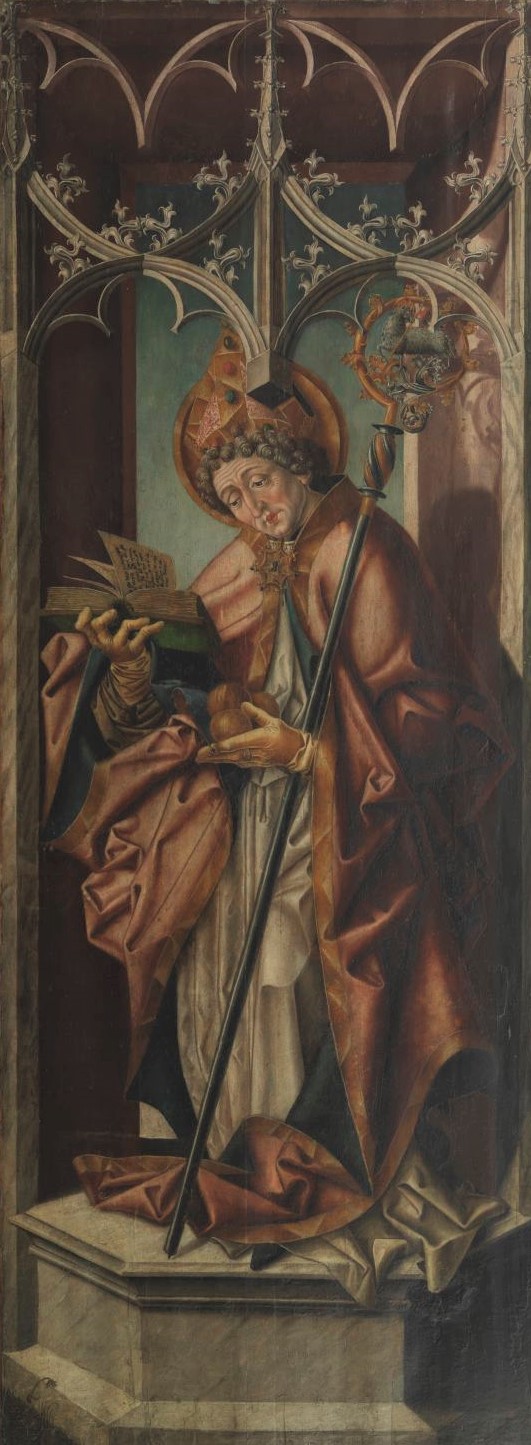
Saint Nicholas Altar Wing
Friedrich Pacher · late 15th century
A late 15th-century painted altar wing by Friedrich Pacher showing Saint Nicholas as bishop, holding his symbolic three golden balls.
Depicts Saint Nicholas with his traditional attributes, made for church devotion in the late medieval period.
About this source
What it is
This is the outer side of an altar wing painted by Friedrich Pacher at the end of the 15th century, on fir wood. It is held today at the Germanisches Nationalmuseum in Nuremberg.
The painting shows a bearded bishop saint standing under Gothic tracery, wearing a golden mitre and red cope, holding an open book, a crozier, and three golden balls.
Why it matters
Altarpieces like this were made for churches to inspire devotion and teach stories through images. The three golden balls were a recognizable symbol linked to Nicholas's legendary gifts of gold, letting worshippers identify him even without reading text.
Look closer
- What details in the painting identify this figure as Saint Nicholas rather than another bishop?
- Why might churches have commissioned such detailed, costly altar paintings?
- What does the saint's clothing and pose tell you about how he was meant to be seen by worshippers?
This painting is part of the curated material that grounds the AI version of Saint Nicholas on Humy.ai — when students ask about related events, the AI can quote it and cite it.
More Saint Nicholas sources
Browse all 91 →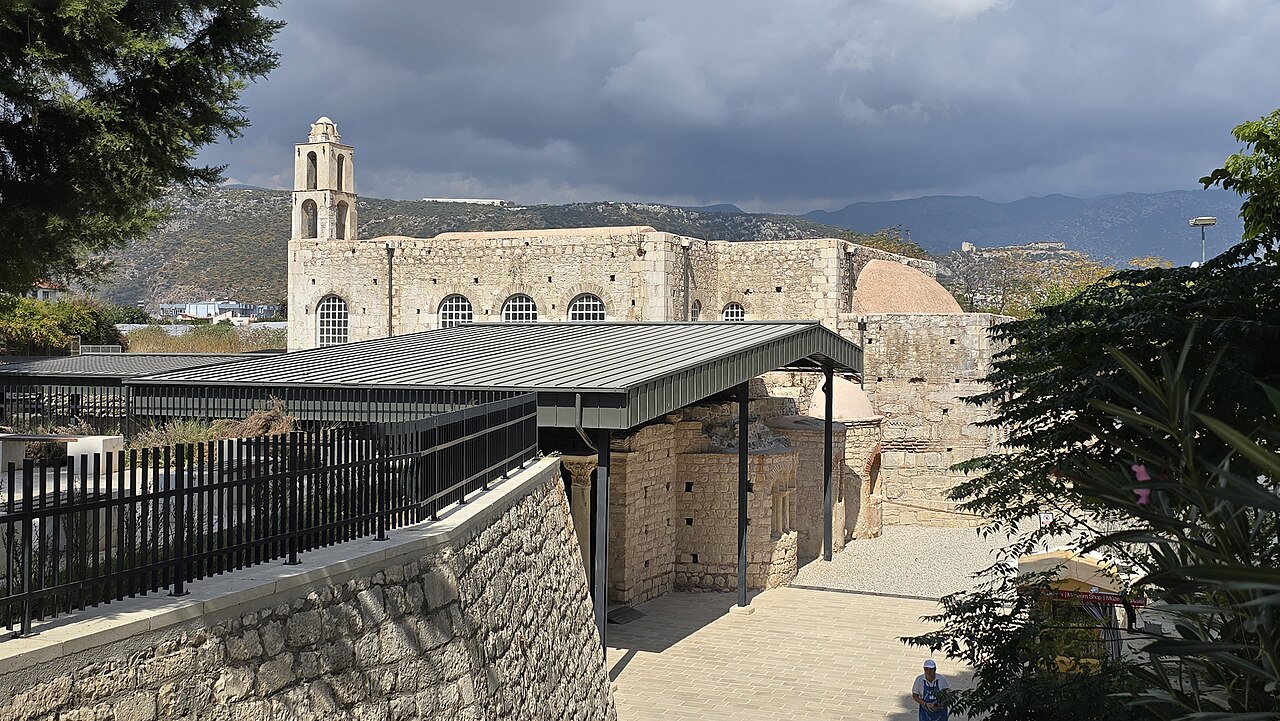 Artifact
Secondary source
St. Nicholas Church, Demre
6th century AD (rebuilt; ruins visible today)
 Artifact
Secondary source
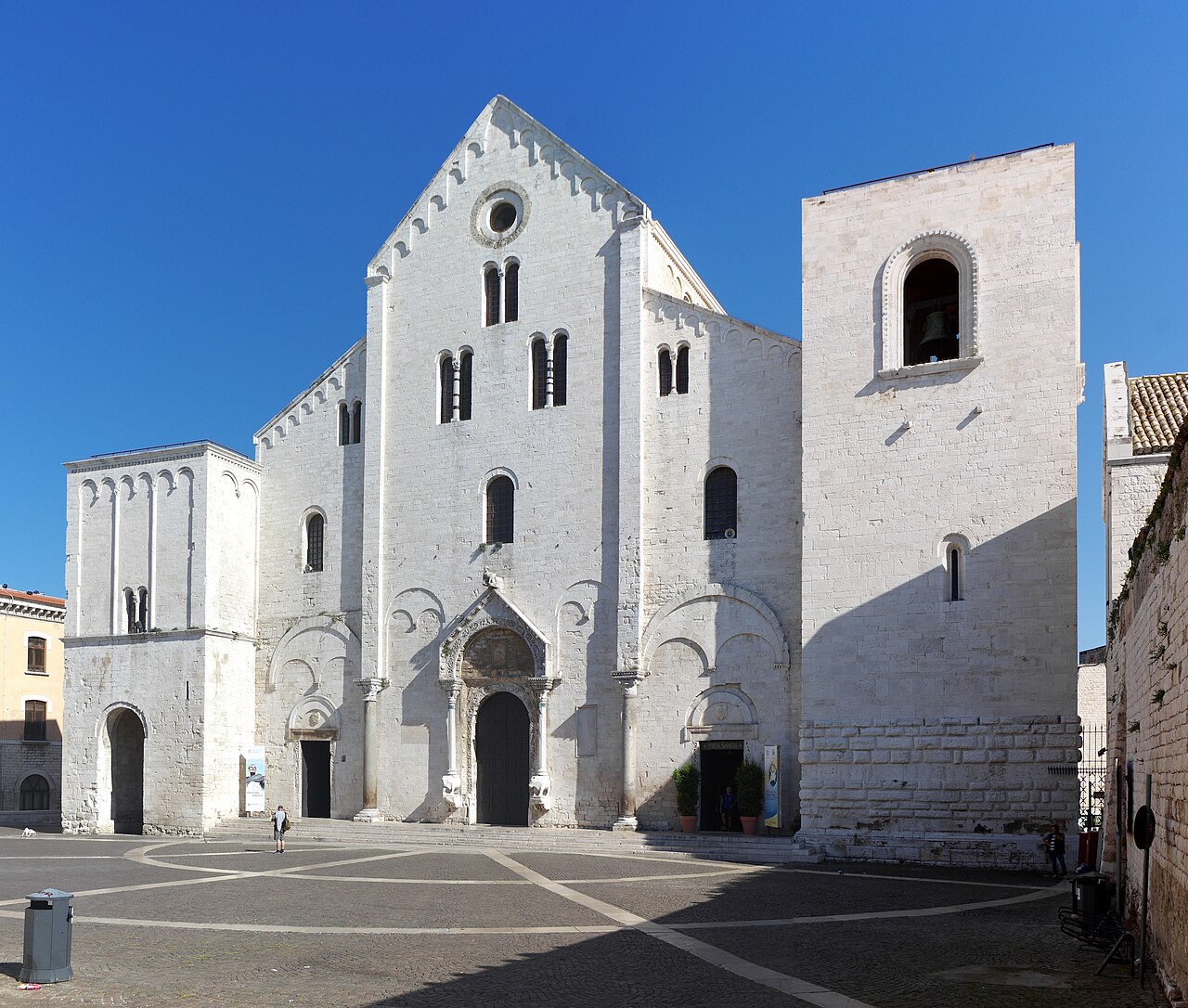
Basilica of Saint Nicholas, Bari
1087–1197
 Painting
Secondary source
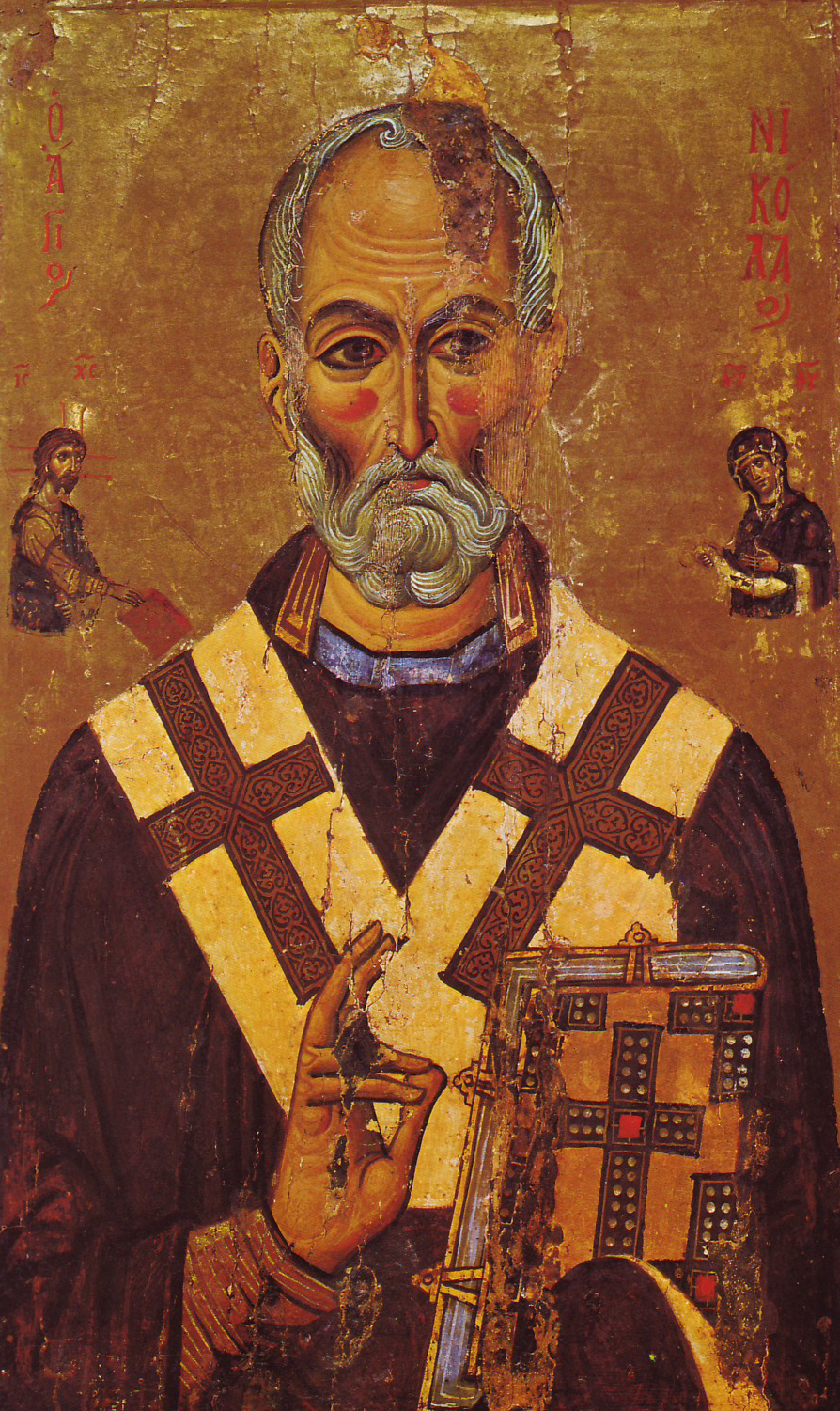
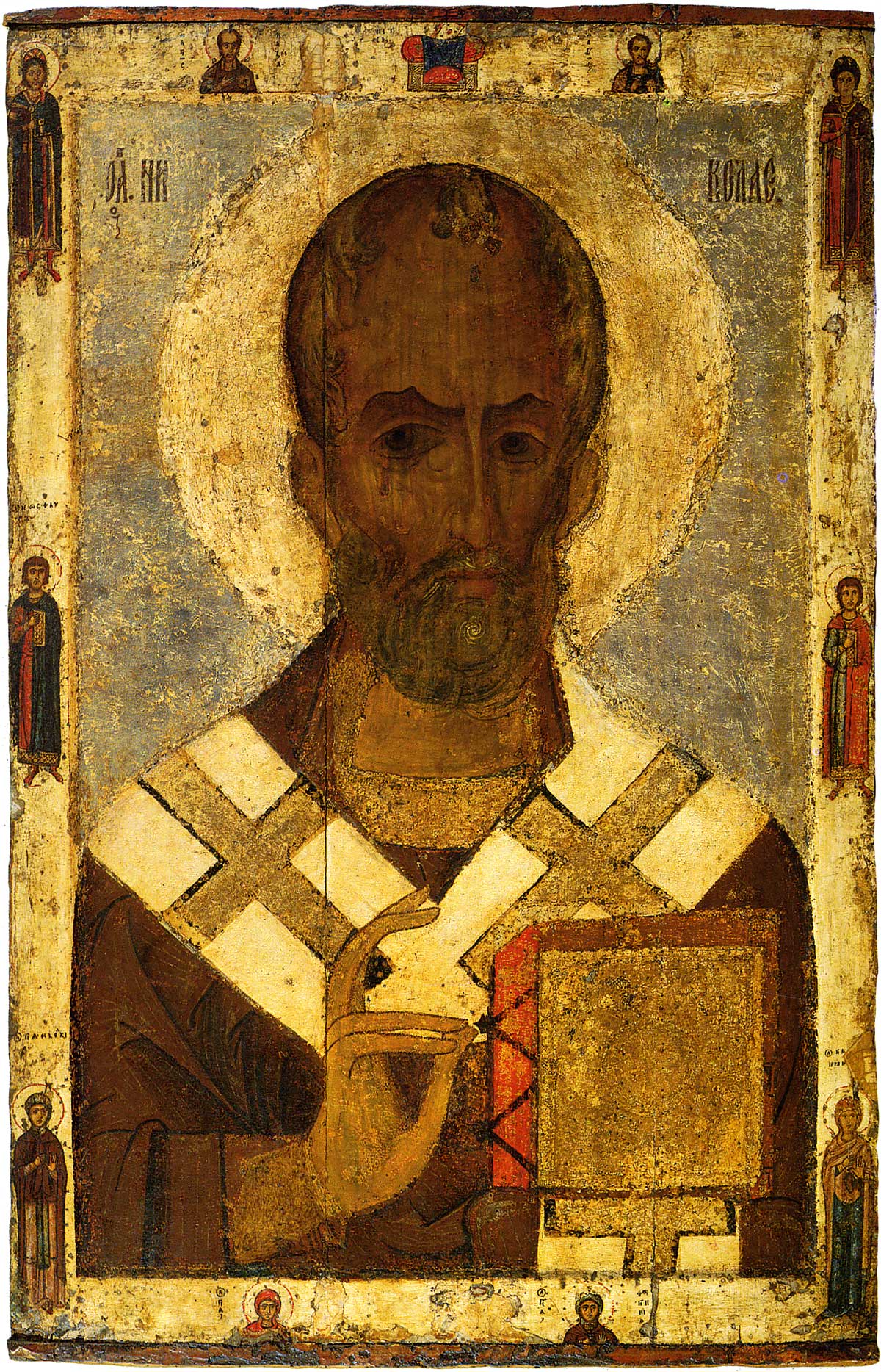
Portrait of Saint Nicholas
first half of the 13th century
 Document
Secondary source
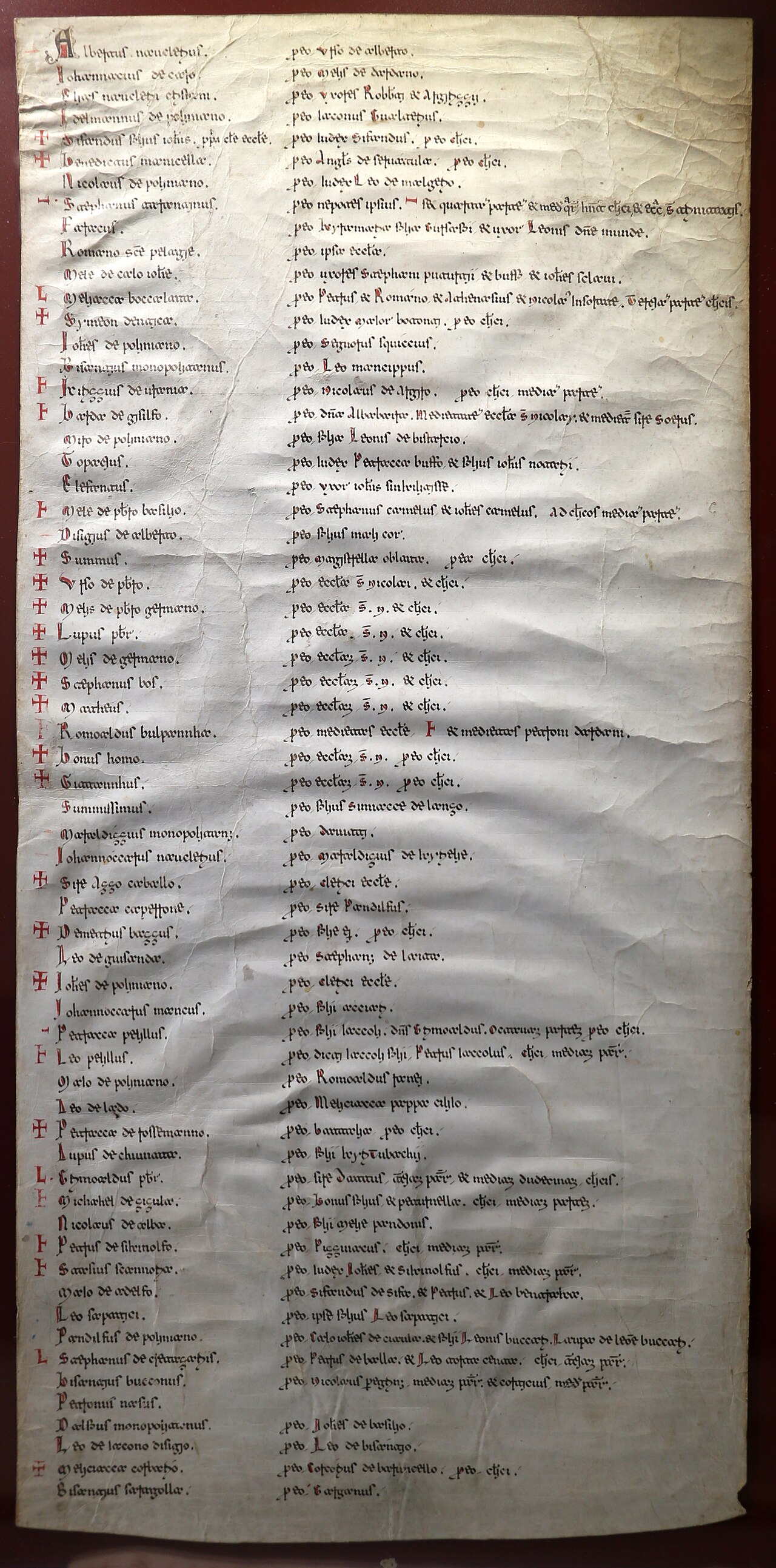
Parchment of the 62 Sailors Who Carried Saint Nicholas's Relics to Bari
c. 1175
Free account
Read every Saint Nicholas source
Sign up free →
Ready when you are
Start chatting with Saint Nicholas now.
20 messages free · No credit card · Available in 50+ languages.