


Secondary sourcePainting1893
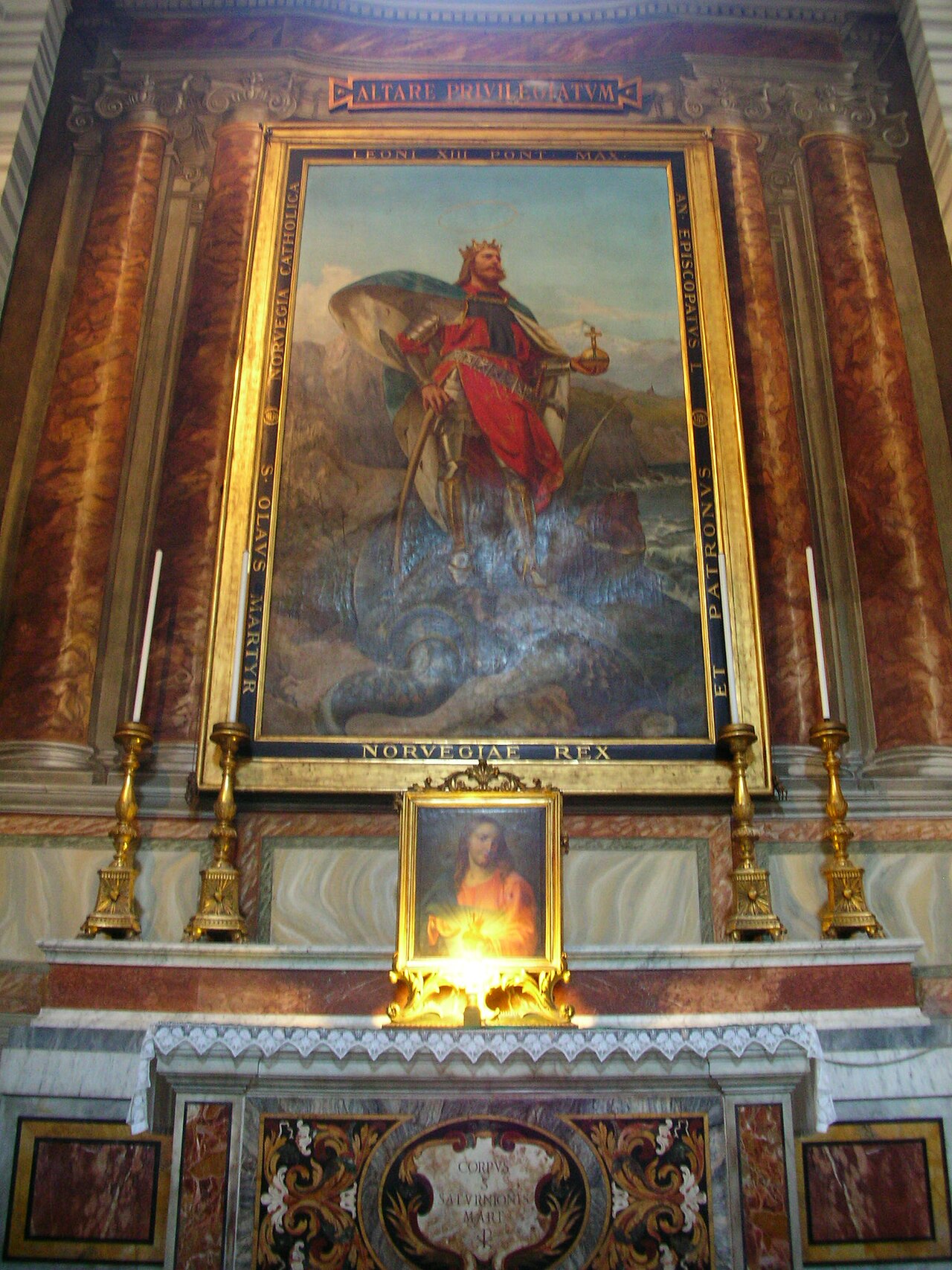
Saint Olav II, King of Norway by Pius Welonski
Pius Weloński · 1893
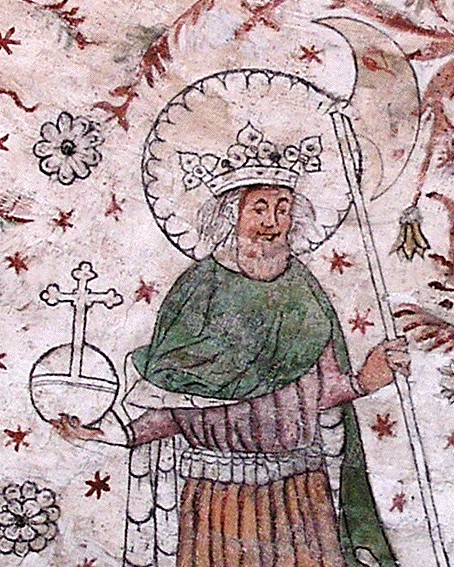
A gilded altarpiece painting from a Rome church showing Olaf as a crowned saint-king standing over a sea serpent.
A later devotional painting honouring Olaf as a saint, showing how he was venerated centuries after his reign.
About this source
What it is
This is a photograph of an altarpiece painting made by the sculptor Pius Weloński in 1893, displayed in the church of San Carlo al Corso in Rome. The painting shows a crowned king in red robes holding an orb and scepter, standing above a sea serpent, with Latin inscriptions naming him King of Norway.
Why it matters
The image shows how Olaf, who ruled Norway centuries earlier, was remembered and honoured as a saint long after his death. It reveals how artists like Weloński imagined royal holiness, using symbols such as the crown, orb, and defeated serpent to show spiritual victory.
Look closer
- What do the objects the king holds (orb, scepter) suggest about his authority?
- Why might the artist have placed a sea serpent beneath his feet?
- What does the setting of a church altar tell you about how people viewed Olaf by the 1800s?
This painting is part of the curated material that grounds the AI version of Olaf II of Norway on Humy.ai — when students ask about related events, the AI can quote it and cite it.
More Olaf II of Norway sources
Browse all 87 →Secondary source
Óláfs saga helga in Heimskringla
Snorri Sturluson · c. 1230
 Book
Secondary source
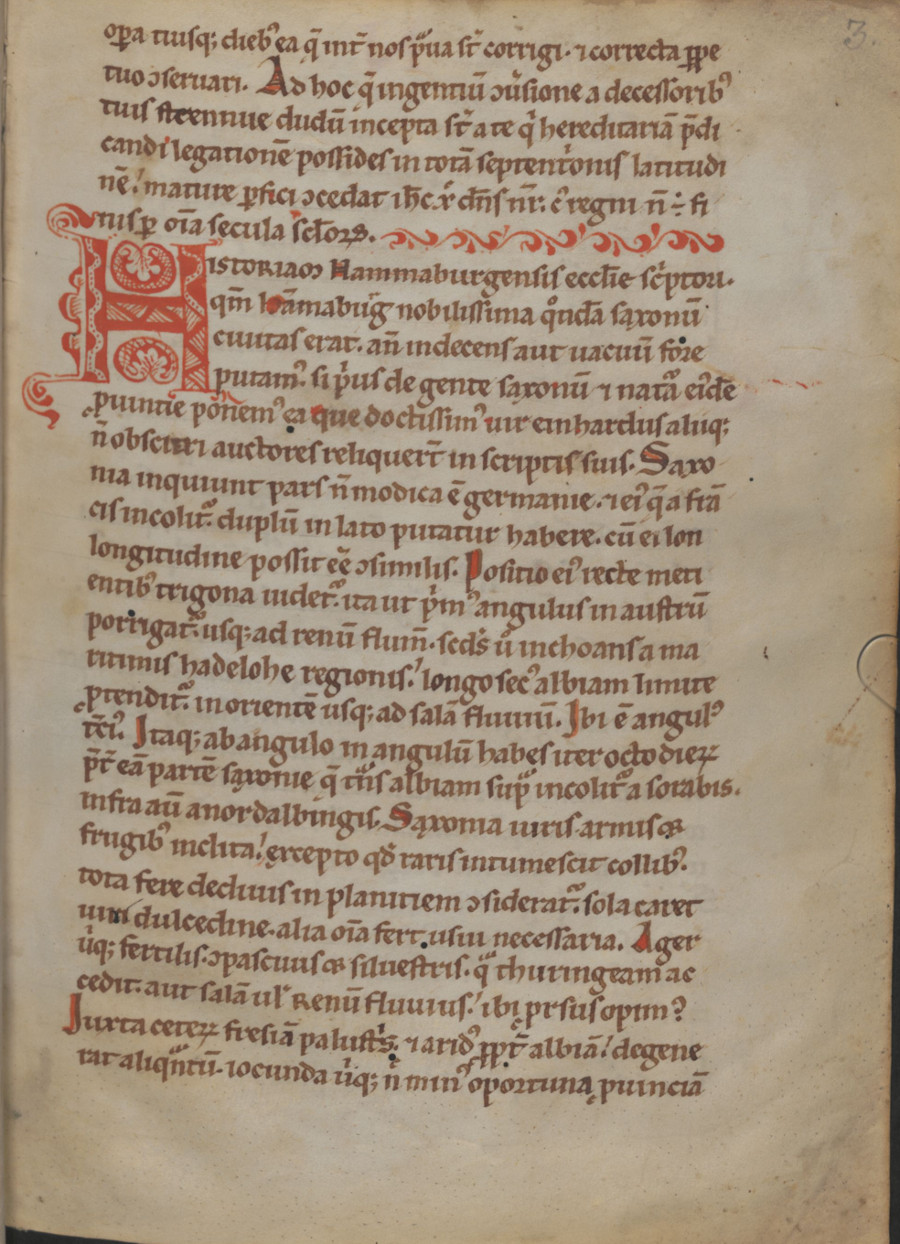
Gesta Hammaburgensis ecclesiae pontificum
Adam of Bremen · 1073-1076
 Artifact
Secondary source
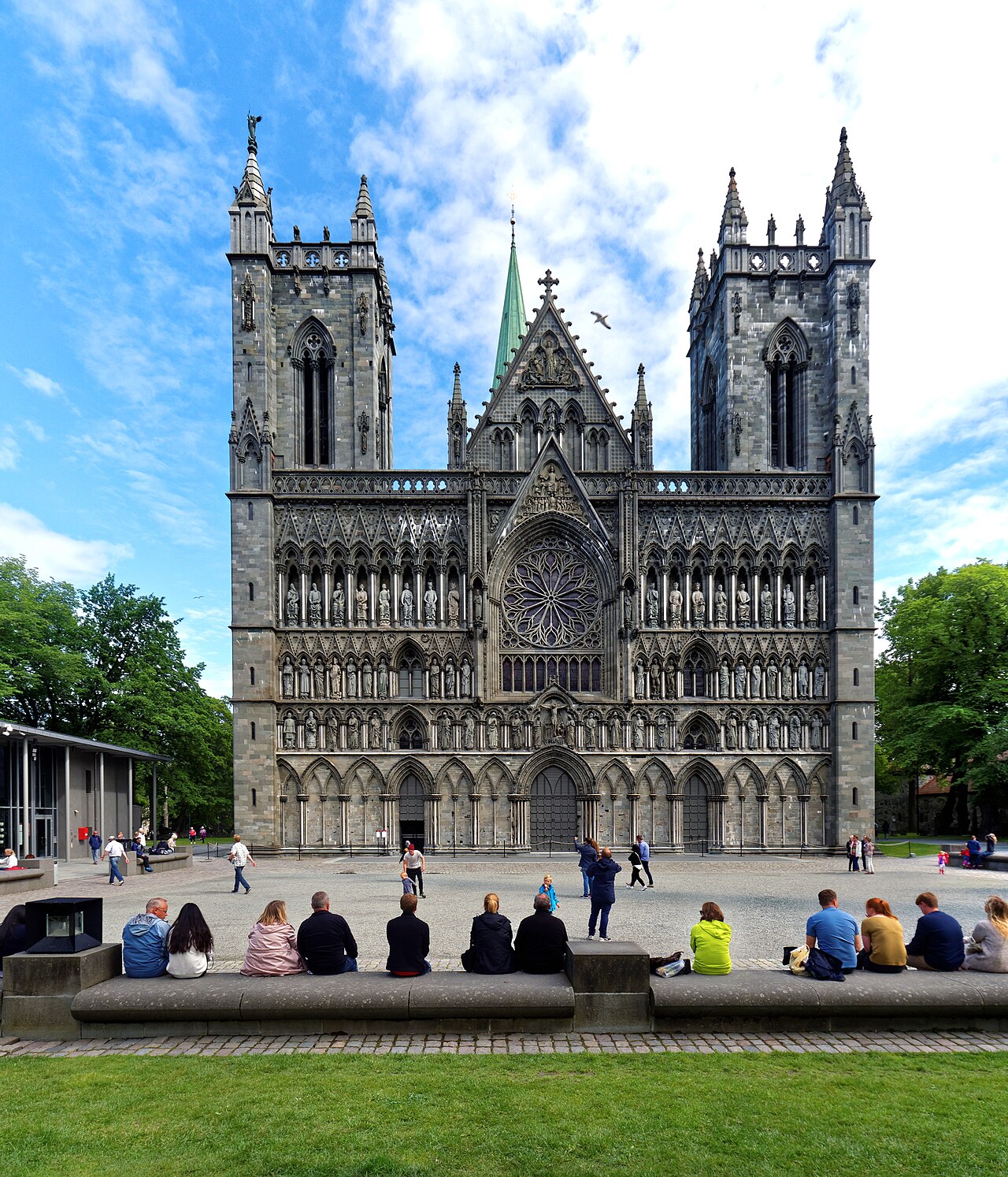
Nidaros Cathedral
1070-1300 (begun)
 Artifact
Primary source
Kuli Stone
c. 1034

Free account
Read every Olaf II of Norway source
Sign up free →
Ready when you are
Start chatting with Olaf II of Norway now.
20 messages free · No credit card · Available in 50+ languages.