


Primary sourcePaintingc. 1470
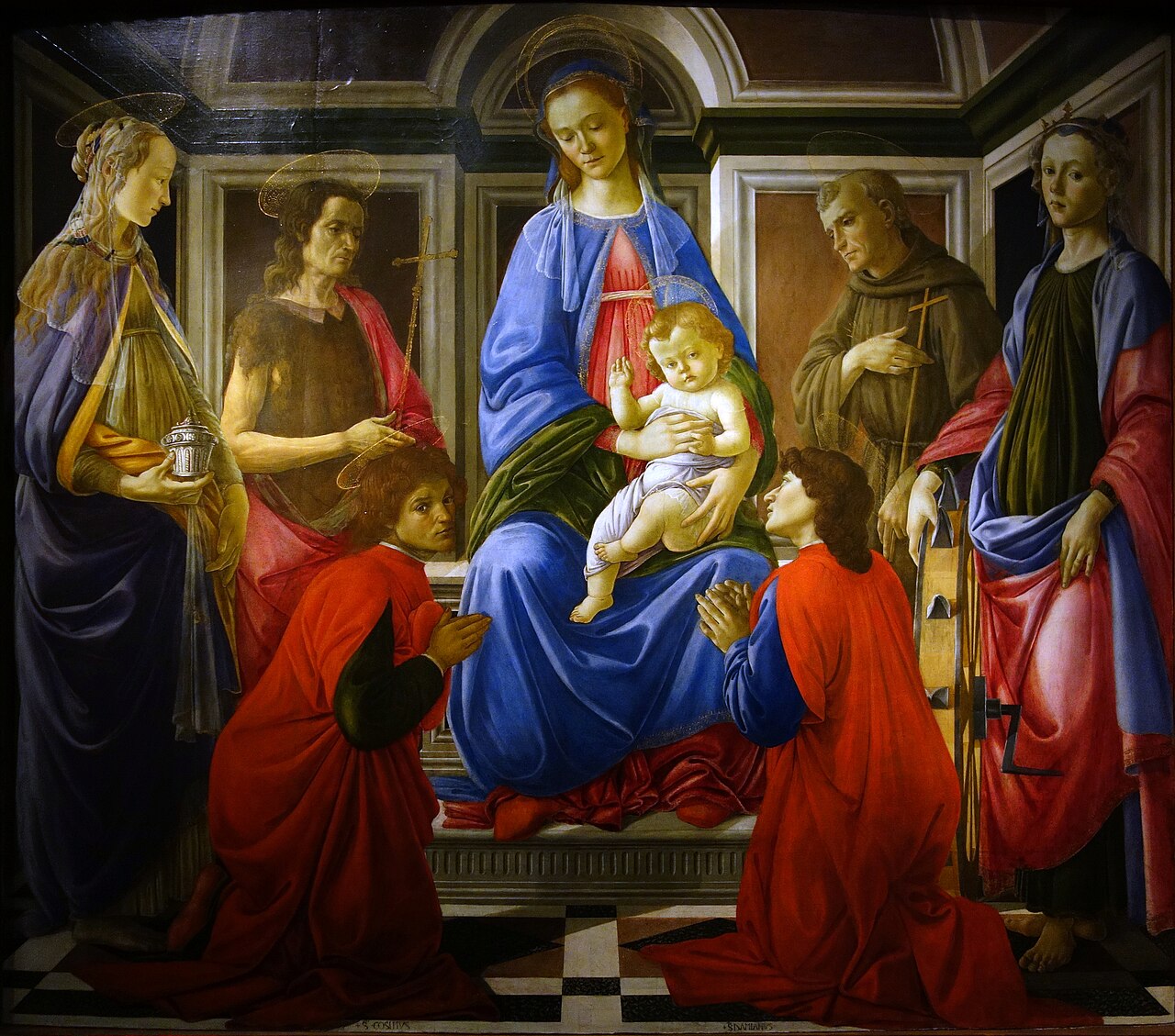
Sant'Ambrogio Altarpiece
Sandro Botticelli · c. 1470
Botticelli's earliest surviving altarpiece, showing the Virgin and Child with six saints in a sacra conversazione composition.
Botticelli's earliest surviving altarpiece, demonstrating his early mastery of composition and Medici connections.
About this source
What it is
This altarpiece, also called Madonna and Child with Six Saints, was painted by Sandro Botticelli around 1470. It is now kept in the Uffizi Gallery in Florence.
It shows the Virgin Mary enthroned with the Christ Child, surrounded by six saints including Mary Magdalene, John the Baptist, Francis of Assisi and Catherine of Alexandria, with two figures kneeling in the foreground.
Why it matters
This is Botticelli's earliest surviving altarpiece, made when he was still a young painter establishing his style. The two kneeling saints, Cosmas and Damian, are thought to be disguised portraits of members of the powerful Medici family, possibly Lorenzo and Giuliano de' Medici, showing how art and politics mixed in Renaissance Florence.
Look closer
- Why might wealthy patrons want to appear disguised as saints in a religious painting?
- How does the arrangement of figures guide your eye around the painting?
- What does this altarpiece suggest about Botticelli's skill so early in his career?
This painting is part of the curated material that grounds the AI version of Sandro Botticelli on Humy.ai — when students ask about related events, the AI can quote it and cite it.
More Sandro Botticelli sources
Browse all 95 →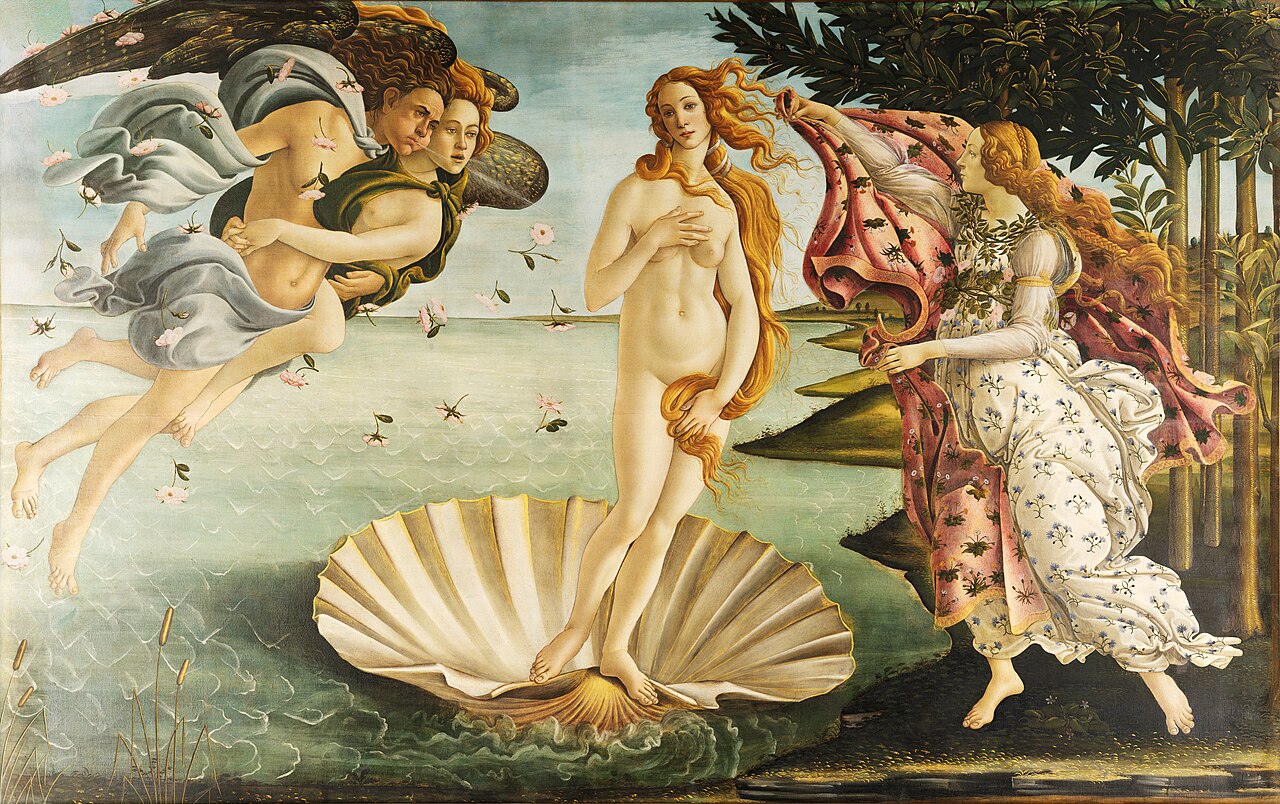 Painting
Primary source
The Birth of Venus
Sandro Botticelli · 1485
 Painting
Primary source
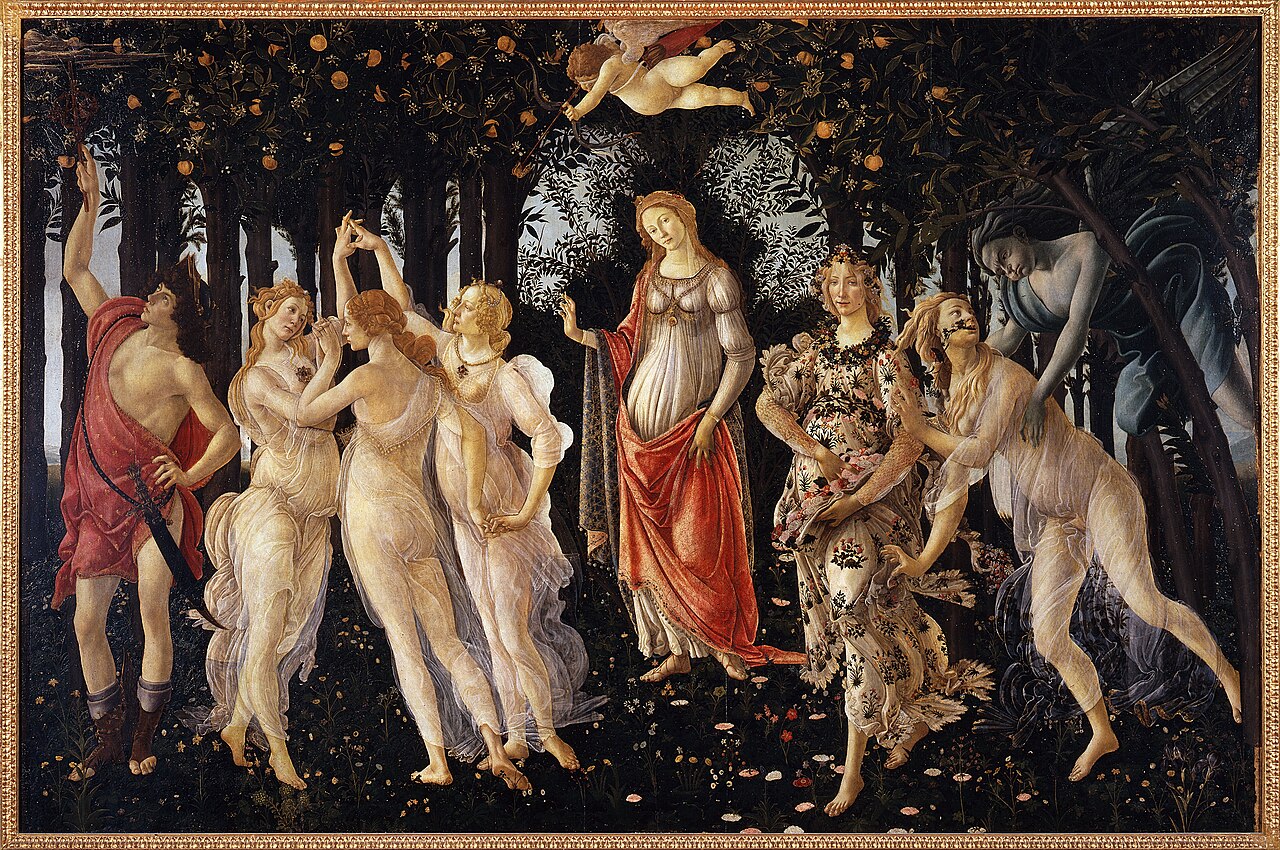
Primavera
Sandro Botticelli · 1480
 Painting
Primary source
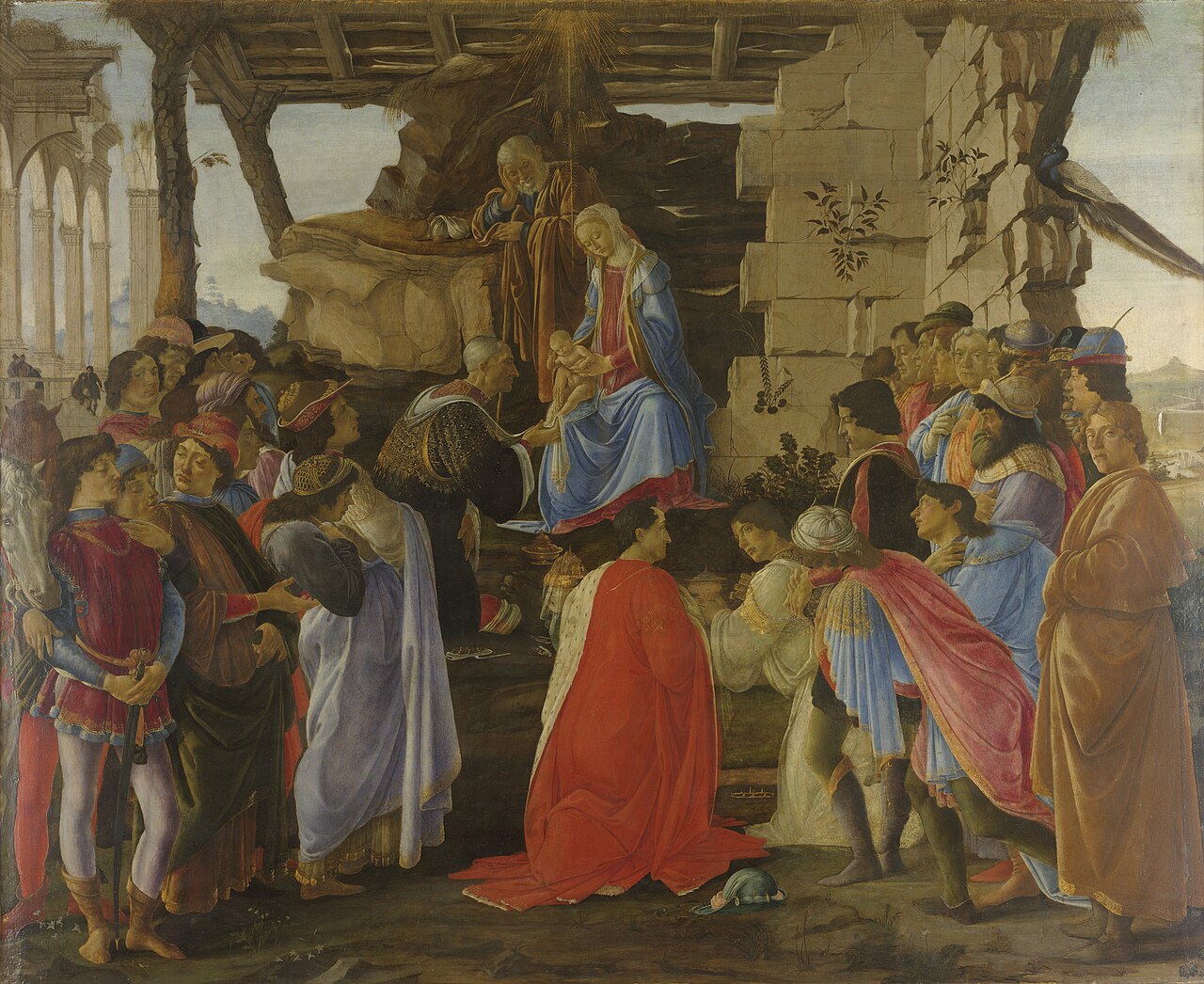
Adoration of the Magi
Sandro Botticelli · c. 1475
 Painting
Primary source
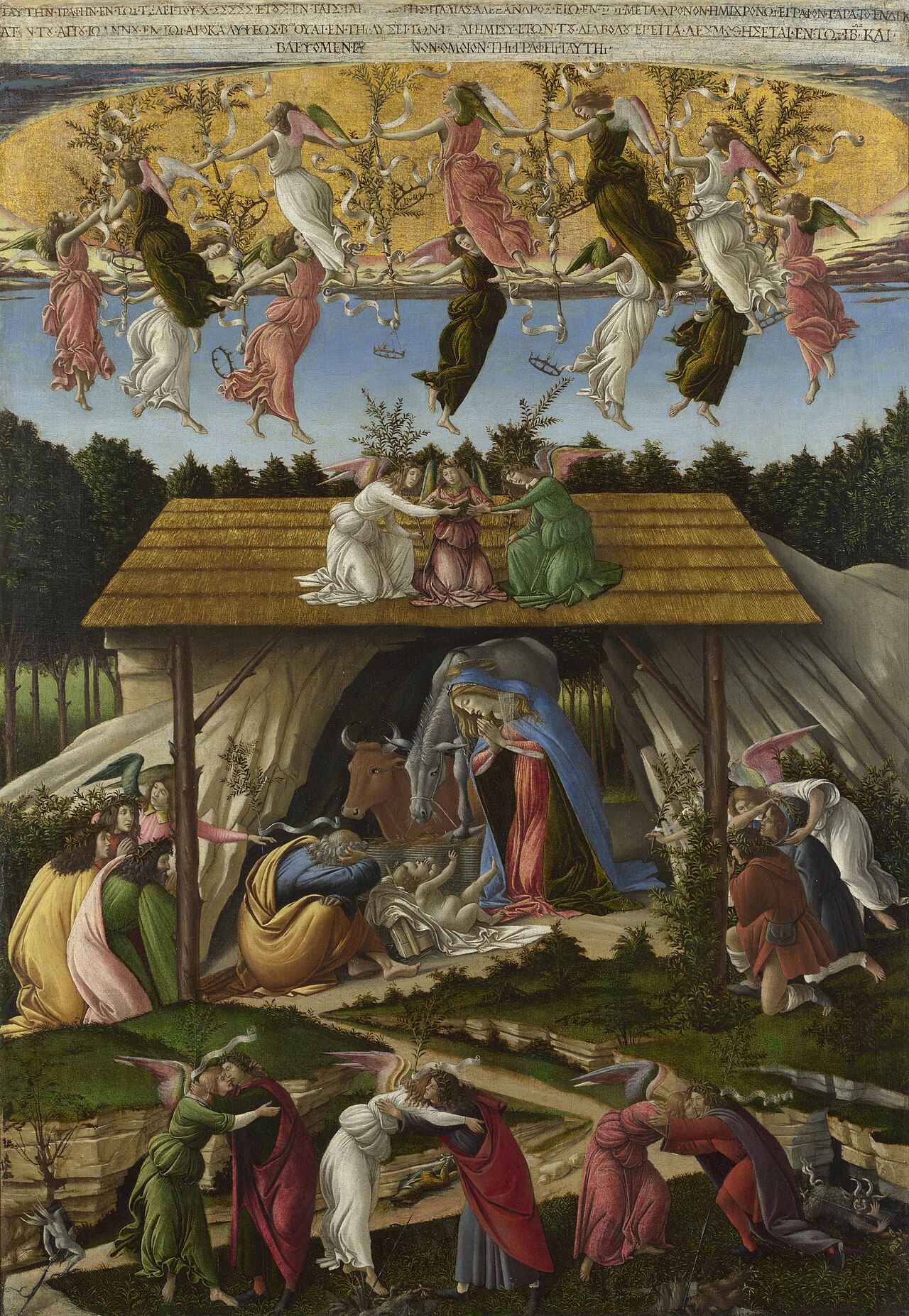
The Mystical Nativity
Sandro Botticelli · 1500-1501
Free account
Read every Sandro Botticelli source
Sign up free →
Ready when you are
Start chatting with Sandro Botticelli now.
20 messages free · No credit card · Available in 50+ languages.