


Secondary sourcePainting1653
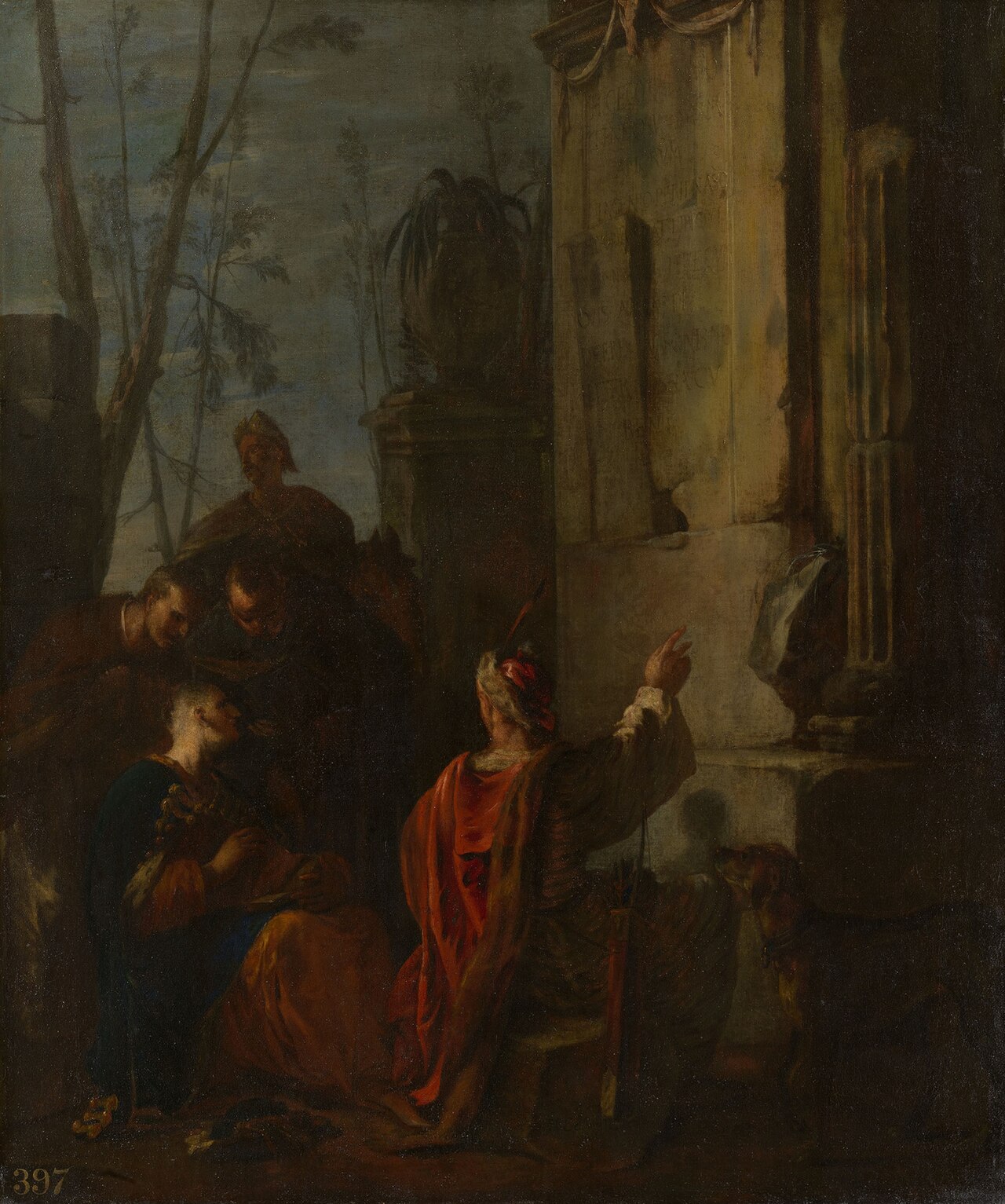
Sarmatians at the Tomb of Ovid
Johann Heinrich Schönfeld · 1653
A 17th-century imagined painting of Ovid's grave among the Sarmatians, reflecting the legend of his exile at Tomis.
Imagines Ovid's exile and burial among the Sarmatians, reflecting the legend of his banishment to Tomis.
About this source
What it is
This is a painting by Johann Heinrich Schönfeld, made in 1653 and now held in the Royal Collection. It shows a dim classical scene with figures gathered near an inscribed stone monument, imagined as Ovid's tomb among the Sarmatians.
Why it matters
The painting is not a real record of Ovid's grave but a 17th-century artist's imagining of the legend that Ovid died and was buried in exile at Tomis, far from Rome. It shows how later European artists kept Ovid's story of banishment alive long after his death, using it to explore themes of exile and memory.
Look closer
- What details suggest this is an imagined scene rather than a real record?
- Why might an artist centuries later be interested in painting Ovid's exile and death?
- What does the monument in the painting suggest about how Ovid was remembered?
This painting is part of the curated material that grounds the AI version of Ovid on Humy.ai — when students ask about related events, the AI can quote it and cite it.
Ready when you are
Start chatting with Ovid now.
20 messages free · No credit card · Available in 50+ languages.