


Primary sourcePainting18th century
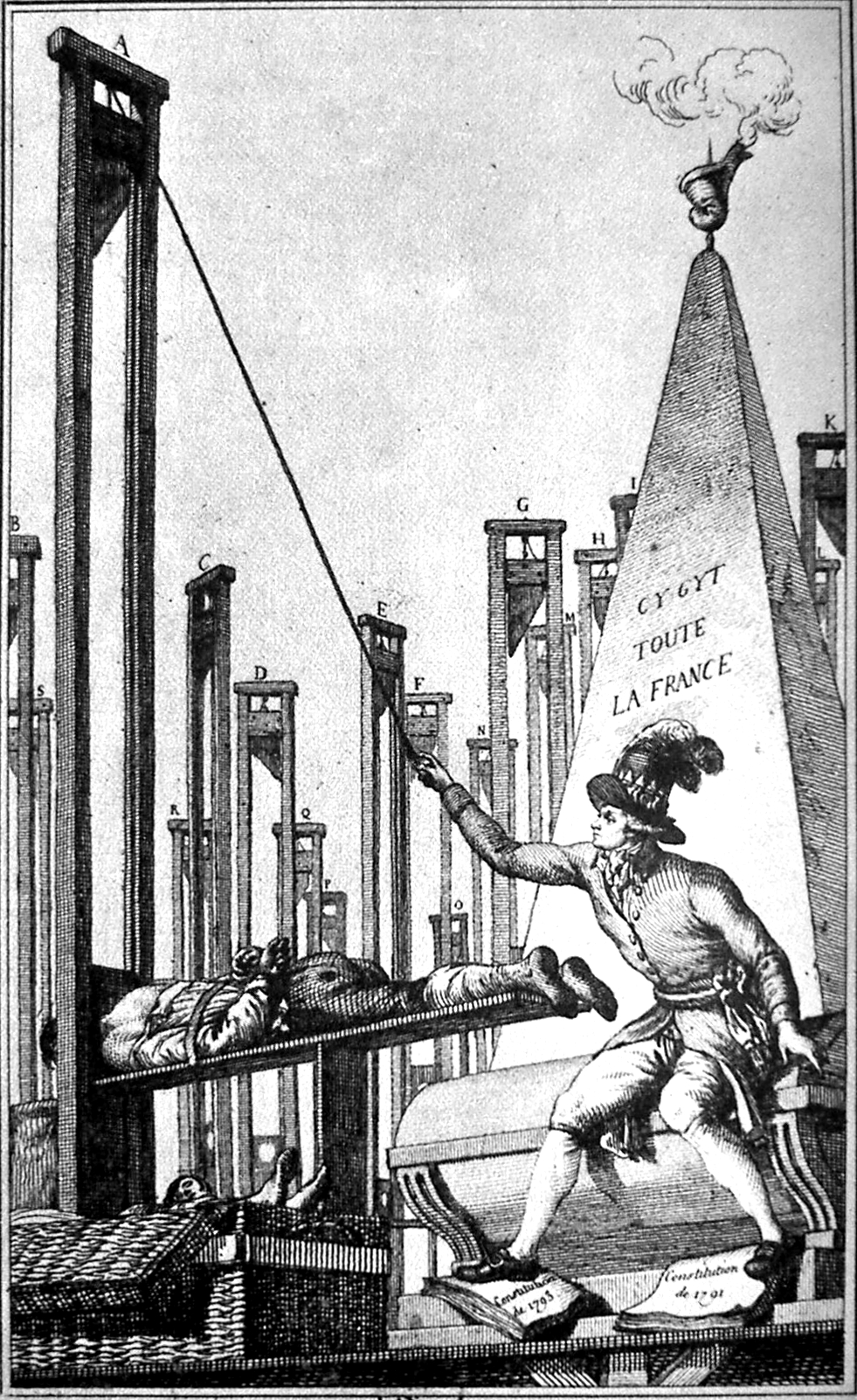
Satirical engraving, Robespierre guillotining the executioner
18th century
An 18th-century satirical engraving showing Robespierre as a tyrant who guillotines the executioner after everyone else in France.
Shows how opponents portrayed Robespierre as a tyrant during the Terror.
About this source
What it is
This is a black-and-white satirical engraving from the 18th century. It shows a man in a feathered hat pulling a rope to drop a guillotine blade onto a prone figure, with other guillotines standing around him. A pyramid is inscribed Cy Gyt Toute La France, meaning Here lies all of France. Books at his feet are labeled Constitution de 1793 and 1791. The artist is unknown.
Why it matters
Prints like this were used by opponents to show Robespierre as a tyrant. The image uses the guillotine, the symbol of the Terror, to present him as a killer of his own people. Such images show how his critics wanted him to be seen, and they are part of the wider political fight in revolutionary France.
Look closer
- What details tell you the artist wants the viewer to condemn Robespierre?
- Why do the books labeled with the constitutions appear at his feet?
- What might this satire leave out about the people who supported him?
This painting is part of the curated material that grounds the AI version of Maximilien Robespierre on Humy.ai — when students ask about related events, the AI can quote it and cite it.
More Maximilien Robespierre sources
Meet the AI Maximilien Robespierre →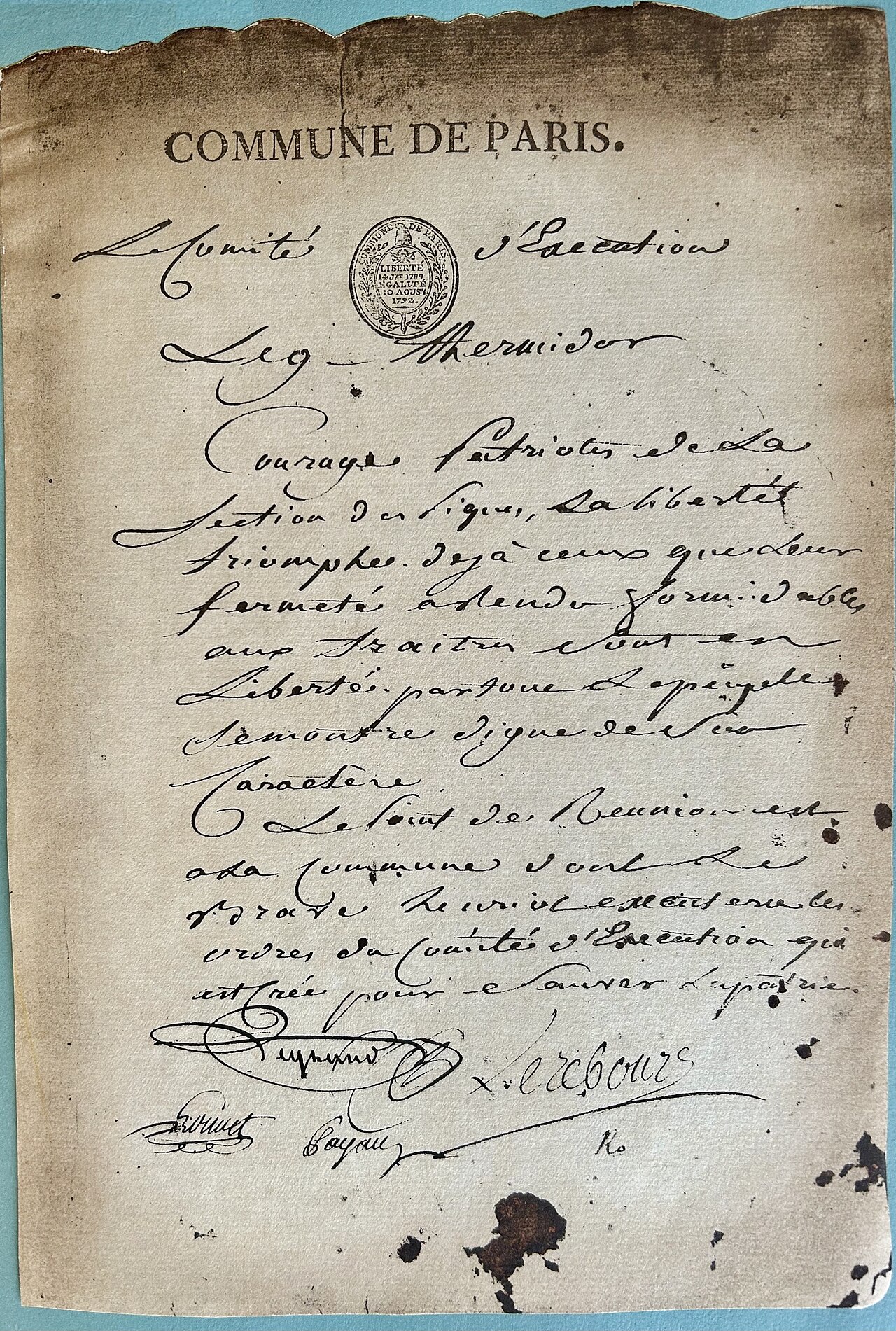 Document
Primary source
Appeal of the Commune to the Section des Piques, 9 Thermidor
Louvet, Payan, Lerebourgs, Legrand, Robespierre · 27 July 1794 (9 Thermidor Year II)
Primary source
Speech on the Trial of the King
Maximilien Robespierre · 3 December 1792
 Painting
Primary source
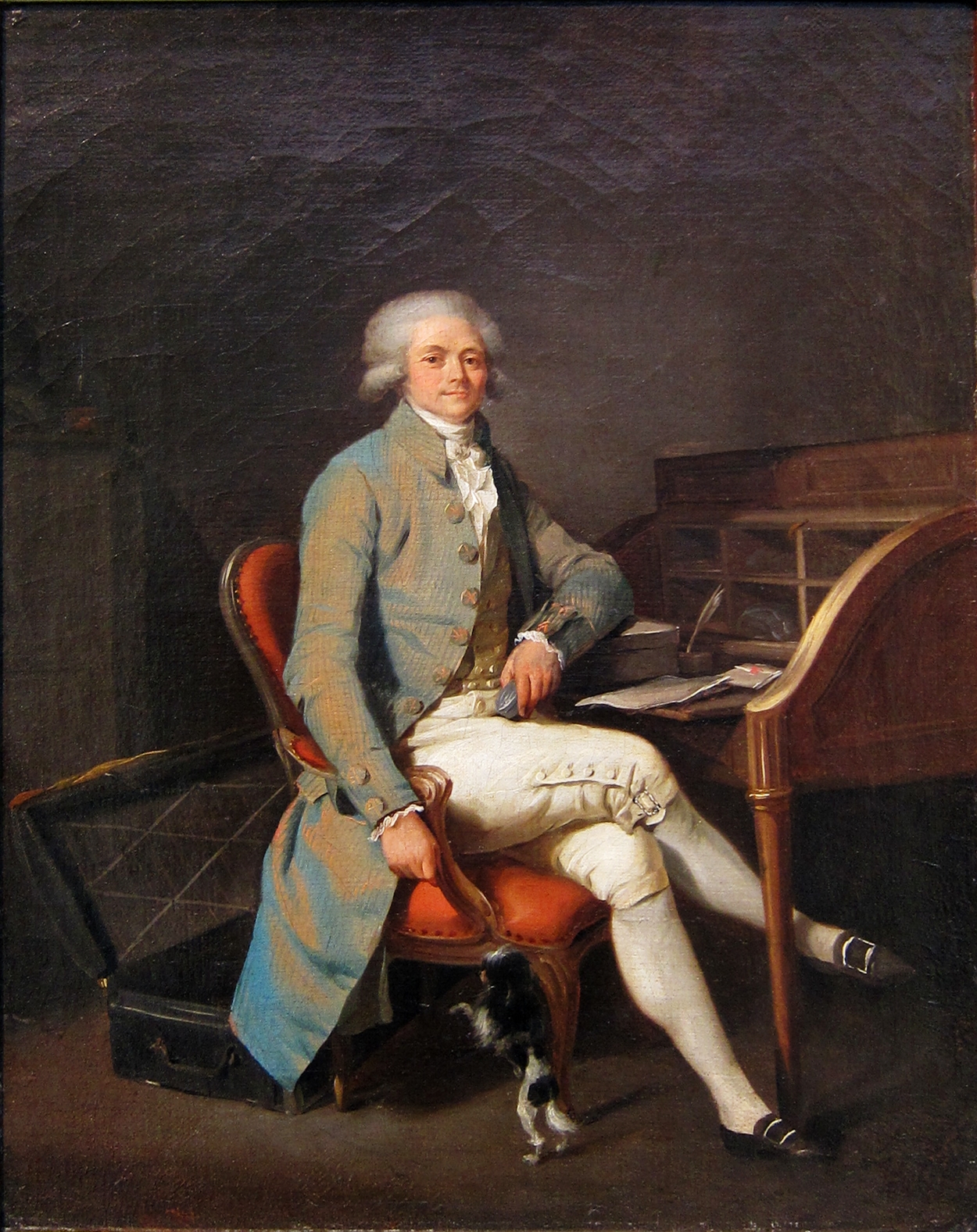
Portrait of Maximilien de Robespierre
Louis-Léopold Boilly · 1791
 Sculpture
Primary source
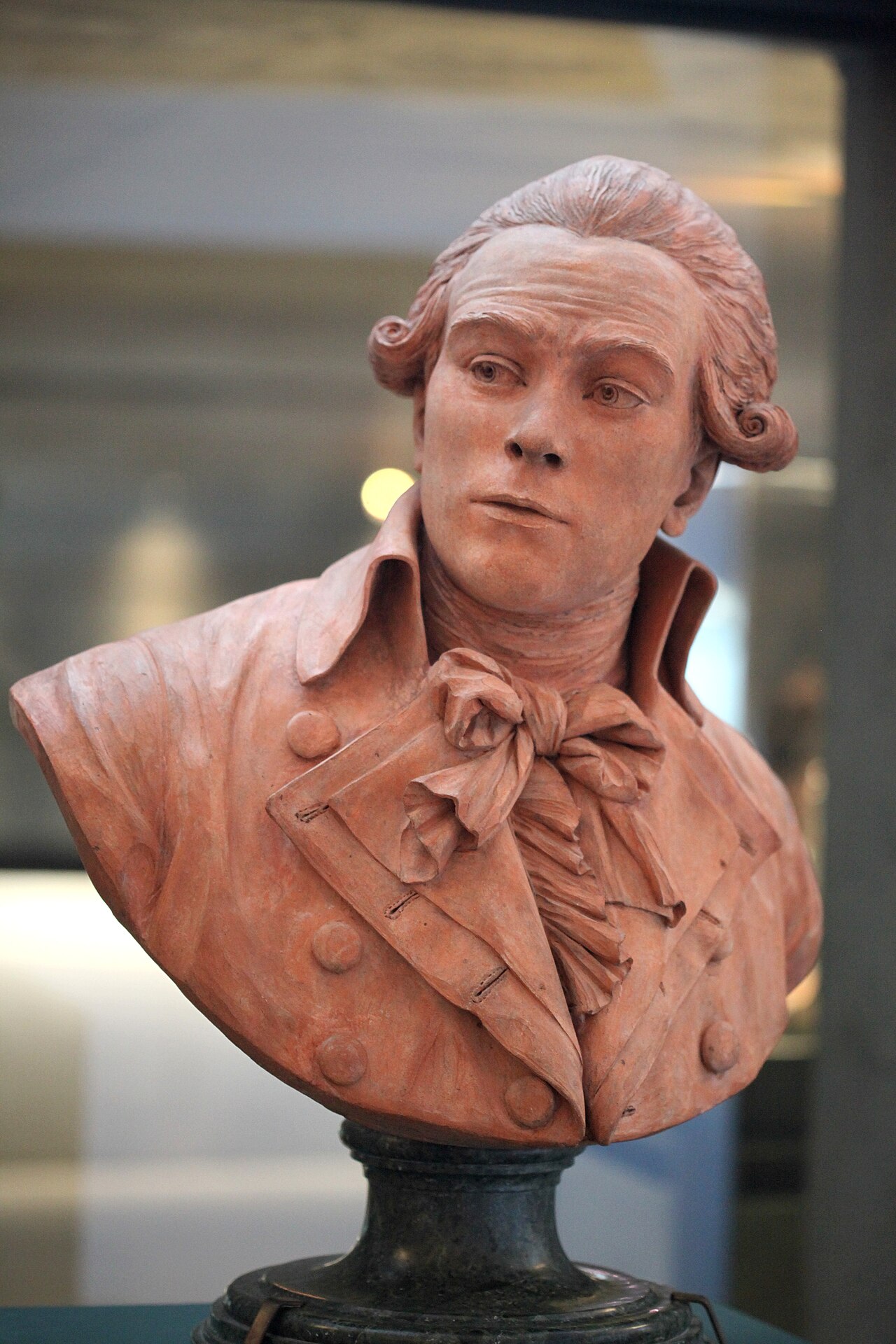
Bust of Robespierre
Claude-André Deseine · 1791
Primary source
Report on Religious and Moral Ideas and National Festivals (18 Floréal)
Maximilien Robespierre · 7 May 1794 (18 Floréal Year II)
Ready when you are
Start chatting with Maximilien Robespierre now.
20 messages free · No credit card · Available in 50+ languages.