


Primary sourcePainting1836-1837
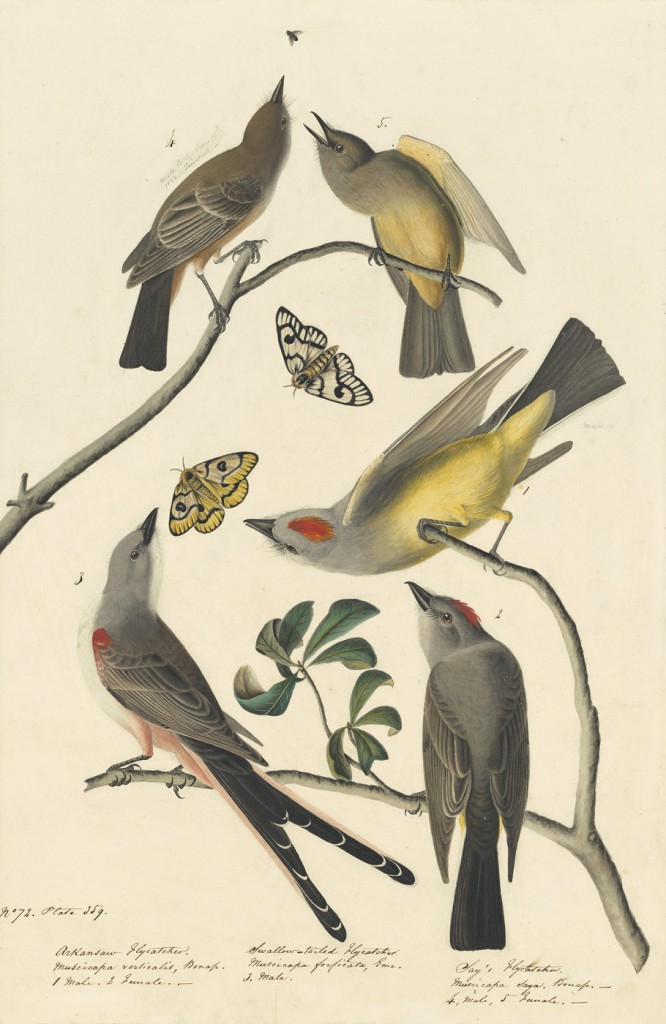
Say's Phoebe and other flycatchers, study for Havell plate
John James Audubon, Maria Martin, John Woodhouse Audubon · 1836-1837
A watercolor study of four flycatcher birds made by Audubon with Maria Martin and John Woodhouse Audubon for a plate in The Birds of America.
This preparatory study, made by Audubon with collaborators, shows his working method behind the finished Birds of America plates.
About this source
What it is
This is a watercolor, graphite, pastel, gouache, and ink study on paper showing four different flycatcher birds among branches and moths. It was made by John James Audubon together with Maria Martin and John Woodhouse Audubon as preparation for a plate in The Birds of America, around 1836–1837.
Why it matters
This study shows that Audubon did not work alone — his son John Woodhouse Audubon and artist Maria Martin helped create many of his images, often contributing backgrounds or additional species. It gives insight into the collaborative process behind the famous published engravings.
Look closer
- What differences do you notice between the birds shown here?
- Why might several artists have worked together on a single study like this?
- What clues in the image suggest this was a working document rather than a finished artwork?
This painting is part of the curated material that grounds the AI version of John James Audubon on Humy.ai — when students ask about related events, the AI can quote it and cite it.
More John James Audubon sources
Meet the AI John James Audubon →
Ready when you are
Start chatting with John James Audubon now.
20 messages free · No credit card · Available in 50+ languages.