


Secondary sourcePaintinglate 18th–mid 19th century
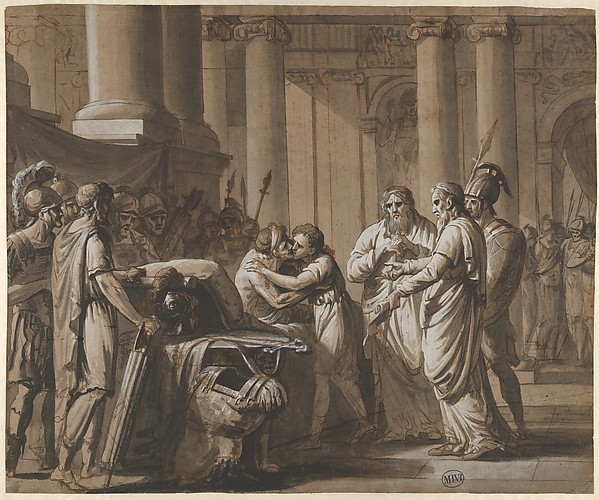
Scene from Roman history: a youth receiving armour from a dying man
Mathieu-Ignace van Bree · late 18th–mid 19th century
A pen and wash drawing by Mathieu-Ignace van Bree, possibly showing Scipio and his son. The Metropolitan Museum of Art holds it, and its subject is uncertain.
Possibly shows Scipio and his son in a scene from Roman history, a later artistic reimagining rather than a record of Scipio's life.
About this source
What it is
This pen and wash drawing was made by Mathieu-Ignace van Bree, dated to the late eighteenth or mid nineteenth century. The Metropolitan Museum of Art holds it. It is drawn in brown tones in pen, brush, black and gray wash, with white gouache and black chalk. The scene is set in a colonnaded hall. A young man embraces an older man lying on a bier, with armor beside them. Two bearded men in togas stand at the right, and soldiers with helmets and spears watch from the left and background. The museum's title reads Scene from Roman History, depicting a Youth receiving Armor from a Dying Man, with Scipio Africanus and His Son as a possible identification.
Why it matters
Artists of the late eighteenth and nineteenth centuries often drew scenes from Roman history to show virtue, duty and sacrifice. Van Bree's drawing reflects this interest in classical subjects. The identification with Scipio and his son is only a possibility, so the drawing shows how later artists reimagined Roman stories rather than recording them.
Look closer
- Who do you think the figures are, and what clues in the scene support or weaken the identification with Scipio and his son?
- Why might an artist choose a dying man and a handover of armor as the subject of a drawing?
- What does the drawing leave out about the soldiers and the wider war?
This painting is part of the curated material that grounds the AI version of Scipio Africanus on Humy.ai — when students ask about related events, the AI can quote it and cite it.
More Scipio Africanus sources
Browse all 94 → Book
Secondary source
The Histories
Polybius · c. 150 BCE
 Book
Primary source
History of Rome
Titus Livius · 27-9 BC
 Book
Secondary source
Parallel Lives
Plutarch · c. 100-120 AD
 Letter
Primary source
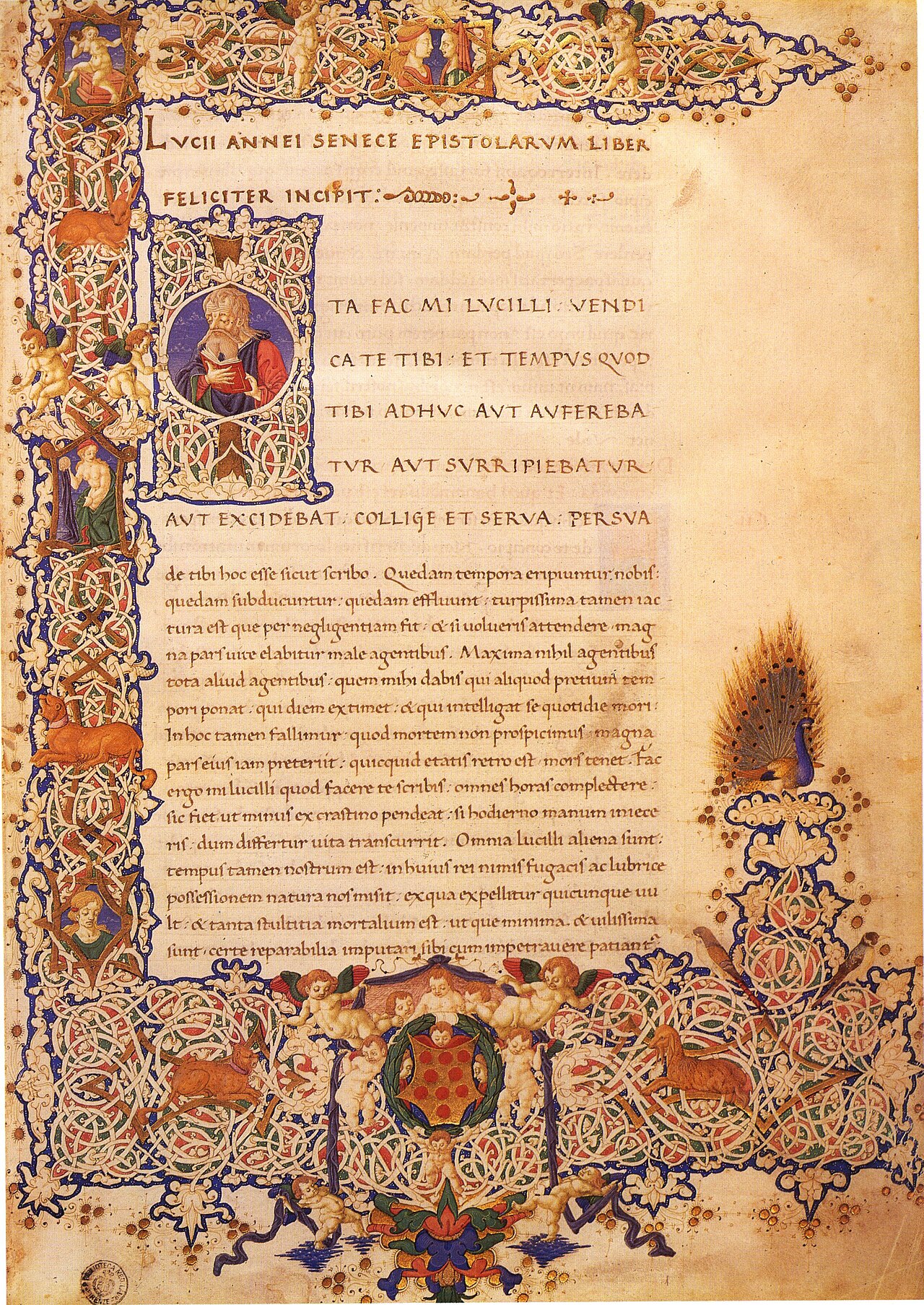
Epistulae Morales ad Lucilium
Seneca · c. 62-65 CE
Free account
Read every Scipio Africanus source
Sign up free →
Ready when you are
Start chatting with Scipio Africanus now.
20 messages free · No credit card · Available in 50+ languages.