


Primary sourcePhotograph1910
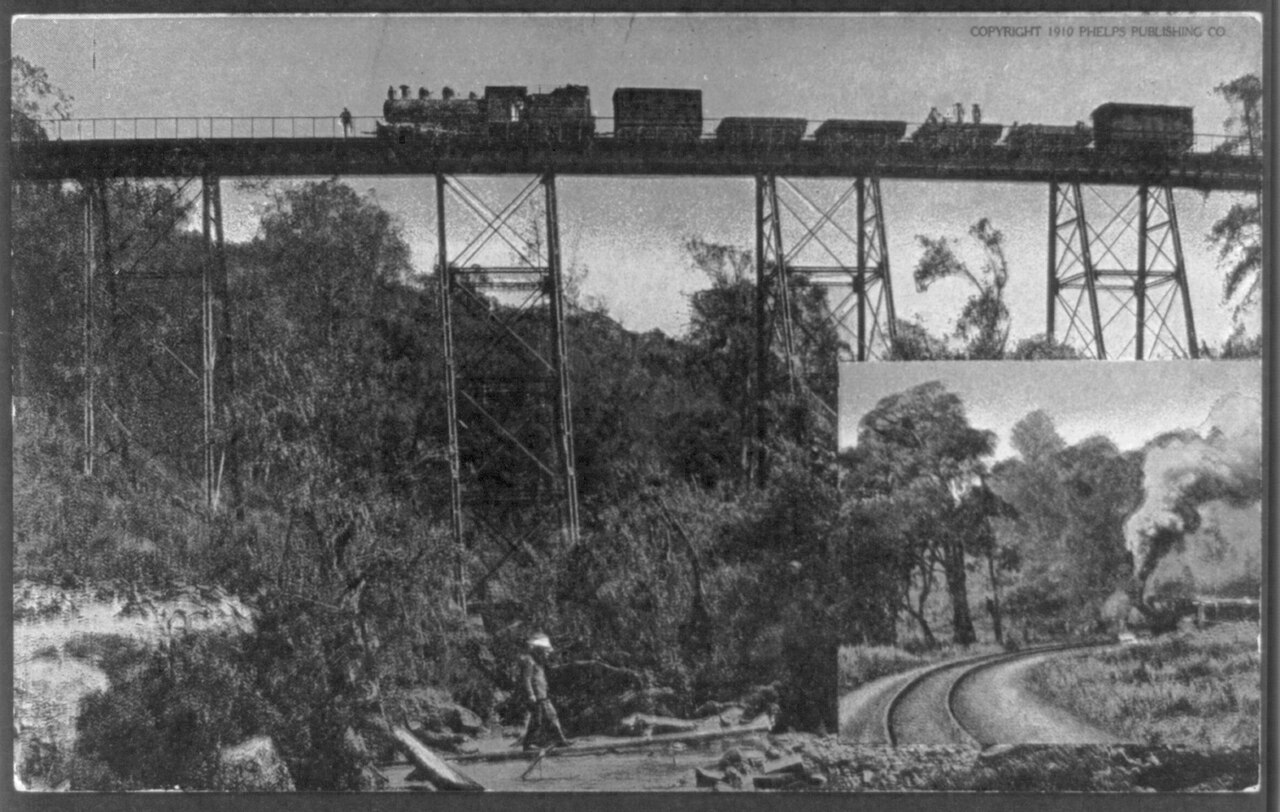
Scenes on Uganda Railway
1910
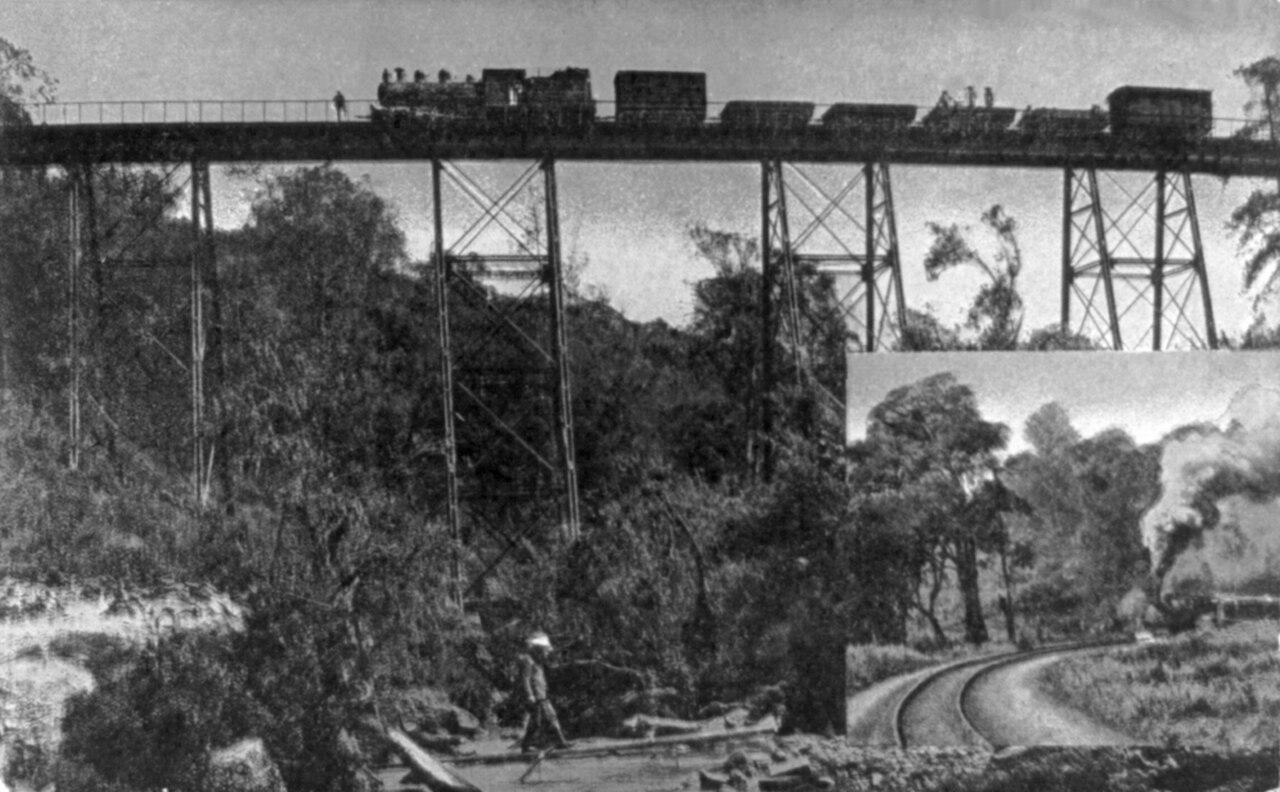
A 1910 halftone print showing scenes of the Uganda Railway, including a train crossing a steel bridge, taken after Koitalel's death.
A later, celebratory image of the railway whose construction the Nandi, led by Koitalel, had resisted before his death.
About this source
What it is
This is a photomechanical halftone print from 1910, produced by Phelps Publishing Co., showing scenes of the Uganda Railway. The main image shows a steam train crossing a tall steel trestle bridge over a forested ravine, with a man in a pith helmet standing below; an inset shows a locomotive on a curved track.
Why it matters
Made five years after Koitalel arap Samoei's death, this print shows the Uganda Railway as an established, celebrated feat of engineering. It reflects how colonial powers presented their infrastructure projects to audiences back home, with little acknowledgment of the resistance the railway's construction had provoked among the Nandi and other peoples.
Look closer
- How does this image present the railway — as a triumph, a curiosity, or something else?
- Who is shown in the image, and what role does he seem to play?
- What history is missing from this celebratory depiction?
This photograph is part of the curated material that grounds the AI version of Koitalel arap Samoei on Humy.ai — when students ask about related events, the AI can quote it and cite it.
More Koitalel arap Samoei sources
Browse all 10 →Secondary source
The Nandi: Their Language and Folk-lore
Alfred Claud Hollis · 1909
Primary source
The East Africa Protectorate
Sir Charles Eliot · 1905
 Book
Primary source
My African Journey
Winston Churchill · 1909
 Photograph
Primary source
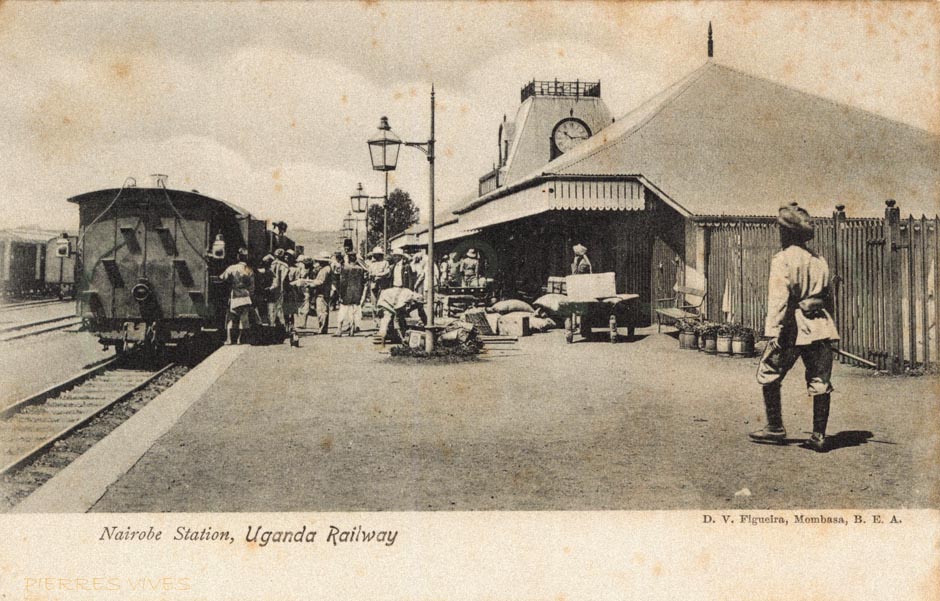
Postcard of Nairobi Station, Uganda Railway
D. V. Figueira · ca. 1900s
Free account
Read every Koitalel arap Samoei source
Sign up free →
Ready when you are
Start chatting with Koitalel arap Samoei now.
20 messages free · No credit card · Available in 50+ languages.