


Secondary sourcePaintingSeventeenth century
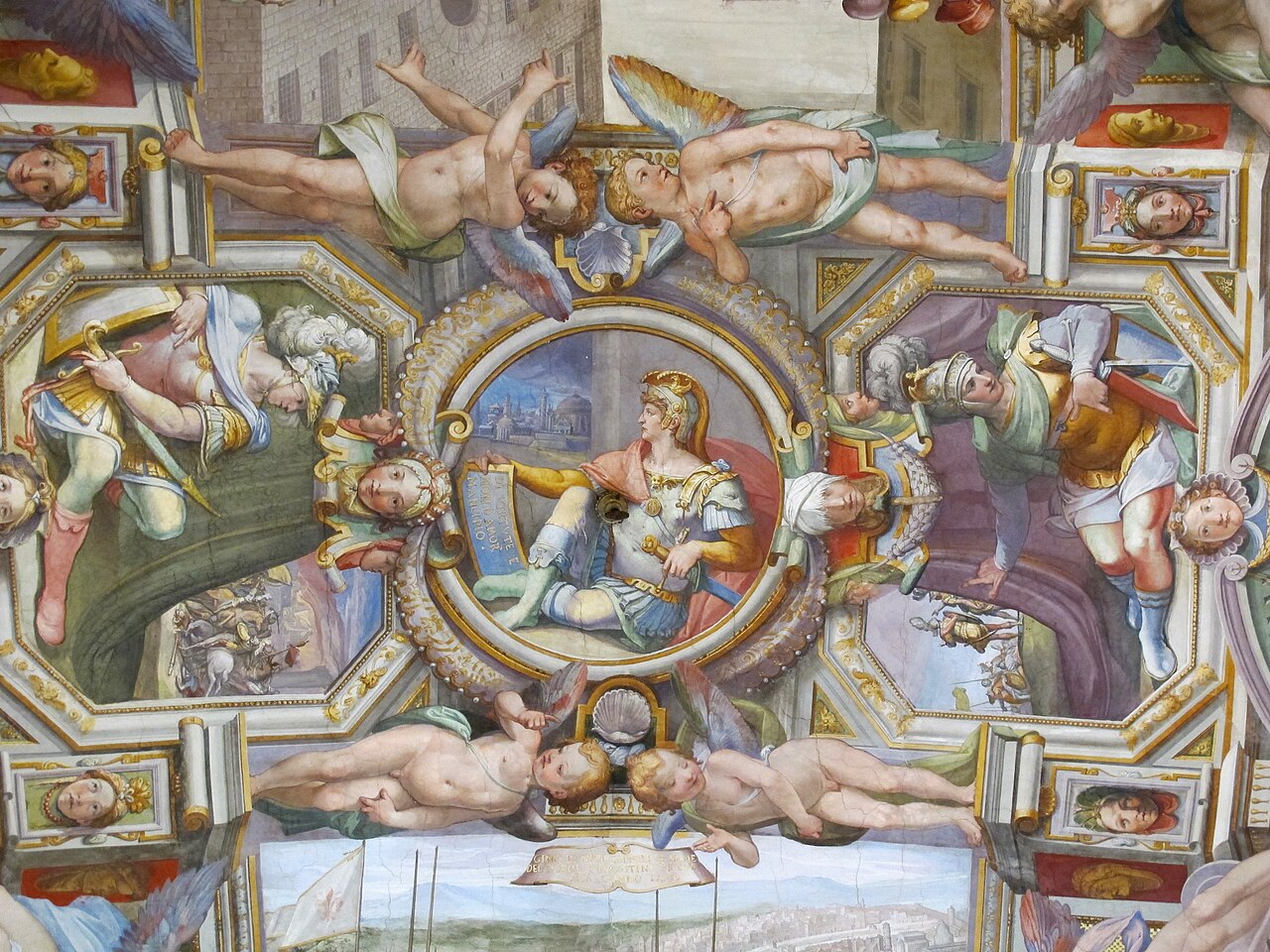
Scipio among heroes
Poccetti · Seventeenth century
A seventeenth-century ceiling fresco by Poccetti in Palazzo Capponi-Vettori, Florence, showing Scipio among Roman heroes. It is a later artistic depiction of him.
Shows Scipio Africanus as a Roman hero chosen for a later palace's decoration, long after his death.
About this source
What it is
This is a ceiling fresco in the Palazzo Capponi-Vettori in Florence, painted by Poccetti in the seventeenth century. Painted putti and grotesque ornament frame a central roundel. The roundel shows a Roman-style armoured figure seated on a rock, holding a scroll, with a city and river landscape behind him, inside an ornate gilded frame.
Why it matters
The fresco was painted about eighteen centuries after Scipio lived. It shows how later Florentine artists and patrons used the figure of the Roman general to present a model of heroic virtue inside a noble house. It reveals what the seventeenth century admired in the ancient past.
Look closer
- Why might the painter place a Roman hero among decorative putti and gold ornament?
- What does the scroll in the figure's hand suggest about his reputation?
- What does the fresco tell us about the owners of the palace, and what does it leave out about Scipio's actual life?
This painting is part of the curated material that grounds the AI version of Scipio Africanus on Humy.ai — when students ask about related events, the AI can quote it and cite it.
More Scipio Africanus sources
Browse all 94 → Book
Secondary source
The Histories
Polybius · c. 150 BCE
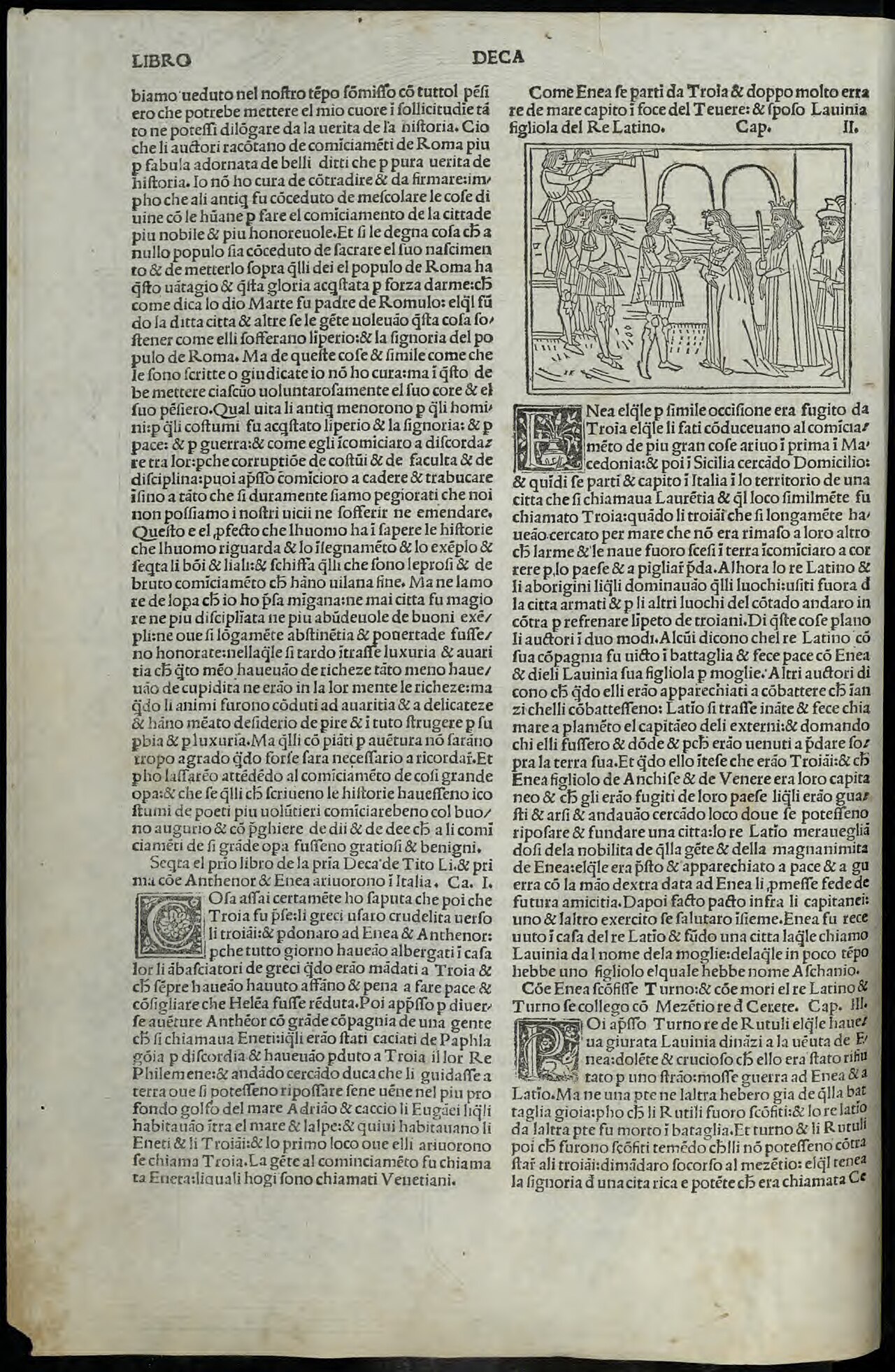 Book
Primary source
History of Rome
Titus Livius · 27-9 BC
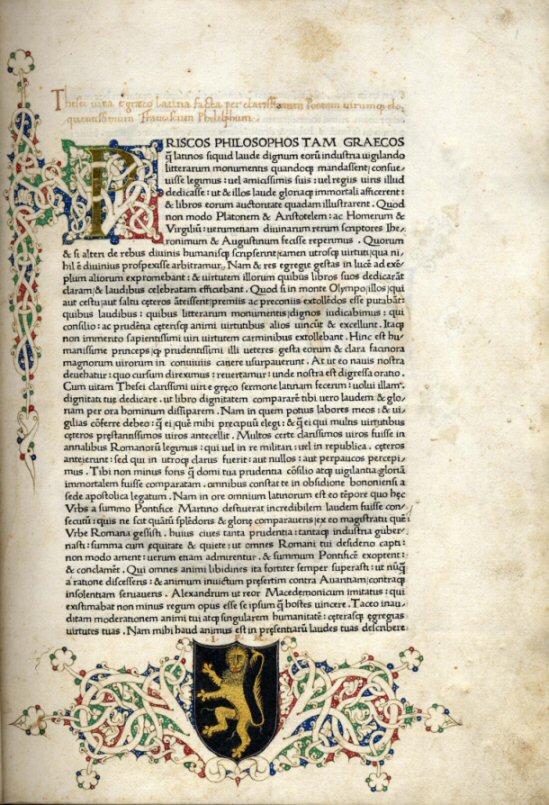 Book
Secondary source
Parallel Lives
Plutarch · c. 100-120 AD
 Letter
Primary source
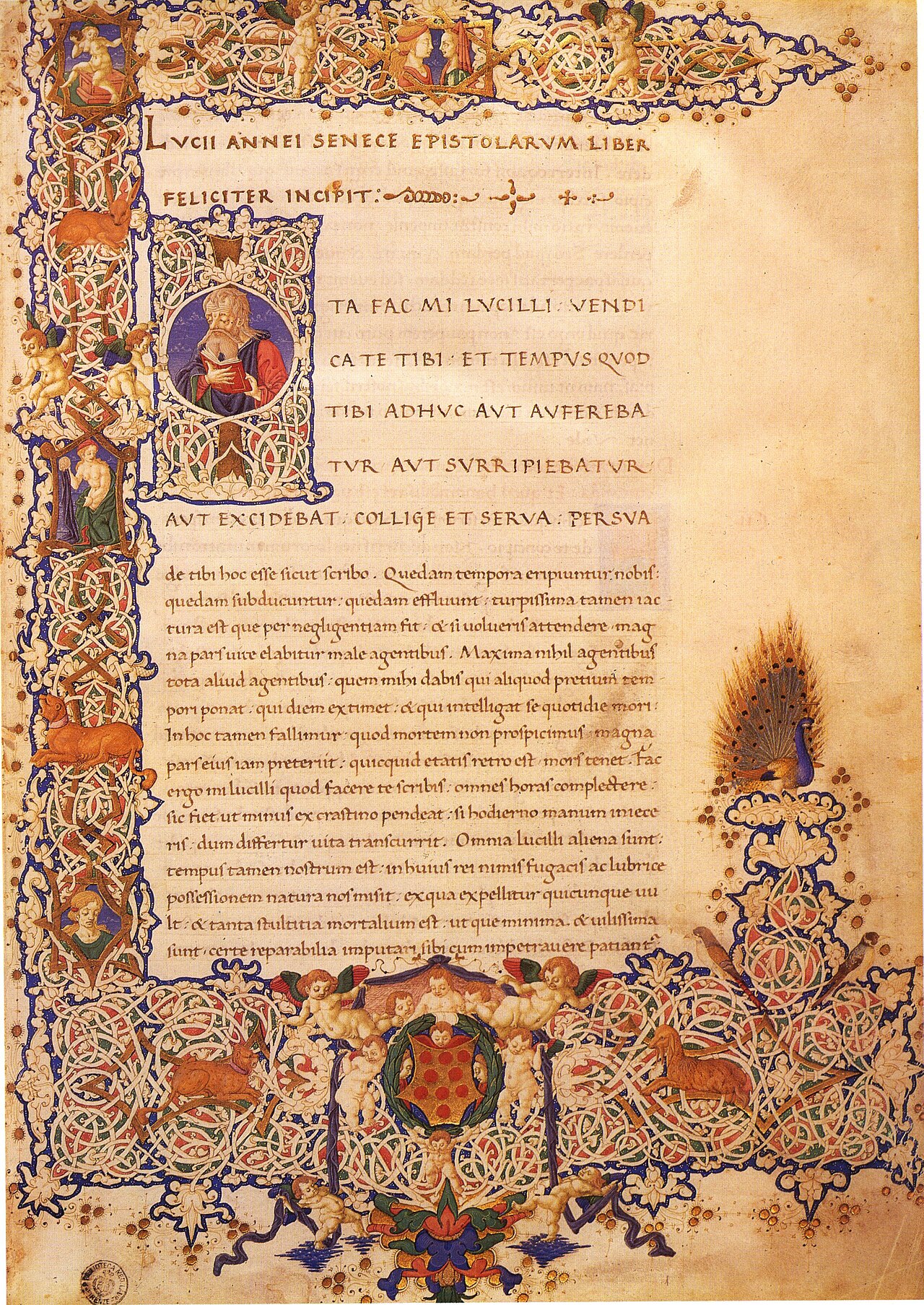
Epistulae Morales ad Lucilium
Seneca · c. 62-65 CE
Free account
Read every Scipio Africanus source
Sign up free →
Ready when you are
Start chatting with Scipio Africanus now.
20 messages free · No credit card · Available in 50+ languages.