


Secondary sourcePainting
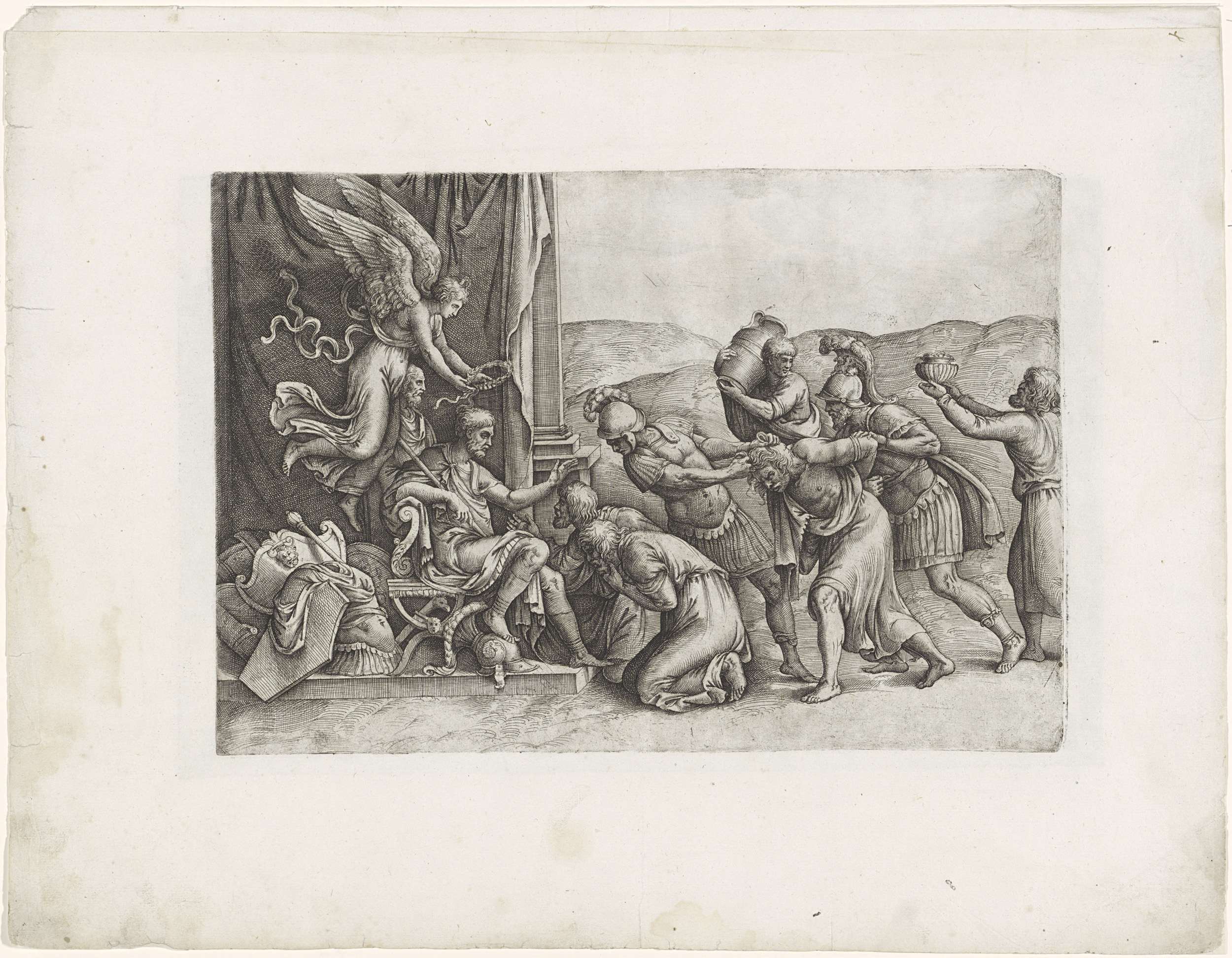
Scipio Pardons Prisoners
An engraved scene showing Scipio Africanus seated on a throne, granting clemency to captives brought before him by his soldiers.
Scipio is the seated figure granting clemency, so the print shows how later makers pictured his reputation for mercy toward captives.
About this source
What it is
This engraving in the Rijksmuseum shows the Roman general Scipio Africanus seated on a throne. A winged figure above him holds a wreath, and soldiers lead two bowed, kneeling prisoners toward him. Hills appear in the background. The museum record says that an angel crowns him with laurel while he grants clemency to the two captives. The print is a later image, not a record made in Scipio's lifetime.
Why it matters
The scene presents Scipio as a merciful victor. The curator's note links it to his reputation for mercy. Later artists also chose scenes in which Scipio acted with restraint toward defeated enemies, as with the 1796 print of Scipio and Hasdrubal at a banquet. Such images show what later European makers wanted their audiences to admire in a Roman commander.
Look closer
- What gestures and positions show who holds power in this scene?
- Why might a printmaker choose mercy as the subject instead of a battle?
- What does the image leave out about the reasons the prisoners were captured?
This painting is part of the curated material that grounds the AI version of Scipio Africanus on Humy.ai — when students ask about related events, the AI can quote it and cite it.
More Scipio Africanus sources
Browse all 94 →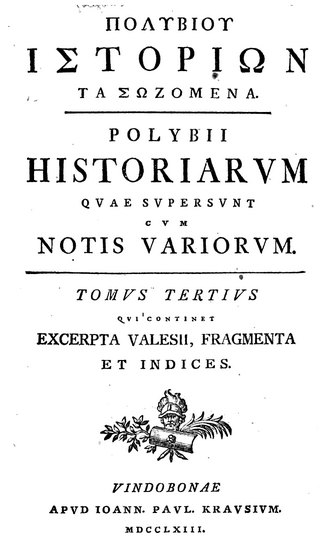 Book
Secondary source
The Histories
Polybius · c. 150 BCE
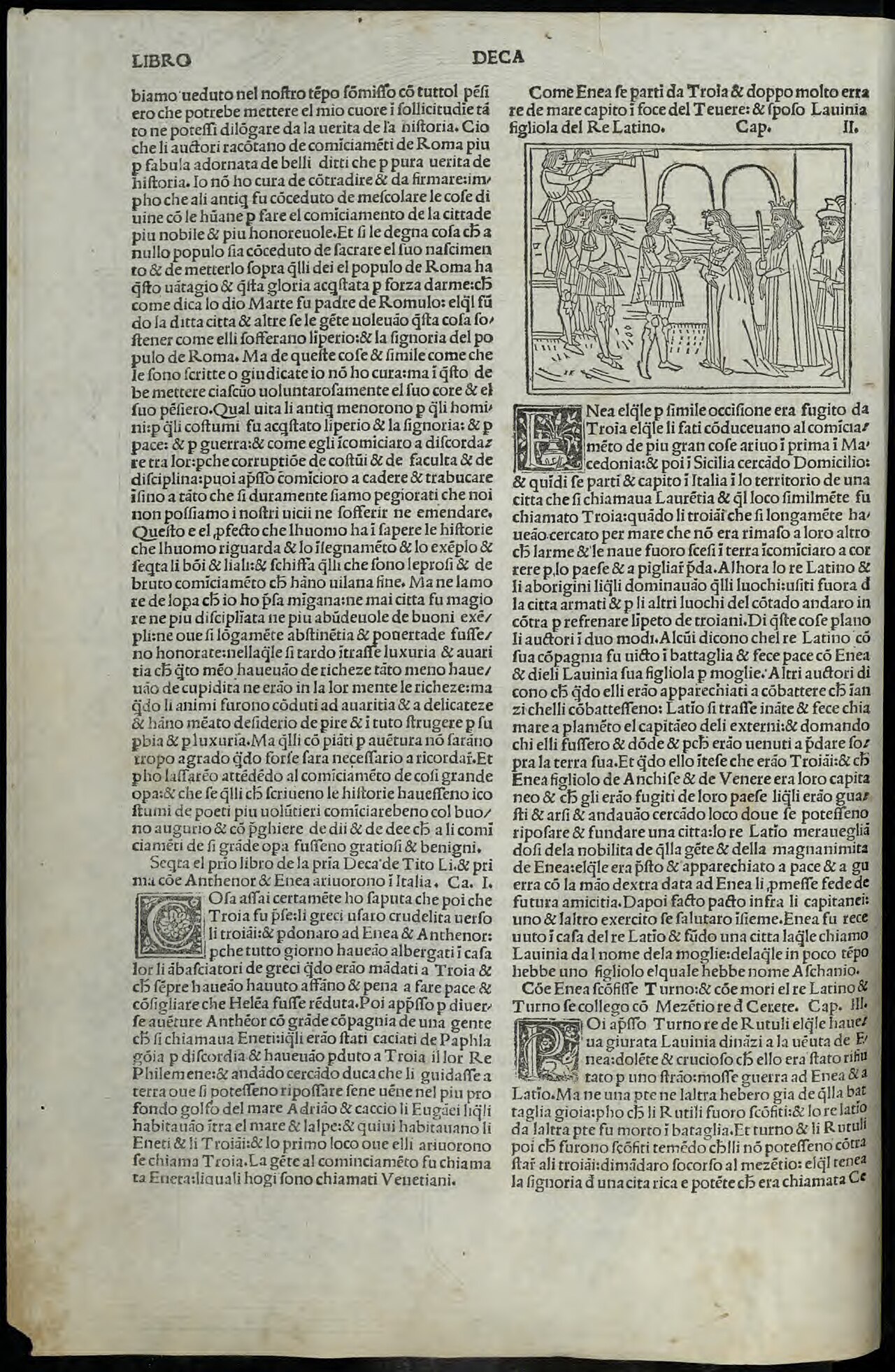 Book
Primary source
History of Rome
Titus Livius · 27-9 BC
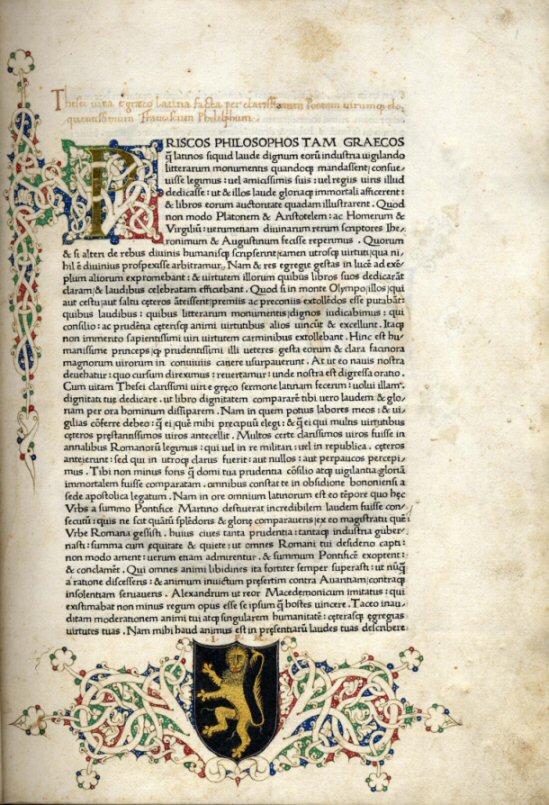 Book
Secondary source
Parallel Lives
Plutarch · c. 100-120 AD
 Letter
Primary source
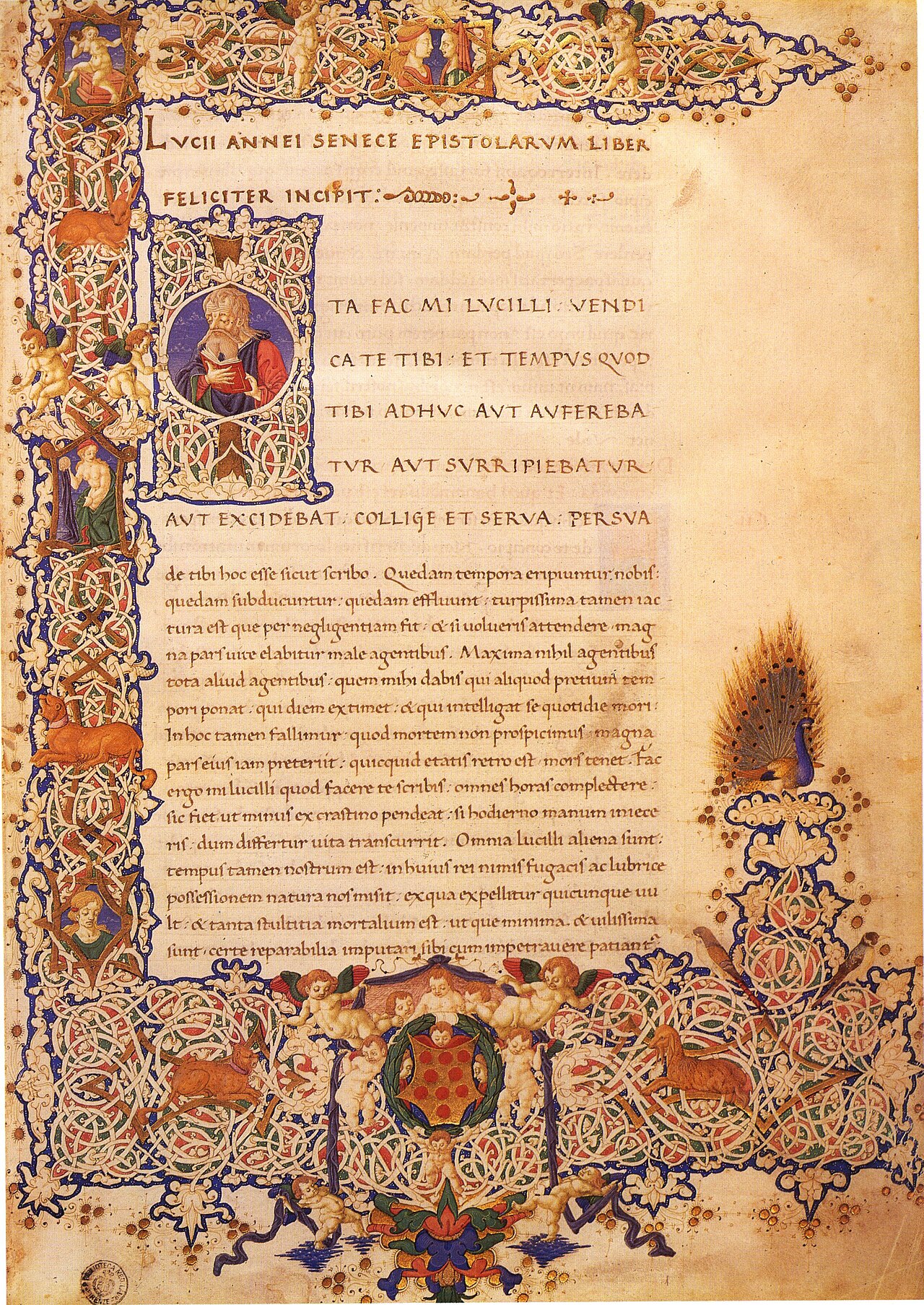
Epistulae Morales ad Lucilium
Seneca · c. 62-65 CE
Free account
Read every Scipio Africanus source
Sign up free →
Ready when you are
Start chatting with Scipio Africanus now.
20 messages free · No credit card · Available in 50+ languages.