


Secondary sourceArtifact12th or early 13th century
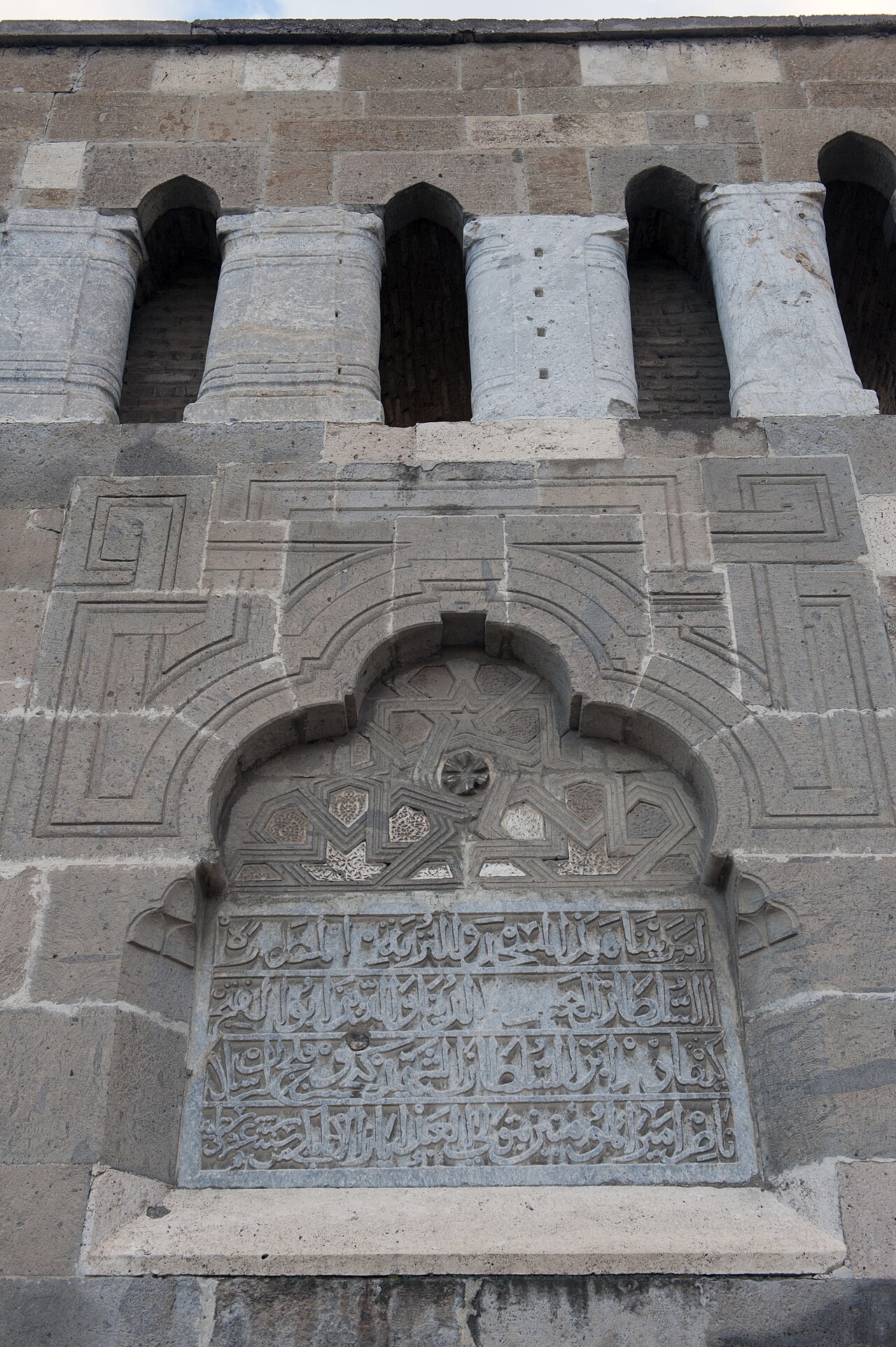
Second Building Inscription on the Alaeddin Mosque, Konya
Dosseman · 12th or early 13th century
Another Seljuk inscription panel on the Alaeddin Mosque's main facade, from the 12th or early 13th century.
Another inscription from the mosque complex associated with the Seljuk sultans, including Kayqubad I's reign.
About this source
What it is
This photograph shows a second carved stone inscription on the northeastern (main) facade of the Alaeddin Mosque in Konya, dating from the Seljuk period in the 12th or early 13th century. It sits beneath a star-patterned arch and above a row of reused ancient columns.
Why it matters
Multiple inscriptions on one facade suggest the building was expanded or repaired over different periods, possibly including the reign of Kayqubad I. Together with the mosque's architecture, these inscriptions help historians piece together who built, funded, and used the mosque across Seljuk rule.
Look closer
- Why might a building have more than one inscription added over time?
- What does the mix of old and new architectural styles suggest about this period?
- What is missing from a photograph that a historian who reads the inscription's text could add?
This artifact is part of the curated material that grounds the AI version of Kayqubad I on Humy.ai — when students ask about related events, the AI can quote it and cite it.
More Kayqubad I sources
Browse all 87 →
Ready when you are
Start chatting with Kayqubad I now.
20 messages free · No credit card · Available in 50+ languages.