


Primary sourceArtifactbefore 1917
Seed Storage Jar (Paiute)
before 1917
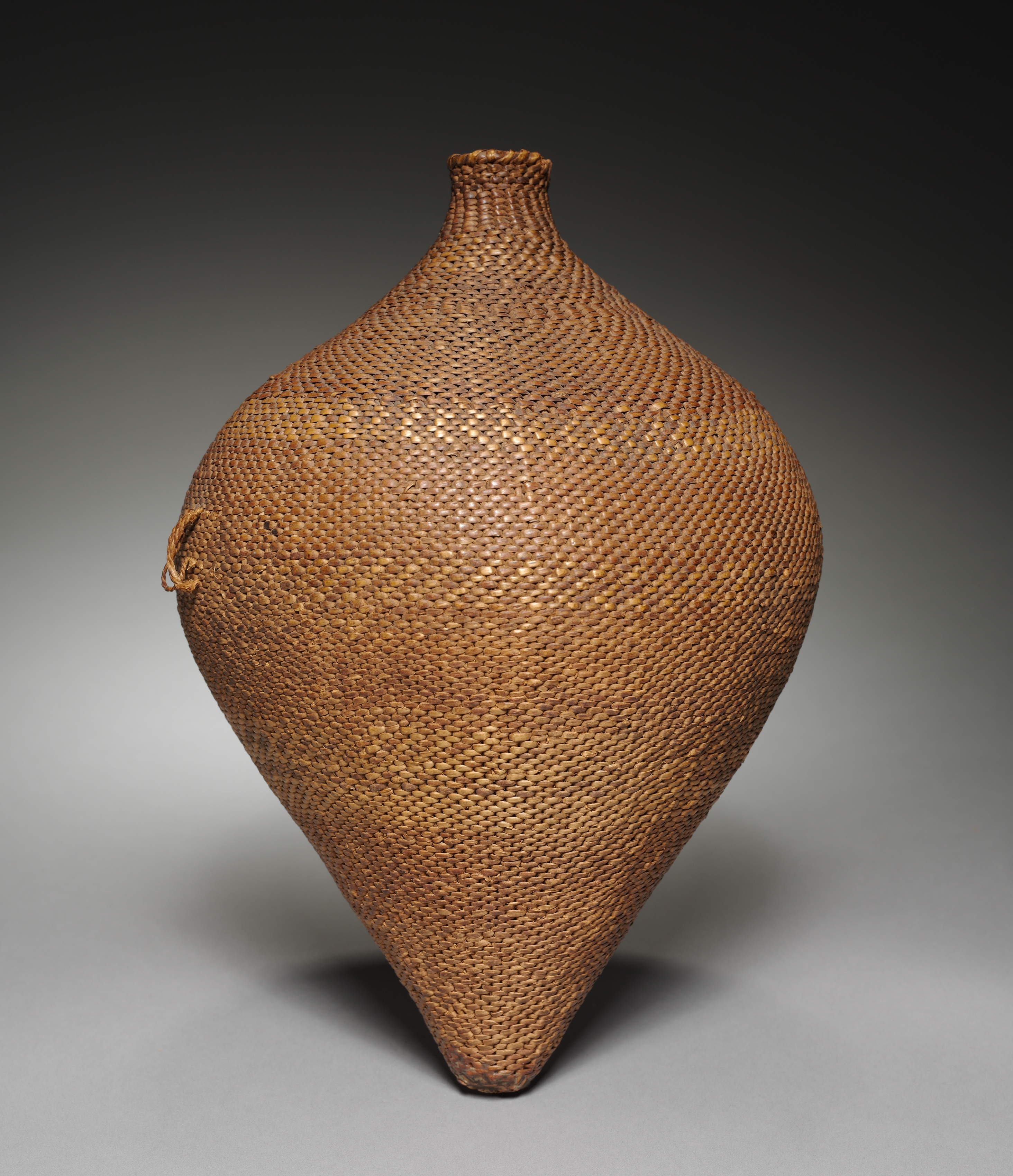
A twined willow seed storage jar made by a Paiute artisan before 1917, reflecting the material culture of Wovoka's people.
A storage basket made by Paiute people, illustrating the culture Wovoka's teachings grew from.
About this source
What it is
This is a tall, teardrop-shaped woven storage jar made of willow fibers by a Paiute maker from Kern County, dated before 1917. It is held today at the Cleveland Museum of Art.
Why it matters
Wovoka was a Paiute man, and his religious teachings emerged from the Great Basin Paiute way of life. Storage jars like this one, used for keeping seeds, show the practical skills and resourcefulness of Paiute communities during the era when Wovoka's Ghost Dance movement spread.
Look closer
- What does the shape and material of this jar suggest about how it was used?
- Why might objects like this survive while much of Paiute oral tradition does not?
- What does this jar leave unanswered about the spiritual side of Paiute life?
This artifact is part of the curated material that grounds the AI version of Wovoka on Humy.ai — when students ask about related events, the AI can quote it and cite it.
More Wovoka sources
Browse all 16 →Secondary source
My Friend the Indian
James McLaughlin · 1910
 Photograph
Primary source
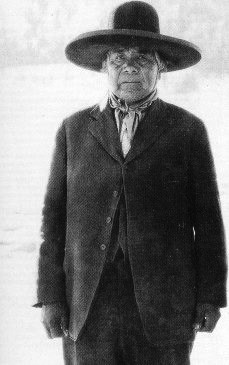
Portrait of Wovoka
Primary source
The Ghost-Dance Religion and the Sioux Outbreak of 1890
James Mooney · 1896
 Document
Primary source
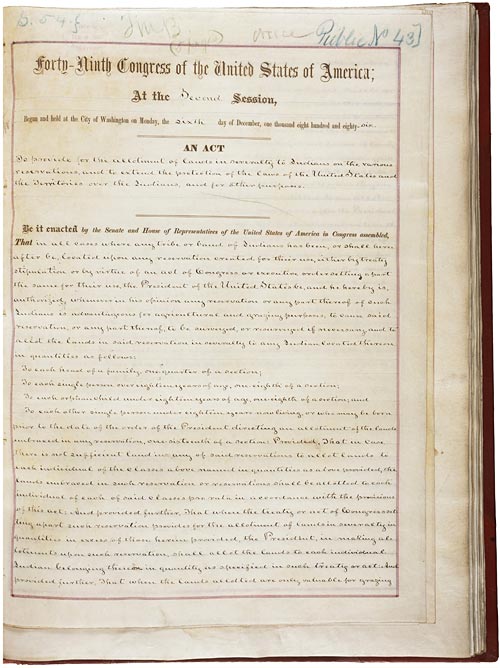
Dawes Act
Henry Dawes · 8 February 1887
Free account
Read every Wovoka source
Sign up free →
Ready when you are
Start chatting with Wovoka now.
20 messages free · No credit card · Available in 50+ languages.