


Secondary sourceArtifact2009
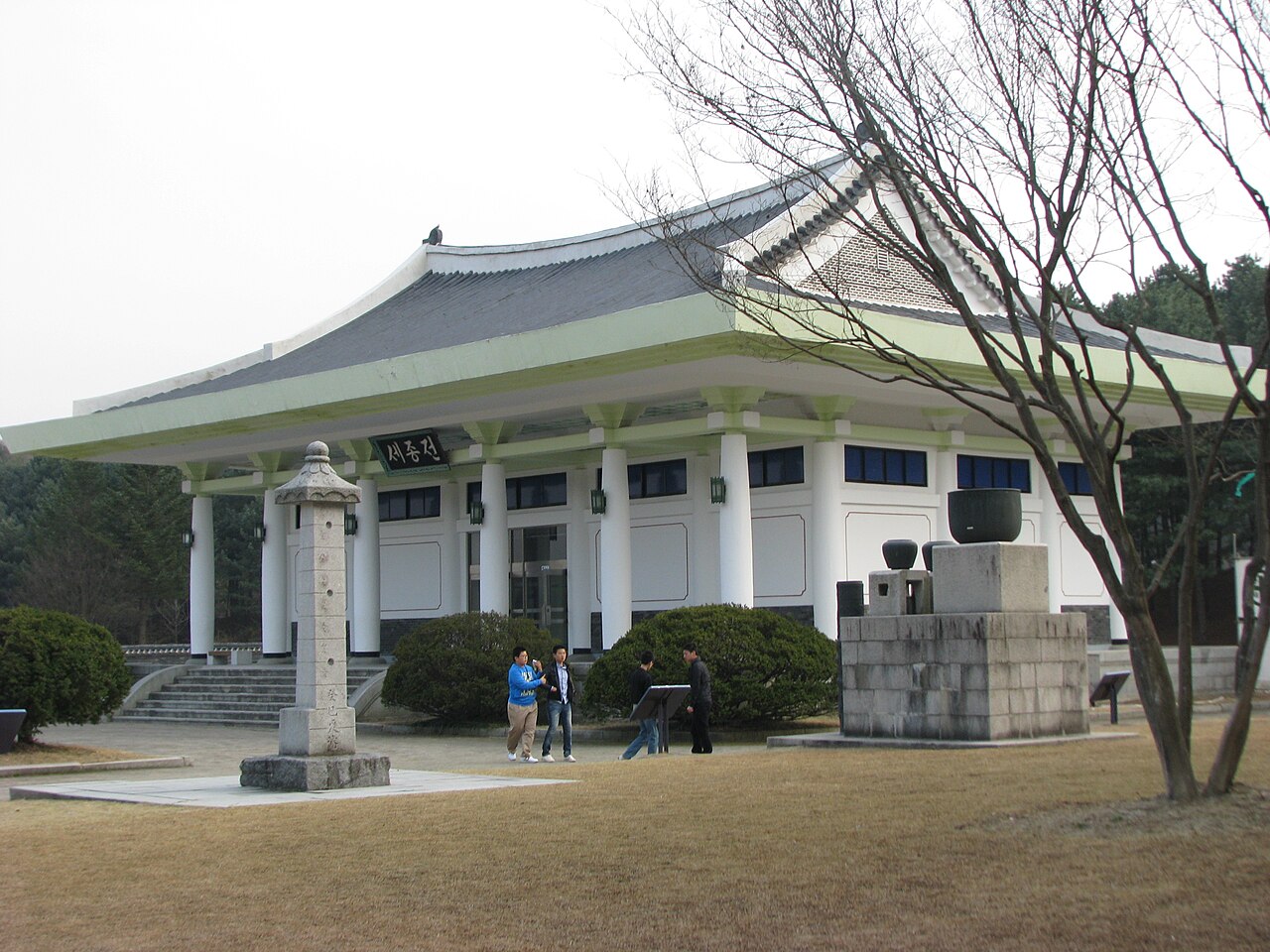
Sejongjeon Shrine Hall at Yeongneung
Kwj2772 · 2009
A memorial shrine hall built at Yeongneung, the tomb complex of King Sejong the Great.
This shrine hall at Sejong's tomb complex reflects the continued commemoration of his reign and legacy.
About this source
What it is
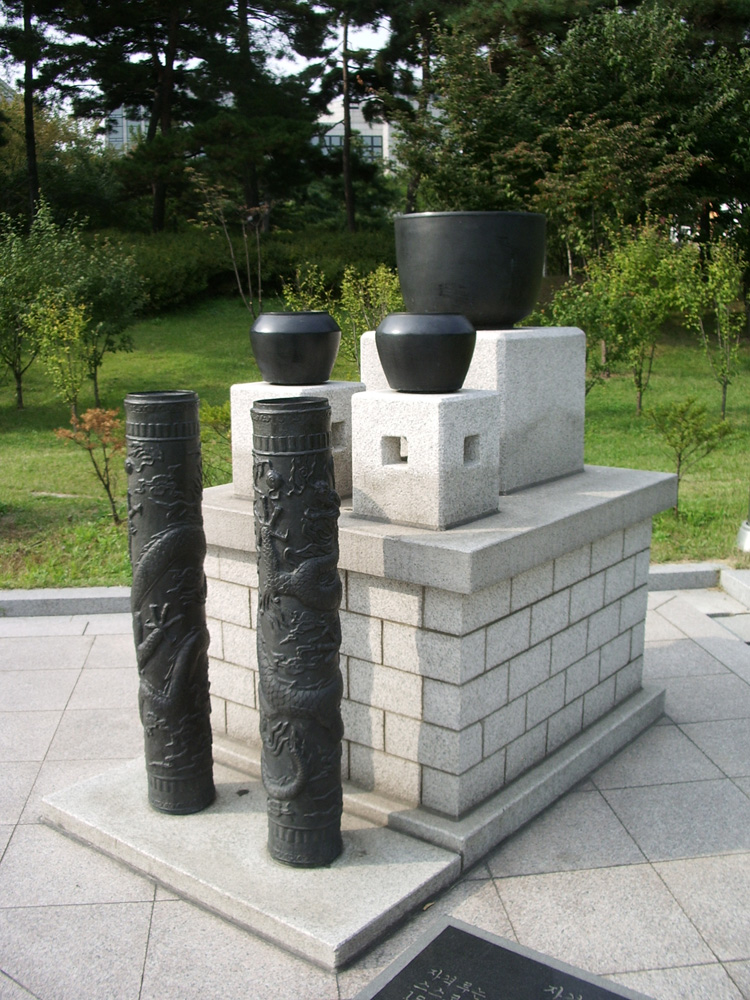
This 2009 photograph shows the Sejongjeon, a white traditional-style shrine hall with a grey tiled roof and green eaves, located at Yeongneung, the tomb complex of King Sejong the Great. The hall bears a sign with its name, and the grounds include a stone pillar and a bronze bell-like object on a pedestal.
Why it matters
Sejong ruled Joseon Korea in the 1400s and is remembered as one of its most significant kings, especially for creating Hangul. Shrine halls like this one, built at his tomb, show how later generations have honored his memory and maintained his burial site as a place of commemoration and visitation.
Look closer
- Why might a shrine hall be built specifically at a king's tomb?
- What does the presence of visitors, such as the students seen here, suggest about how this site is used today?
- What does this building tell us about Sejong's memory, as opposed to his actual life and reign?
This artifact is part of the curated material that grounds the AI version of Sejong the Great on Humy.ai — when students ask about related events, the AI can quote it and cite it.
More Sejong the Great sources
Browse all 74 →
Ready when you are
Start chatting with Sejong the Great now.
20 messages free · No credit card · Available in 50+ languages.