


Primary sourcePainting1940–1943
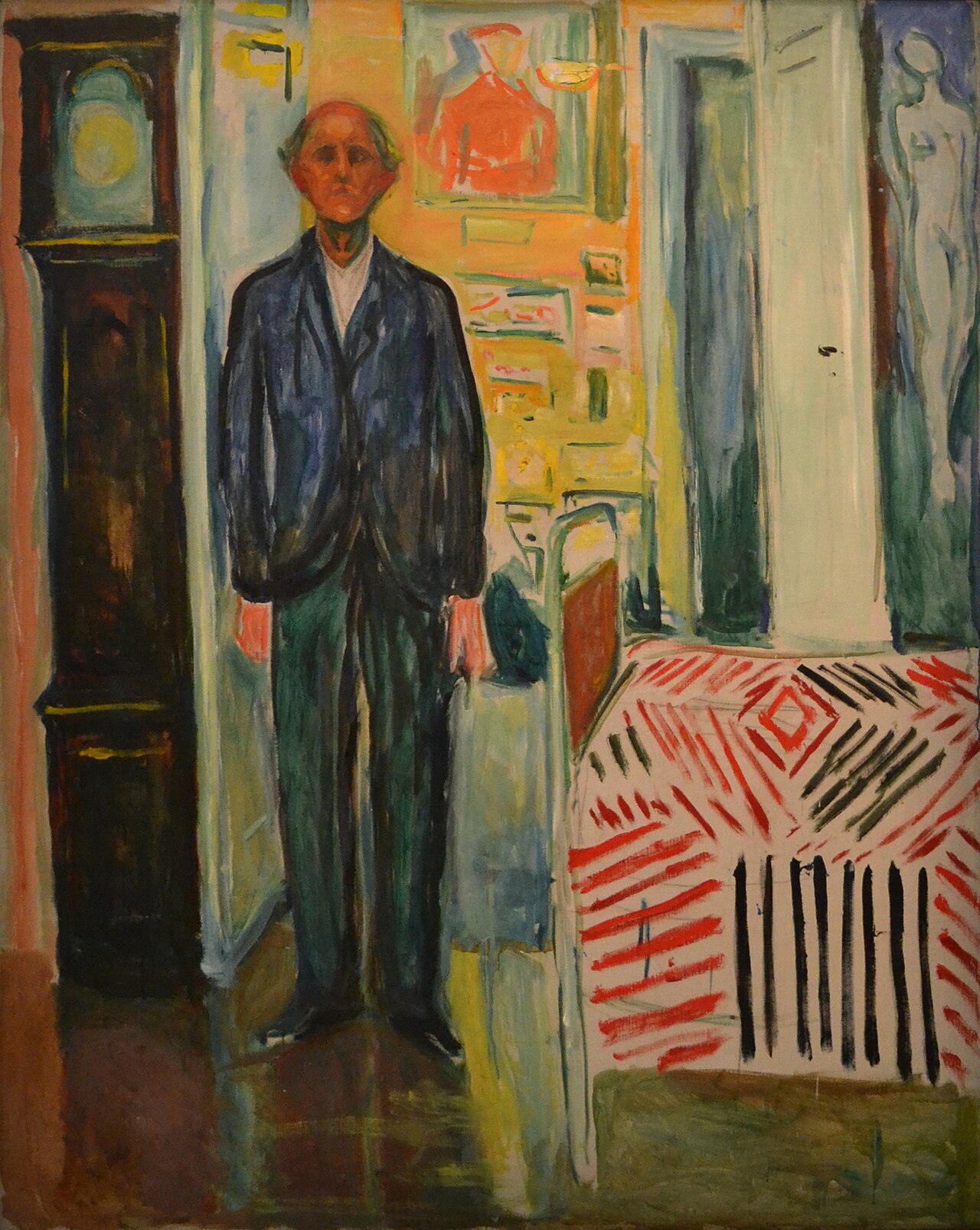
Self-Portrait. Between the Clock and the Bed
Edvard Munch · 1940–1943
A late self-portrait by Munch showing himself as an aging man standing between a clock and a bed, surrounded by his own past paintings.
Munch's own late self-portrait, painted near the end of his life as he reflected on mortality.
About this source
What it is
Self-Portrait. Between the Clock and the Bed is an oil painting by Edvard Munch, made from 1940 to 1943 and now held by the Munch Museum. It is one of his last major works, painted when he was an old man living at his home, Ekely.
Why it matters
Munch shows himself as an unhappy, flattened figure standing stiffly between a faceless grandfather clock and a bed, symbols of passing time and death. Behind him hangs a bright room full of his own earlier paintings, as if his whole life's work surrounds him while he faces his own end. It is a striking example of an artist using self-portraiture late in life to reflect on mortality.
Look closer
- What do the clock and the bed symbolise, and why might Munch place himself between them?
- Why might Munch have surrounded his own figure with his earlier paintings?
- How does this late self-portrait compare to how artists usually depict themselves?
This painting is part of the curated material that grounds the AI version of Edvard Munch on Humy.ai — when students ask about related events, the AI can quote it and cite it.
More Edvard Munch sources
Browse all 89 →
Ready when you are
Start chatting with Edvard Munch now.
20 messages free · No credit card · Available in 50+ languages.