


Primary sourcePaintingc. 1475
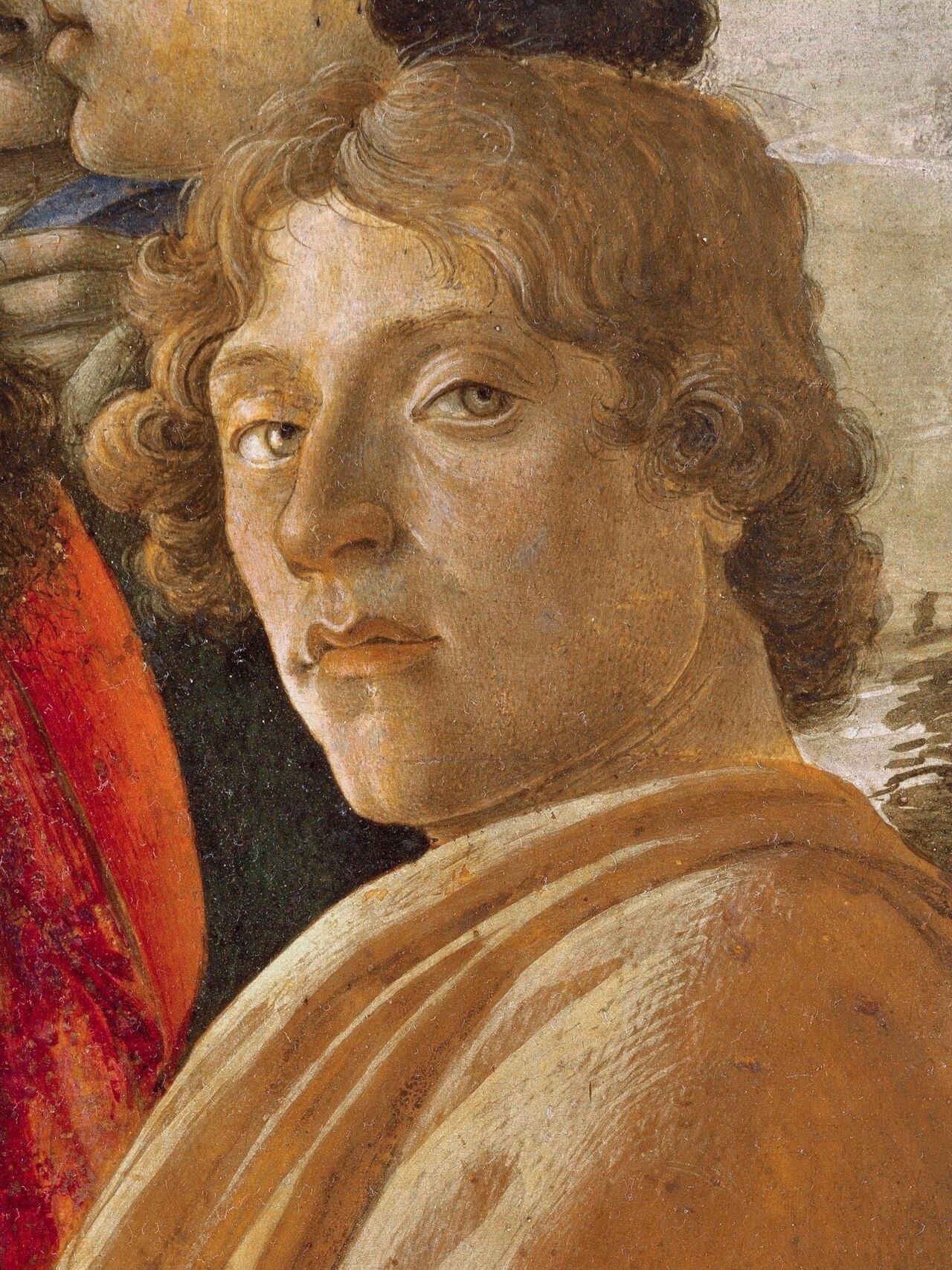
Self-Portrait of Sandro Botticelli
Sandro Botticelli · c. 1475
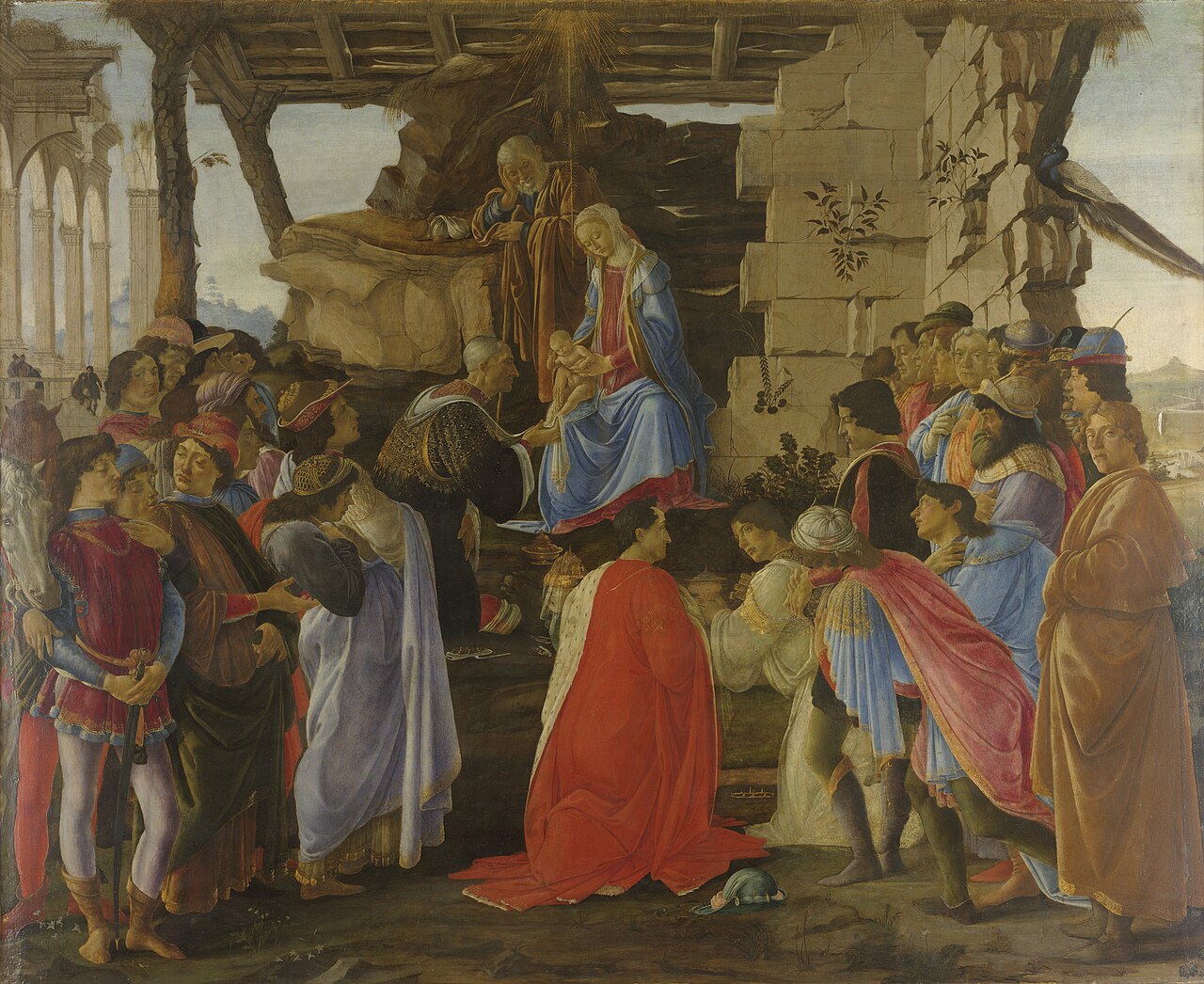
A detail from Botticelli's Adoration of the Magi showing a young man turning toward the viewer, generally accepted as the artist's own self-portrait.
This self-portrait detail is the main accepted image of Botticelli's own appearance, painted by his own hand.
About this source
What it is
This is a detail from Botticelli's painting the Adoration of the Magi, showing a young man with curly reddish-brown hair turning his head toward the viewer. It is the only likeness of Sandro Botticelli that is generally accepted as made by his own hand.
Why it matters
Self-portraits inserted into religious scenes were a common way for Renaissance painters to sign their work and claim a place among the important people depicted. This image is the main visual source for how Botticelli looked, and it shapes every modern idea of his appearance.
Look closer
- Why might an artist paint himself into a religious scene rather than elsewhere?
- What does his direct gaze toward the viewer suggest about his purpose in including himself?
- What can and can't we learn about a person from a single painted detail like this?
This painting is part of the curated material that grounds the AI version of Sandro Botticelli on Humy.ai — when students ask about related events, the AI can quote it and cite it.
More Sandro Botticelli sources
Browse all 95 →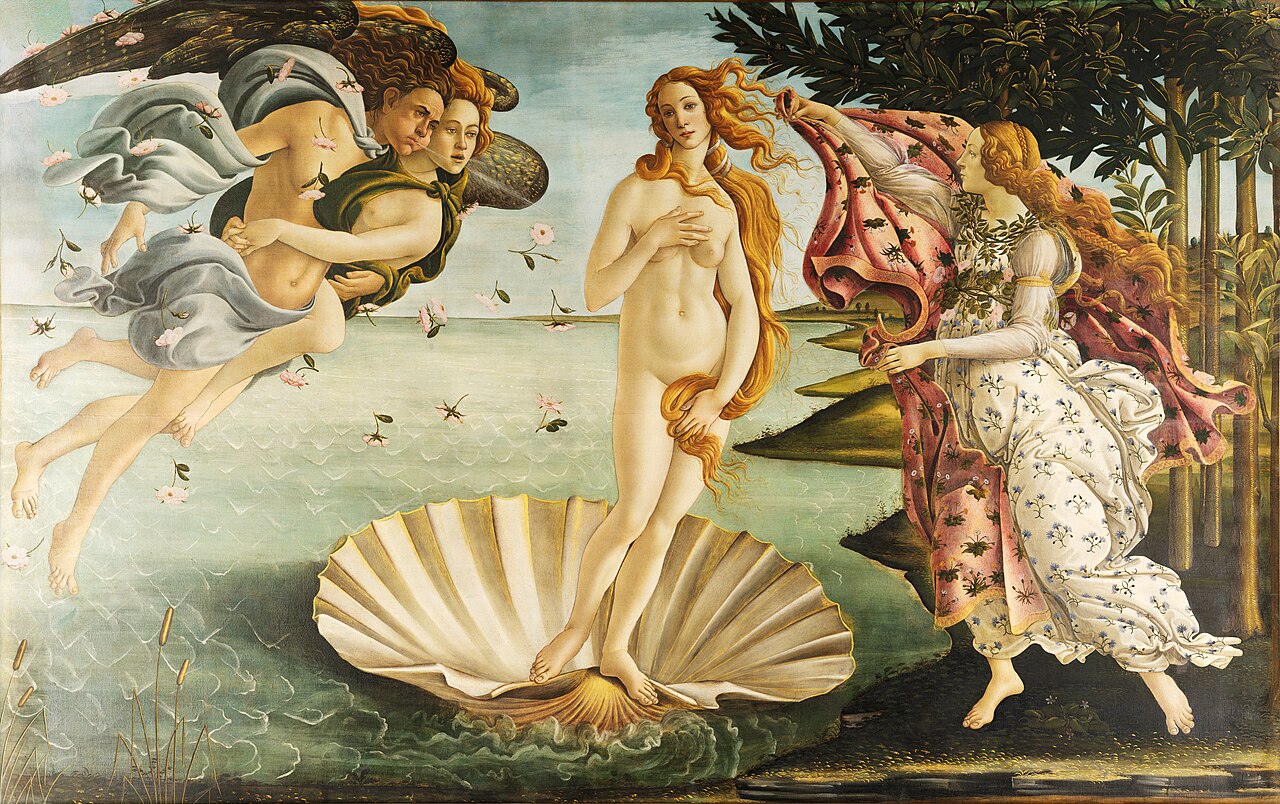 Painting
Primary source
The Birth of Venus
Sandro Botticelli · 1485
 Painting
Primary source
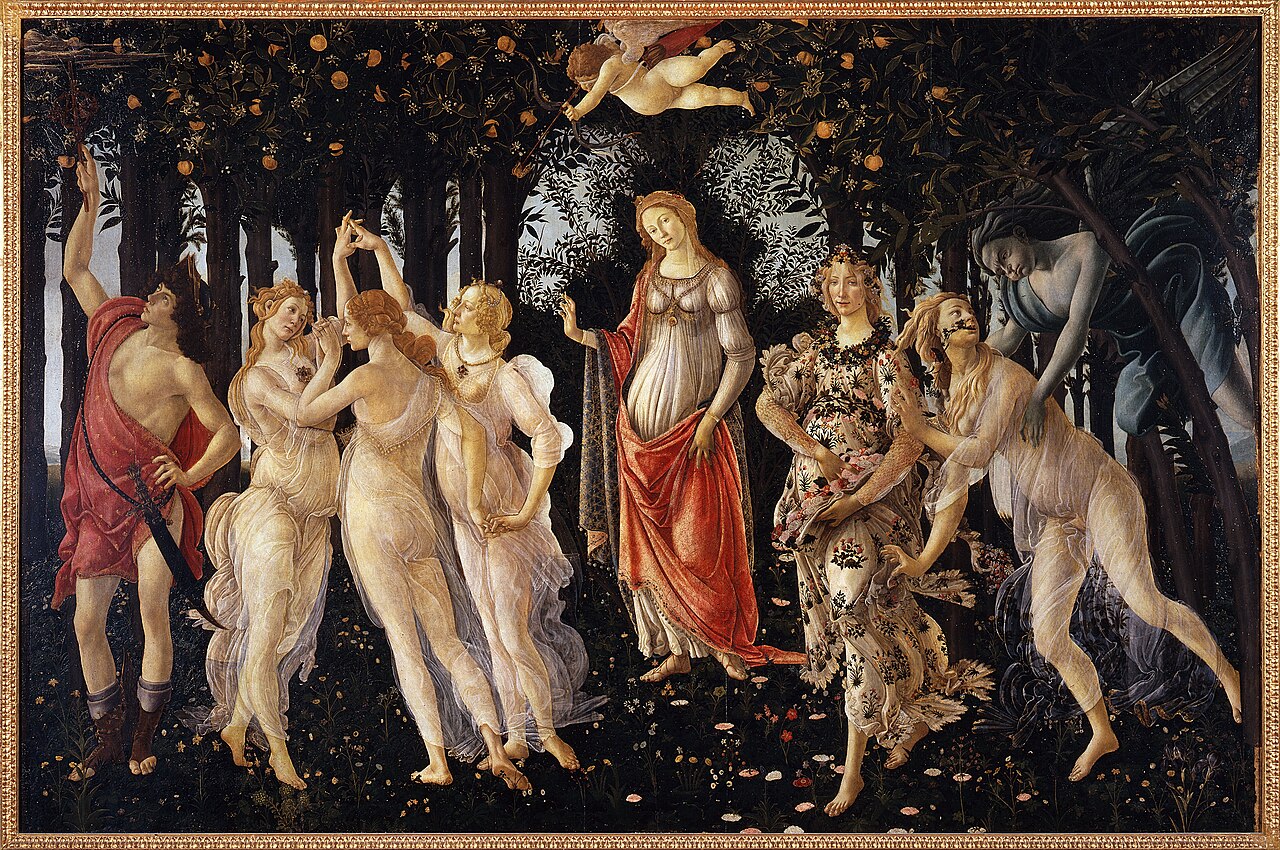
Primavera
Sandro Botticelli · 1480
 Painting
Primary source
Adoration of the Magi
Sandro Botticelli · c. 1475
 Painting
Primary source
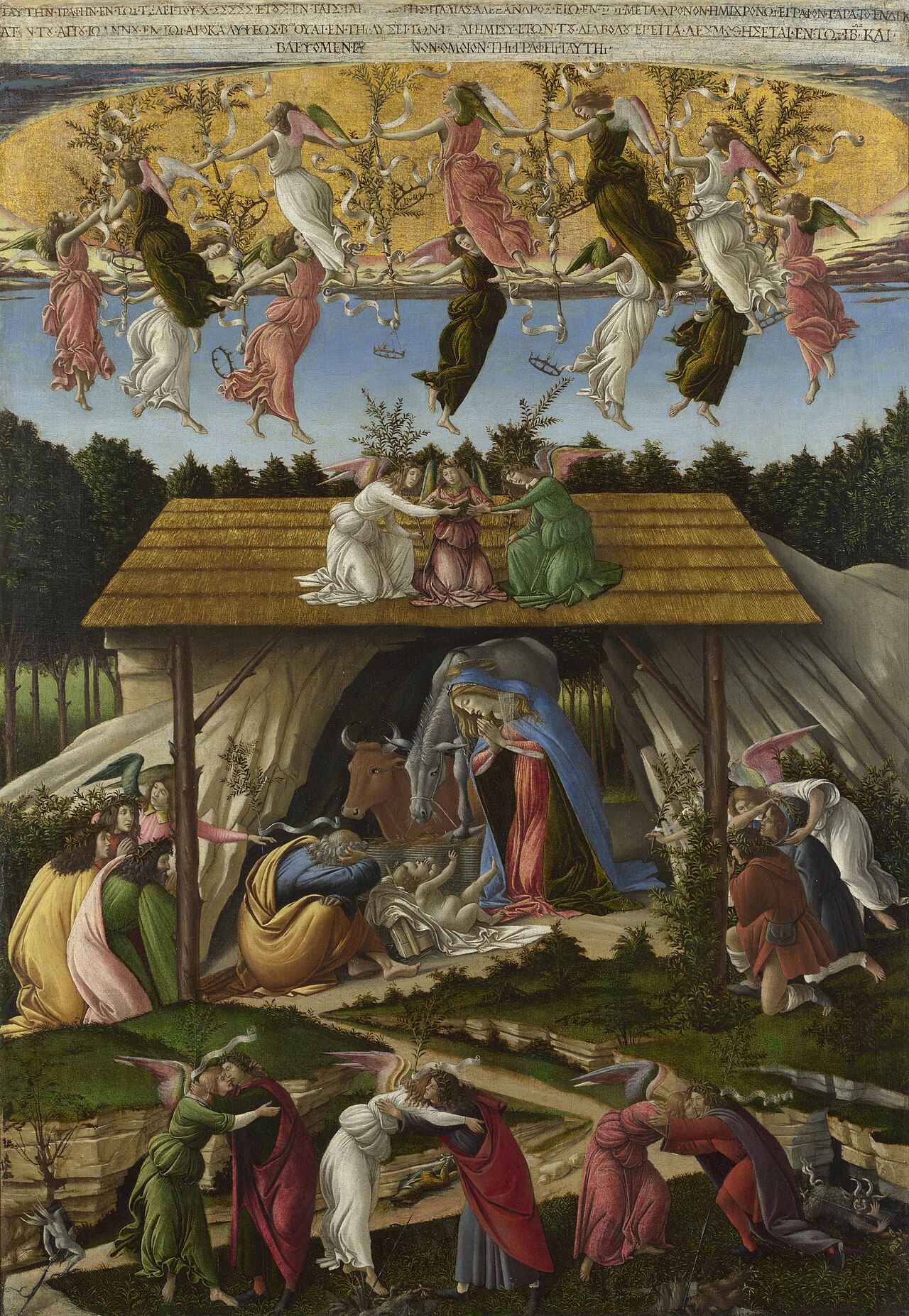
The Mystical Nativity
Sandro Botticelli · 1500-1501
Free account
Read every Sandro Botticelli source
Sign up free →
Ready when you are
Start chatting with Sandro Botticelli now.
20 messages free · No credit card · Available in 50+ languages.