


Primary sourcePainting1919
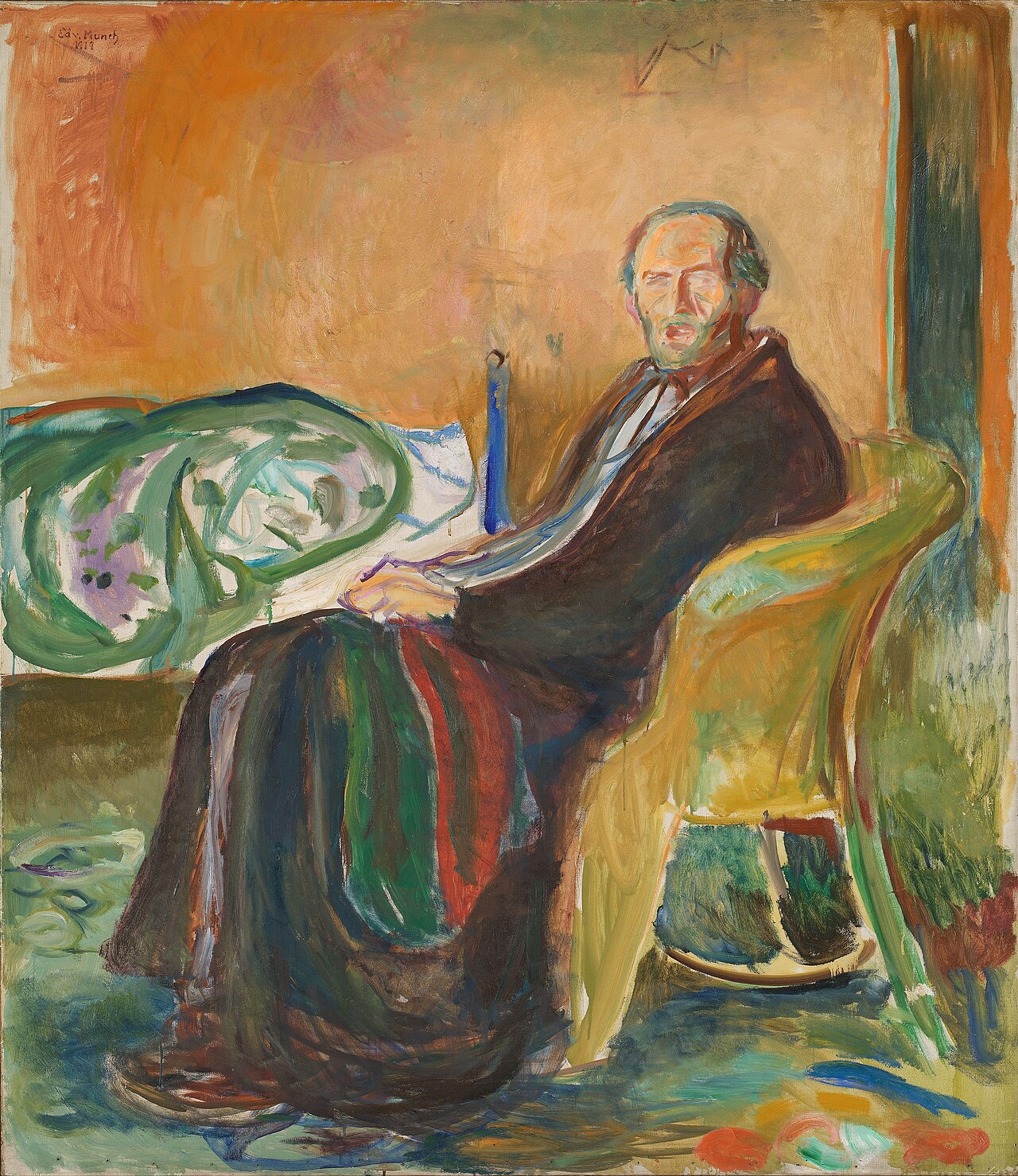
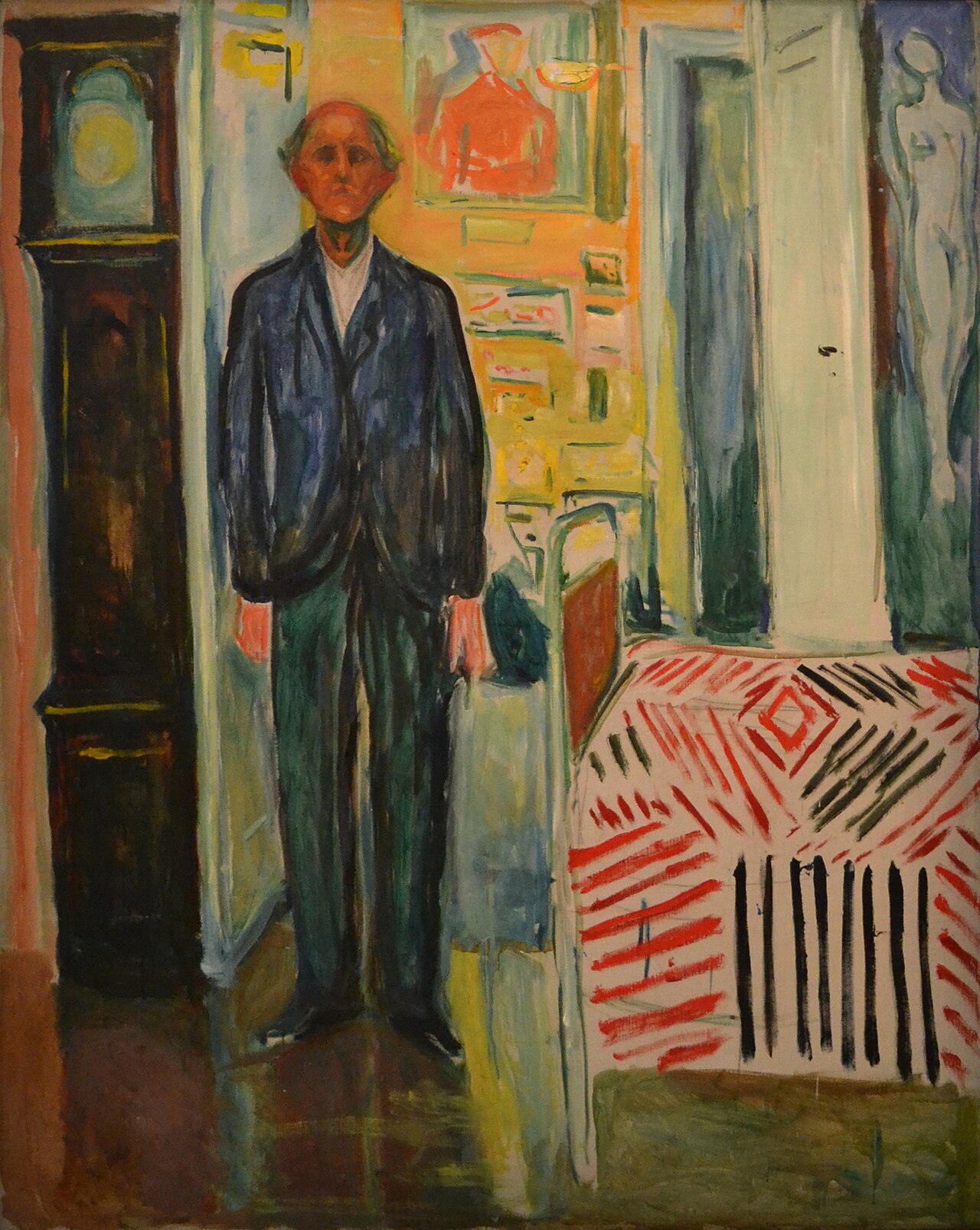
Self-Portrait with the Spanish Flu
Edvard Munch · 1919
A self-portrait Munch painted of himself while recovering from the Spanish flu pandemic in 1919.
Munch painted himself during his own bout of the 1918–19 Spanish flu, a direct record of his illness.
About this source
What it is
This 1919 painting by Edvard Munch shows him seated in a wicker armchair, pale and drawn, wearing a dark jacket and striped trousers, with a bed visible behind him. It is held by the National Museum of Art, Architecture and Design in Norway.
Why it matters
Munch painted this self-portrait during his own illness in the 1918–19 influenza pandemic, one of the deadliest outbreaks in history. By turning his sickness into a painting, he recorded his own physical state directly, continuing his lifelong habit of using his art to examine illness, fear and the body.
Look closer
- What details of the painting show that Munch was unwell when he made it?
- Why might an artist choose to paint himself while sick rather than wait until he recovered?
- How does this self-portrait compare to how healthy people are usually shown in portraits?
This painting is part of the curated material that grounds the AI version of Edvard Munch on Humy.ai — when students ask about related events, the AI can quote it and cite it.
More Edvard Munch sources
Browse all 89 →
Ready when you are
Start chatting with Edvard Munch now.
20 messages free · No credit card · Available in 50+ languages.