


Primary sourceBook1447
Seokbo Sangjeol
1447
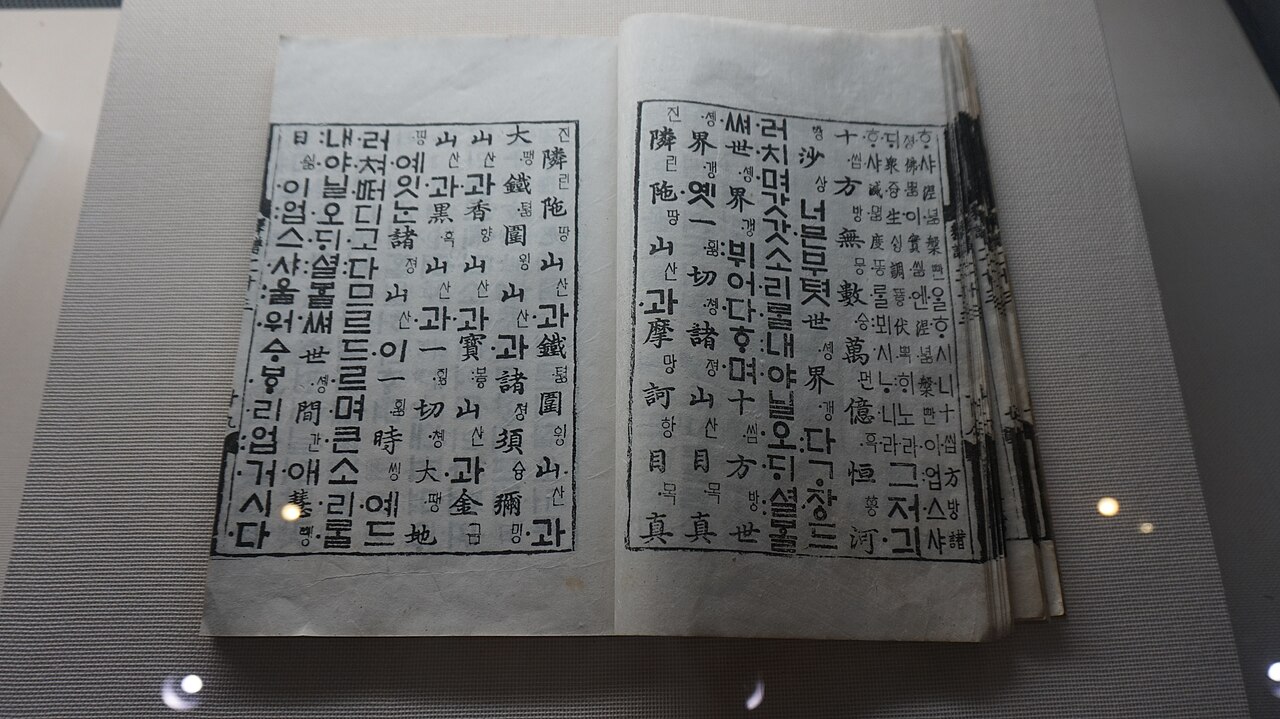
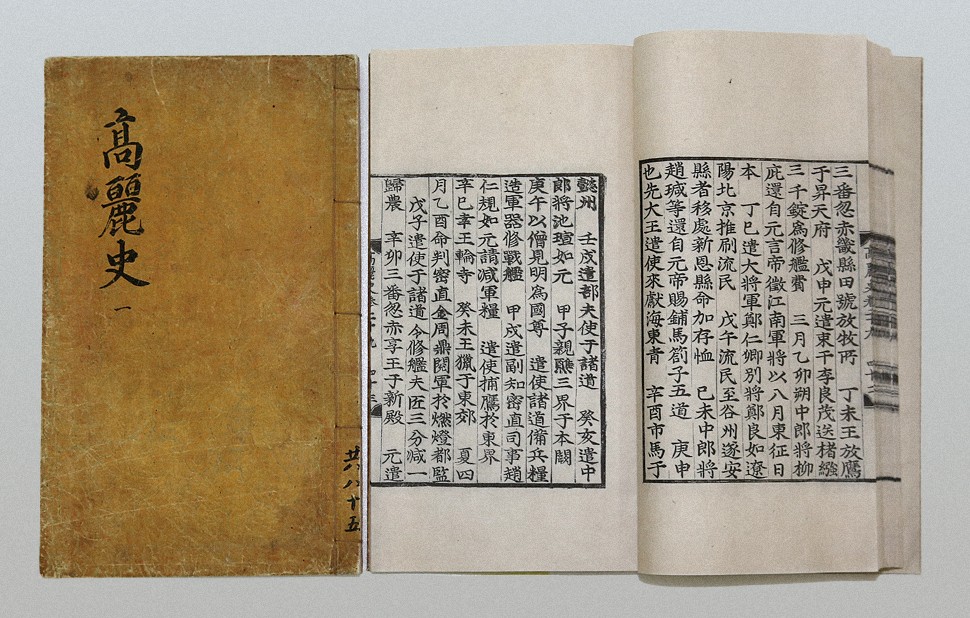
A page from a 1447 Buddhist biography printed in Hangul, showing the new Korean script created under Sejong's reign.
Printed during Sejong's reign, this book shows the new Hangul script he created being used in a real text.
About this source
What it is
Seokbo Sangjeol is a Buddhist text printed in 1447 using Hangul, the script developed during the reign of King Sejong. This page shows woodblock-printed columns of Hangul syllables alongside Chinese characters, now preserved as a worn, yellowed book displayed in a museum case.
Why it matters
Though not written by Sejong himself, this book is an early example of Hangul actually being used in a published text, showing how the new alphabet was put into practice soon after its creation. It reveals how Hangul was first used alongside Chinese characters, and how the script spread into religious and literary life in Korea.
Look closer
- What differences can you spot between the Hangul and Chinese characters on the page?
- Why might a Buddhist text have been chosen as an early work to print in the new script?
- What does the worn condition of the pages tell you about how old and used this book is?
This book is part of the curated material that grounds the AI version of Sejong the Great on Humy.ai — when students ask about related events, the AI can quote it and cite it.
More Sejong the Great sources
Browse all 74 →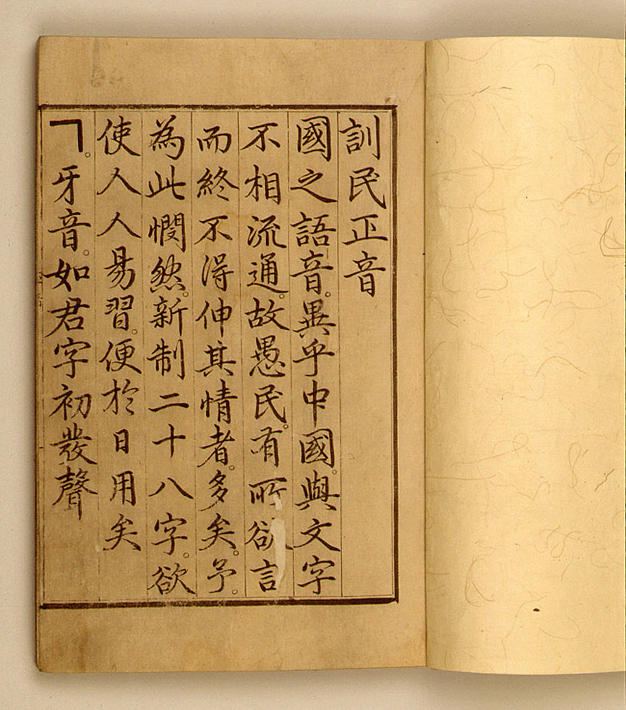

Ready when you are
Start chatting with Sejong the Great now.
20 messages free · No credit card · Available in 50+ languages.