


Secondary sourcePainting1769
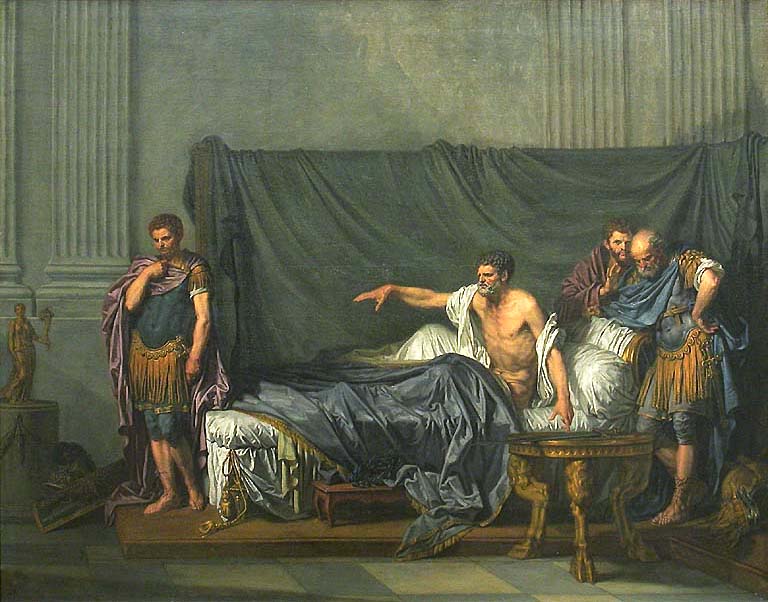
Septimius Severus and Caracalla
Jean-Baptiste Greuze · 1769
An 18th-century history painting imagining Emperor Septimius Severus rebuking his son Caracalla for plotting against him.
Depicts Caracalla being rebuked by his father, shaping his later reputation as a treacherous, violent son.
About this source
What it is
This oil painting was made by the French artist Jean-Baptiste Greuze in 1769. It shows a scene set in the Roman Empire: the dying Emperor Septimius Severus rebuking his son Caracalla, who had conspired against him, while an official looks on. It is held in the Louvre in Paris.
Why it matters
Greuze, mainly known for scenes of everyday life, painted this as his major attempt at history painting and presented it when he joined the Royal Academy. It reflects the emerging Neoclassical style of the time. The painting shows how later European culture remembered Caracalla as a treacherous son and future tyrant, long after his death.
Look closer
- How does the painter use gesture and pose to show accusation and guilt?
- Why might an 18th-century artist choose this moment from Roman history to paint?
- What does this image tell us about Caracalla's reputation centuries after he lived, rather than about the real events?
This painting is part of the curated material that grounds the AI version of Caracalla and Septimius Severus on Humy.ai — when students ask about related events, the AI can quote it and cite it.
More Caracalla sources
Browse all 81 →
Ready when you are
Start chatting with Caracalla now.
20 messages free · No credit card · Available in 50+ languages.