


Primary sourcePainting1838
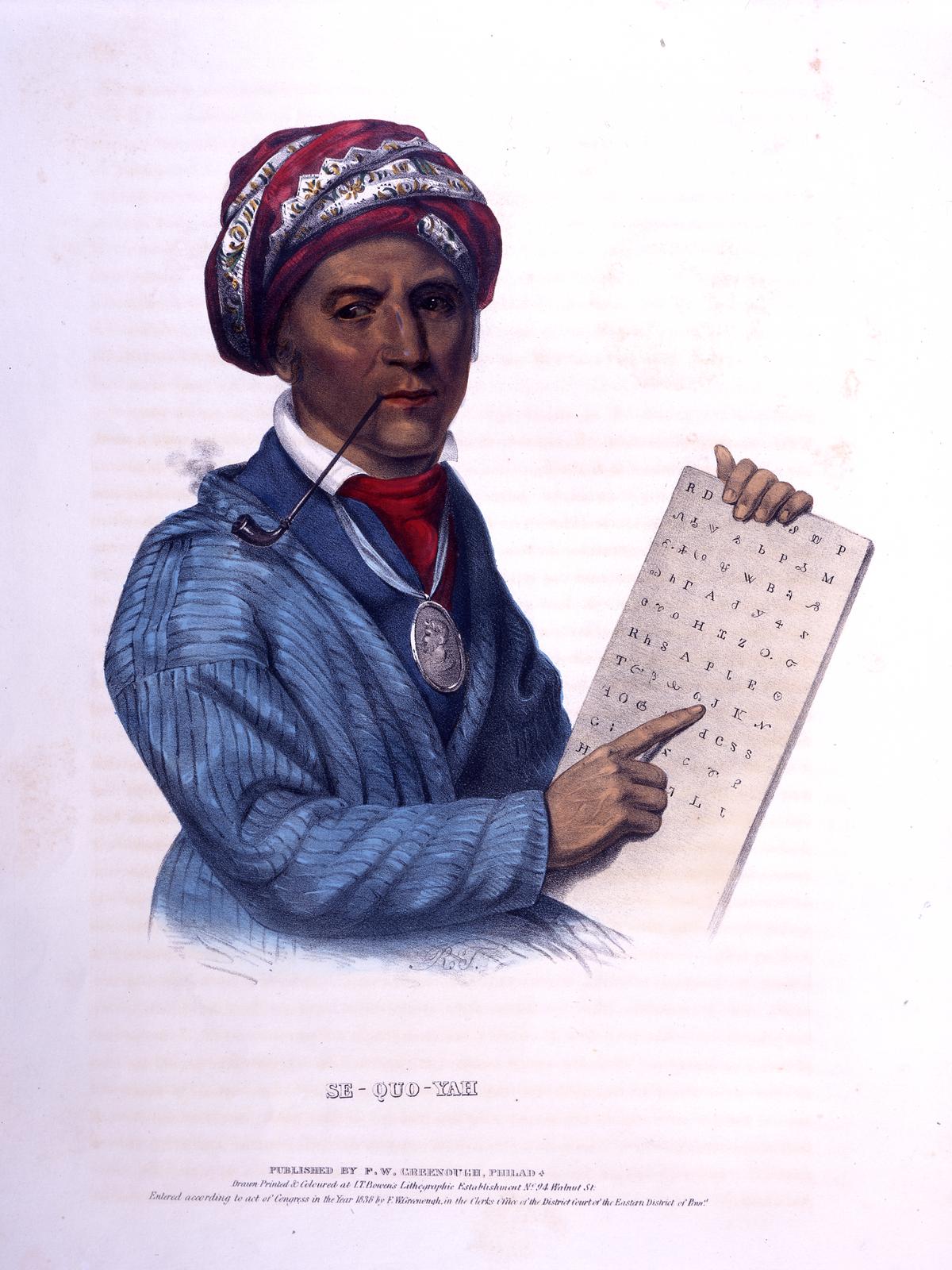
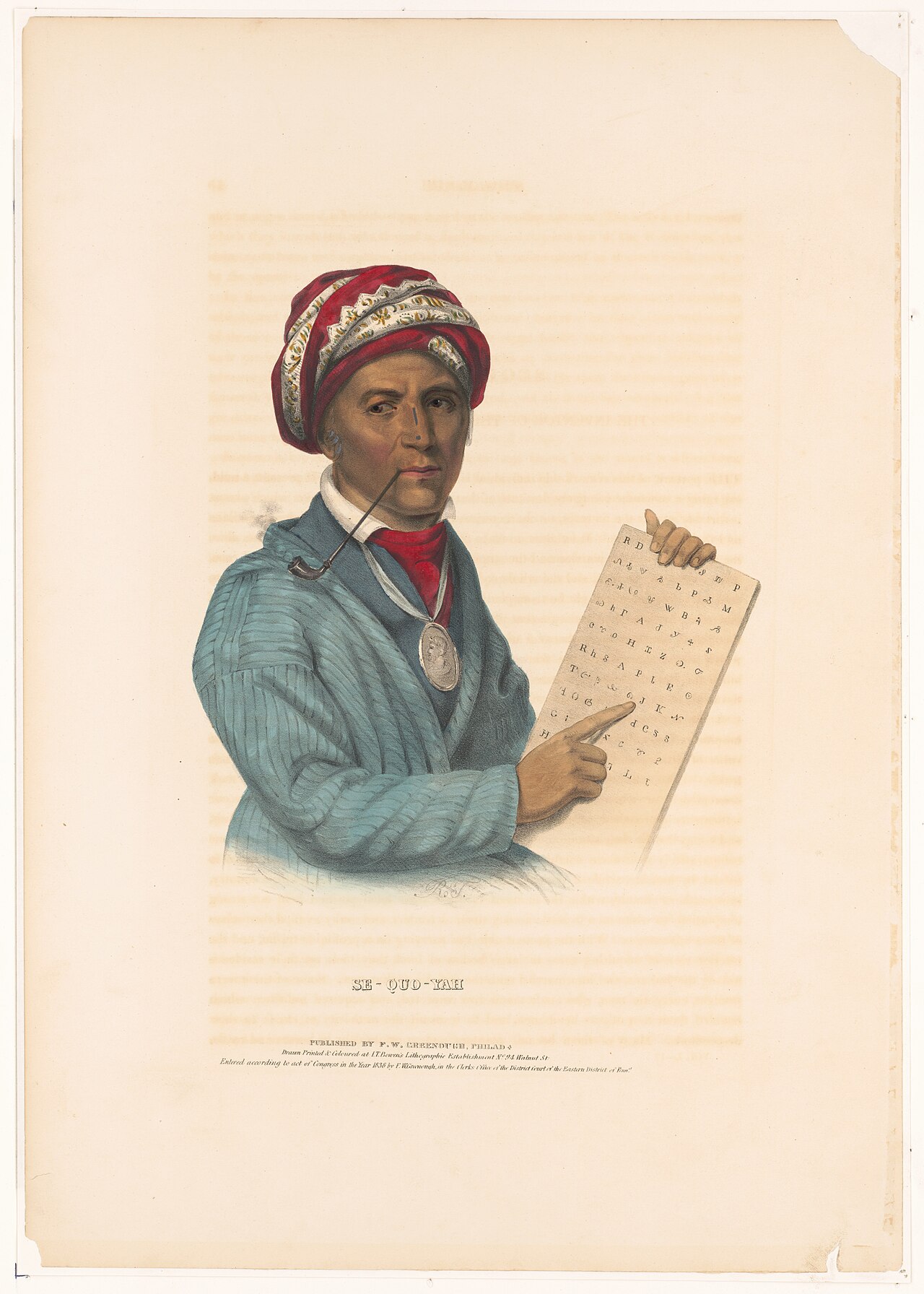
Sequoyah Portrait Plate from History of the Indian Tribes of North America
L.T. Bowen · 1838
An 1838 engraved portrait plate of Sequoyah, made in his lifetime, from McKenney and Hall's history of Indian tribes.
This lifetime portrait, published in a major survey of Indian leaders, depicts Sequoyah with the syllabary he invented.
About this source
What it is
This hand-coloured lithograph portrait of Sequoyah appeared as an illustration in Thomas L. McKenney and James Hall's History of the Indian Tribes of North America, published in Philadelphia in 1838. It was printed by L.T. Bowen and published by F.W. Greenough, based on portraits from the Indian Gallery at the Department of War in Washington.
Why it matters
Sequoyah, also recorded as George Guess, is remembered as the inventor of the Cherokee syllabary. This portrait was part of a major government-linked project to document Native American leaders, showing both his fame at the time and how the US government chose to represent him.
Look closer
- Why might the publishers have included Sequoyah among
This painting is part of the curated material that grounds the AI version of Sequoyah on Humy.ai — when students ask about related events, the AI can quote it and cite it.
More Sequoyah sources
Browse all 72 →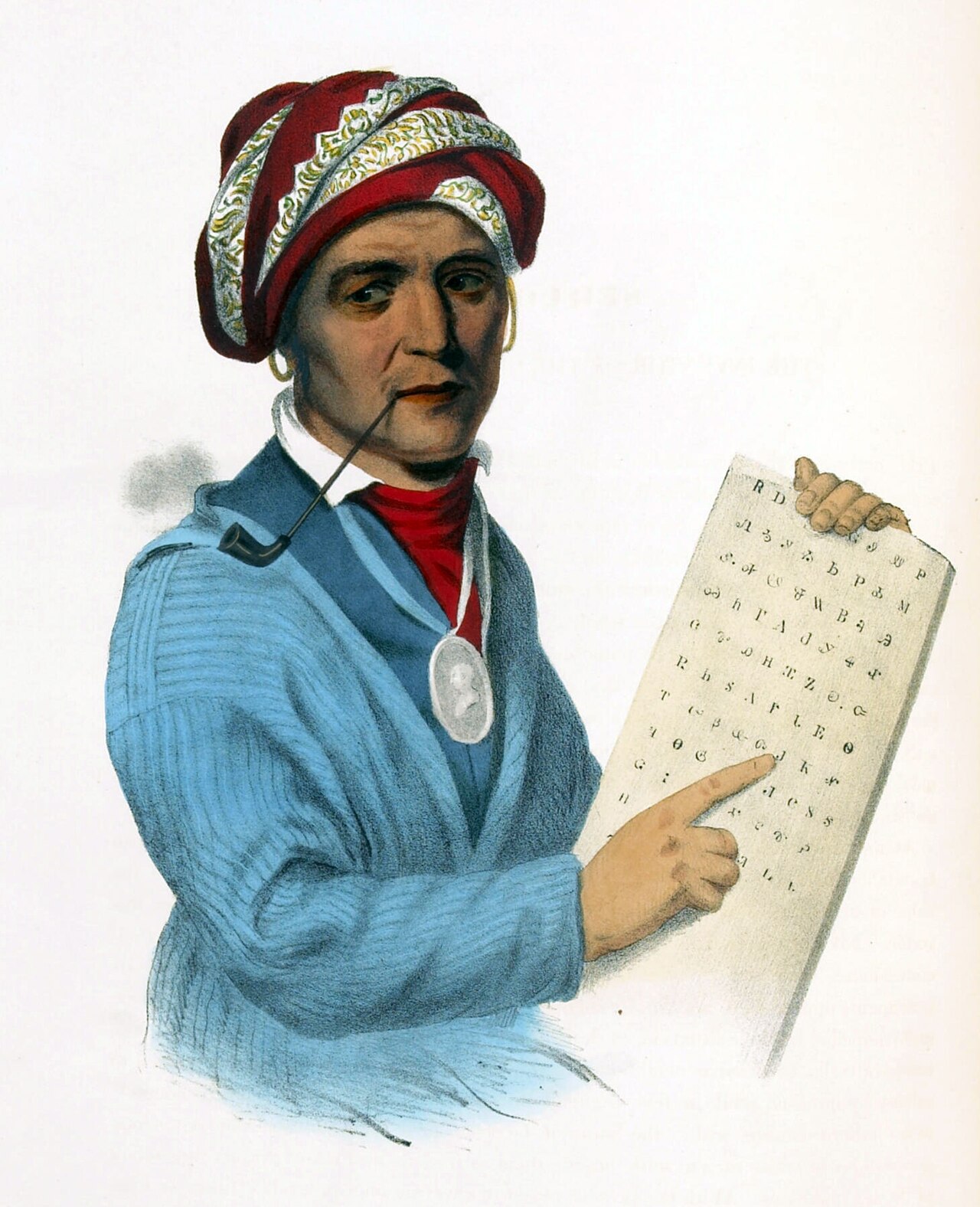 Document
Primary source
Cherokee Syllabary
Sequoyah · 1821
 Painting
Secondary source
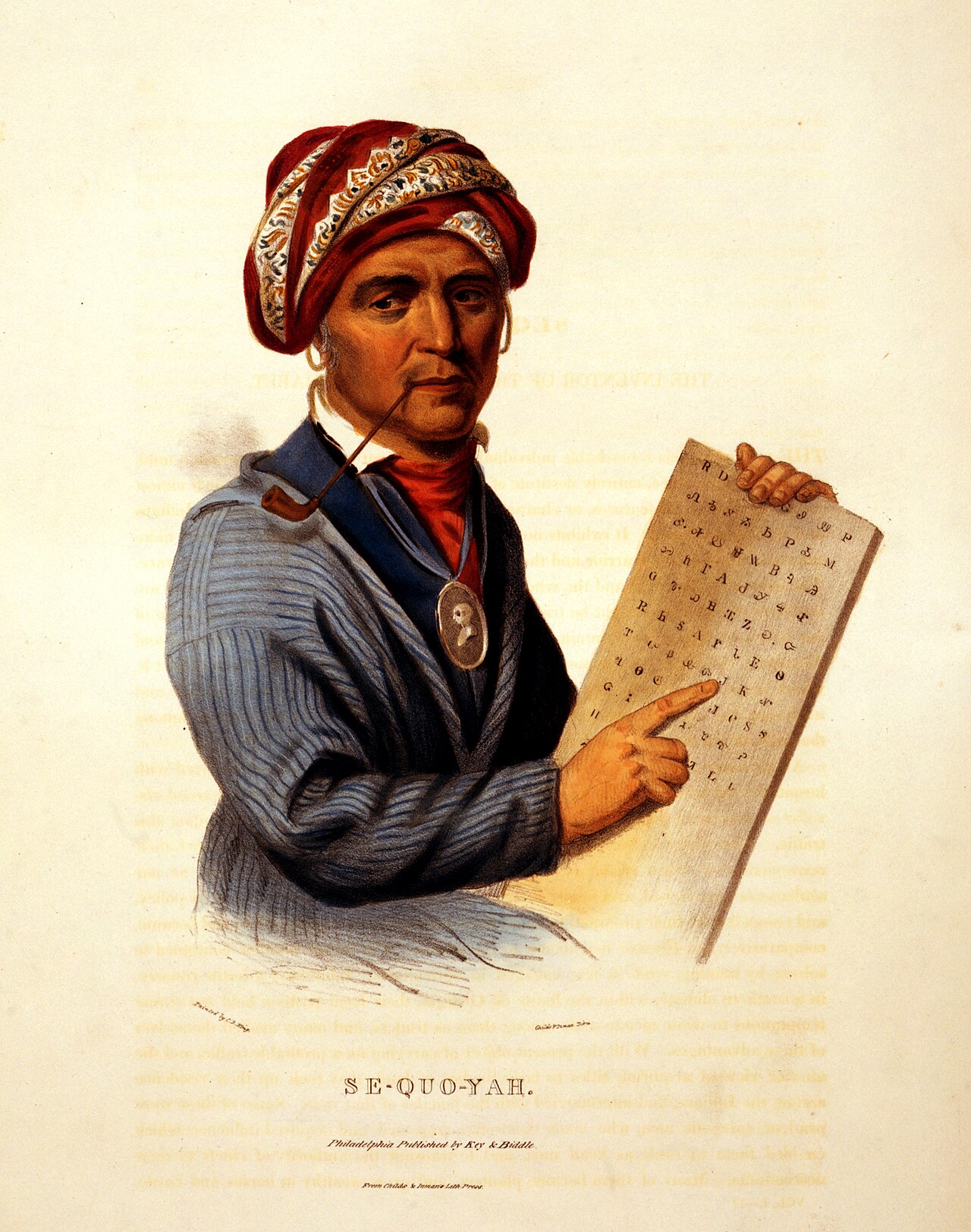
Sequoyah, Cherokee Inventor
Charles Bird King · 1836
 Painting
Primary source
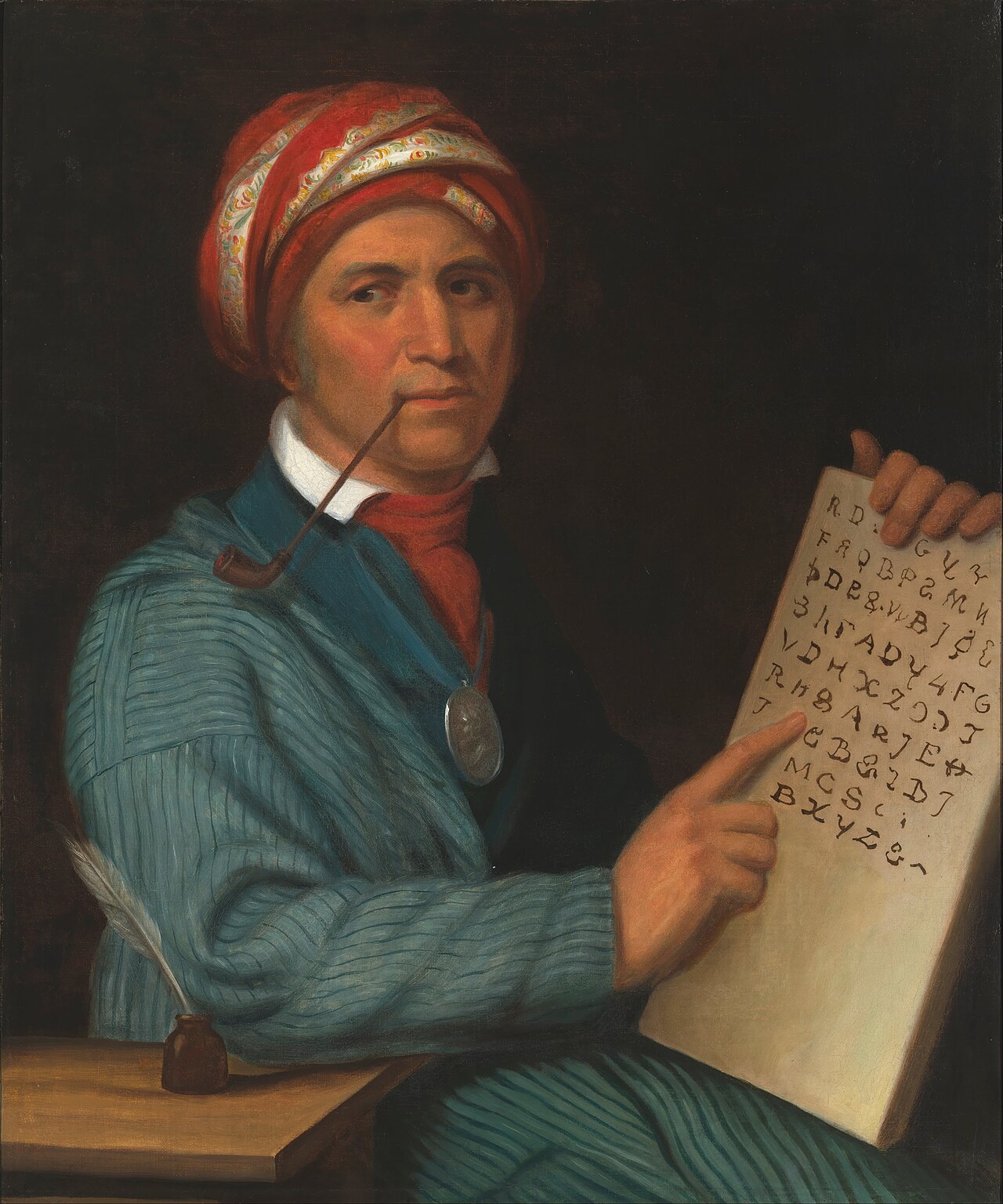
Sequoyah
Henry Inman · 1830
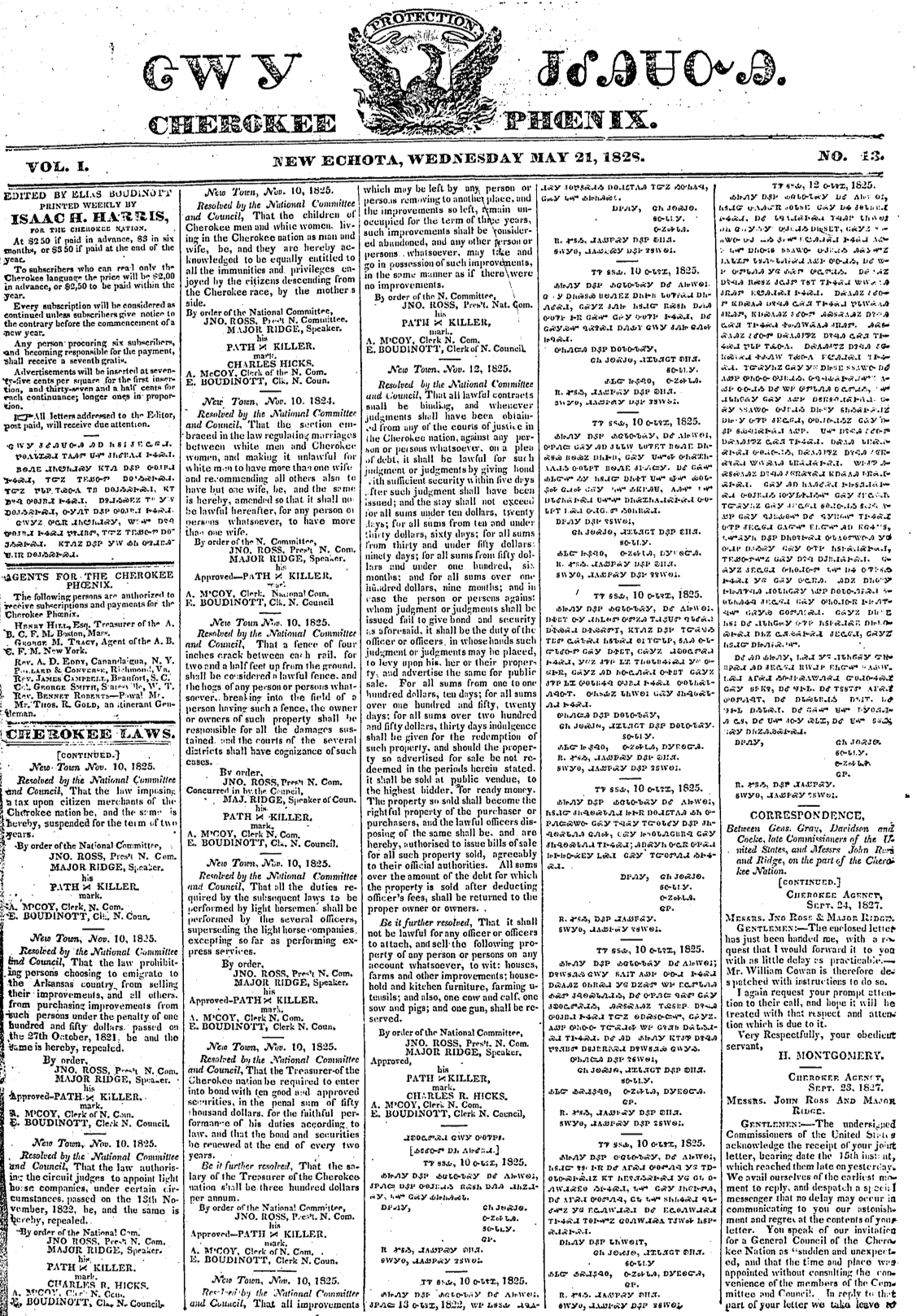 Newspaper article
Primary source
Cherokee Phoenix
Elias Boudinot · 21 May 1828
Free account
Read every Sequoyah source
Sign up free →
Ready when you are
Start chatting with Sequoyah now.
20 messages free · No credit card · Available in 50+ languages.