


Primary sourcePainting1779
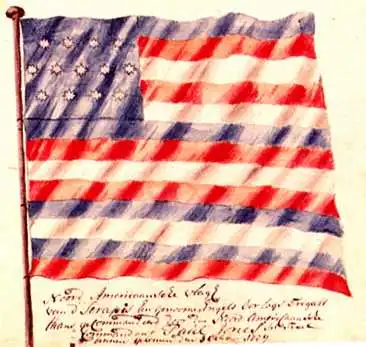
Serapis Flag
Unknown Dutch observer · 1779
An improvised American ensign flown from the captured British frigate Serapis when John Paul Jones sailed it into the Texel in 1779.
This flag was flown on Jones's prize ship Serapis and became a diplomatic incident tied directly to his famous 1779 action.
About this source
What it is
This watercolor sketch, made by a Dutch observer in 1779, records an unconventional early United States flag flown aboard the captured frigate Serapis. The flag has red and white stripes and a blue canton with eight-sided stars, a design similar to one favored by Benjamin Franklin. The painting is now held at the Chicago History Museum.
Why it matters
When John Paul Jones brought the captured Serapis into the neutral Dutch port of the Texel after the Battle of Flamborough Head, the flag he flew became a diplomatic problem, since displaying an American flag risked Dutch neutrality with Britain. The sketch is a rare visual record of how the young United States represented itself abroad before a standard flag design existed.
Look closer
- Why might the stars have an unusual eight-sided shape instead of five points?
- Why would a foreign observer bother to sketch and label this flag so carefully?
- What does this tell you about how unsettled the symbols of the new nation still were in 1779?
This painting is part of the curated material that grounds the AI version of John Paul Jones on Humy.ai — when students ask about related events, the AI can quote it and cite it.
More John Paul Jones sources
Meet the AI John Paul Jones →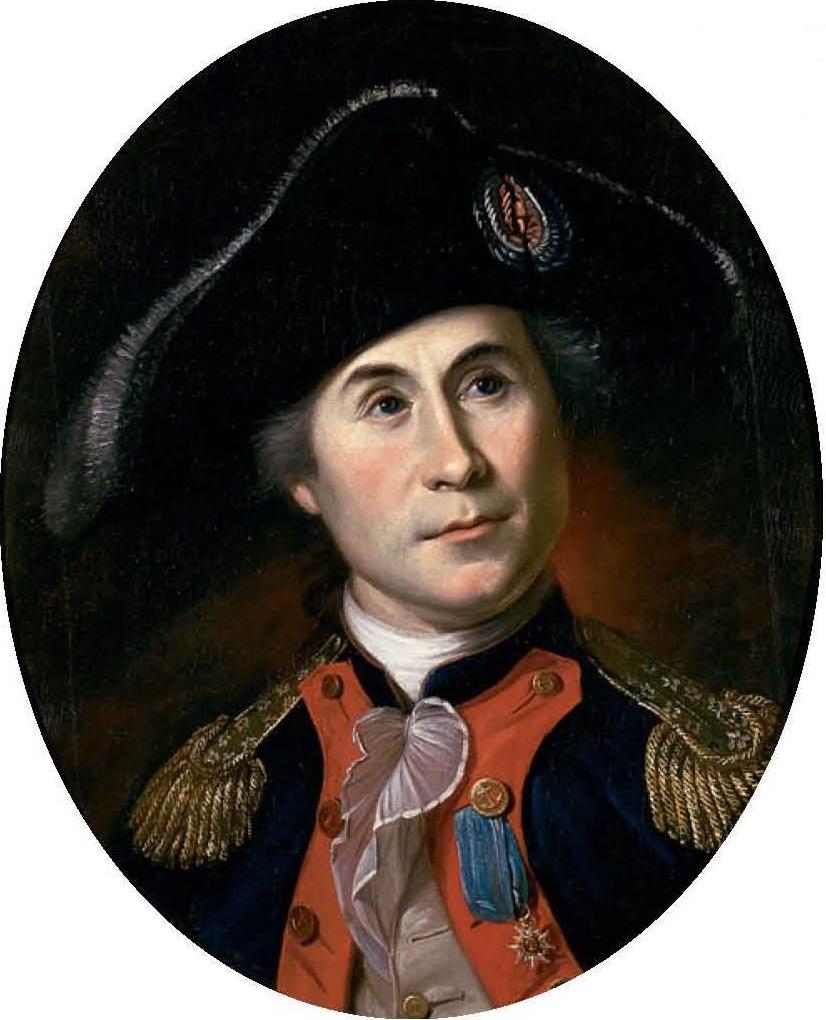 Painting
Primary source
Portrait of John Paul Jones
Charles Willson Peale · c. 1781
 Sculpture
Primary source
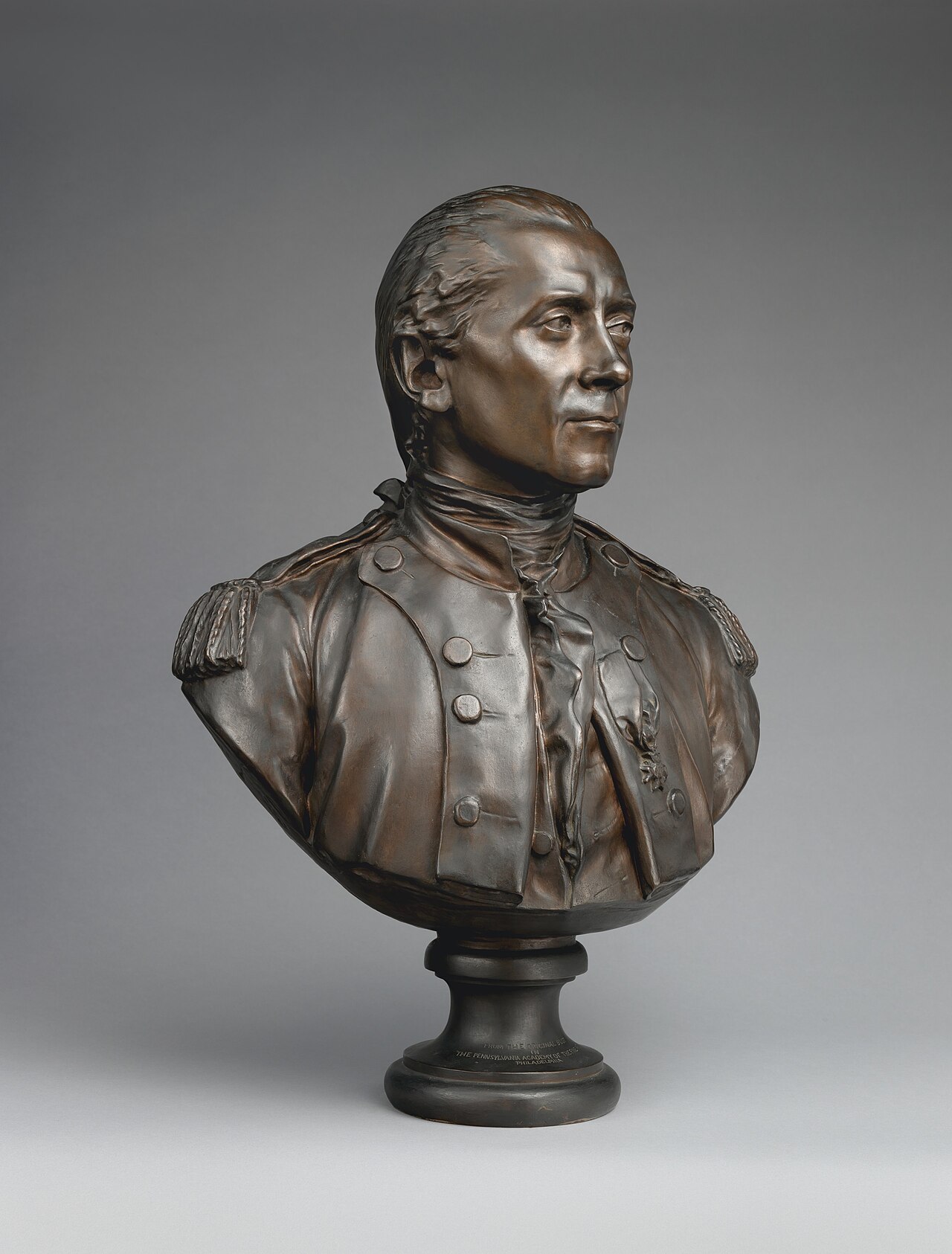
Bust of John Paul Jones
Jean-Antoine Houdon · 1780
 Painting
Primary source
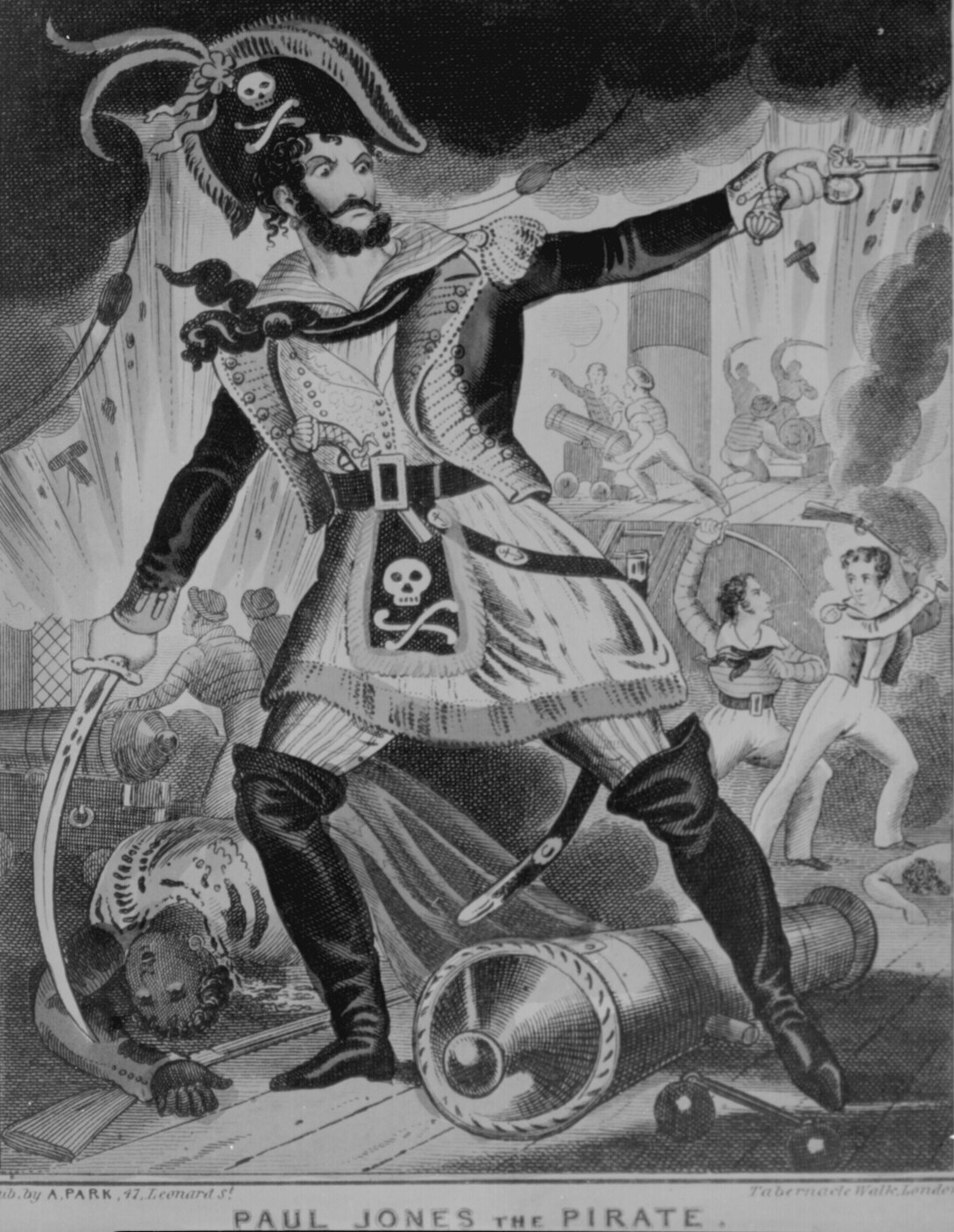
Paul Jones the Pirate
A. Park of London
 Document
Primary source
Treaty of Alliance with France
6 February 1778
 Artifact
Primary source
John Paul Jones Congressional Gold Medal
Augustin Dupré · 1787
Ready when you are
Start chatting with John Paul Jones now.
20 messages free · No credit card · Available in 50+ languages.