


Primary sourceArtifact71 CE
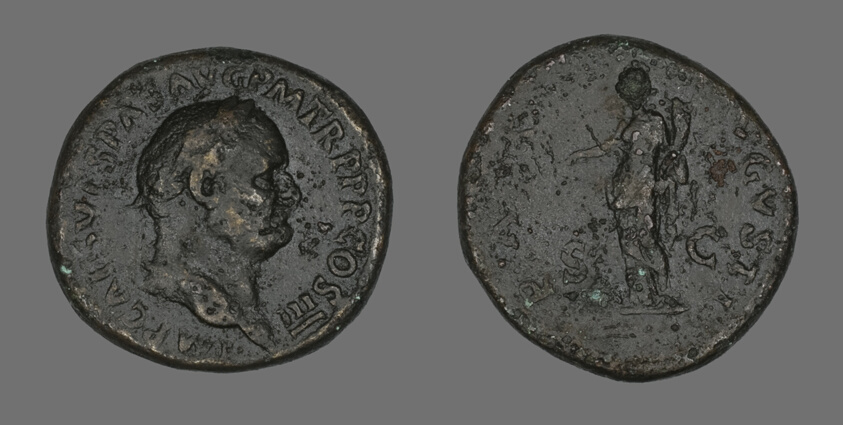
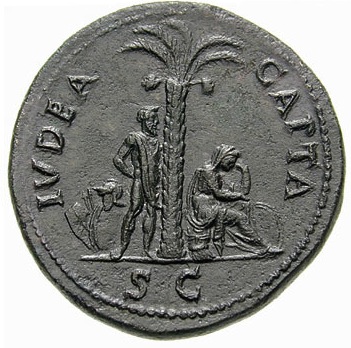
Sestertius Portraying Emperor Vespasian
71 CE
A large bronze Roman coin from 71 CE bearing Vespasian's portrait, issued during his reign.
This large bronze coin, minted under Vespasian, carried his image across the empire during his own reign.
About this source
What it is
This bronze sestertius, dated 71 CE, shows a laureate bust of Vespasian on one side and a standing female figure holding a staff on the other, with the letters S C marking its official Senate authorization. It is held by the Art Institute of Chicago.
Why it matters
As a larger denomination of bronze coin, the sestertius was widely used and seen by many people across the Roman Empire. Its imagery and inscriptions reflect how Vespasian's government communicated authority and legitimacy through everyday currency.
Look closer
- What details in the portrait help identify this as Vespasian rather than another emperor?
- Why might the Senate's mark (S C) appear on coins alongside the emperor's image?
- What might the standing female figure symbolize?
This artifact is part of the curated material that grounds the AI version of Vespasian on Humy.ai — when students ask about related events, the AI can quote it and cite it.
More Vespasian sources
Browse all 95 →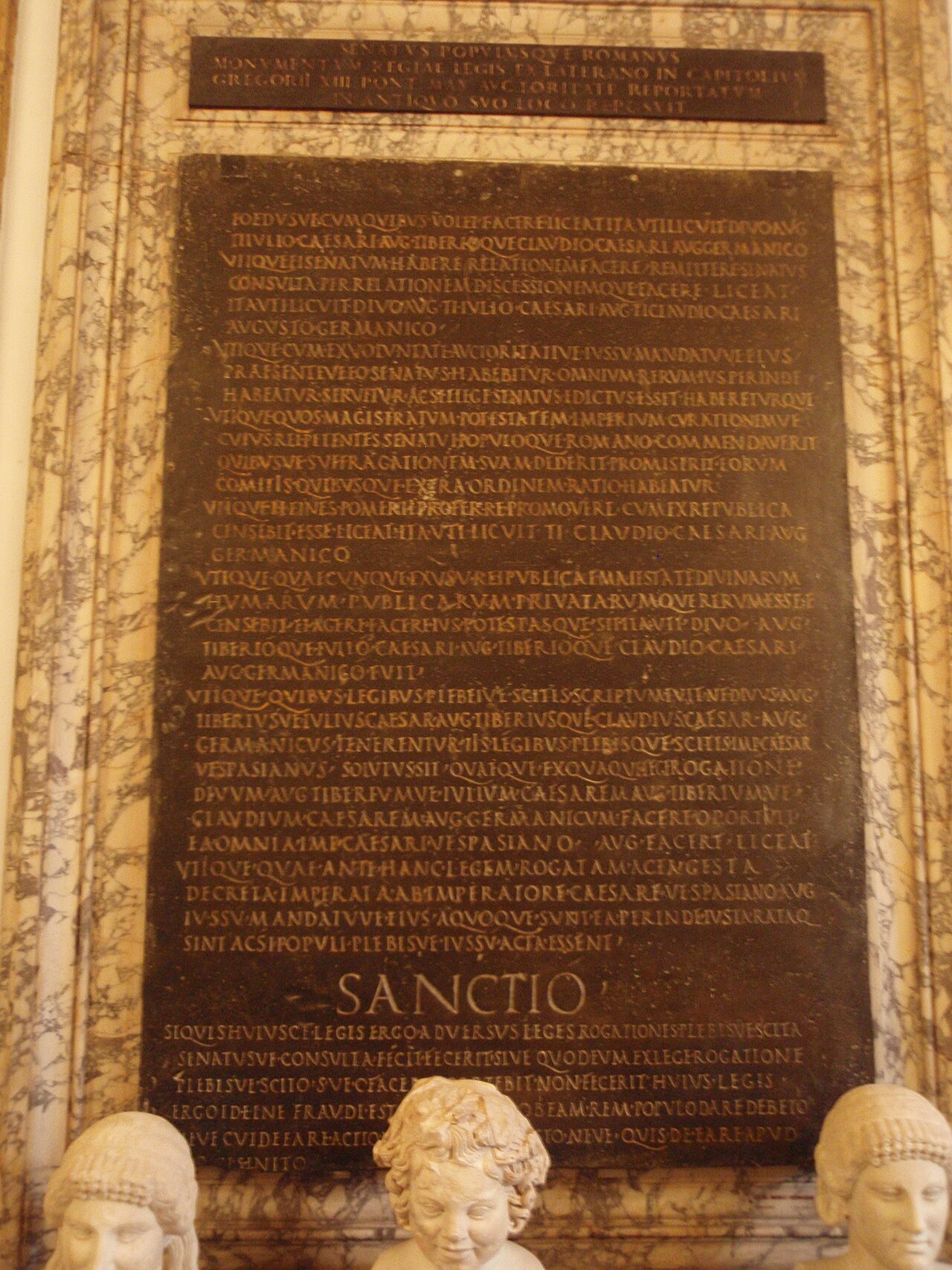 Document
Primary source
Lex de imperio Vespasiani
Roman Senate · AD 69–70
 Artifact
Primary source
Colosseum
begun 72 AD, completed 80 AD
 Book
Secondary source
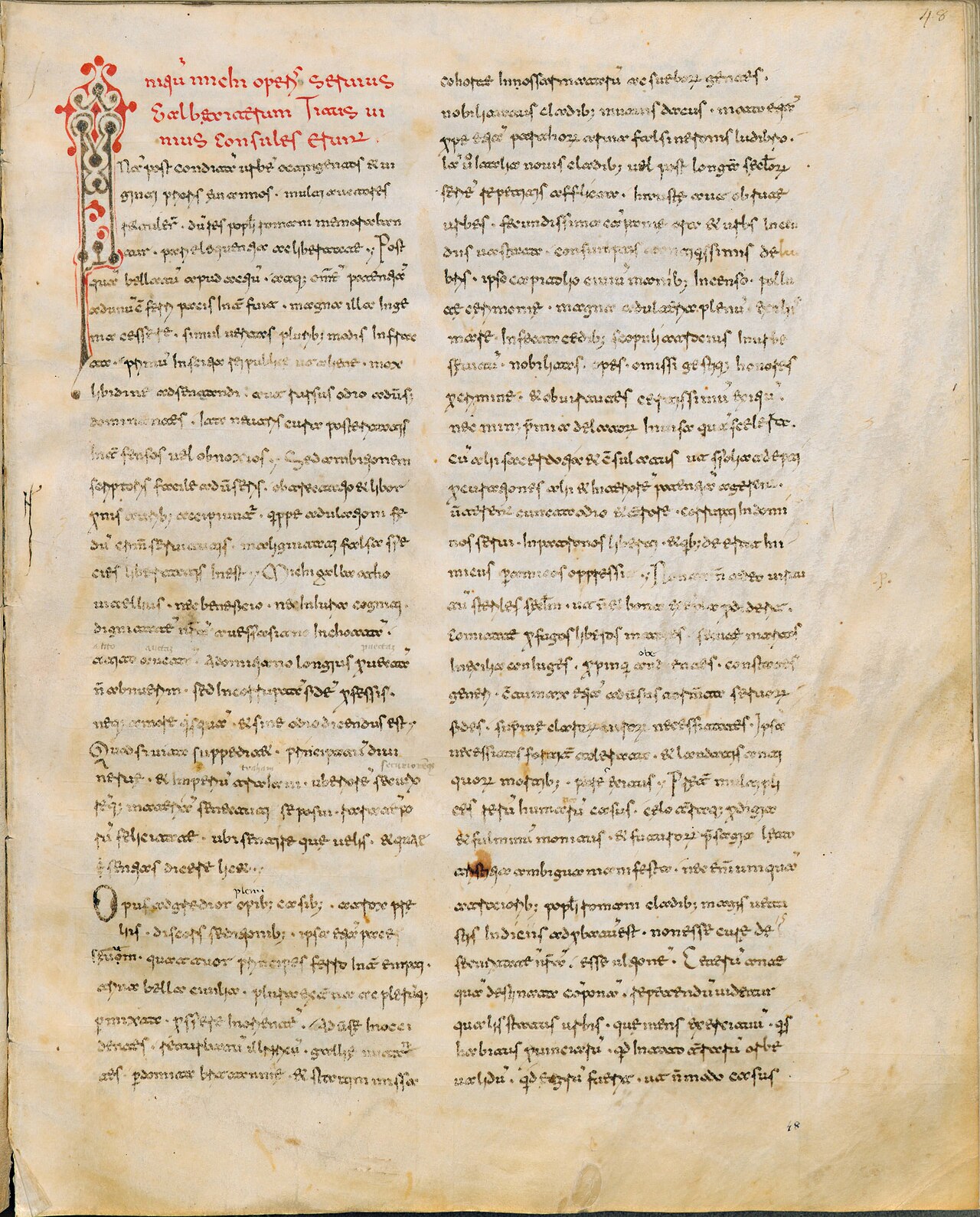
Histories
Tacitus · c. 100-110 AD
 Book
Secondary source
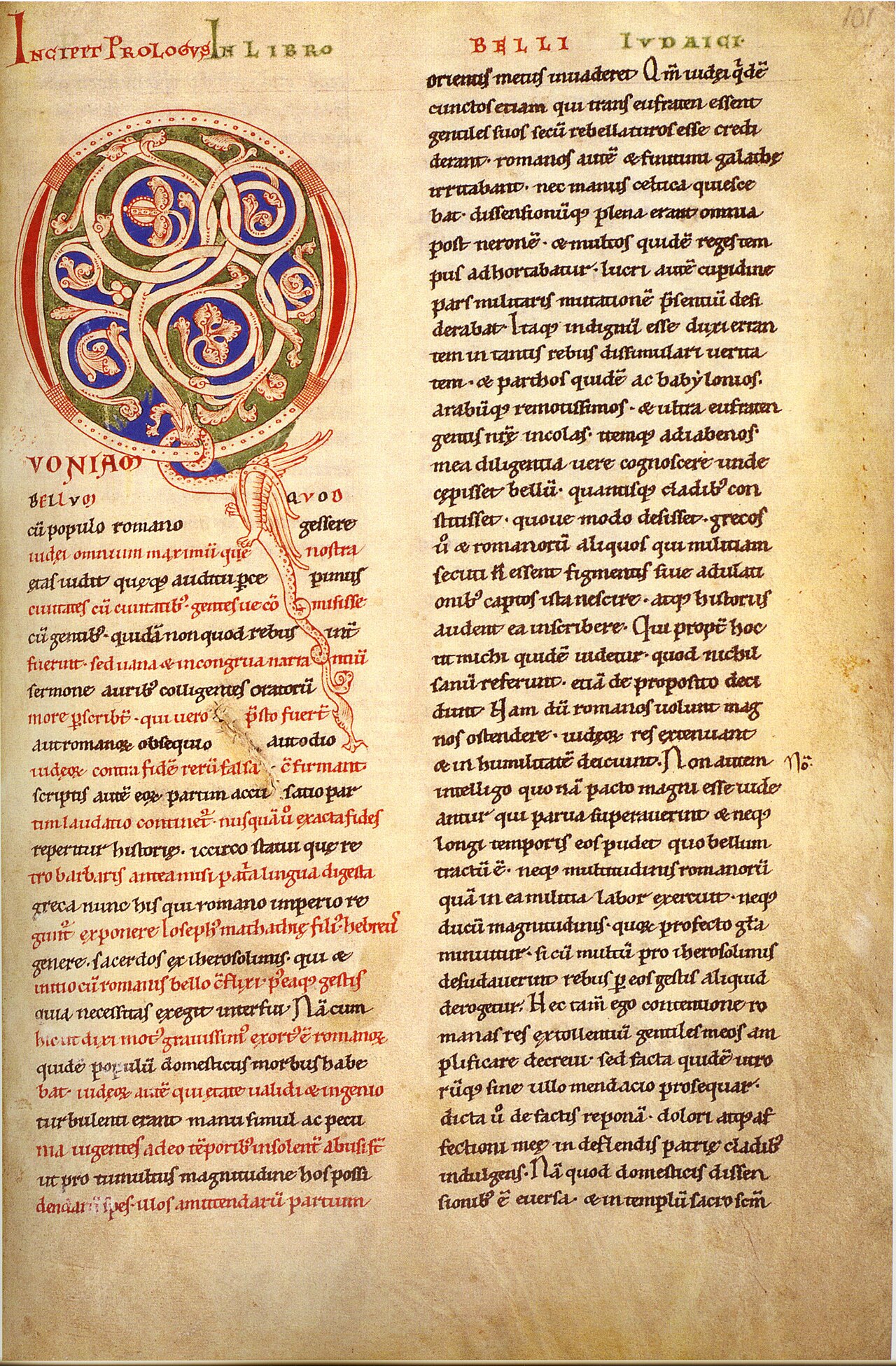
The Jewish War
Josephus · c. AD 75
Free account
Read every Vespasian source
Sign up free →
Ready when you are
Start chatting with Vespasian now.
20 messages free · No credit card · Available in 50+ languages.