


Primary sourceDocumentAD 69–70
Lex de imperio Vespasiani
Roman Senate · AD 69–70
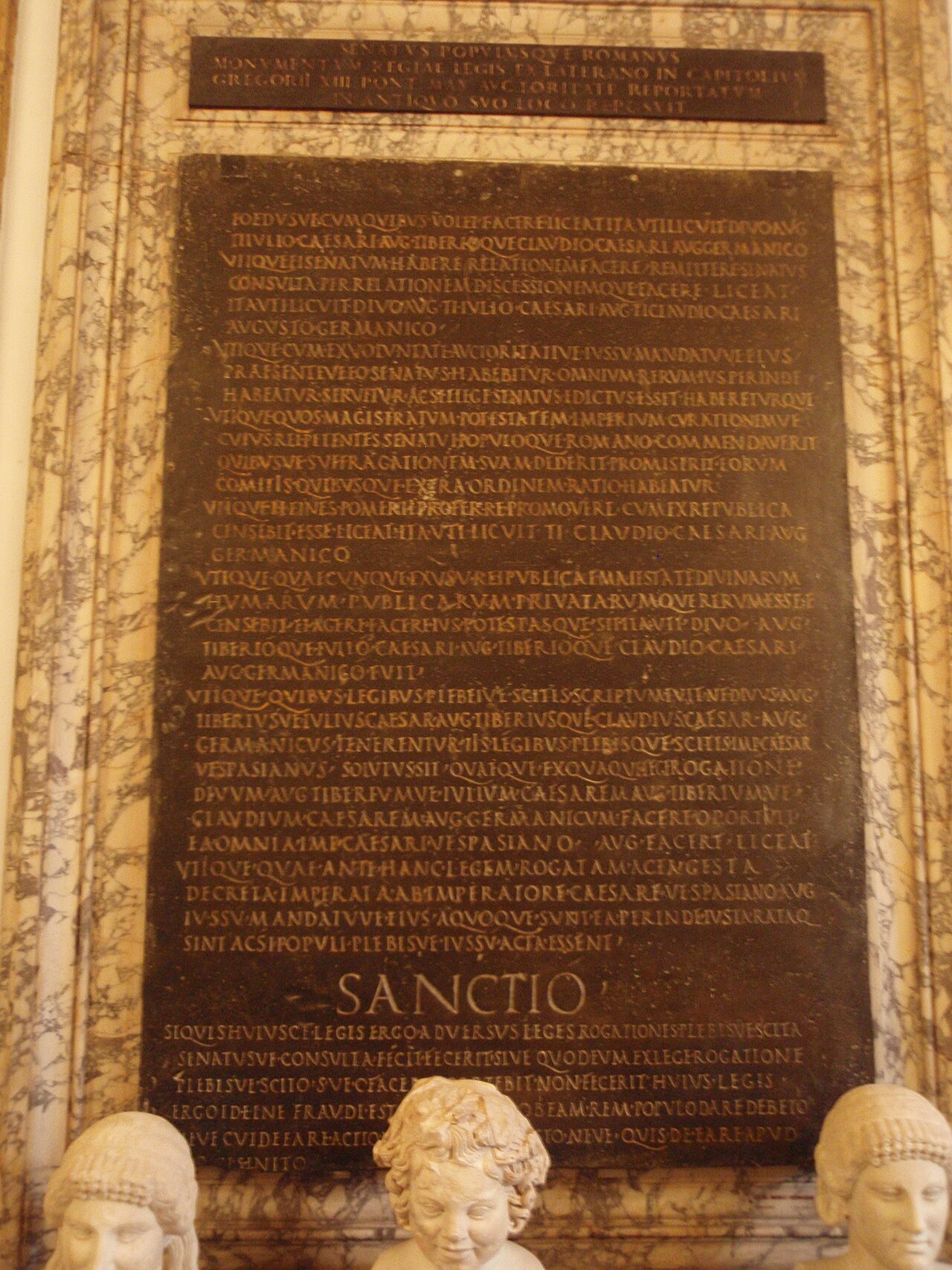
A bronze tablet recording the Roman law granting powers to Emperor Vespasian, which repeatedly cites Claudius's own powers as its legal precedent.
The law cites Claudius's own powers as legal precedent, showing how his reign shaped the office of emperor.
About this source
What it is
This is a bronze tablet inscribed with part of a Roman law passed by the Senate in AD 69–70, granting powers to the new emperor Vespasian. Only the second of two original tablets survives. It is held today in the Musei Capitolini in Rome.
Why it matters
The law lists the powers given to Vespasian by repeatedly referring back to the powers once held by earlier emperors, including Claudius. This shows that Claudius's reign had already set a legal template for how an emperor's authority was defined, decades before Vespasian came to power. It reveals how Roman law built imperial power on precedent rather than invention.
Look closer
- Why might the Senate choose to justify a new emperor's powers by naming earlier ones?
- What does this tell you about how the Romans thought about legitimate rule?
- What is missing from a legal text like this that a narrative history might include?
This document is part of the curated material that grounds the AI version of Claudius and Vespasian on Humy.ai — when students ask about related events, the AI can quote it and cite it.
More Claudius sources
Browse all 87 →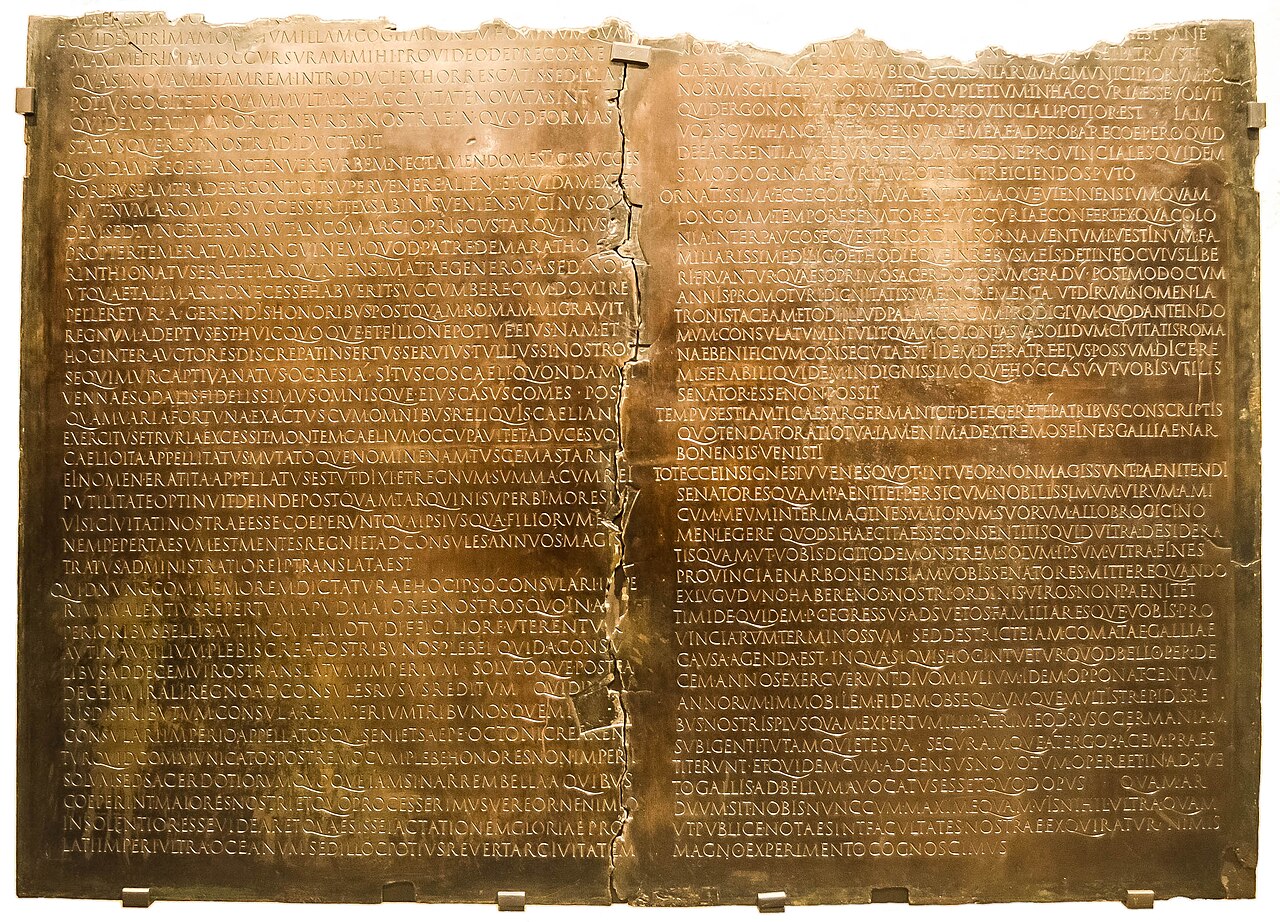




Ready when you are
Start chatting with Claudius now.
20 messages free · No credit card · Available in 50+ languages.