


Primary sourceBook1st century AD
Apocolocyntosis
Seneca · 1st century AD
A satirical work mocking the deification of Emperor Claudius, attributed to Seneca and linked to his political position under Nero.
Attributed to Seneca, this satire mocking Claudius reveals his political positioning under the new emperor Nero.
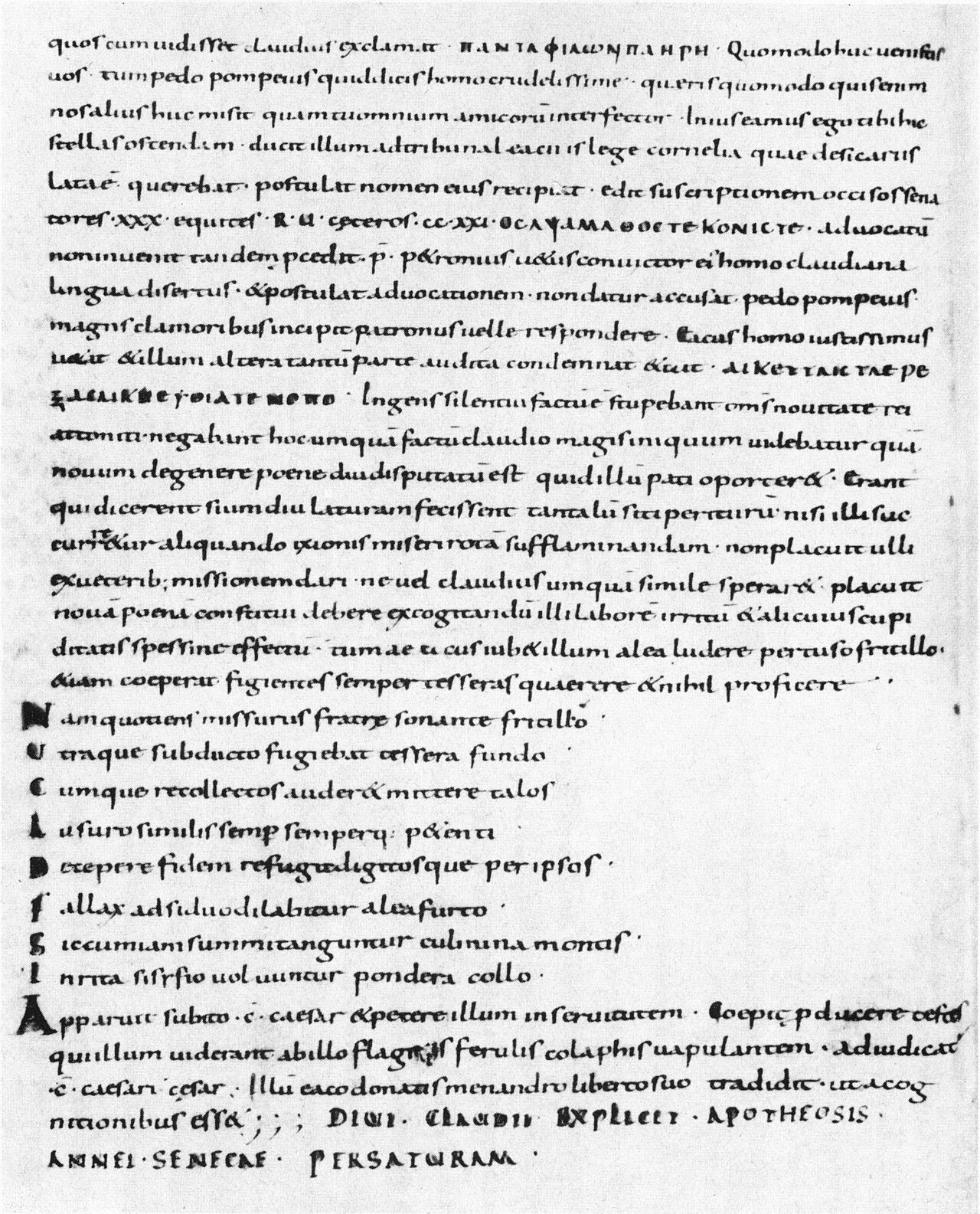
About this source
What it is
The Apocolocyntosis, meaning roughly 'Pumpkinification,' is a short satirical text mocking the official deification of the Roman emperor Claudius after his death. Ancient historian Cassius Dio attributed the work to Seneca the Younger, though some scholars debate whether the surviving manuscript text is exactly the same piece. It survives in medieval manuscripts, including one at the Abbey Library of St. Gallen.
Why it matters
The work mocks Claudius's personal failings and his pretensions to godhood, and is read as evidence of Seneca's sharp political wit as he positioned himself under the new emperor Nero, who succeeded Claudius in 54. It is one of very few surviving examples of the Menippean satire genre from antiquity.
Look closer
- Why might Seneca have mocked an emperor only after that emperor's death?
- What does the satire suggest about the risks and rewards of political writing in imperial Rome?
- How does the choice of comedy, rather than direct criticism, change the message?
This book is part of the curated material that grounds the AI version of Seneca on Humy.ai — when students ask about related events, the AI can quote it and cite it.
More Seneca sources
Meet the AI Seneca →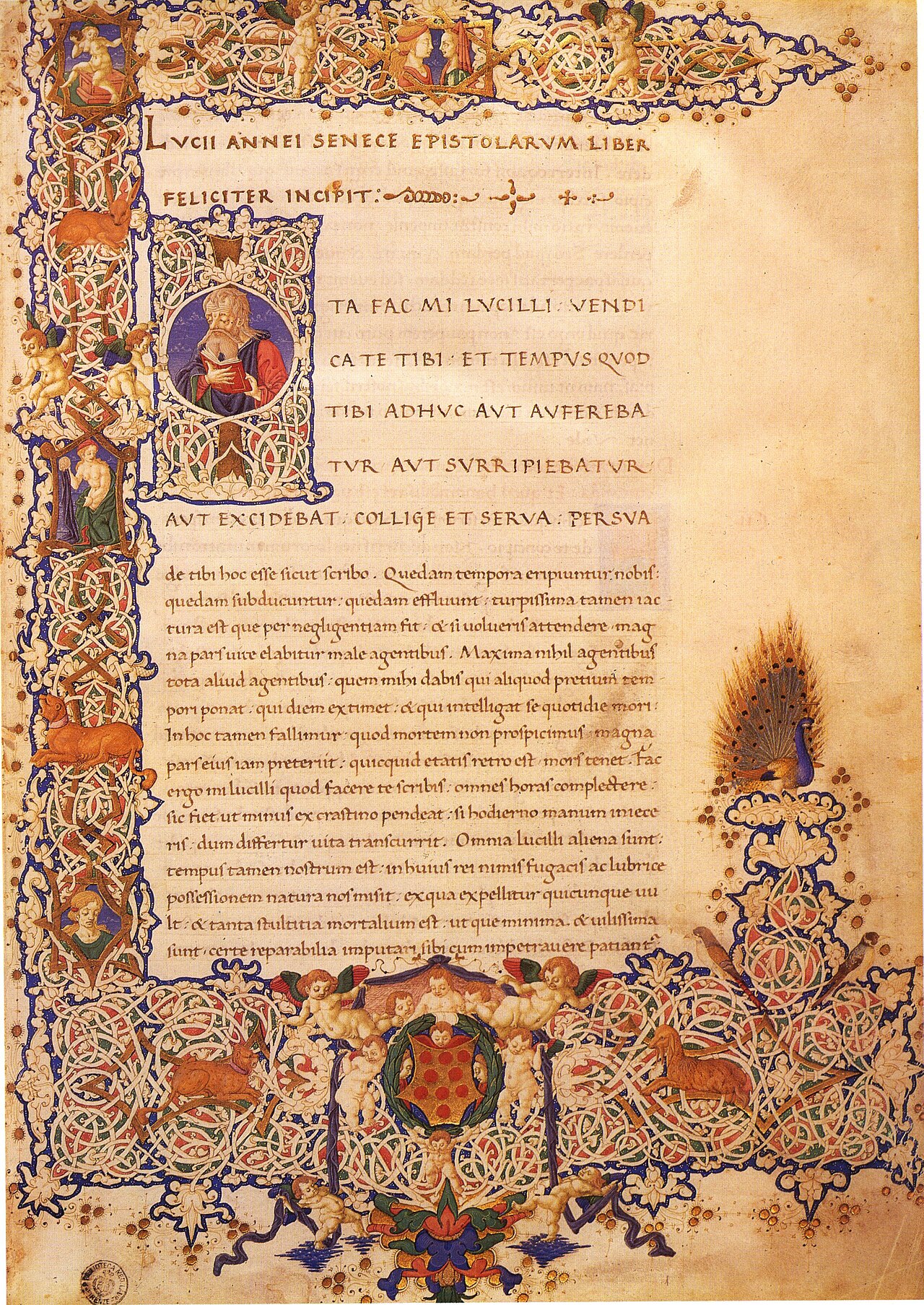 Letter
Primary source
Epistulae Morales ad Lucilium
Seneca · c. 62-65 CE
 Book
Primary source
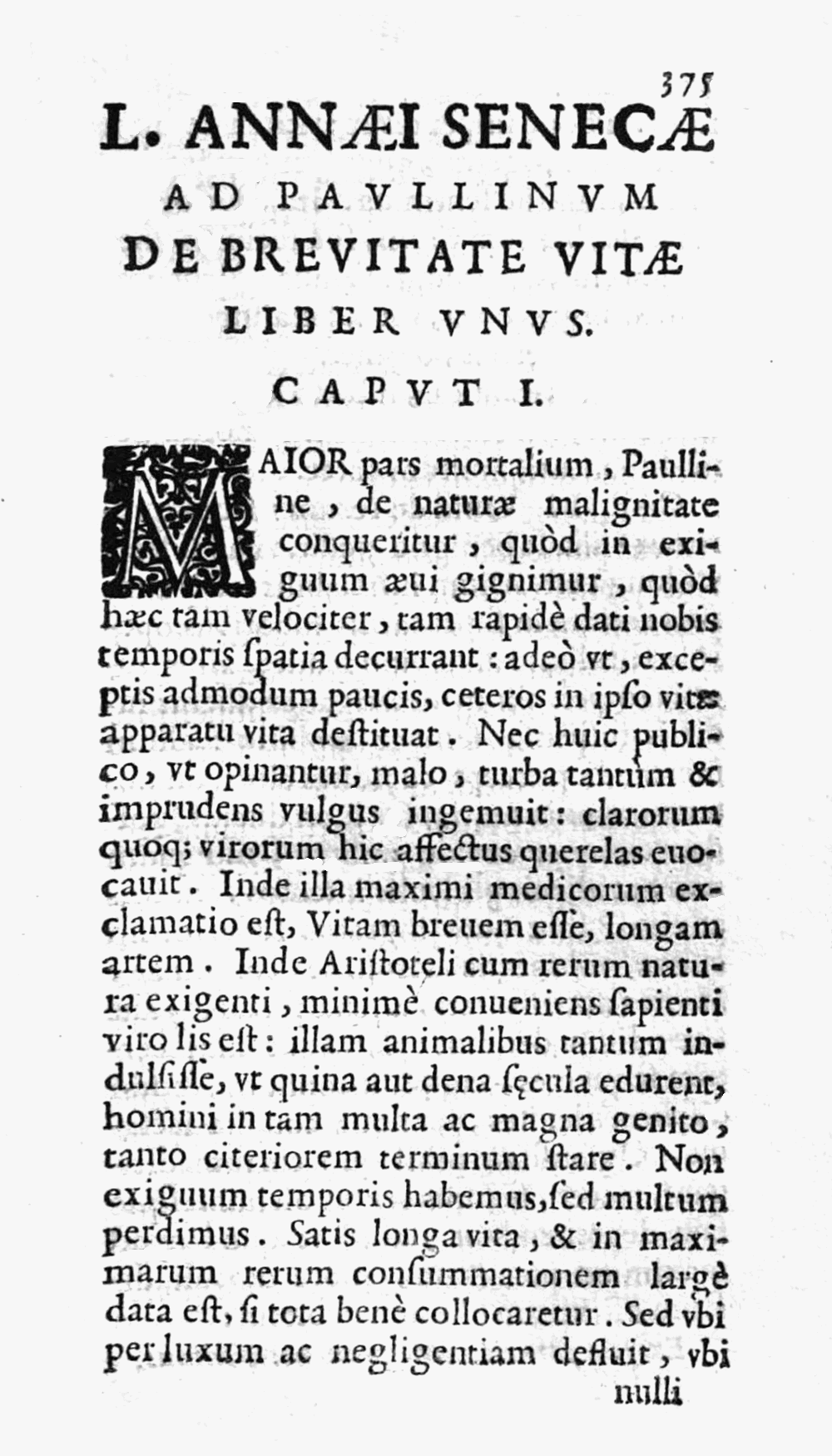
De Brevitate Vitae
Seneca · c. 49 CE
 Book
Secondary source
Annals
Tacitus · c. AD 116 or later
 Book
Primary source
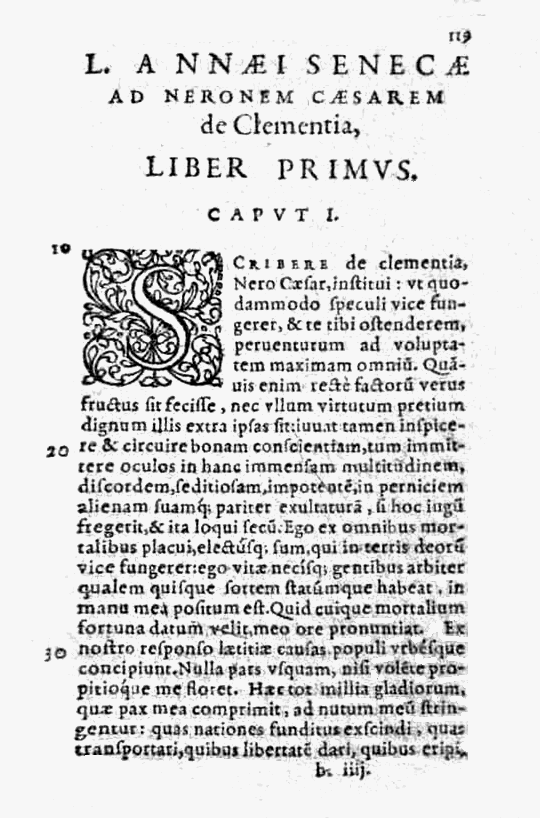
De Clementia
Seneca · 55-56 CE
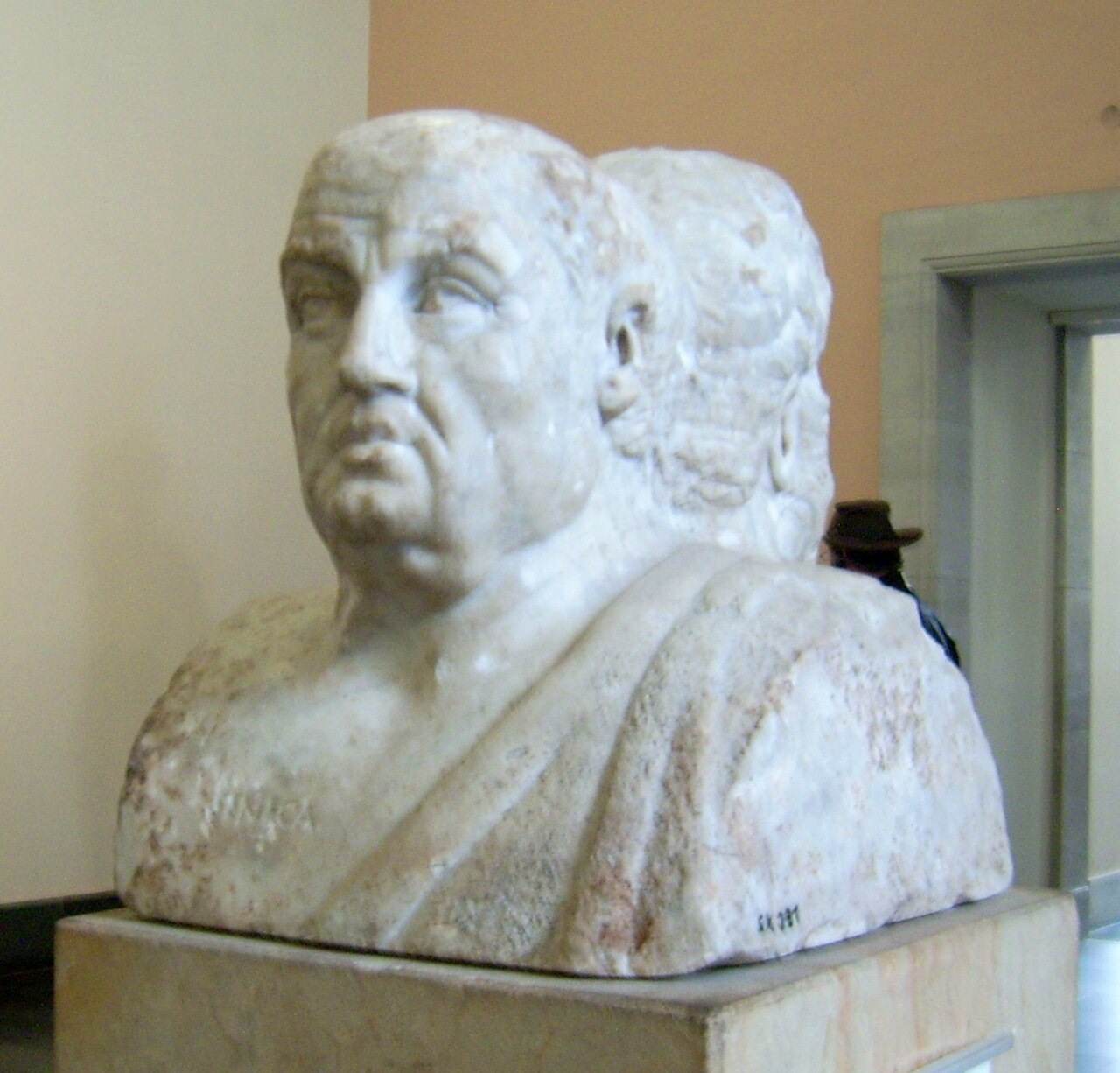 Sculpture
Secondary source
Double Herm of Socrates and Seneca
first half of the 3rd century AD
Ready when you are
Start chatting with Seneca now.
20 messages free · No credit card · Available in 50+ languages.