


Primary sourceArtifactc. 200 CE
Severan Bridge
c. 200 CE
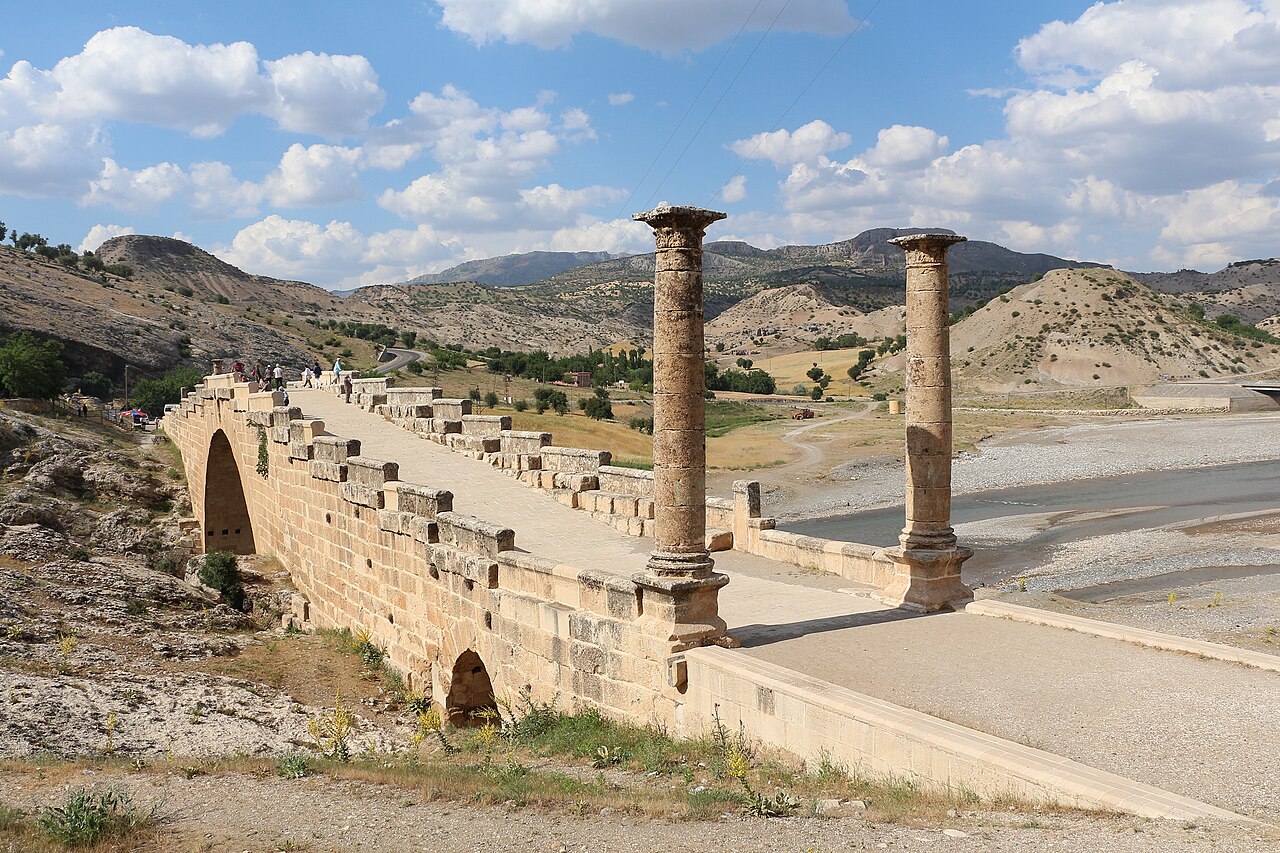
A Roman bridge in southeastern Turkey rebuilt by legions and dedicated with columns to Severus, his wife, and their two sons.
Dedicated to Severus and his family by legions, with one son's column later removed after his murder.
About this source
What it is
The Severan Bridge, also known as the Cendere Bridge, crosses the Cendere Çayı near the ancient city of Arsameia in what is now southeastern Turkey. It was rebuilt around 200 CE by the Legio XVI Gallica, a Roman legion, and is one of the longest surviving single-arch Roman bridges.
Why it matters
Commagenean cities erected four tall columns on the bridge dedicated to Septimius Severus, his wife Julia Domna, and their sons Caracalla and Geta, as recorded in a Latin inscription. After Caracalla had his brother Geta murdered and condemned his memory, Geta's column was removed. The bridge is physical evidence both of how the Severan family was honored across the empire and of how that memory could later be destroyed.
Look closer
- Why would a legion preparing for war dedicate a bridge to the emperor's whole family?
- What does the missing column tell us about power struggles after an emperor's death?
- Why has this bridge remained in use for so many centuries?
This artifact is part of the curated material that grounds the AI version of Septimius Severus on Humy.ai — when students ask about related events, the AI can quote it and cite it.
More Septimius Severus sources
Browse all 85 →
Ready when you are
Start chatting with Septimius Severus now.
20 messages free · No credit card · Available in 50+ languages.