


Secondary sourcePainting1430
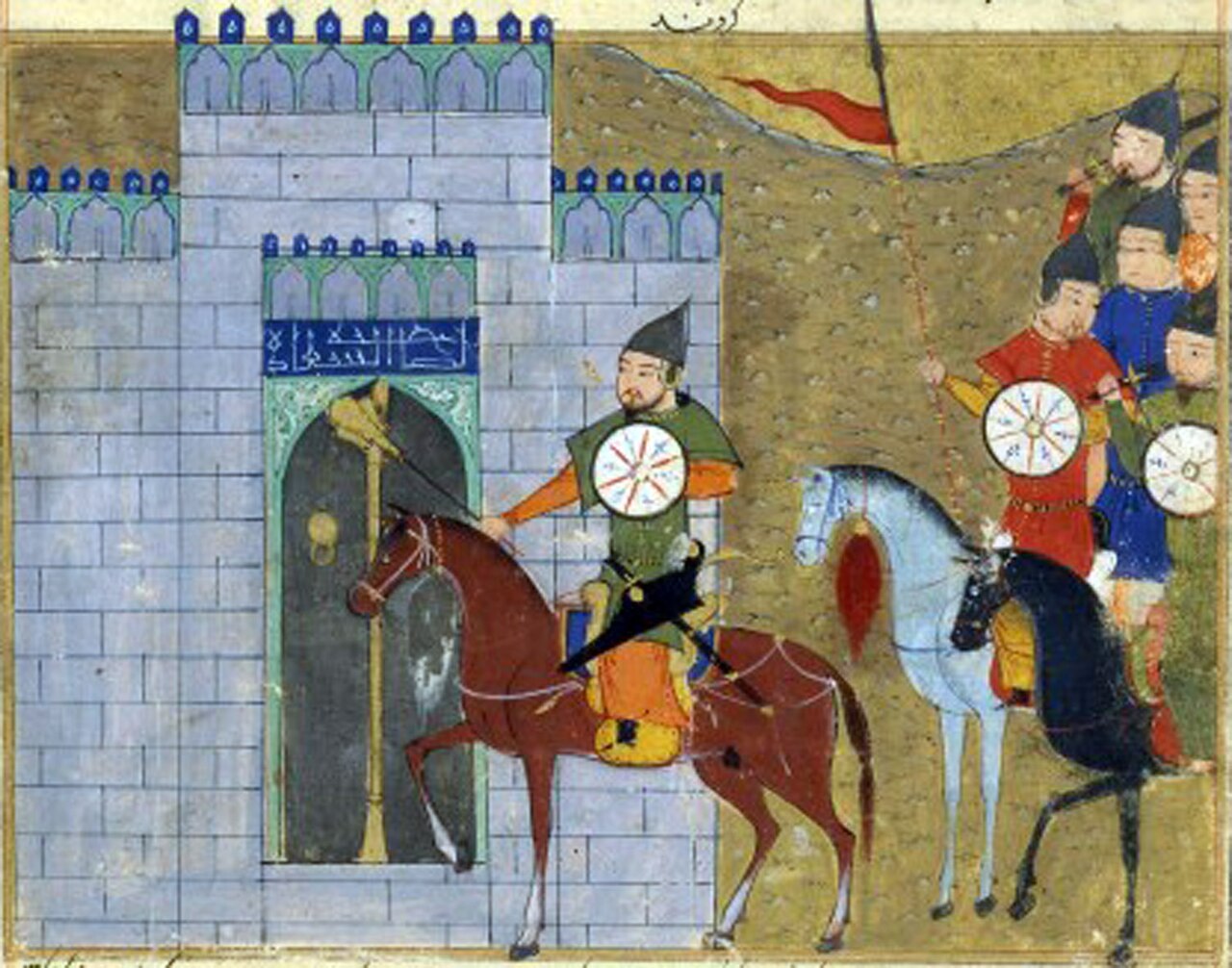
Siege of Beijing 1213-1214 (Jami al-tawarikh miniature)
Sayf al-Vâhidî · 1430
A 1430 manuscript miniature from the Jami al-tawarikh showing a mounted warrior before a walled city, depicting a siege Genghis Khan led against the Jin capital.
An illustration from a later history by Rashid al-Din showing a siege Genghis Khan led, placing him in the wider record of Mongol campaigns.
About this source
What it is
This is a painted miniature from a manuscript of the Jami al-tawarikh, a history written by Rashid al-Din, with the illustration dated 1430. The creator is listed as Sayf al-Vâhidî of Herat, Afghanistan. The image shows a mounted warrior in green and orange armour and a pointed helmet riding before a grey walled city with a gate. Behind him a red-clad rider and a line of helmeted soldiers stand on a golden hillside under a red banner.
Why it matters
The illustration depicts the siege of Beijing from 1213 to 1214, when Genghis Khan's forces attacked the Jin capital. The manuscript itself was written by Rashid al-Din, who worked at the Ilkhanid court in Persia. Images like this show how later Persian artists imagined Mongol campaigns, and they add visual detail to the written history.
Look closer
- How does the painter show the attackers and the city, and which side seems to be in control?
- Why might a 15th-century artist in Herat illustrate a siege that happened in China two centuries earlier?
- What does the picture leave out about the people who lived inside the city?
This painting is part of the curated material that grounds the AI version of Genghis Khan on Humy.ai — when students ask about related events, the AI can quote it and cite it.
More Genghis Khan sources
Meet the AI Genghis Khan →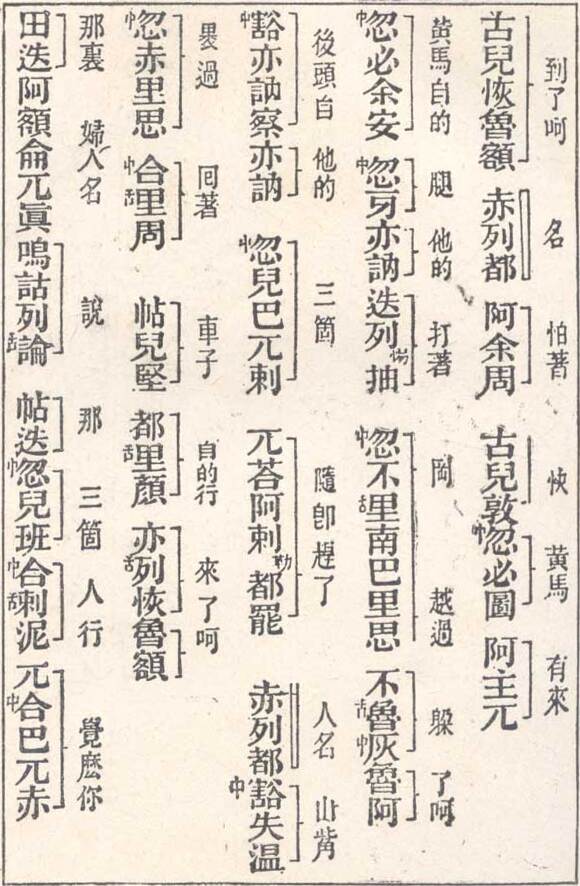 Book
Secondary source
The Secret History of the Mongols
c. 1228 (completed after 1227)
 Painting
Secondary source
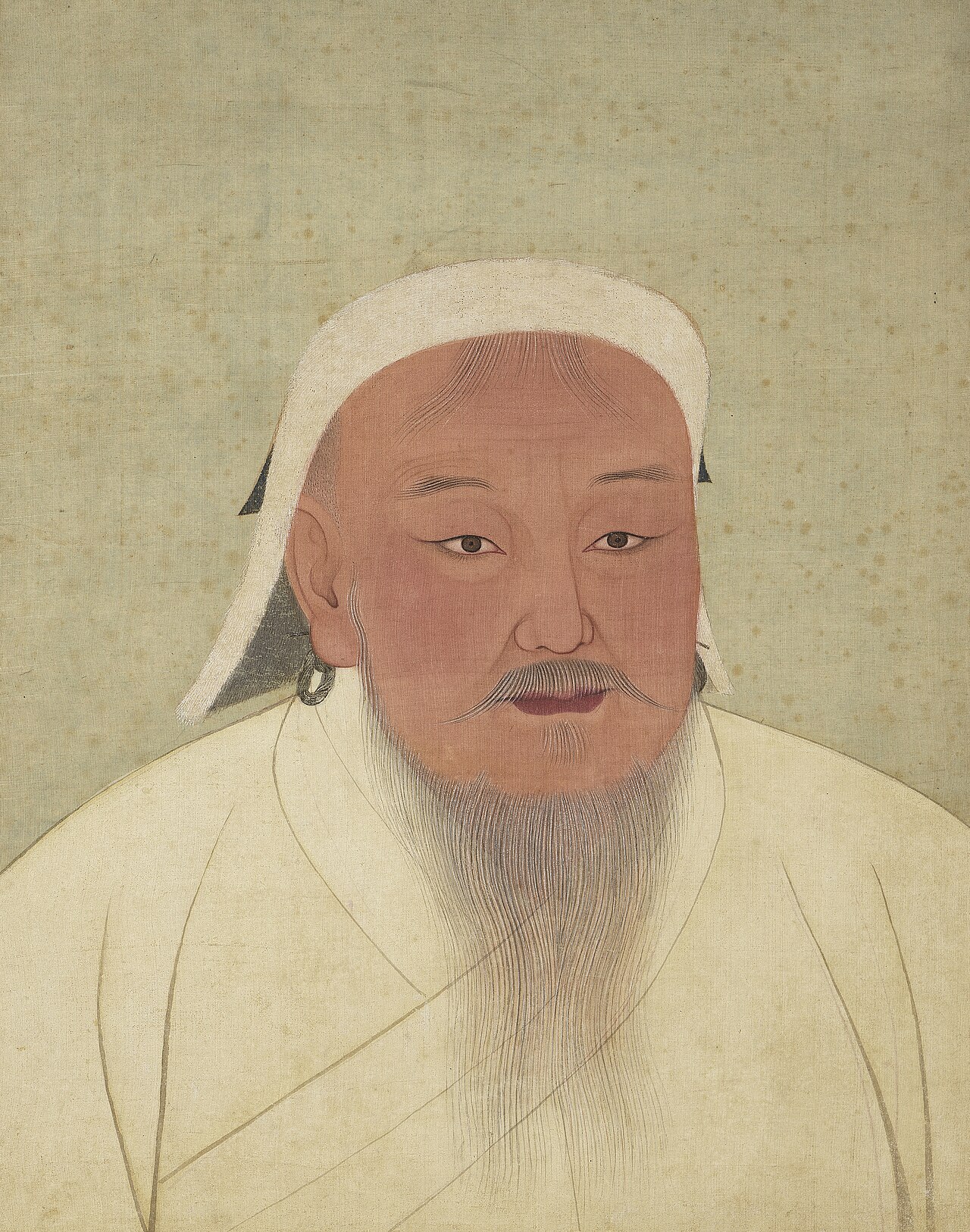
Portrait of Genghis Khan
Unknown Yuan court painter
 Book
Secondary source
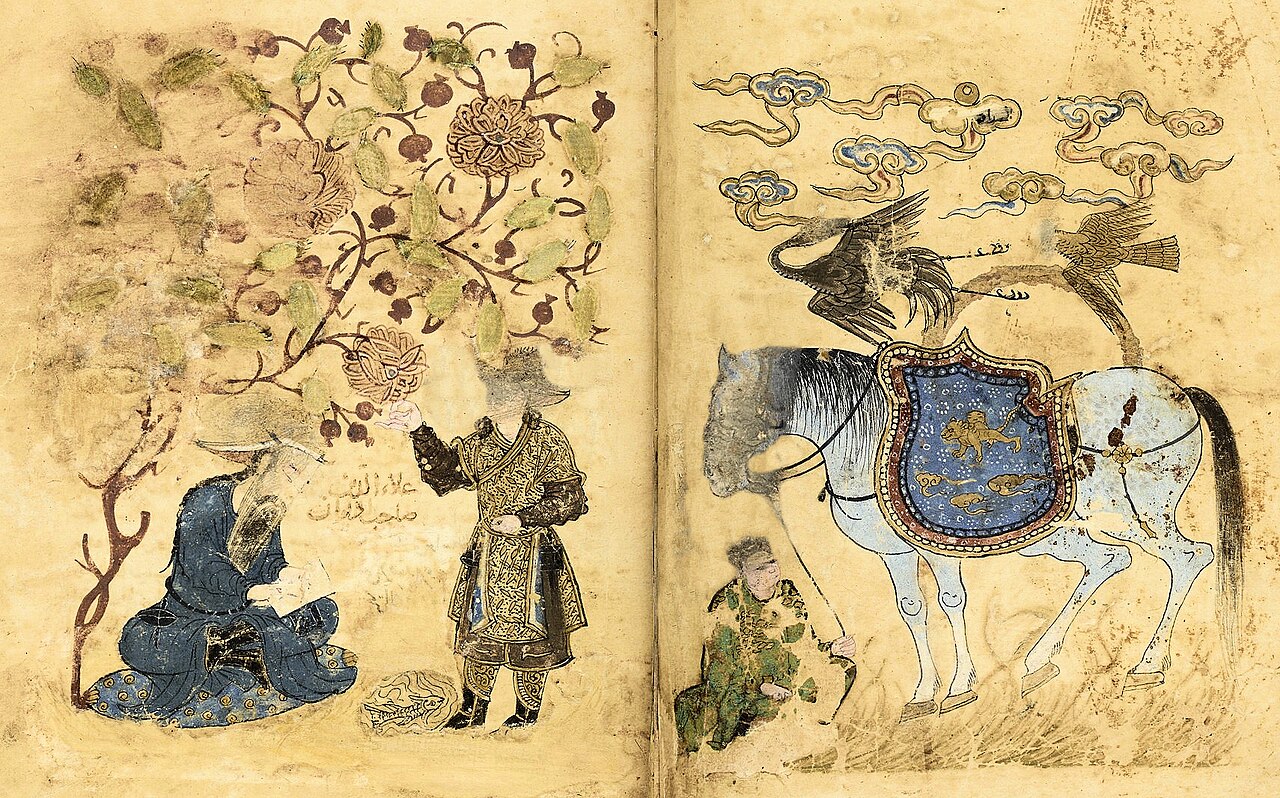
Tarikh-i Jahangushay-i Juvaini
Ata-Malik Juvayni
 Book
Secondary source
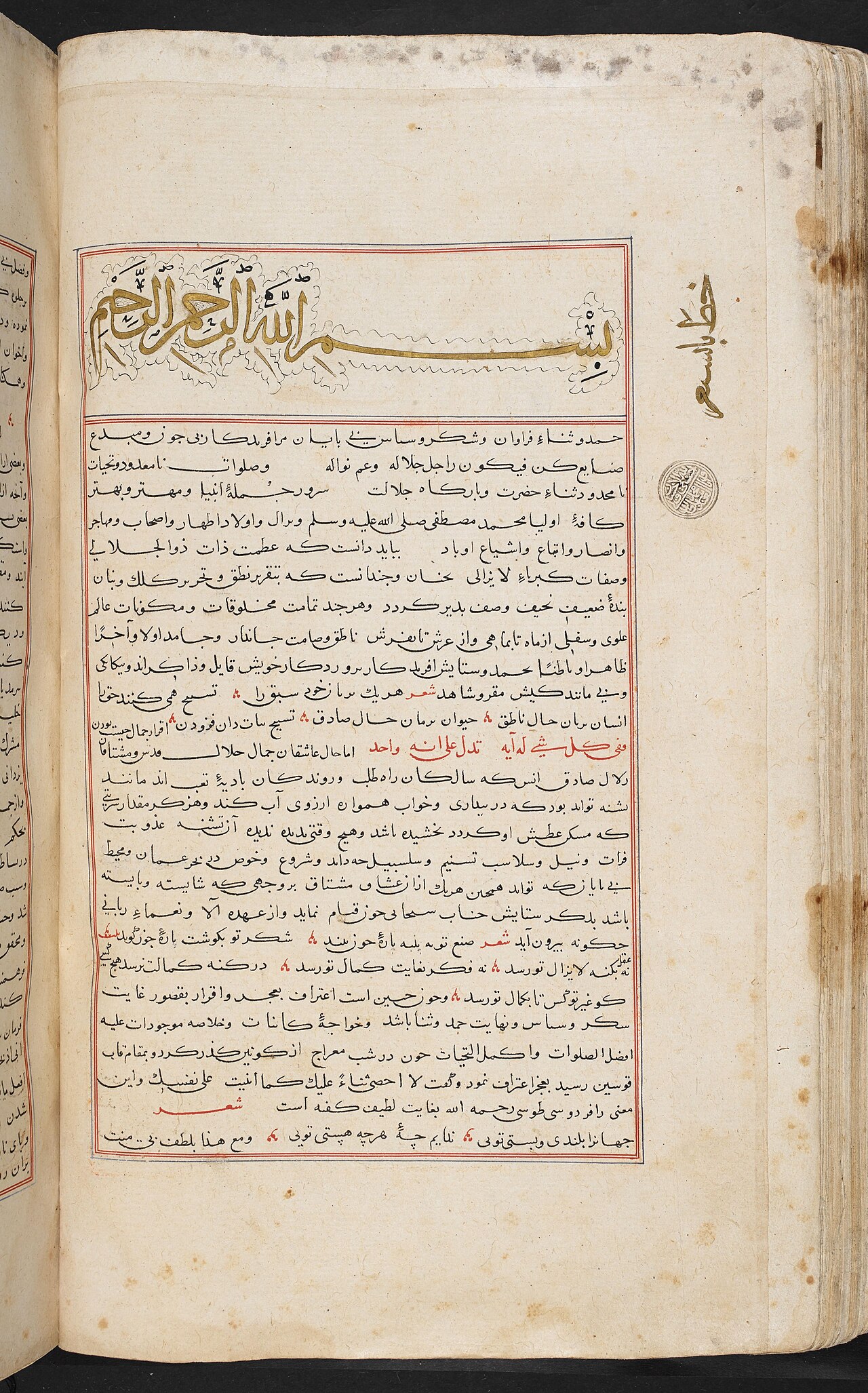
Jami' al-tawarikh
Rashid al-Din Hamadani · c. 1400 (manuscript copy)
 Artifact
Primary source
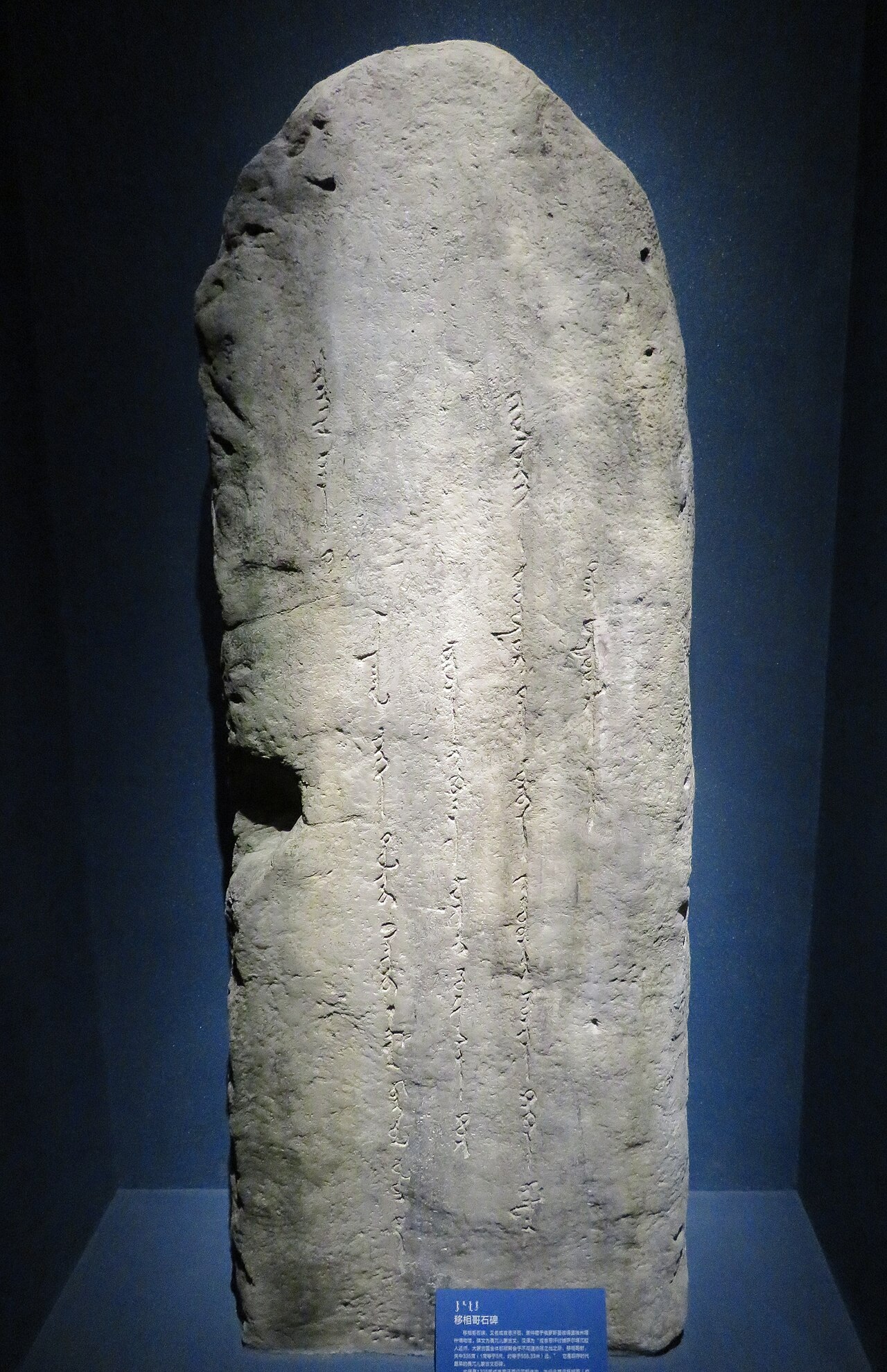
Stele of Genghis Khan
c. 1224-1225
Ready when you are
Start chatting with Genghis Khan now.
20 messages free · No credit card · Available in 50+ languages.