


Secondary sourcePaintingc. 1634
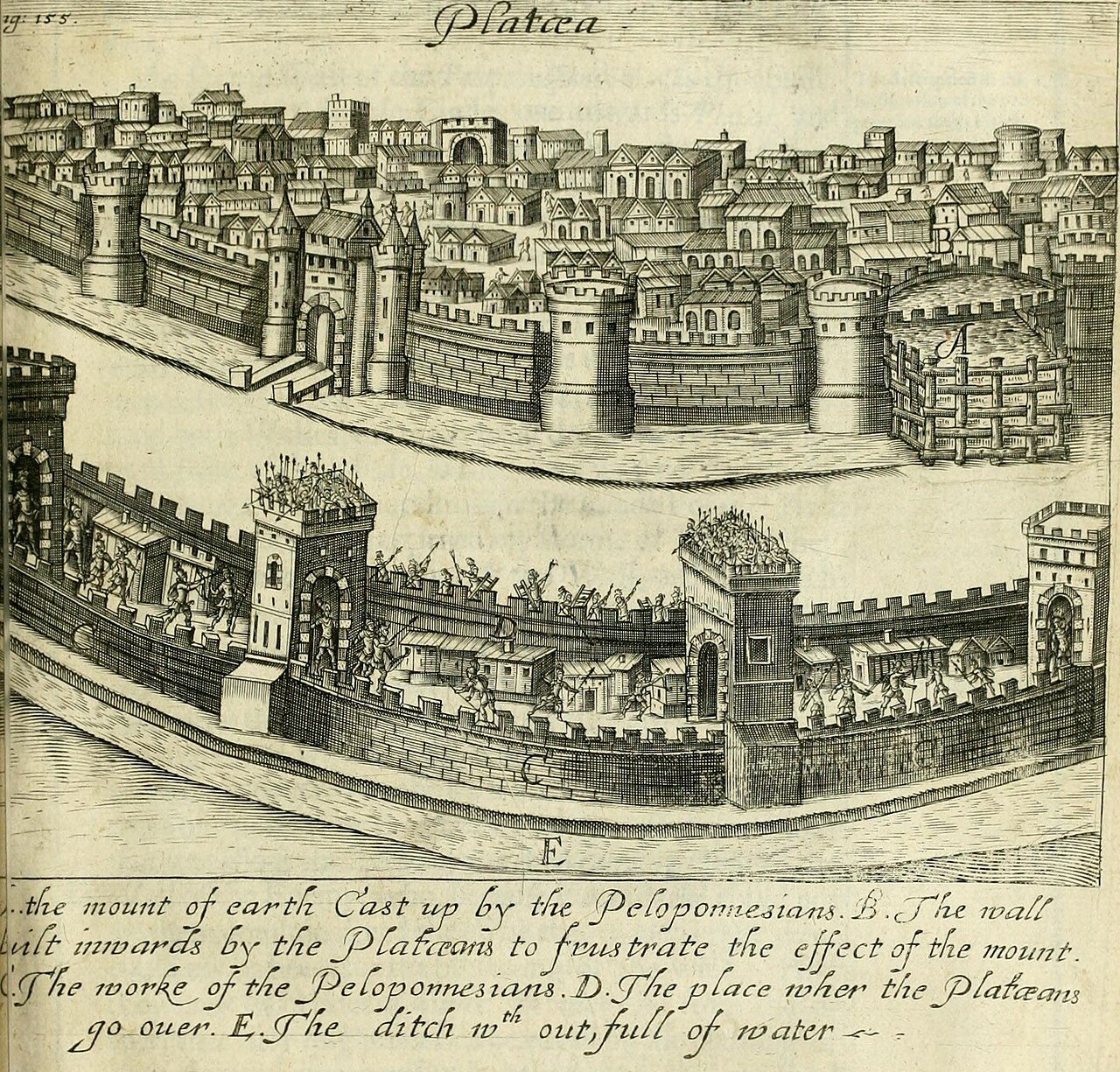
Siege of Plataea, 429-427 BC (1634 Thucydides edition)
c. 1634
An engraved plan from a 1634 English edition of Thucydides' history, showing the siege of Plataea that he describes.
Illustrates a siege the figure describes in his history, printed in a later edition of that work.
About this source
What it is
This is an engraved print titled Plataea, dated around 1634, from an edition of Thucydides' history. The top shows a walled town with houses and towers, with a mound of earth and wooden structures beside the walls. The bottom shows a wall with soldiers, tall towers with figures, and a moat, with an explanatory caption in italic type.
Why it matters
Thucydides described the siege of Plataea, which took place between 429 and 427 BC, during the Peloponnesian War. This plan was made long after his time, so it is a later printed interpretation of his account, not a record made by him. It shows how readers in the 1600s tried to picture a siege that the ancient historian had described in words.
Look closer
- What do the mound, wooden structures and towers suggest about how a siege was carried out?
- What might an artist have had to guess at when drawing a place described only in written words?
This painting is part of the curated material that grounds the AI version of Thucydides on Humy.ai — when students ask about related events, the AI can quote it and cite it.
More Thucydides sources
Browse all 71 →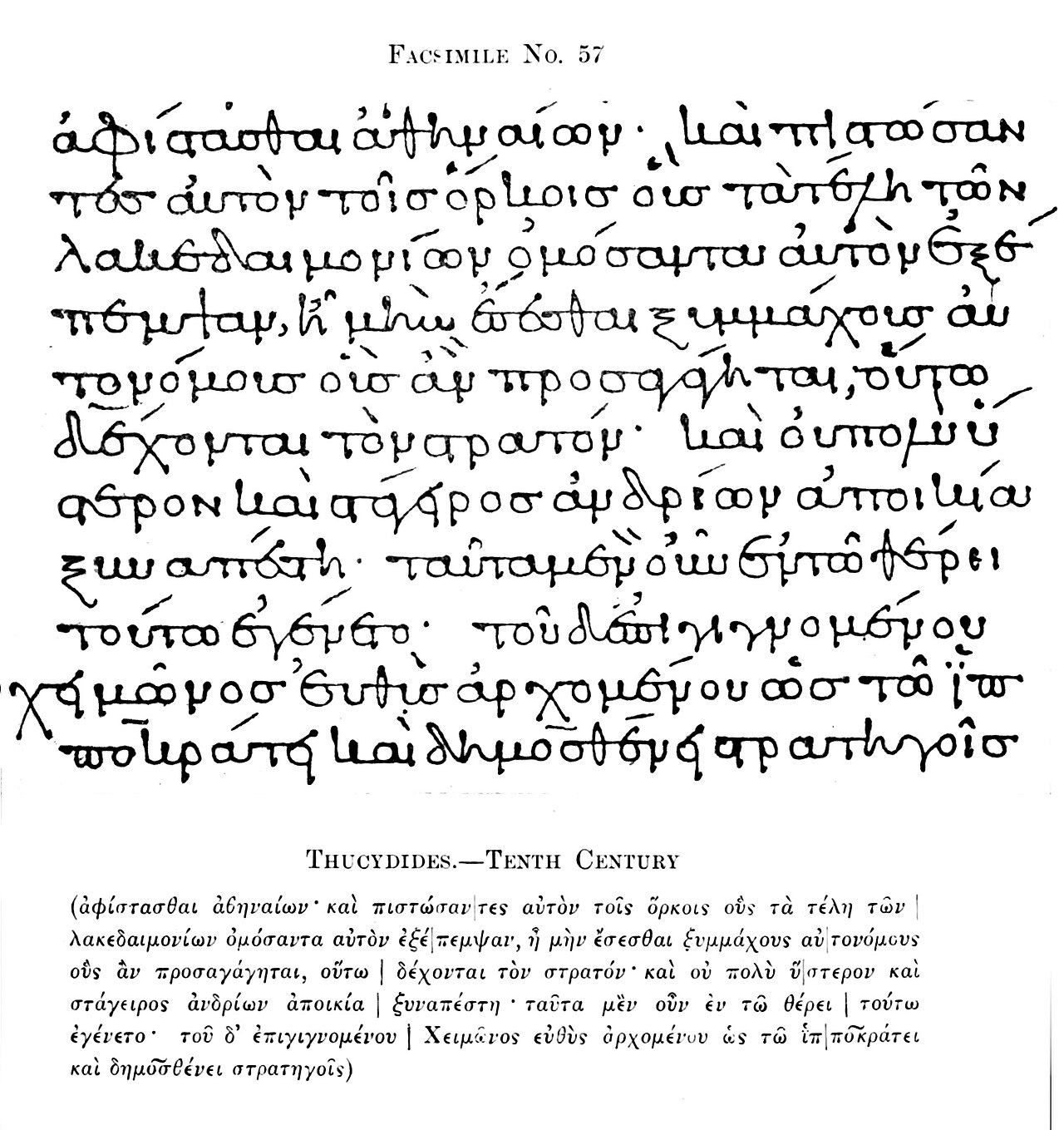 Book
Primary source
History of the Peloponnesian War
Thucydides · 5th century BCE
 Speech
Secondary source
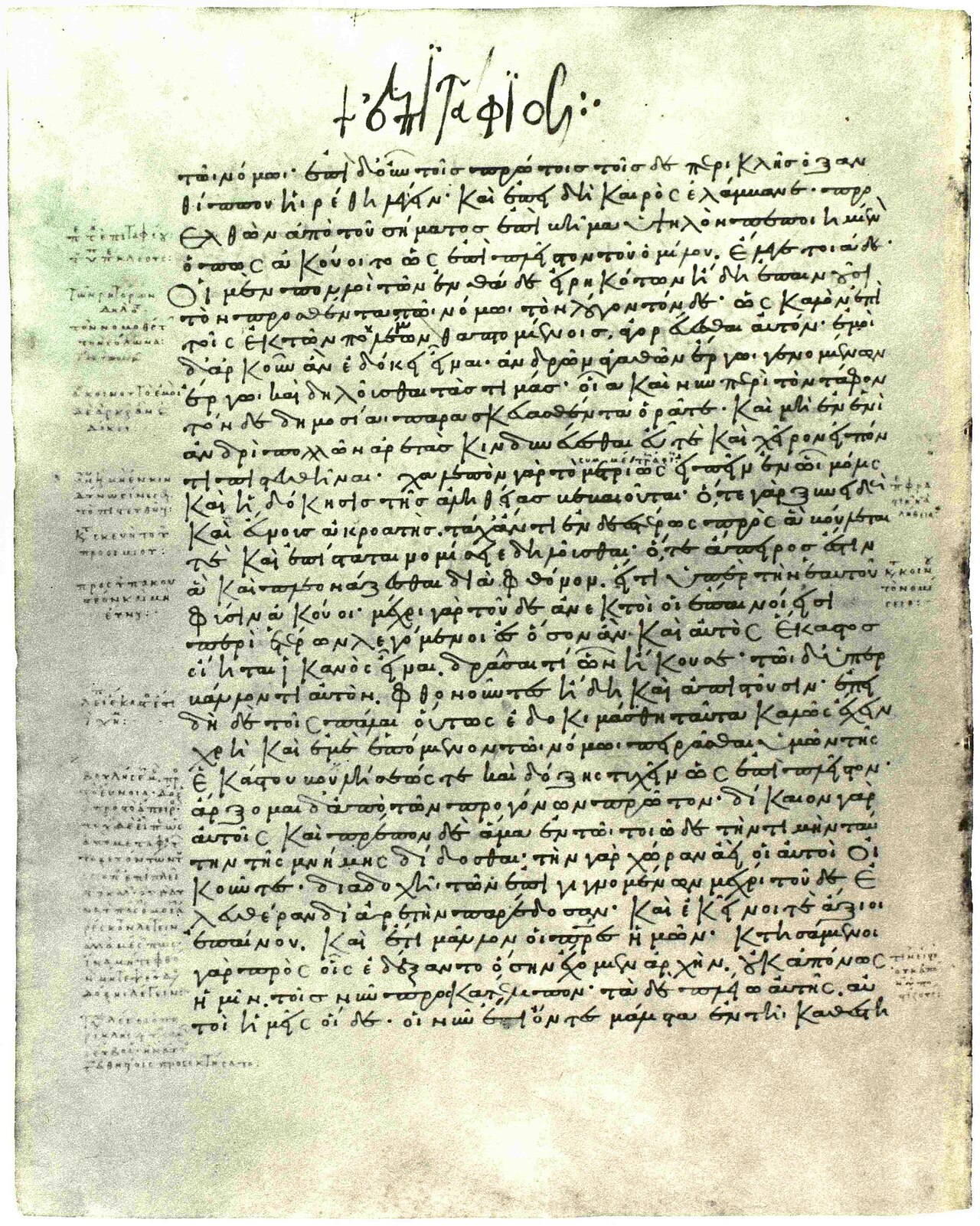
Pericles' Funeral Oration
Thucydides · 431/430 BCE
 Document
Secondary source
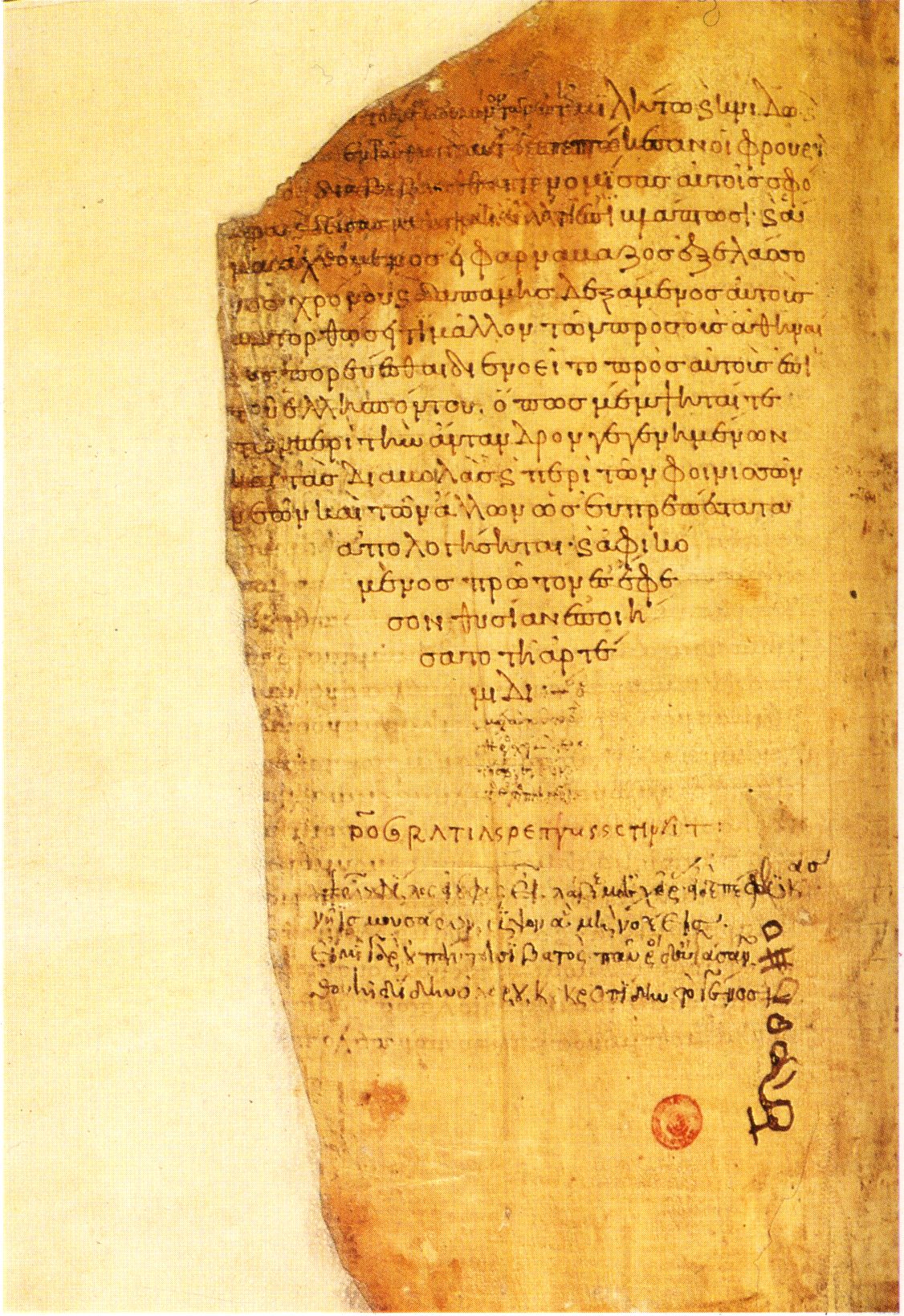
Thucydides, Florence, Plut. 69.2
10th century AD
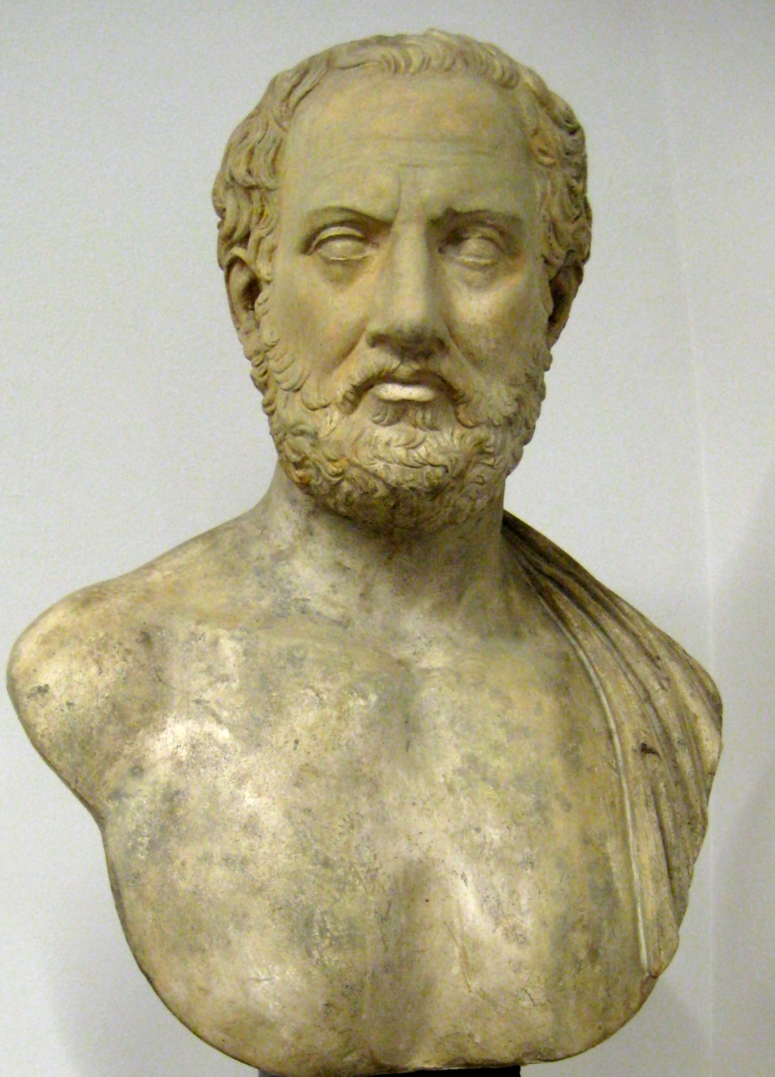 Sculpture
Secondary source
Portrait of Thucydides
Unknown Roman sculptor (after a Greek original) · Roman copy c. 100 CE of a Greek original of the early 4th century BCE; this cast early 20th century
Free account
Read every Thucydides source
Sign up free →
Ready when you are
Start chatting with Thucydides now.
20 messages free · No credit card · Available in 50+ languages.