


Tertiary sourcePhotograph
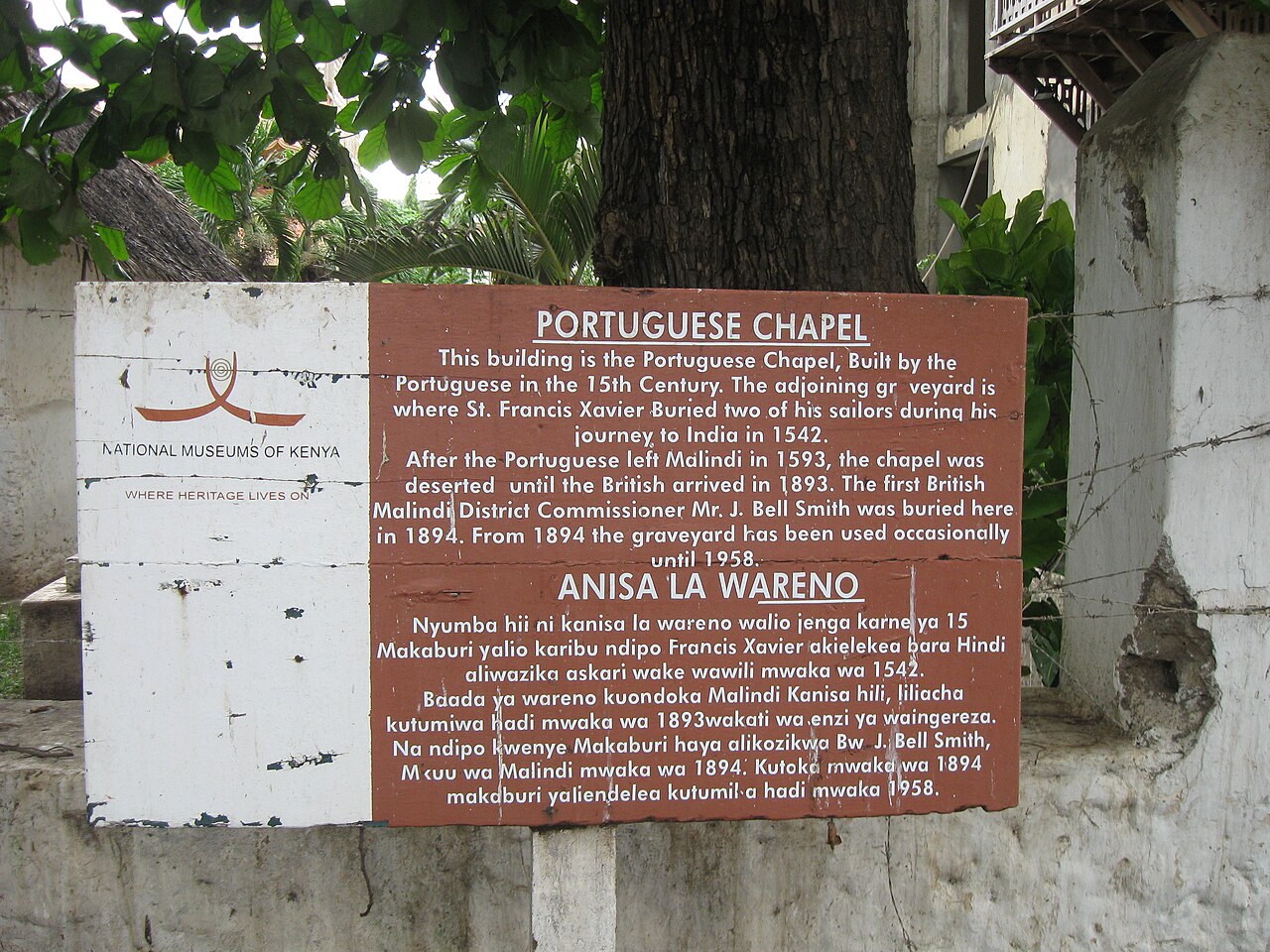
Signboard at the Portuguese Chapel, Malindi
Ruslik0
A museum signboard at a chapel in Kenya noting that Xavier buried two sailors there in 1542 during his voyage to India.
The chapel's graveyard received two sailors from Xavier's 1542 voyage to India, a stop on his passage east.
About this source
What it is
This photograph shows a signboard placed by the National Museums of Kenya beside the Portuguese chapel in Malindi, built by the Portuguese in the 15th century.
Why it matters
The sign records that in 1542, on his journey to India, Francis Xavier buried two sailors in the chapel's graveyard. It is a small but concrete trace of the long sea voyages missionaries made along the East African coast, and shows how such journeys connected Europe, Africa and Asia.
Look closer
- Why would a modern museum choose to mark this detail about a 16th-century voyage?
- What does this stop along the route tell us about the dangers of such long sea journeys?
- What is missing from the sign that a sailor's own account of the voyage might add?
This photograph is part of the curated material that grounds the AI version of Francis Xavier on Humy.ai — when students ask about related events, the AI can quote it and cite it.
More Francis Xavier sources
Browse all 85 →

Ready when you are
Start chatting with Francis Xavier now.
20 messages free · No credit card · Available in 50+ languages.