


Secondary sourceDocument1713
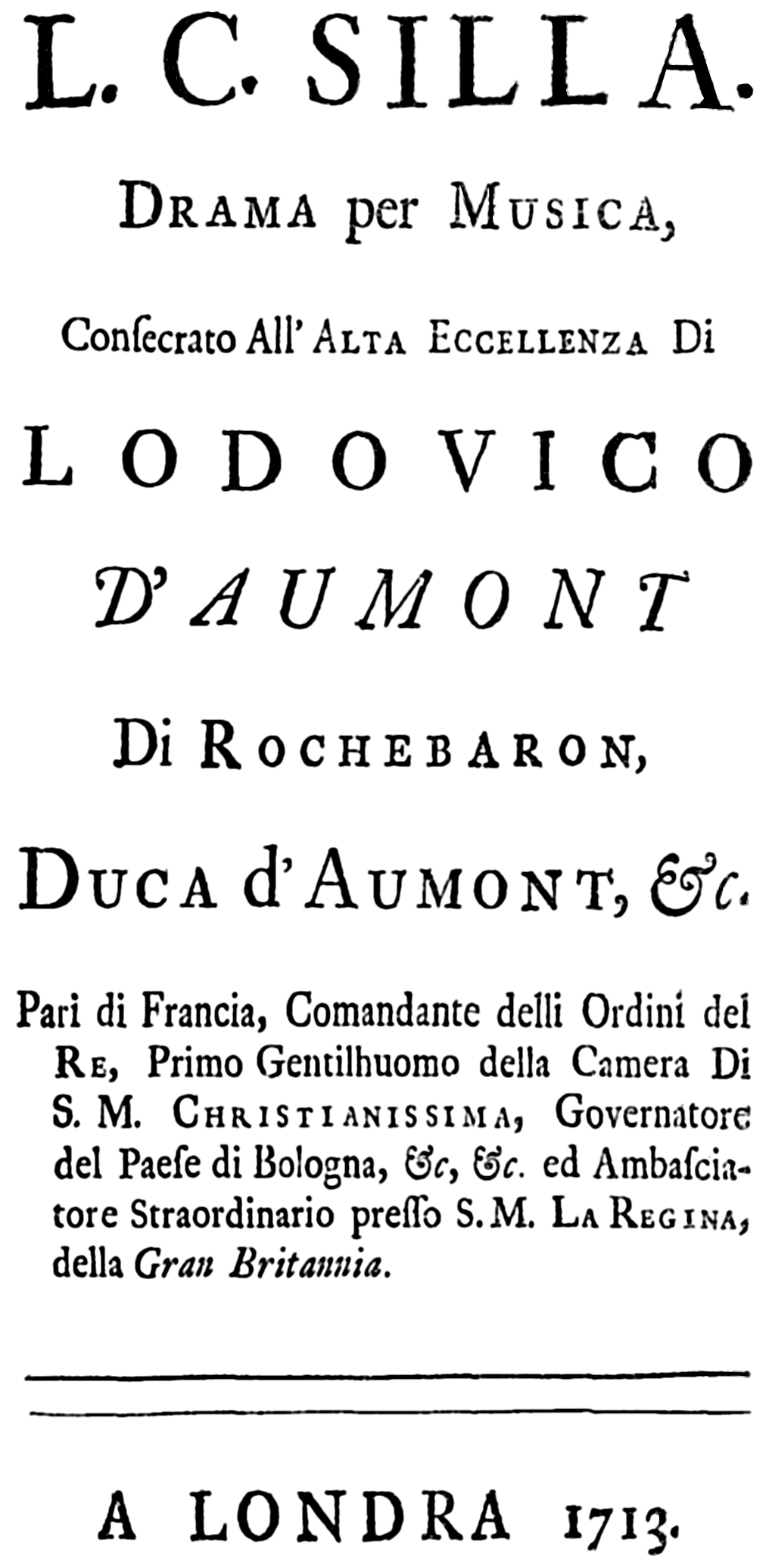
Silla
George Frideric Handel · 1713
George Frideric Handel's 1713 opera casting the Roman dictator Sulla as a tyrannical seducer, based on Plutarch's account of his life.
Handel's opera dramatizes Sulla as a tyrannical dictator, showing his later reputation in European culture.
About this source
What it is
Silla (full title Lucio Cornelio Silla) is an opera in three acts composed by George Frideric Handel in 1713, with an Italian libretto by Giacomo Rossi, based on Plutarch's account of the Roman dictator Lucius Cornelius Sulla. It was likely performed only once, possibly at Burlington House in London, and some of its music was later reused in Handel's opera Amadigi di Gaula.
Why it matters
In the opera, Sulla returns to Rome victorious, declares himself dictator, and then abuses his power by pursuing other men's wives and ordering executions of those who oppose him. The work shows how, nearly 1800 years after his death, Sulla had become a stock figure for tyranny in European culture — a lesson in absolute power used for Handel's early 18th-century London audience.
Look closer
- Why might an 18th-century composer choose an ancient Roman dictator as an opera subject?
- How does the opera's plot compare with what ancient sources say actually happened?
- What does turning a historical figure into a villain in a drama leave out about them?
This document is part of the curated material that grounds the AI version of Sulla and George Frideric Handel on Humy.ai — when students ask about related events, the AI can quote it and cite it.
Ready when you are
Start chatting with Sulla now.
20 messages free · No credit card · Available in 50+ languages.