


Primary sourceArtifact792 AH (14th century)
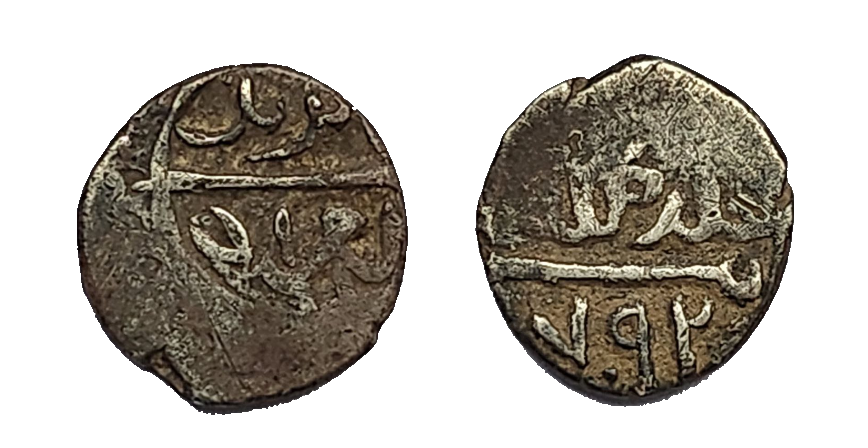
Silver akçe coin of Bayezid I
792 AH (14th century)
A silver coin struck during the reign of Bayezid I, naming him as son of Murad and bearing the date 792 AH.
This coin was struck in Bayezid I's name during his reign, making it a direct physical record of his rule.
About this source
What it is
This is a small silver coin, called an akçe, struck under the authority of Sultan Bayezid I. One side names him "Bayezid, son of Murad" in Arabic script, and the other carries a blessing for his reign along with the date 792 in the Islamic (AH) calendar.
Why it matters
Coins like this were struck in the sultan's name as a sign of his authority over the territory and economy of the Ottoman state. Because it was made during Bayezid's own reign, it is a primary, physical trace of his rule, naming him directly and linking him to his father Murad I.
Look closer
- Why would a ruler put his own name and his father's name on money people used every day?
- What does the worn, hand-struck look of the coin tell you about how it was made and used?
- What can a coin tell historians that a written chronicle cannot?
This artifact is part of the curated material that grounds the AI version of Bayezid I on Humy.ai — when students ask about related events, the AI can quote it and cite it.
More Bayezid I sources
Browse all 91 →

Ready when you are
Start chatting with Bayezid I now.
20 messages free · No credit card · Available in 50+ languages.