


Primary sourceArtifact1181-1190
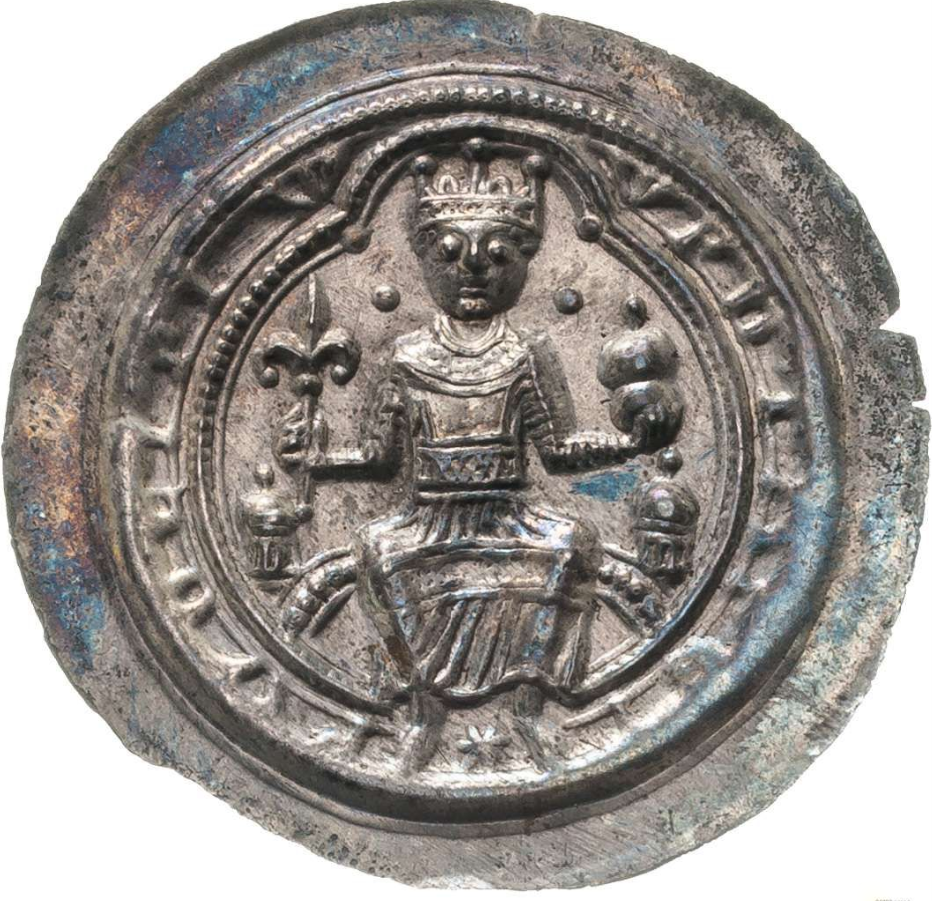
Silver Bracteate of Frederick I Barbarossa
1181-1190
A thin silver coin struck in Frederick Barbarossa's name, showing the enthroned emperor with sceptre and orb.
This coin, struck in his name during his reign, shows how Frederick's image circulated as money across the empire.
About this source
What it is
This is a silver bracteate, a thin one-sided coin, struck between about 1181 and 1190 in Saalfeld, Thuringia. It shows the emperor seated between two towers, holding a lily-sceptre in one hand and a double orb in the other, with a star and two small circles in the field. The inscription around the edge is a meaningless imitation of lettering. It is held by the Herzog Anton Ulrich Museum.
Why it matters
Coins carried the ruler's image into everyday use across the empire, making them a key tool for spreading an image of authority even to people who never saw the emperor. That the lettering is not real text shows how local mints copied imperial designs without always understanding the writing, revealing how coin imagery spread and changed.
Look closer
- Why would a ruler want his image on money people used every day?
- What might it mean that the inscription is not readable, real writing?
- What symbols on the coin mark the figure as an emperor?
This artifact is part of the curated material that grounds the AI version of Frederick Barbarossa on Humy.ai — when students ask about related events, the AI can quote it and cite it.
More Frederick Barbarossa sources
Browse all 95 →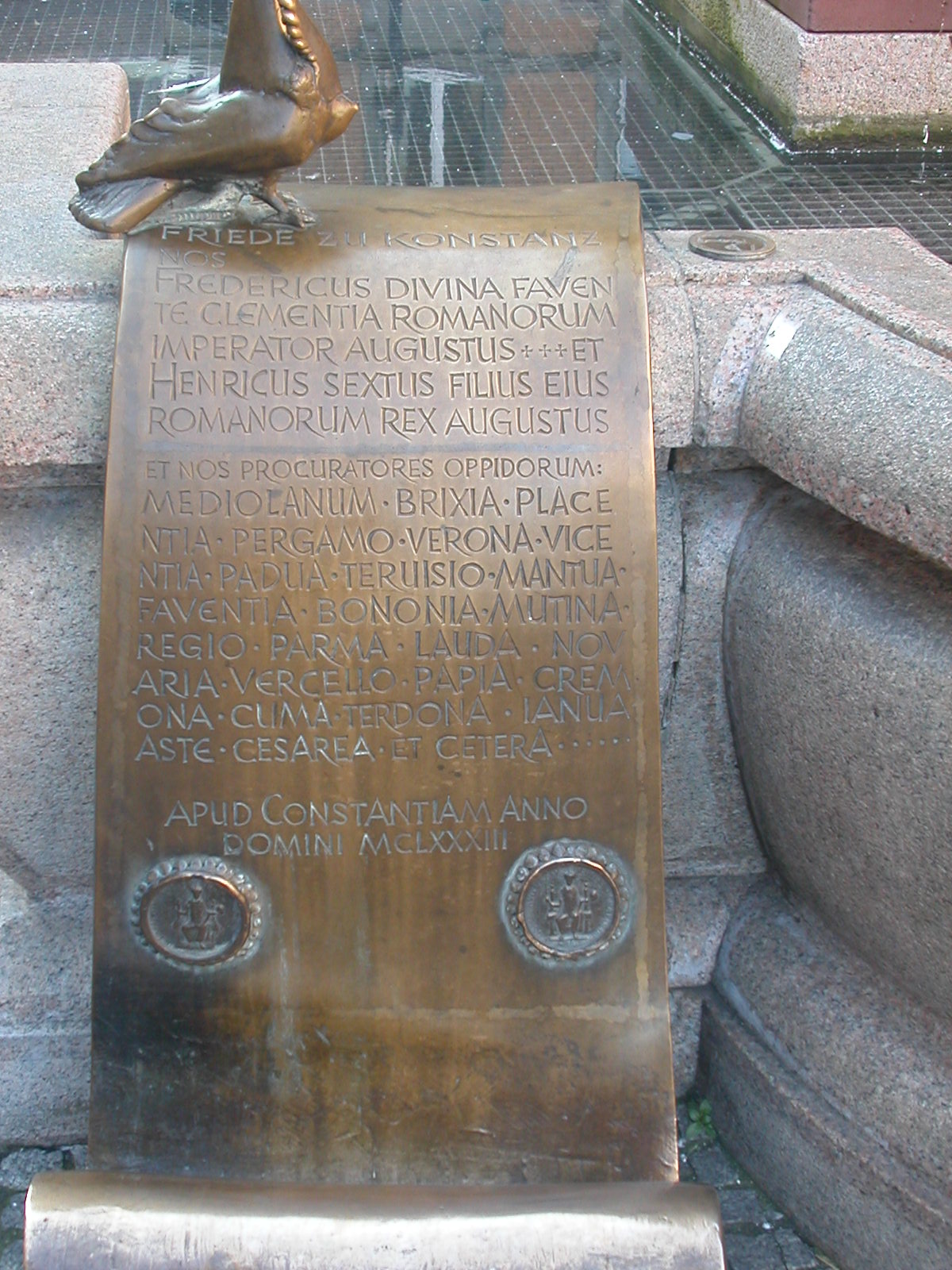 Document
Primary source
Peace of Constance
Frederick I Barbarossa · 25 June 1183
 Sculpture
Primary source
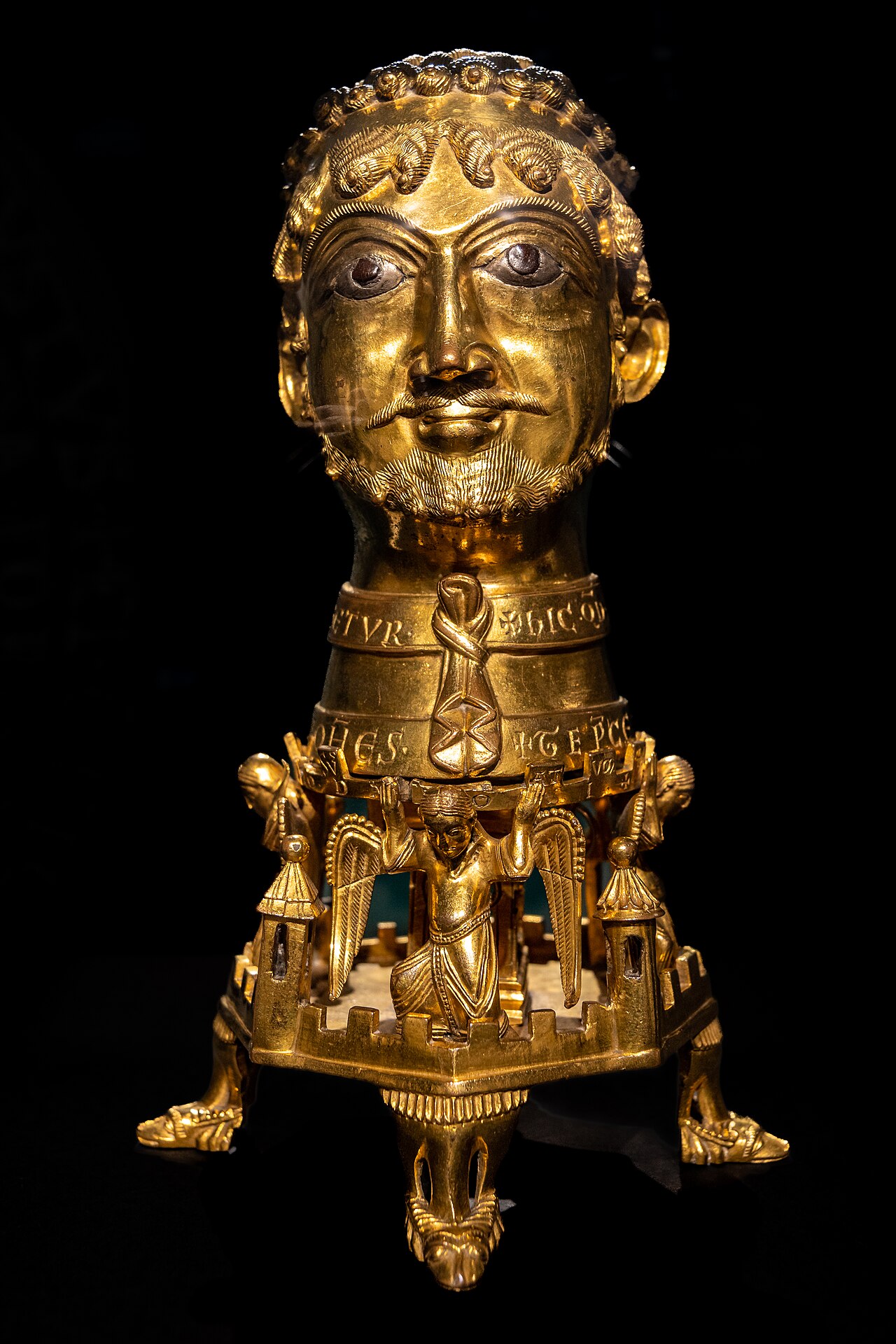
Cappenberg Head
c. 1160
 Artifact
Primary source
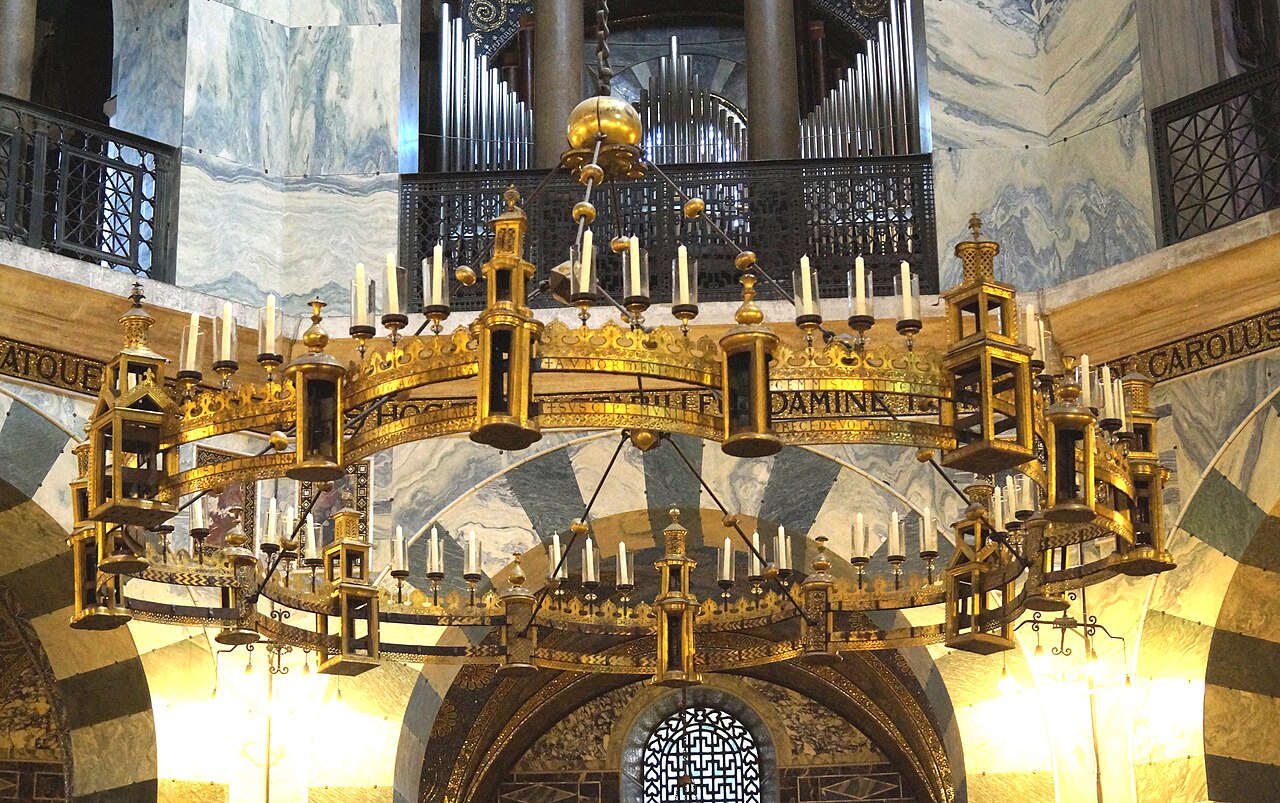
Barbarossa Chandelier
c. 1165-1170
 Document
Primary source
Authentica habita
Frederick I Barbarossa · c. 1155
Free account
Read every Frederick Barbarossa source
Sign up free →
Ready when you are
Start chatting with Frederick Barbarossa now.
20 messages free · No credit card · Available in 50+ languages.