


Secondary sourceArtifact1252-1256 (plate published 19th century)
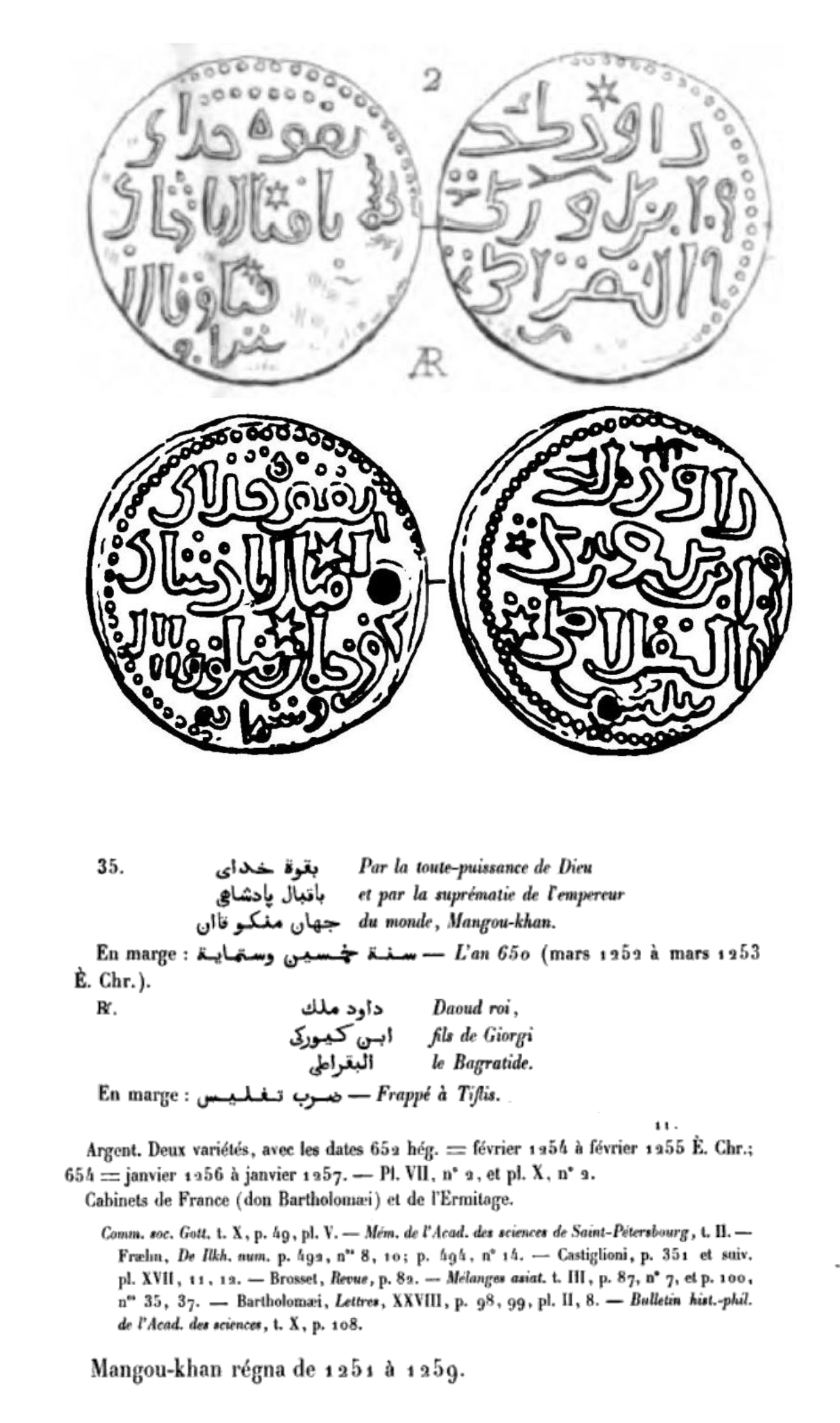
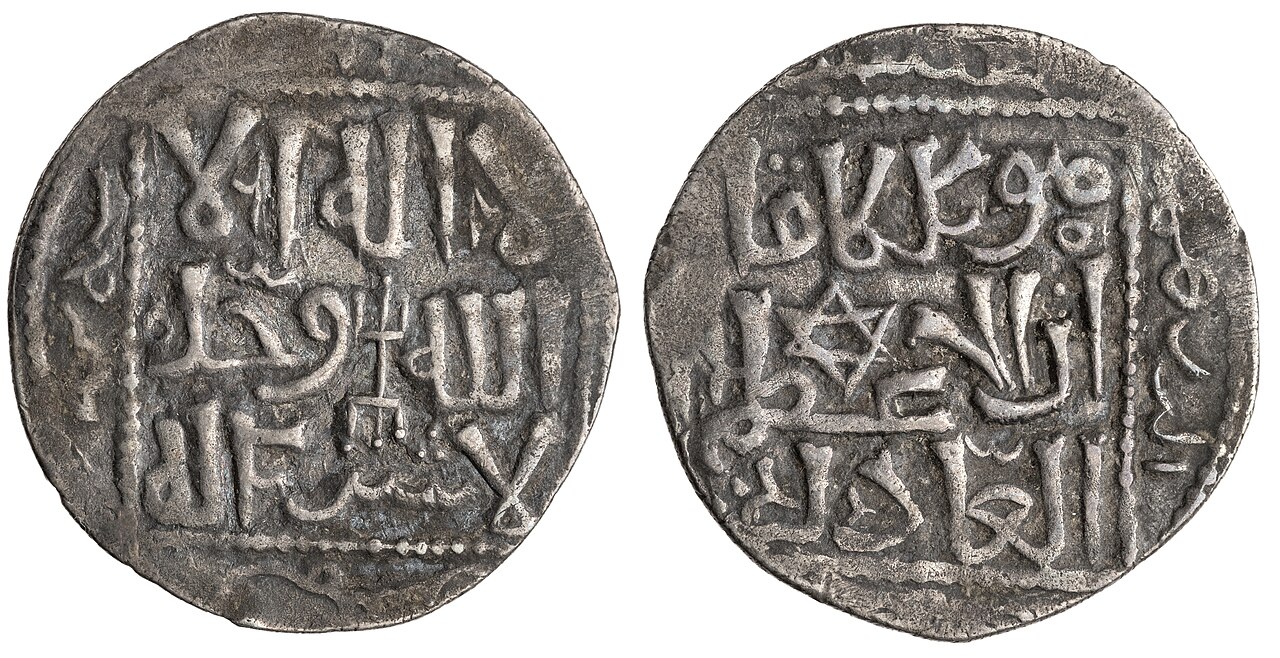
Silver Coins of David VII Ulugh
Victor Langlois · 1252-1256 (plate published 19th century)
Coins struck by a Georgian vassal king, David VII Ulugh, acknowledging the overlordship of Mongol Great Khan Möngke.
These coins show a Georgian vassal king recognizing Möngke's overlordship, evidence of his empire's reach into the Caucasus.
About this source
What it is
This is an engraved plate showing silver coins minted at Tiflis (Tbilisi) between 1252 and 1256, in the name of David VII Ulugh, a Georgian king under Mongol rule. The plate was produced by Victor Langlois, a 19th-century scholar who studied Eastern coinage.
Why it matters
The coins document how local rulers across the Mongol Empire acknowledged the authority of the Great Khan, Möngke, by putting his overlordship into their own currency. They show how far Mongol power reached into the Caucasus region and how subject kings like David VII had to signal loyalty.
Look closer
- Why would a local king put a foreign ruler's name or symbols on his own coins?
- What does this tell you about how the Mongol Empire controlled distant lands without always ruling directly?
- This is a 19th-century drawing of the coins, not the coins themselves — how might that change what we can learn from it?
This artifact is part of the curated material that grounds the AI version of Möngke Khan on Humy.ai — when students ask about related events, the AI can quote it and cite it.
More Möngke Khan sources
Browse all 36 →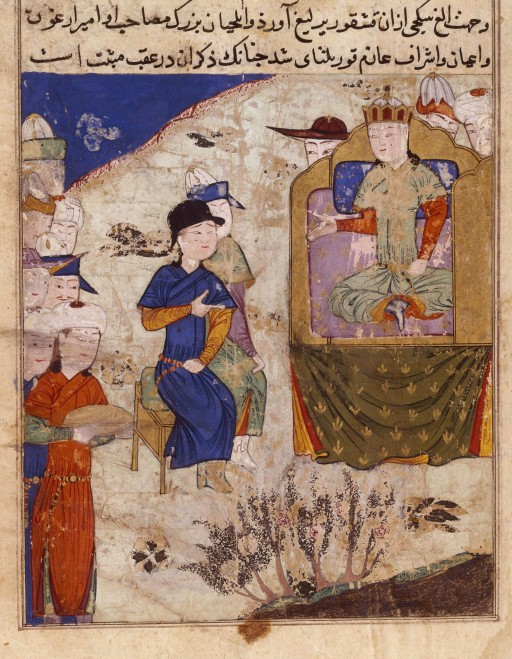 Painting
Secondary source
Audience with Möngke
Abdullâh Sultân (atelier), Shiraz · 1438
 Painting
Secondary source
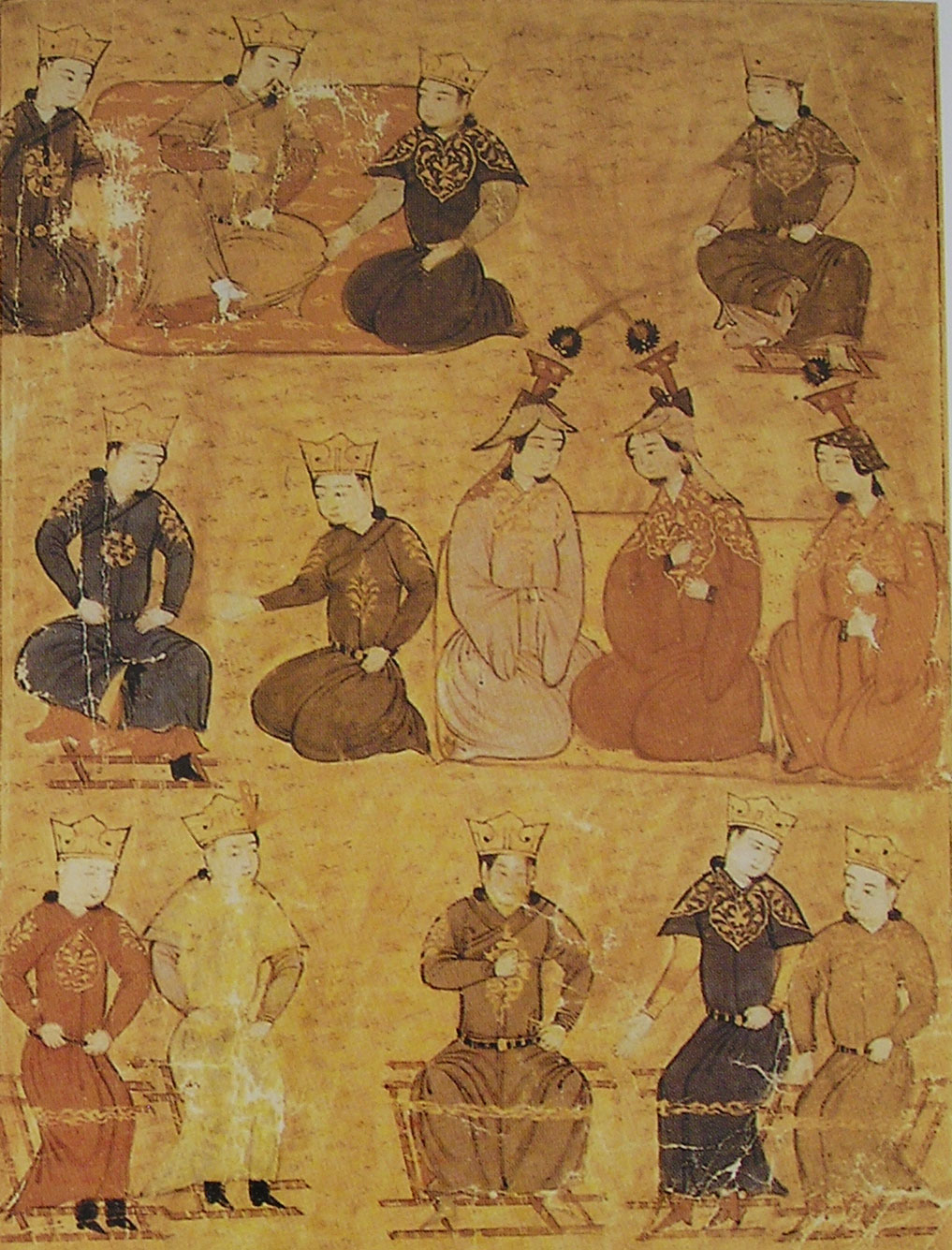
Möngke Khan in the Chronicle of Rashid al-Din
Rashid al-Din (text); unnamed court painter
 Painting
Secondary source
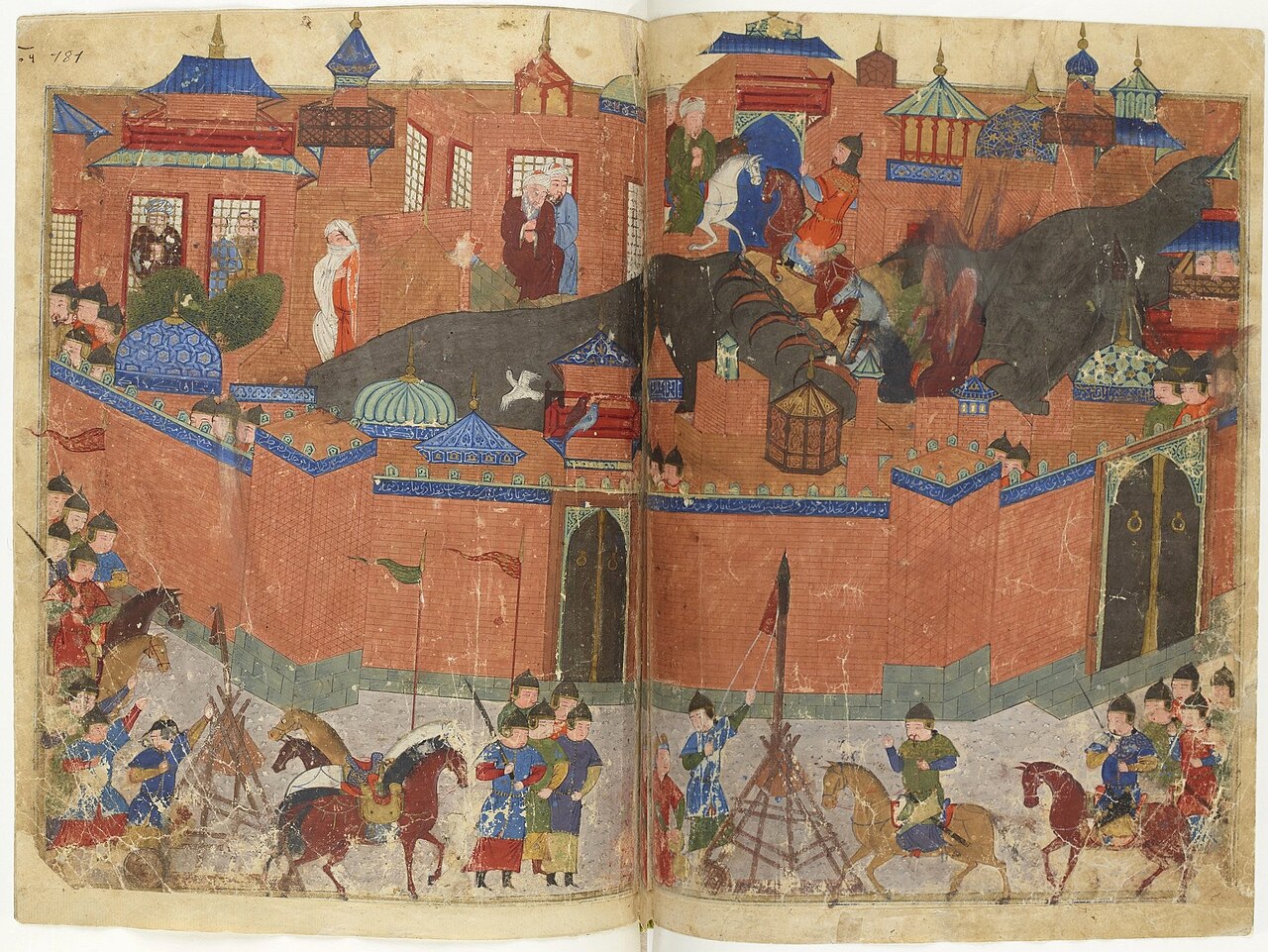
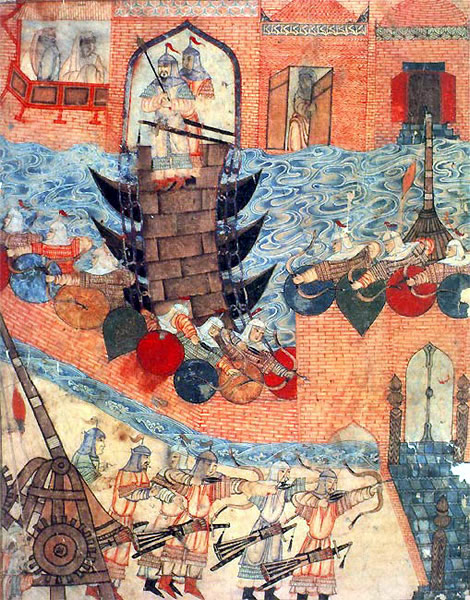
Mongols Besieging Baghdad in 1258
Sayf al-Vahidi · c. 1430-1434
 Painting
Secondary source
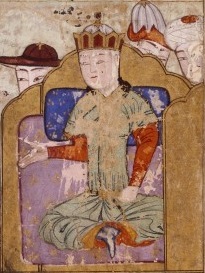
Portrait of Möngke Khan
Free account
Read every Möngke Khan source
Sign up free →
Ready when you are
Start chatting with Möngke Khan now.
20 messages free · No credit card · Available in 50+ languages.