


Primary sourceArtifact1914
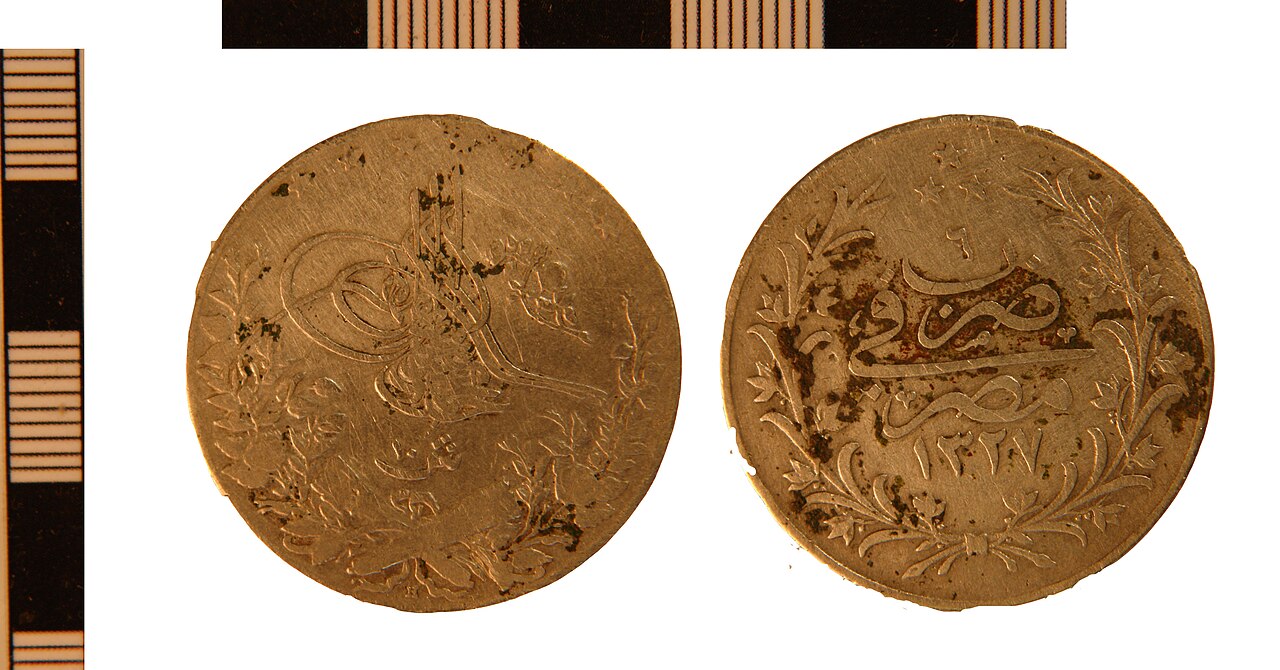
Silver Ten Qirsh Coin of Sultan Mohammed V
1914
A silver coin struck in Egypt in 1914 bearing the name and tughra of Sultan Mehmed V, found centuries later in England.
This coin was struck in Mehmed V's name as sultan, showing his nominal authority over Ottoman Egypt.
About this source
What it is
This is a silver ten qirsh coin minted in Egypt during the sixth year of the reign of Sultan Mohammed V (Mehmed V), corresponding to 1914. It carries his ornate tughra, or calligraphic monogram, on one side and the Arabic word for Egypt with the date on the other. It was discovered as part of the Winterton hoard and is held by North Lincolnshire Museum.
Why it matters
Coins like this were struck in the Sultan's name even in provinces like Egypt, which was still nominally under Ottoman rule though effectively controlled by Britain. In this very year, 1914, Egypt formally became a British Protectorate, making the coin a snapshot of a crumbling empire. It shows how Mehmed V's authority was symbolic as much as real by this point in Ottoman history.
Look closer
- What does the tughra on the coin tell us about how rulers used symbols of power?
- Why might a coin naming an Ottoman Sultan still be minted in a country controlled by Britain?
- What does the coin's journey to England suggest about trade or travel in this period?
This artifact is part of the curated material that grounds the AI version of Mehmed V on Humy.ai — when students ask about related events, the AI can quote it and cite it.
More Mehmed V sources
Browse all 94 →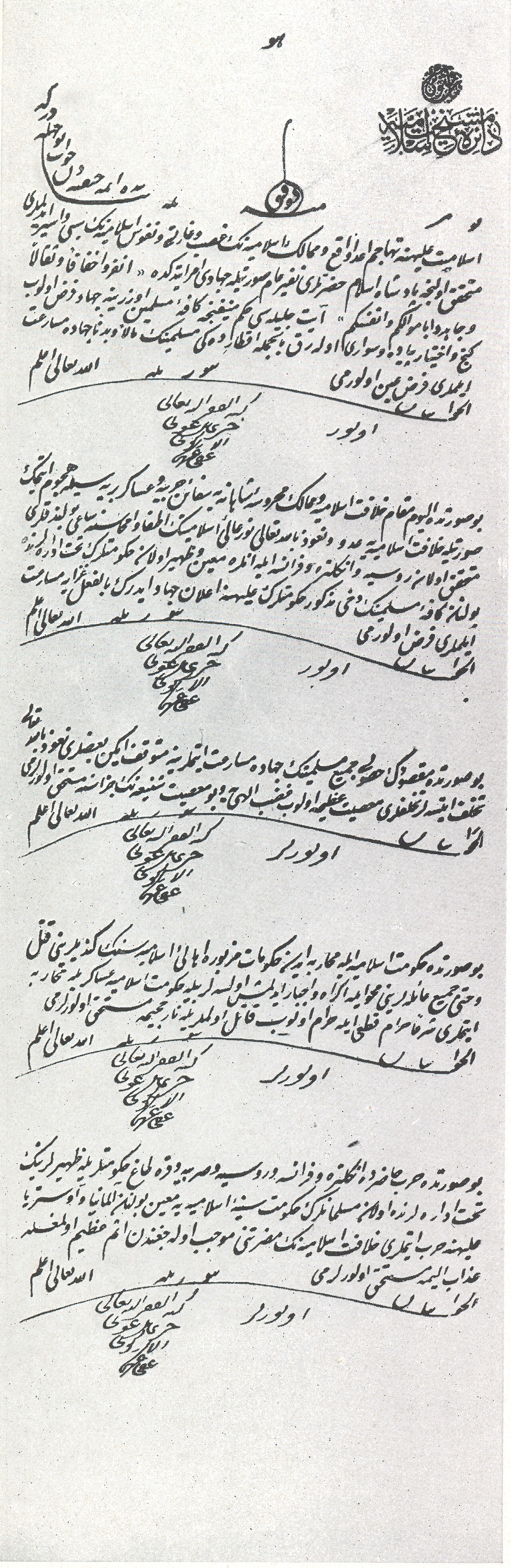 Document
Primary source
Ottoman Declaration of Jihad
Mustafa Hayri Efendi · 11-14 November 1914
Primary source
Sultan Mehmed V Visits Thessaloniki
Manaki brothers · 1911
 Artifact
Primary source
Tughra of Mehmed V
1909-1918
 Photograph
Primary source
Sultan Mehmed V Greeting Kaiser Wilhelm II at Constantinople
German official photographer · 1917
Free account
Read every Mehmed V source
Sign up free →
Ready when you are
Start chatting with Mehmed V now.
20 messages free · No credit card · Available in 50+ languages.