


Primary sourceArtifactlate 19th century
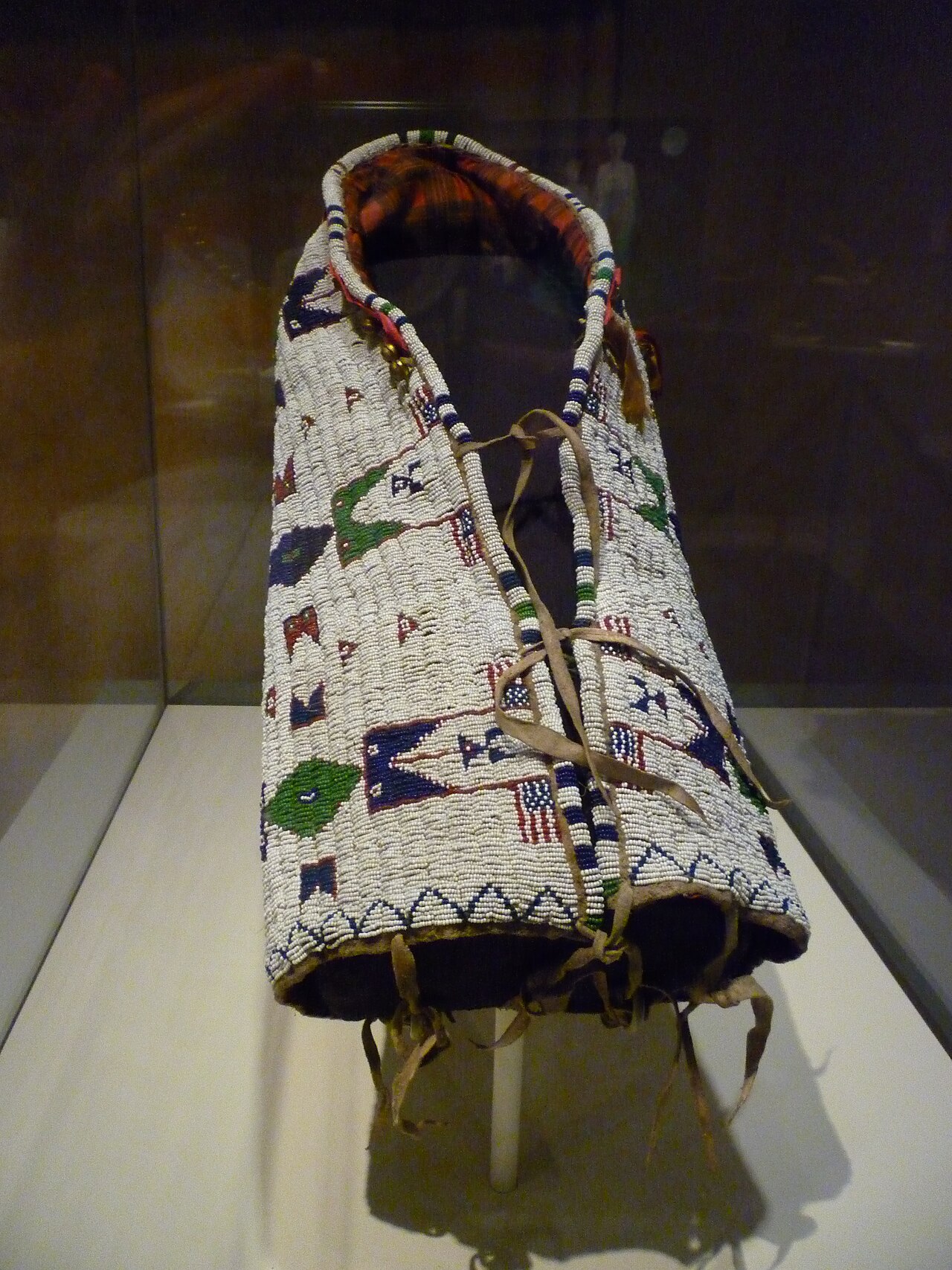
Sioux Beaded Baby Carrier
late 19th century
A beaded Sioux cradleboard from the late 19th century, an example of the Lakota material culture Dee Brown later wrote about.
This Sioux cradleboard illustrates the material culture of the Lakota people and era Brown documented.
About this source
What it is
This is a baby carrier, or cradleboard, made by a Sioux artist in the late 19th century from glass beads, leather, brass and silk, from the Great Plains region of the United States.
Why it matters
Made during the reservation era, this cradleboard is an example of the everyday and ceremonial objects created by Lakota and other Sioux communities during the period historian Dee Brown later chronicled. It shows care for infants and skilled craftsmanship amid difficult historical circumstances.
Look closer
- What do the flag and geometric designs suggest about the maker's world?
- Why might a family invest so much skill and material into an object for a baby?
- What does this object add to our understanding of the history Brown wrote about?
This artifact is part of the curated material that grounds the AI version of Dee Brown on Humy.ai — when students ask about related events, the AI can quote it and cite it.
More Dee Brown sources
Meet the AI Dee Brown →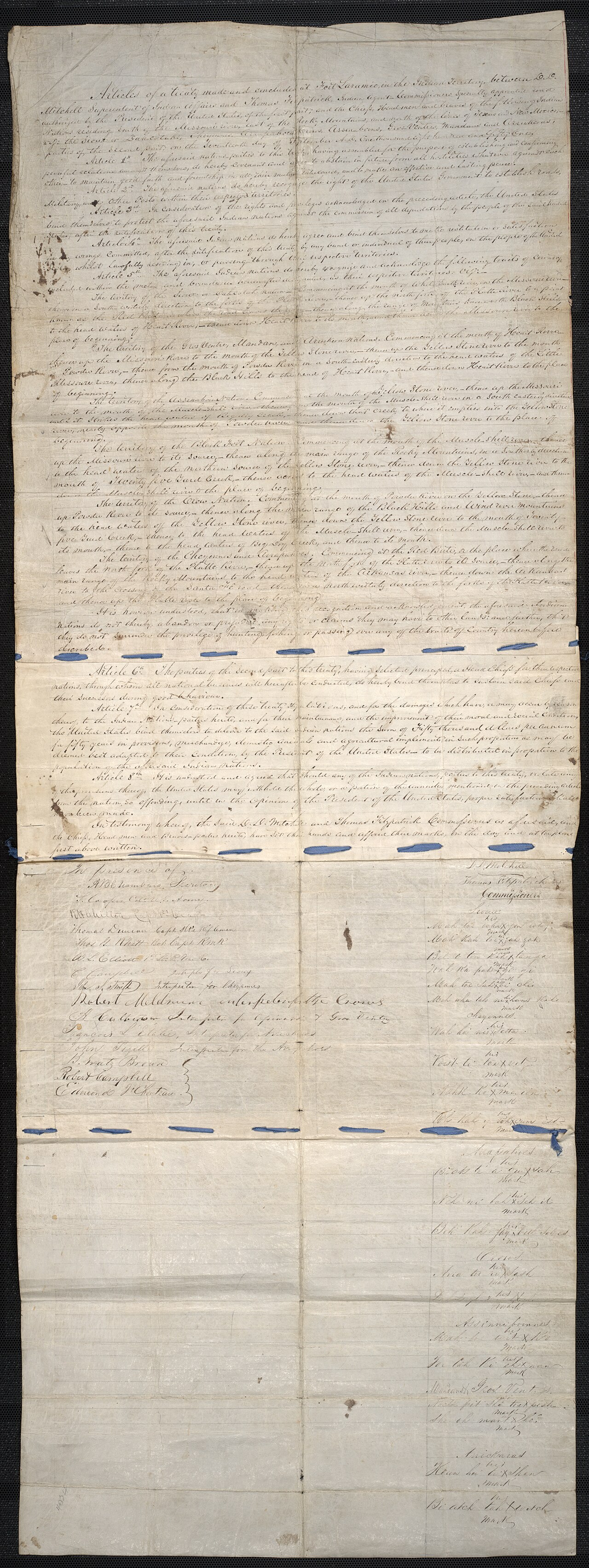 Document
Primary source
Fort Laramie Treaty of 1851
Office of Indian Affairs · 17 September 1851
 Document
Primary source
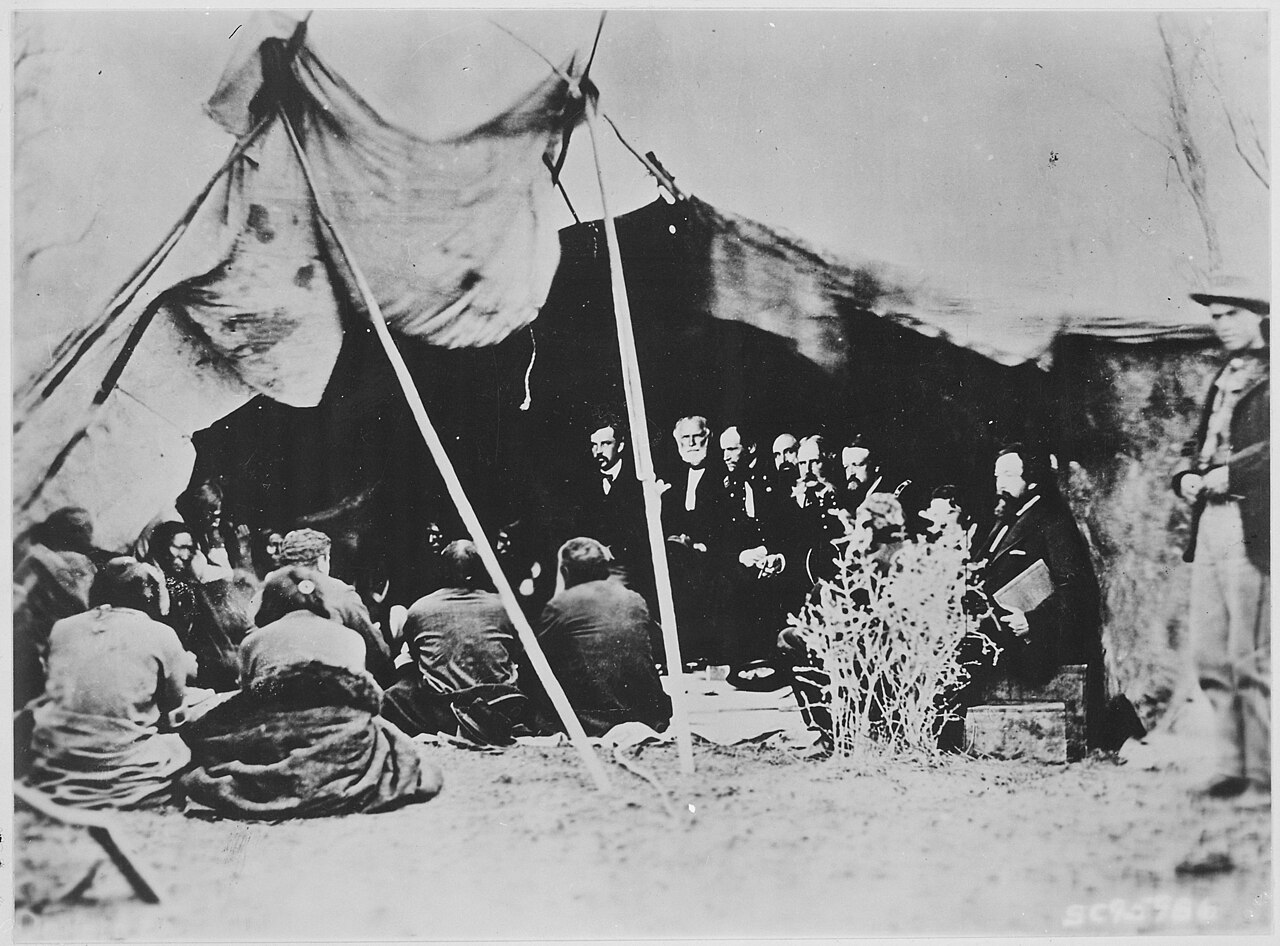
Treaty of Fort Laramie
1868
 Photograph
Primary source
Chief Joseph, Bismarck Portrait
O. S. Goff (attributed) · November 1877
Primary source
The Ghost-Dance Religion and the Sioux Outbreak of 1890
James Mooney · 1896
 Document
Primary source
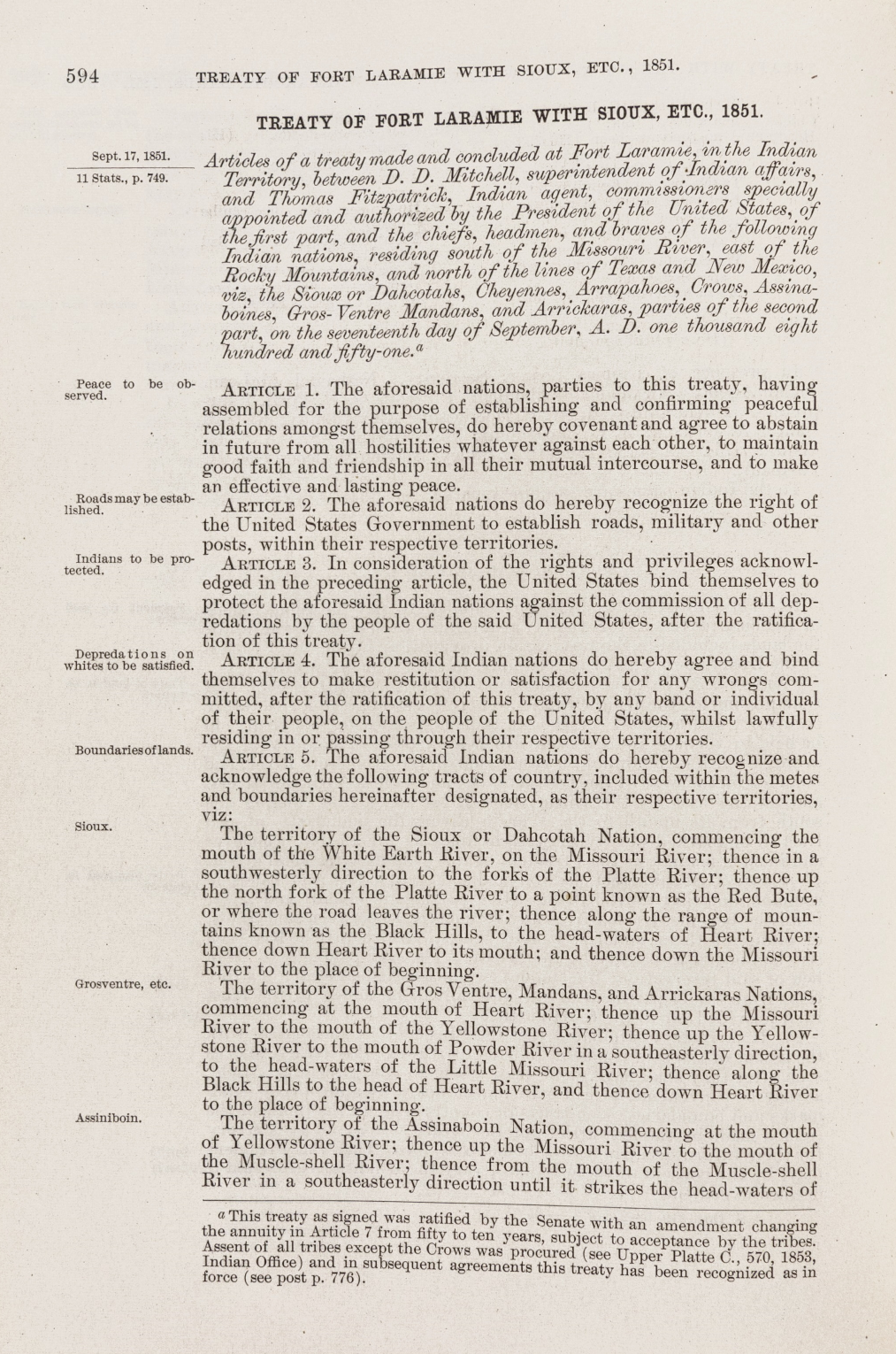
Fort Laramie Treaty, 1851, printed in Kappler volume 2
Government Printing Office · 17 September 1851 (printed 1904)
Ready when you are
Start chatting with Dee Brown now.
20 messages free · No credit card · Available in 50+ languages.