


Secondary sourcePainting1750
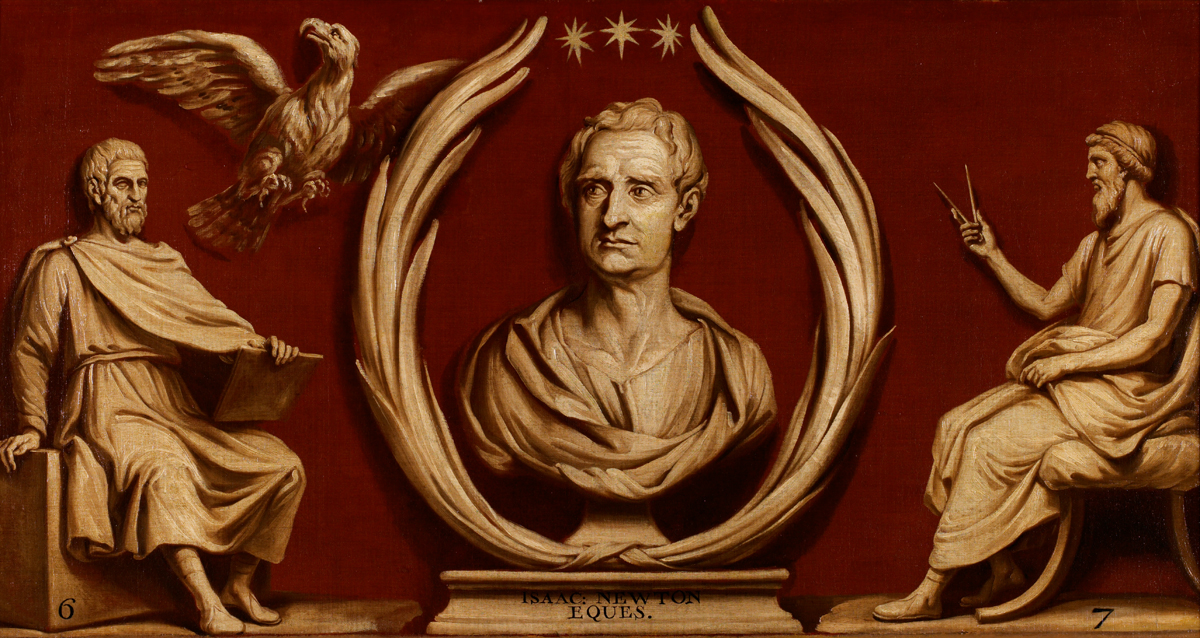
Sir Isaac Newton, mathematician, engraved portrait
Anonymous · 1750
An anonymous 1750 engraved portrait of Newton made after his death to honor him as a mathematician.
A commemorative portrait of Newton created decades after his death, showing his lasting reputation.
About this source
What it is
This is an anonymous engraved portrait dated 1750, made more than twenty years after Newton's death. It shows a bust of Newton framed by a laurel wreath and stars, flanked by two robed figures holding a tablet and stylus, with the inscription "ISAAC NEWTON EQUES" at the base.
Why it matters
Because it was made after Newton died, this image is not a direct likeness from life but a commemorative tribute. The symbolic details — laurel, stars, an eagle, and allegorical figures — show how Newton was remembered as a towering intellectual figure whose achievements in mathematics and science were honored with the kind of imagery once reserved for classical heroes.
Look closer
- What do the laurel wreath, stars, and eagle suggest about how Newton was viewed?
- Who might the two robed figures represent, and why are they included?
- Why might an artist use symbolic images instead of a realistic portrait?
This painting is part of the curated material that grounds the AI version of Isaac Newton on Humy.ai — when students ask about related events, the AI can quote it and cite it.
More Isaac Newton sources
Meet the AI Isaac Newton →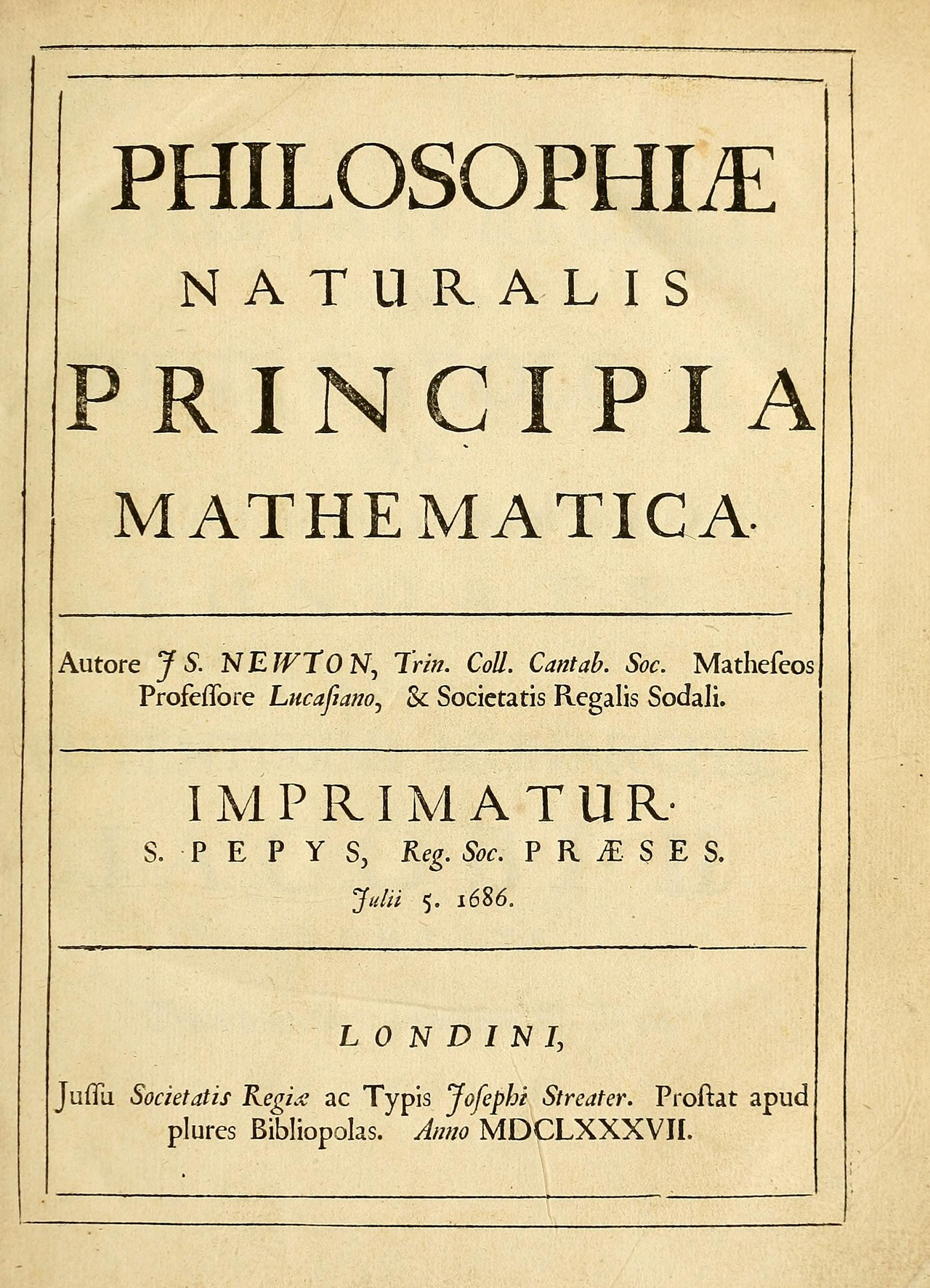 Book
Primary source
Philosophiæ Naturalis Principia Mathematica
Isaac Newton · 1687
 Book
Primary source
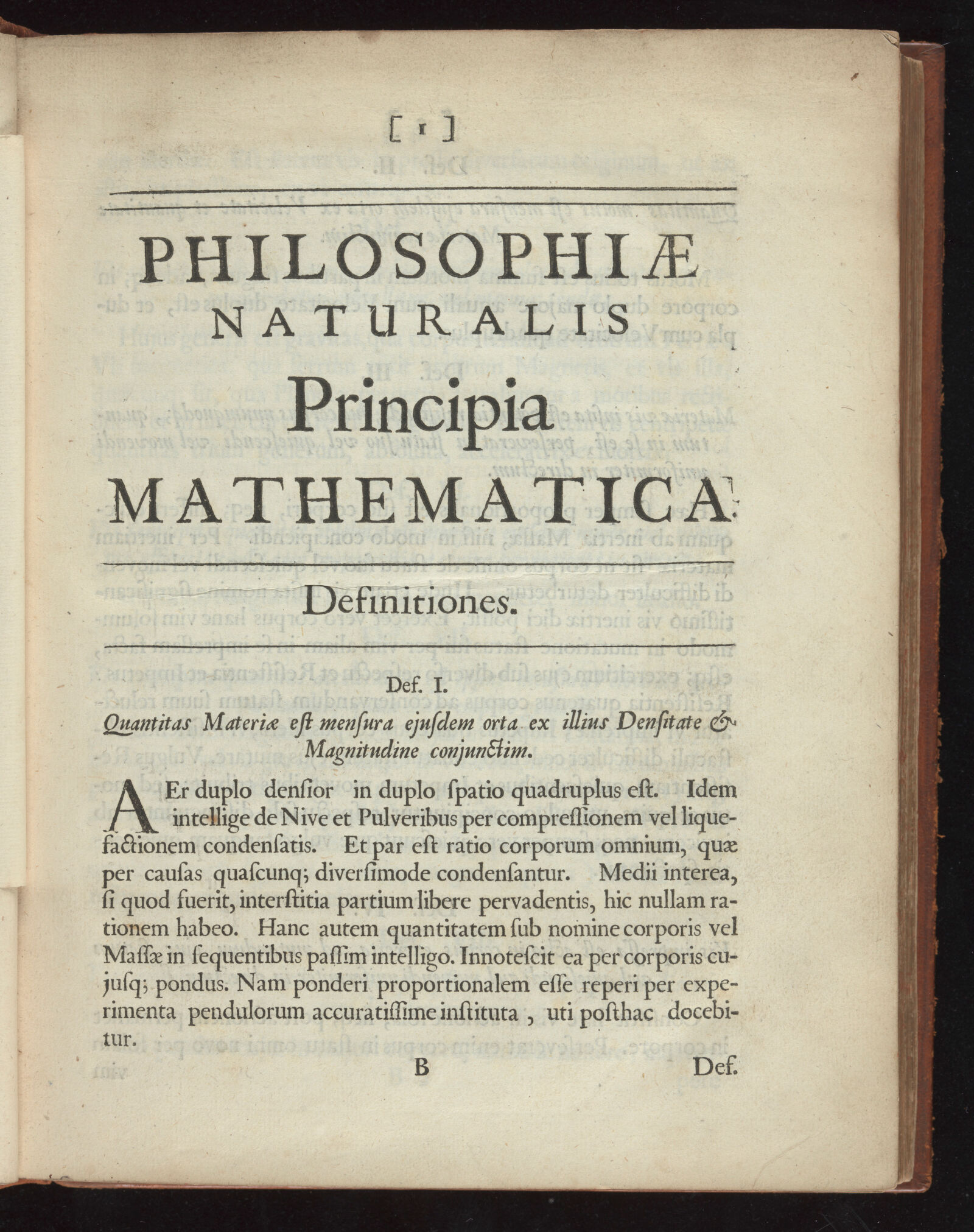
Principia Mathematica, Page 1: Definitions
Isaac Newton · 1687
 Painting
Primary source
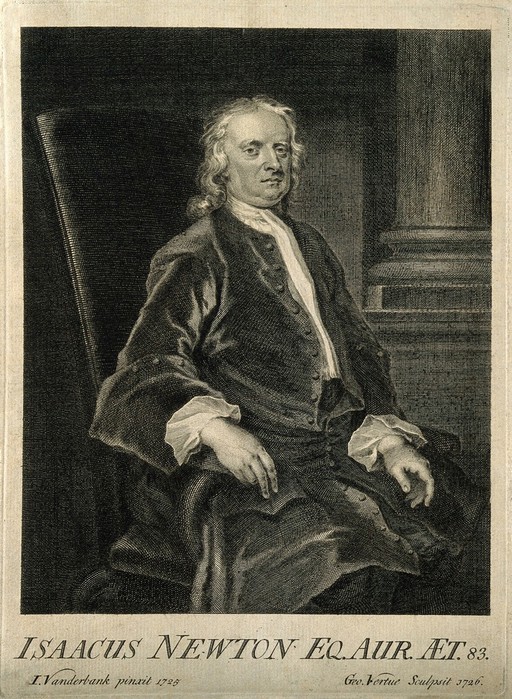
Sir Isaac Newton, line engraving by Vertue, 1726
George Vertue · 1726
 Document
Primary source
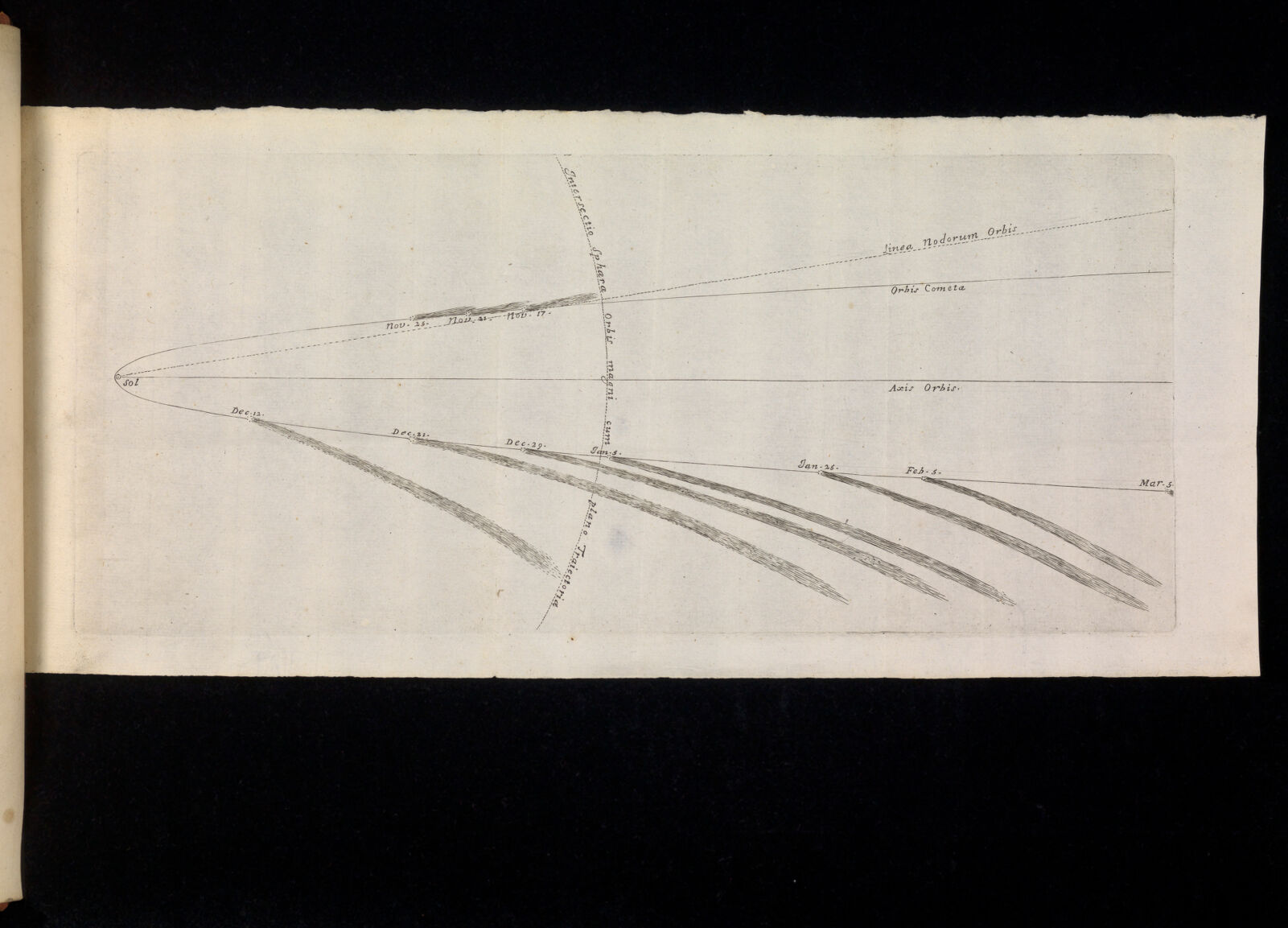
Principia Mathematica, Fold-out Diagram
Isaac Newton · 1687
 Painting
Primary source
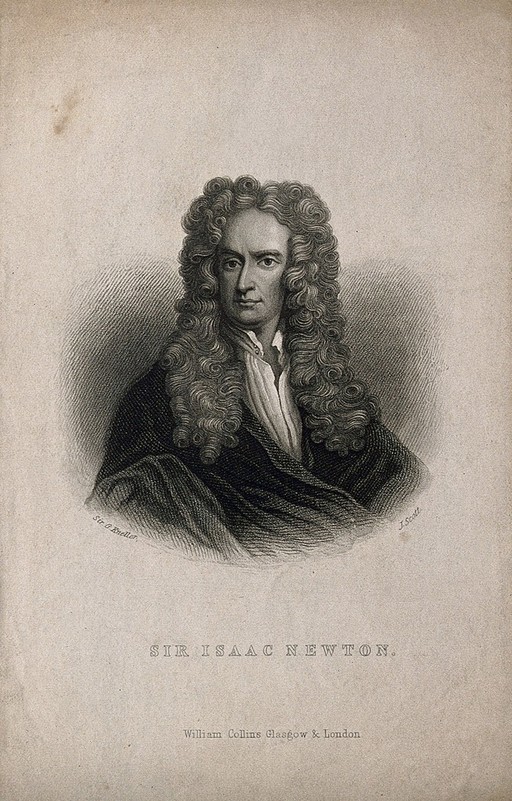
Sir Isaac Newton, stipple engraving by J. Scott after Kneller, 1702
J. Scott, after Sir Godfrey Kneller · 1702 (print made later)
Ready when you are
Start chatting with Isaac Newton now.
20 messages free · No credit card · Available in 50+ languages.