


Primary sourcePainting1720 (after Kneller's portrait)
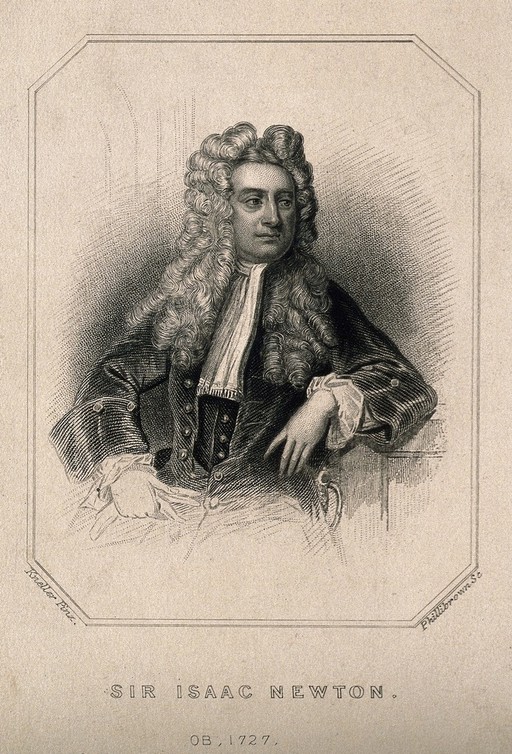
Sir Isaac Newton, stipple engraving by T. Phillibrown after Kneller, 1720
T. Phillibrown, after Sir Godfrey Kneller · 1720 (after Kneller's portrait)
An engraving of Newton made around 1720, copying Godfrey Kneller's portrait, published with his death date noted.
An engraving copying Kneller's portrait of Newton, later captioned with his death year.
About this source
What it is
This stipple engraving by T. Phillibrown, dated 1720, reproduces an earlier portrait of Isaac Newton by Sir Godfrey Kneller. It shows Newton in a long curled wig and dark robe, resting a hand on a table. It is held by the Wellcome Collection.
Why it matters
The print carries a caption noting Newton's death year, suggesting this version was printed or captioned after he died, even though it copies a portrait from his lifetime. This shows how images of famous scientists kept being reproduced and updated for new audiences after their deaths.
Look closer
- Why might a print add the words 'OB. 1727' (meaning he died in that year) if the portrait itself is older?
- What does Newton's pose, resting a hand on a table, suggest about the image the engraver wanted to create?
- How can prints like this one both preserve and reshape the memory of a historical figure?
This painting is part of the curated material that grounds the AI version of Isaac Newton on Humy.ai — when students ask about related events, the AI can quote it and cite it.
More Isaac Newton sources
Meet the AI Isaac Newton →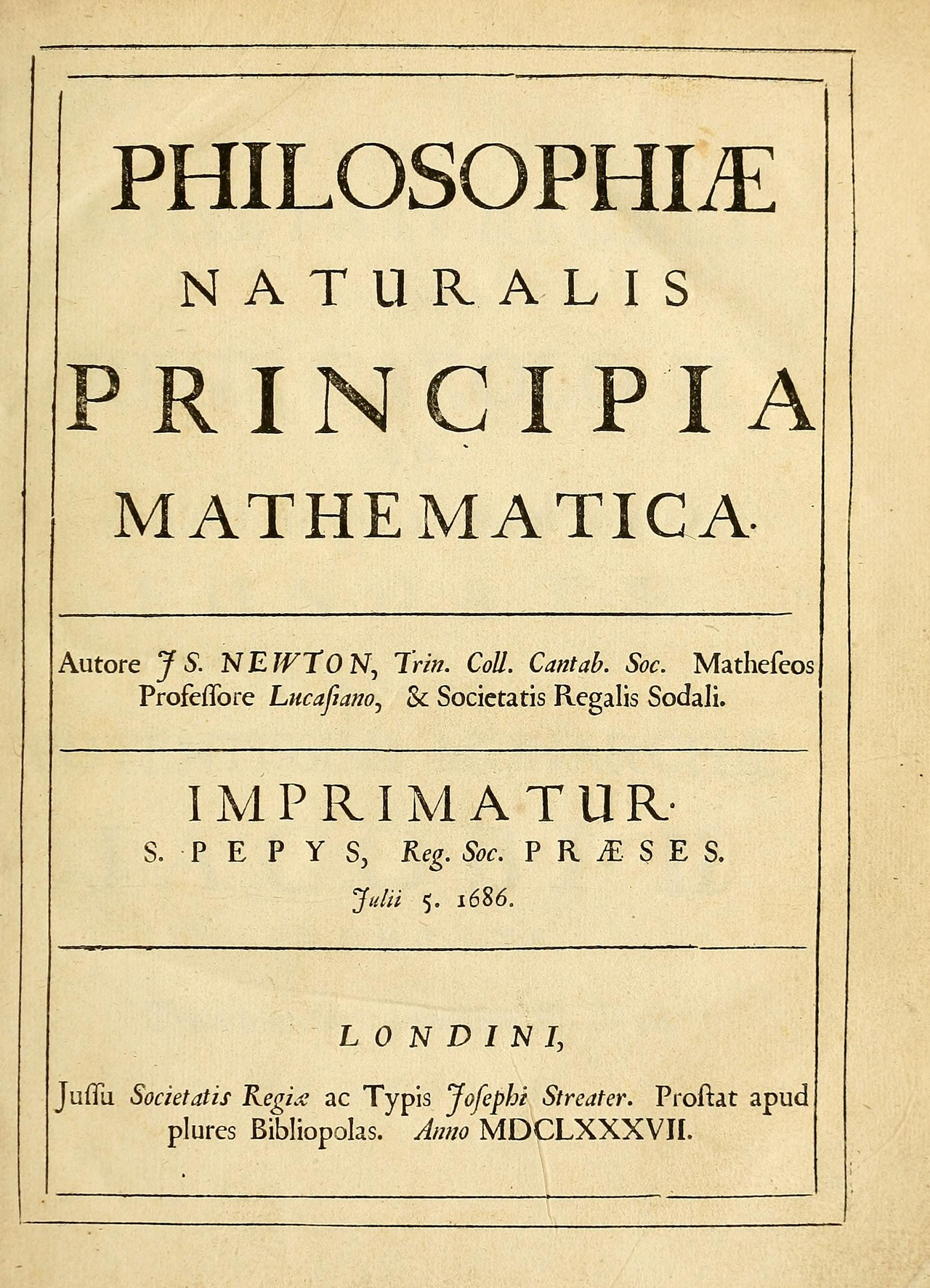 Book
Primary source
Philosophiæ Naturalis Principia Mathematica
Isaac Newton · 1687
 Book
Primary source
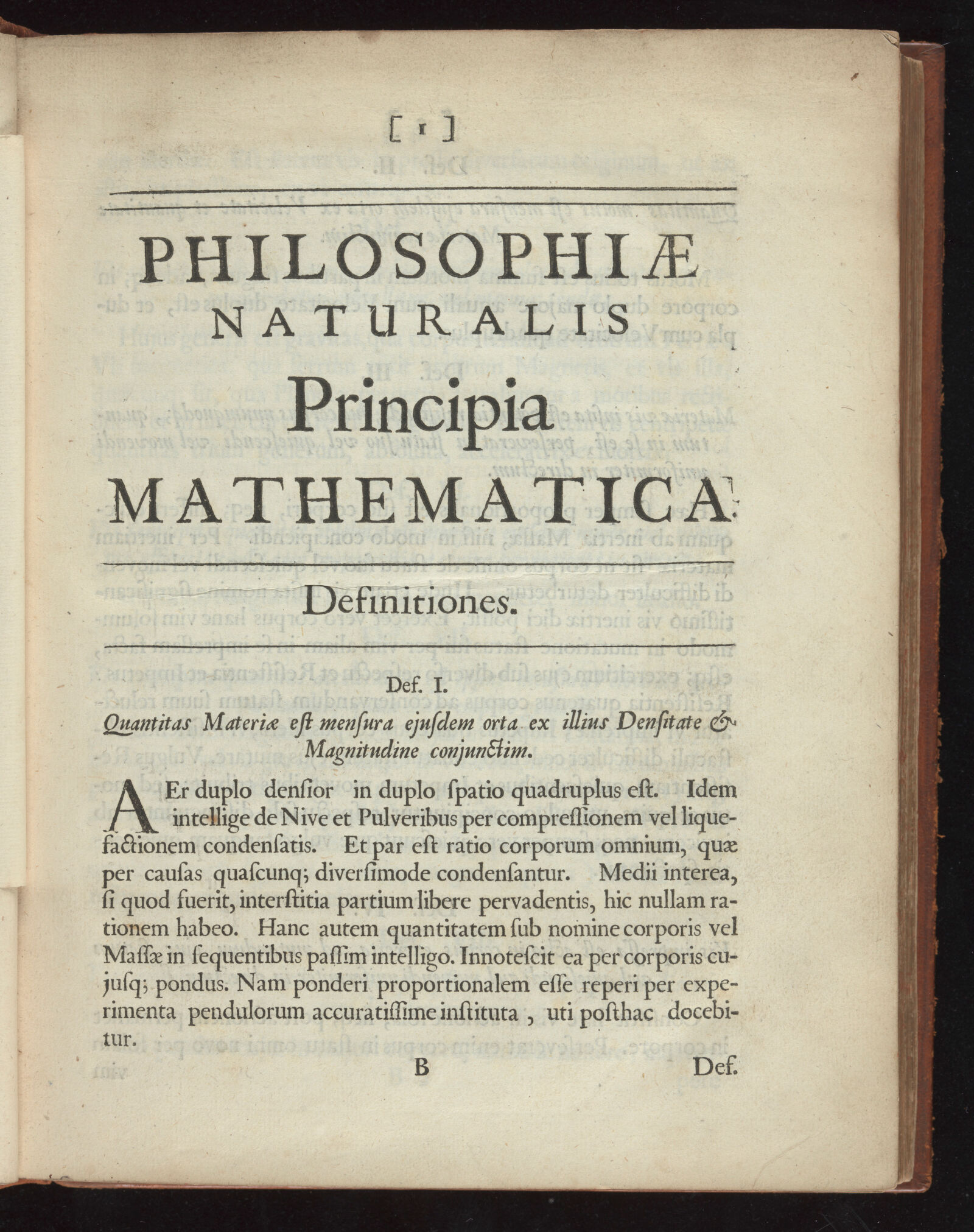
Principia Mathematica, Page 1: Definitions
Isaac Newton · 1687
 Painting
Primary source
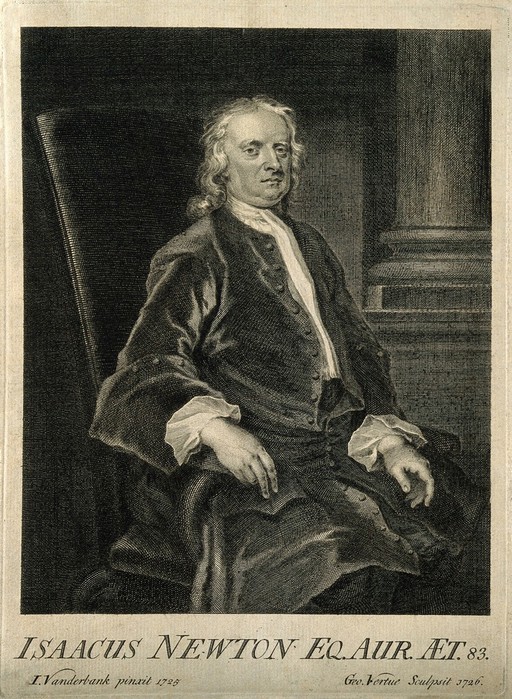
Sir Isaac Newton, line engraving by Vertue, 1726
George Vertue · 1726
 Document
Primary source
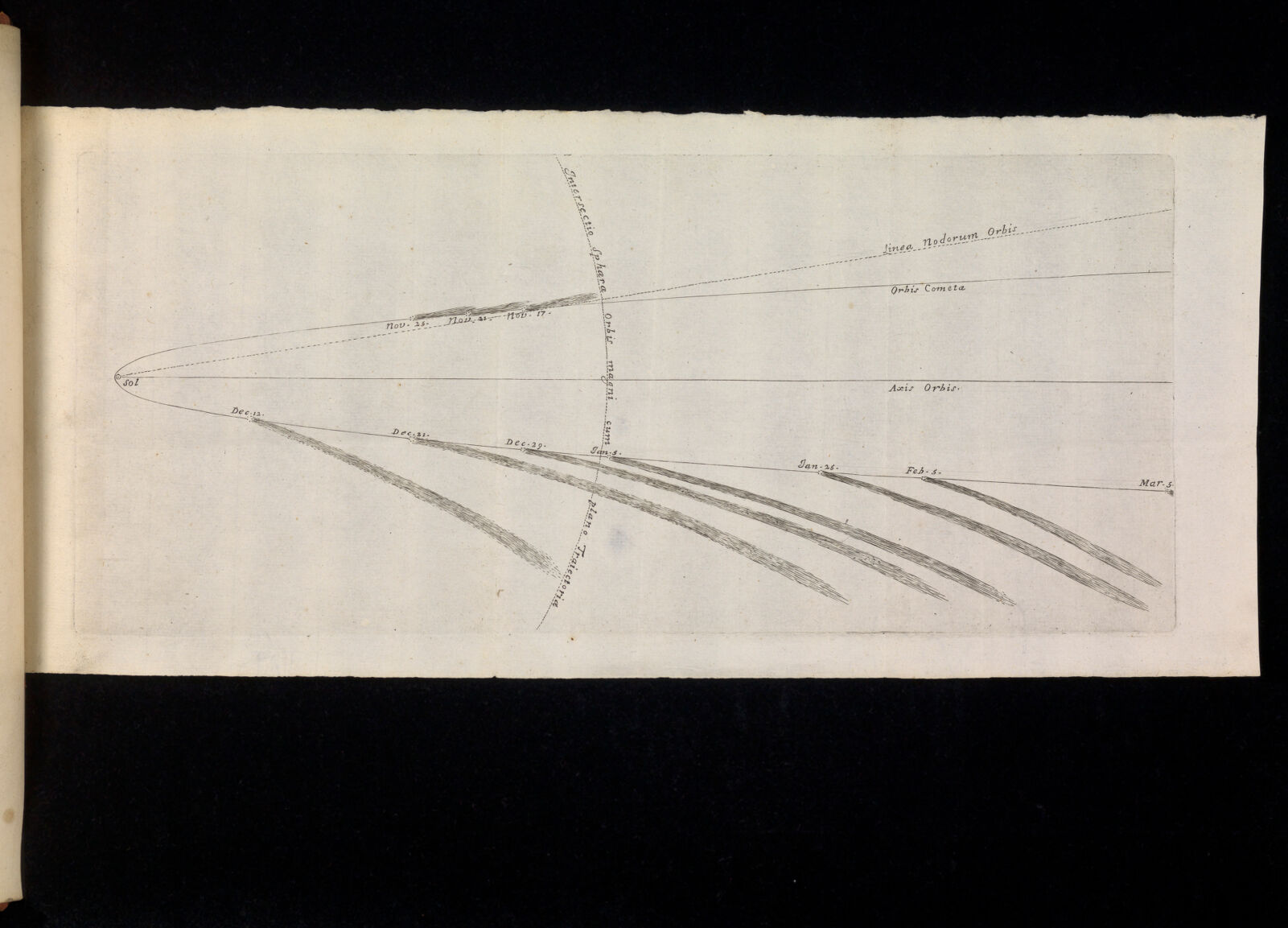
Principia Mathematica, Fold-out Diagram
Isaac Newton · 1687
 Painting
Primary source
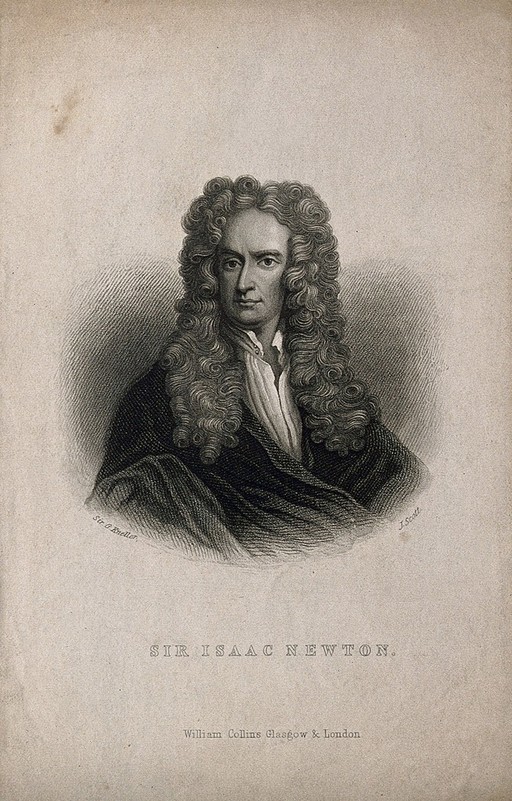
Sir Isaac Newton, stipple engraving by J. Scott after Kneller, 1702
J. Scott, after Sir Godfrey Kneller · 1702 (print made later)
Ready when you are
Start chatting with Isaac Newton now.
20 messages free · No credit card · Available in 50+ languages.