


Secondary sourcePaintingc. 1600-1620
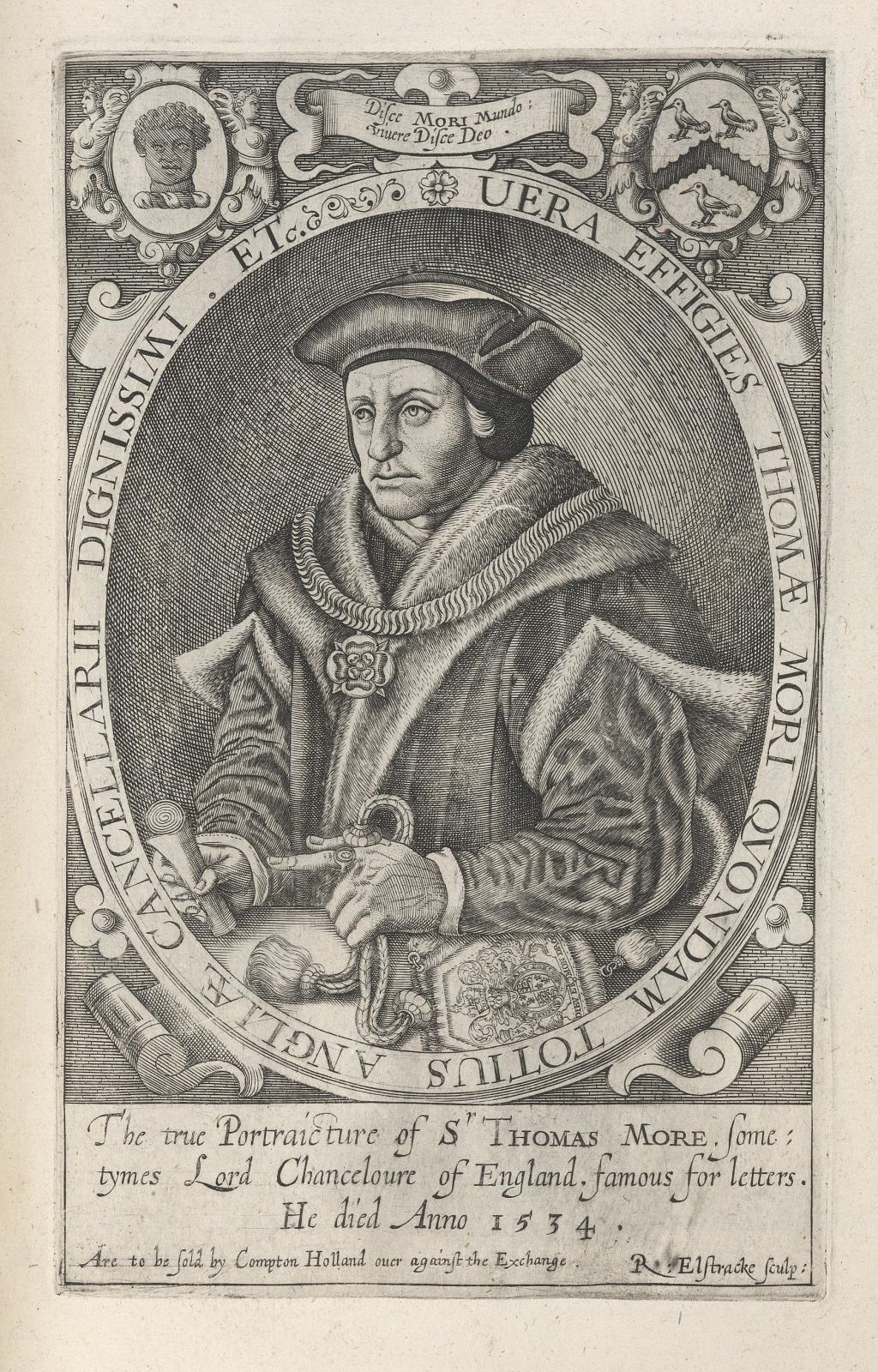
Sir Thomas More engraved portrait by Renold Elstrack
Renold Elstrack · c. 1600-1620
An engraved oval portrait of Thomas More, made by Renold Elstrack decades after More's death in 1535. It shows More with a scroll, a book and a chain collar.
It shows More as a sitter in a print made decades after his death, so it reflects how later readers remembered him.
About this source
What it is
This is an engraved oval portrait of Sir Thomas More in a fur-trimmed robe and flat cap, wearing a chain collar with a badge. He holds a scroll and rests his hand on a book with a coat of arms. Inscriptions surround the oval, and a caption below reads 'The true Portraicture of Sr Thomas More, sometymes Lord Chanceloure of England, famous for letters. He died Anno 1534.' Coats of arms and a Latin motto appear at the top. Renold Elstrack made the print, probably between 1600 and 1620. The National Portrait Gallery in London holds this copy, which is part of the Smithsonian record.
Why it matters
The print was made long after More's death, so it shows how his reputation was remembered in the early 1600s. The caption calls him famous for his letters and lists his former office. Its coats of arms and Latin motto place him within the honours of the period.
Look closer
- What objects does More hold, and what might they say about him?
- Why would a printmaker add coats of arms and a Latin motto around the portrait?
- The caption gives a death year of 1534, but More died in 1535. What might explain this difference?
This painting is part of the curated material that grounds the AI version of Thomas More on Humy.ai — when students ask about related events, the AI can quote it and cite it.
More Thomas More sources
Browse all 90 →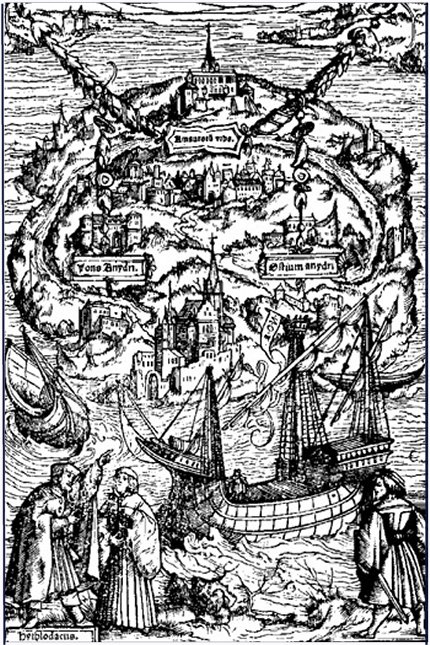 Book
Primary source
Utopia
Thomas More · 1516
 Painting
Primary source
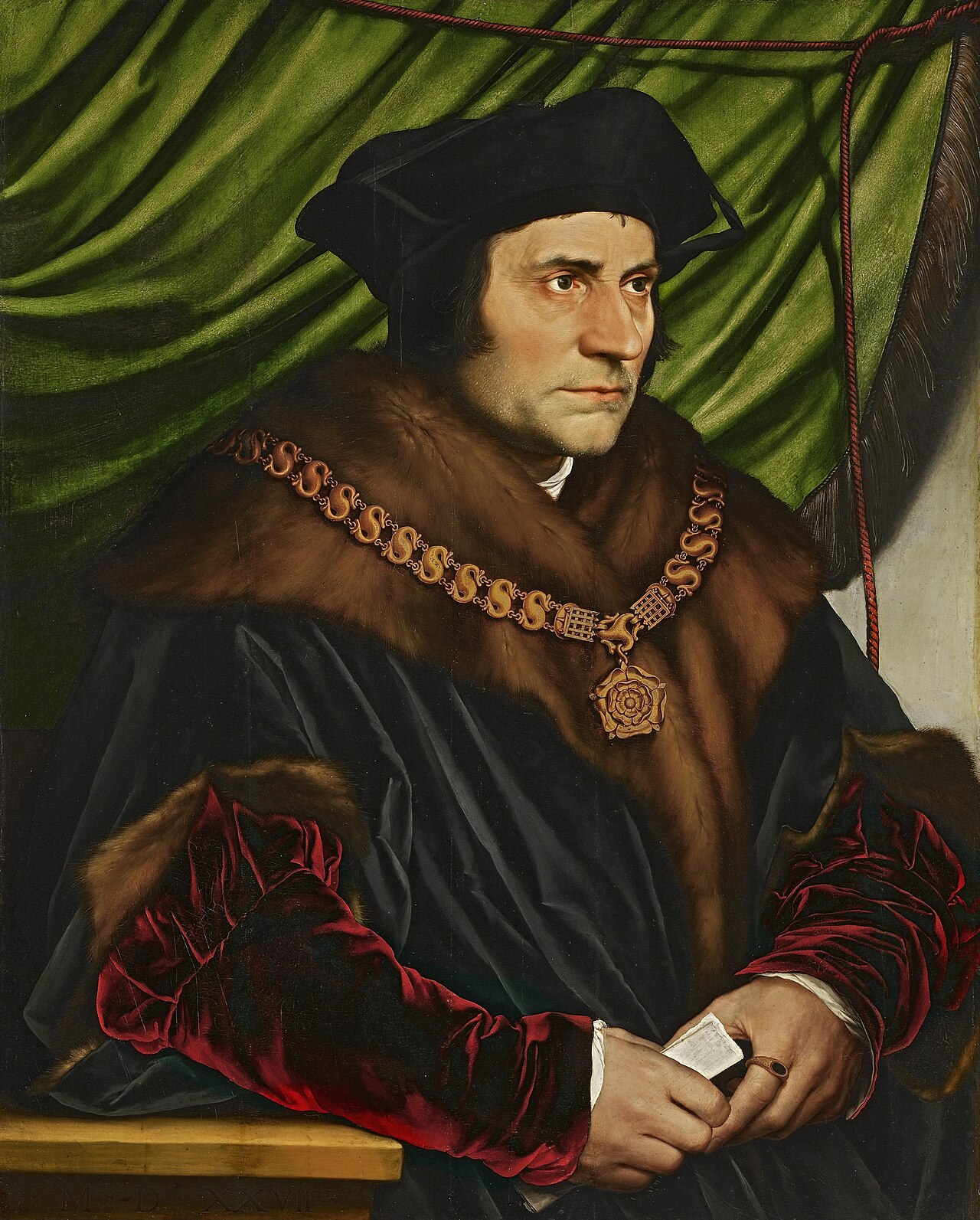
Portrait of Sir Thomas More
Hans Holbein the Younger · 1527
 Artifact
Primary source
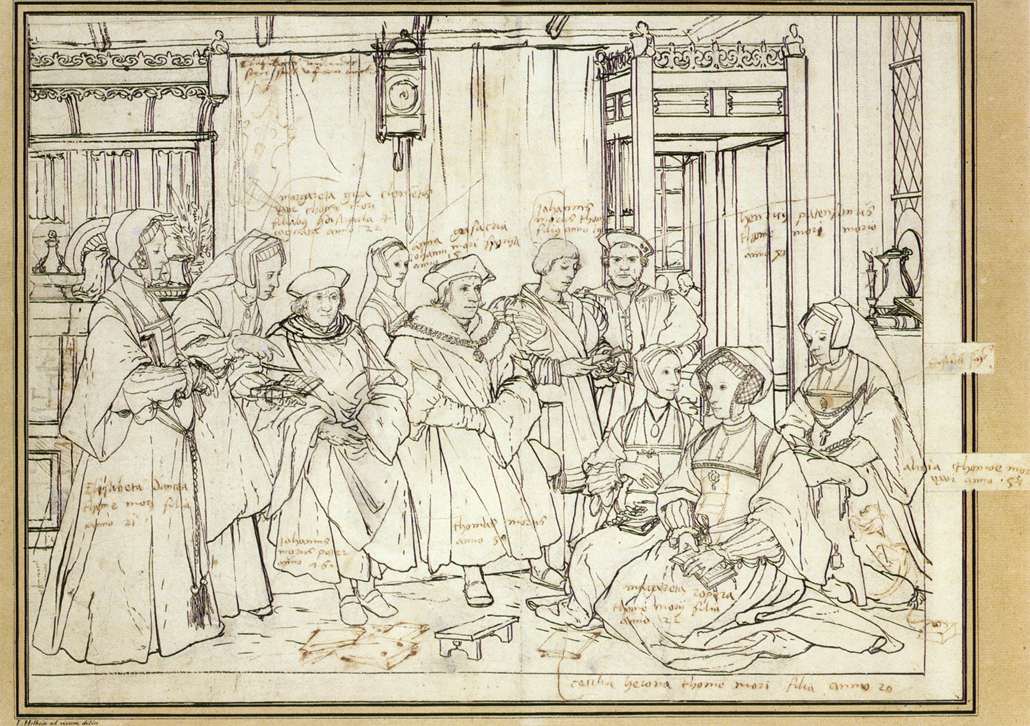
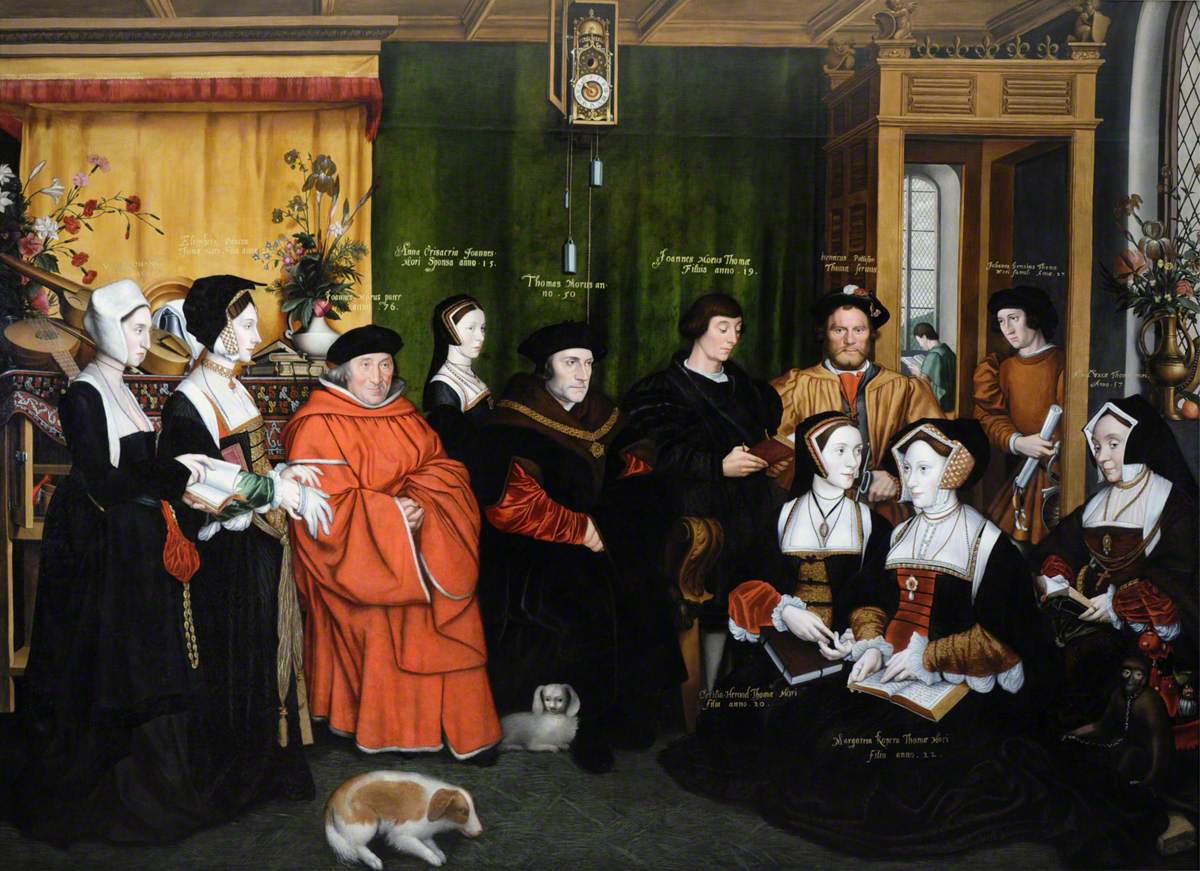
Study for the Family of Sir Thomas More
Hans Holbein the Younger · c. 1527
 Painting
Primary source
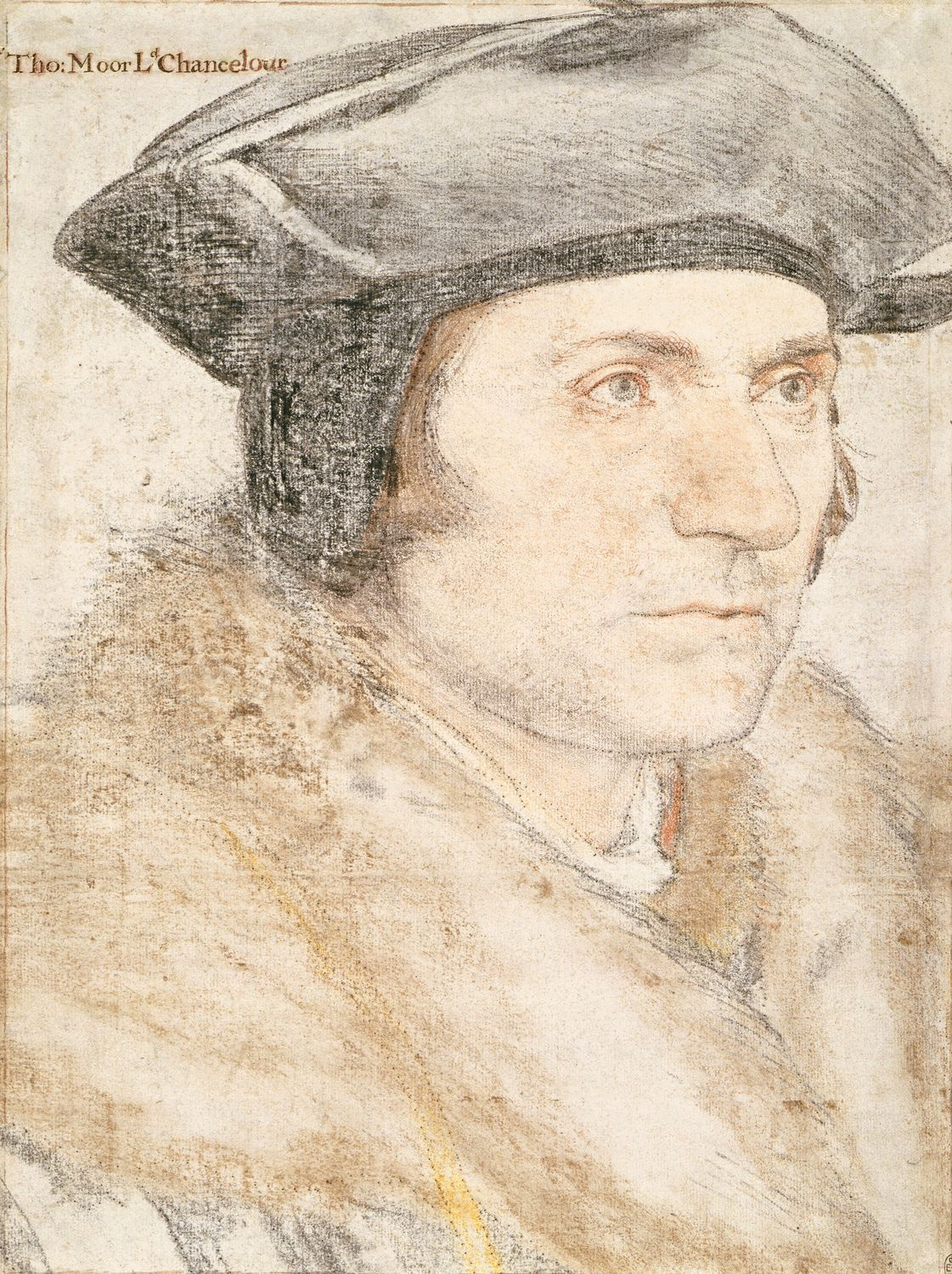
Sir Thomas More (chalk portrait drawing)
Hans Holbein the Younger · c. 1526–1527

Free account
Read every Thomas More source
Sign up free →
Ready when you are
Start chatting with Thomas More now.
20 messages free · No credit card · Available in 50+ languages.