


Secondary sourcePainting1740
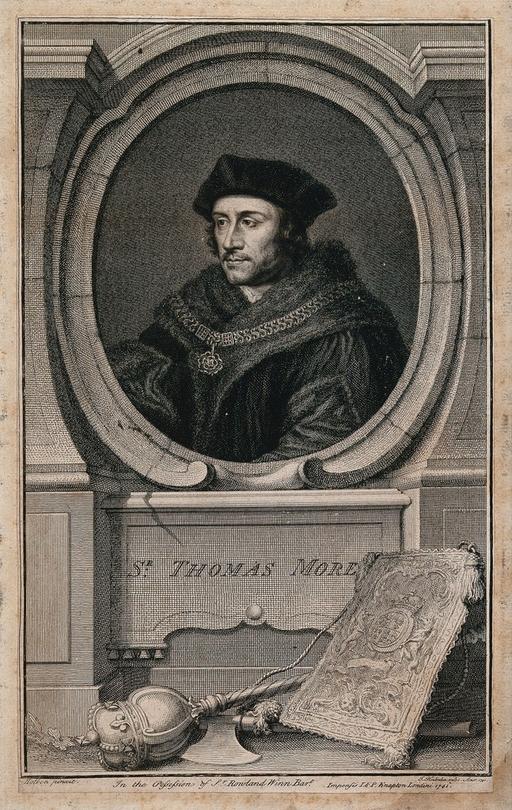
Sir Thomas More, engraving after Hans Holbein
J. Houbraken, after Hans Holbein · 1740
A 1740 engraved portrait of Thomas More by J. Houbraken, based on a painting by Hans Holbein, made two centuries after More's execution.
A later engraved likeness of More, based on Holbein's portrait, noting his execution for defying Henry VIII.
About this source
What it is
This is an engraving made in 1740 by J. Houbraken, based on a portrait originally painted by Hans Holbein. It shows Sir Thomas More in an oval frame within a stone architectural setting, and is held today by the Wellcome Collection.
Why it matters
More was an English lawyer, author and statesman who refused to accept Henry VIII as supreme head of the Church of England, leading to his execution. This engraving, made long after his death, became a standard way people pictured him, showing how Holbein's original image of More continued to shape his memory for centuries.
Look closer
- What objects surround the portrait (the mace, the cushion), and what might they suggest about More's status?
- Why would an engraver in the 1700s choose to copy a much older painting rather than create a new image?
- What does the inscription below the portrait tell us about how More was remembered generations later?
This painting is part of the curated material that grounds the AI version of Thomas More on Humy.ai — when students ask about related events, the AI can quote it and cite it.
More Thomas More sources
Browse all 90 →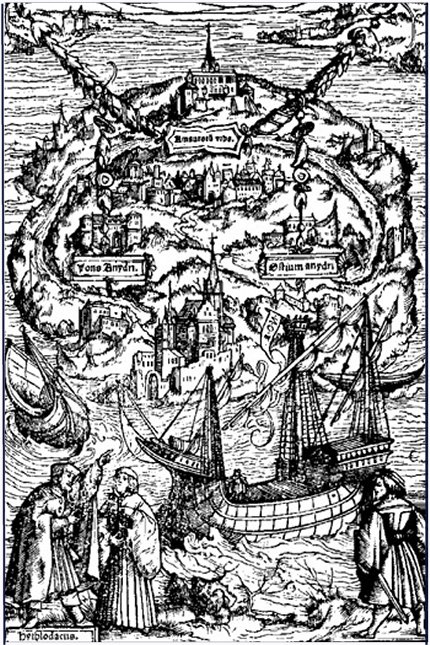 Book
Primary source
Utopia
Thomas More · 1516
 Painting
Primary source
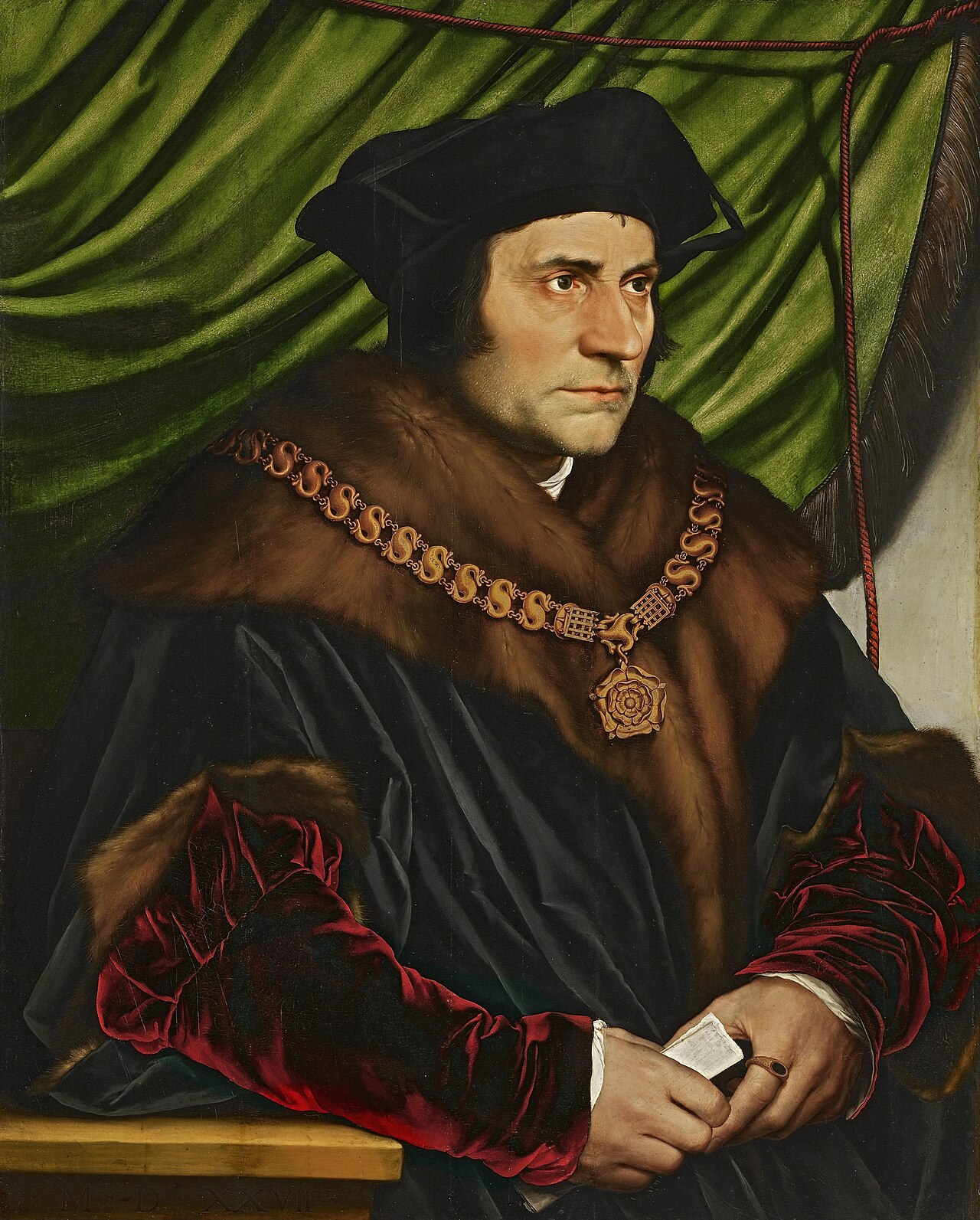
Portrait of Sir Thomas More
Hans Holbein the Younger · 1527
 Artifact
Primary source
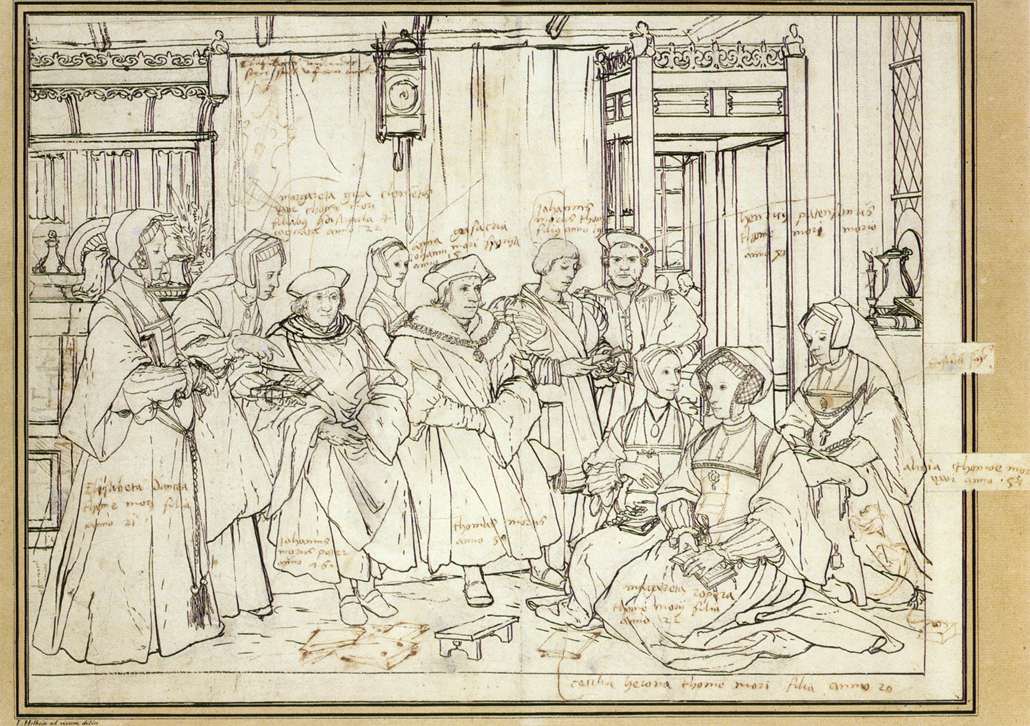
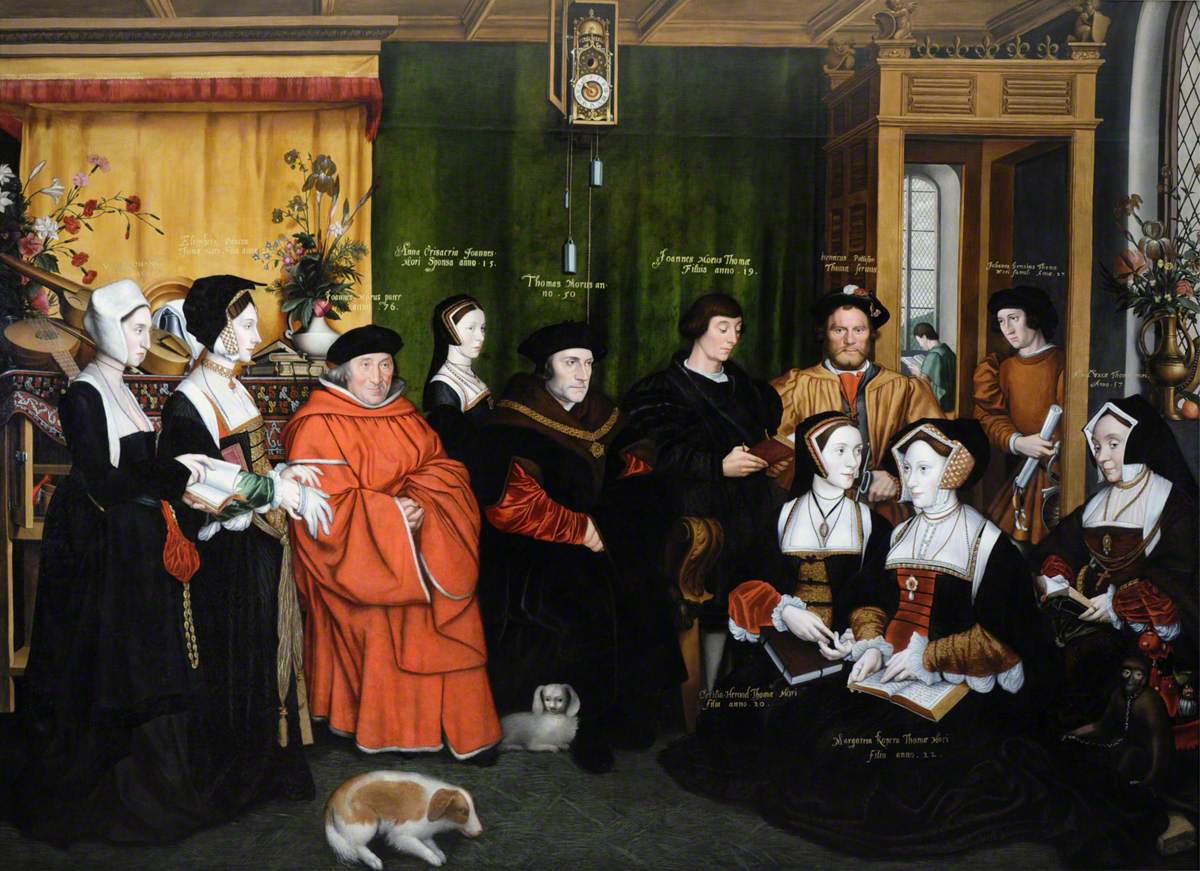
Study for the Family of Sir Thomas More
Hans Holbein the Younger · c. 1527
 Painting
Primary source
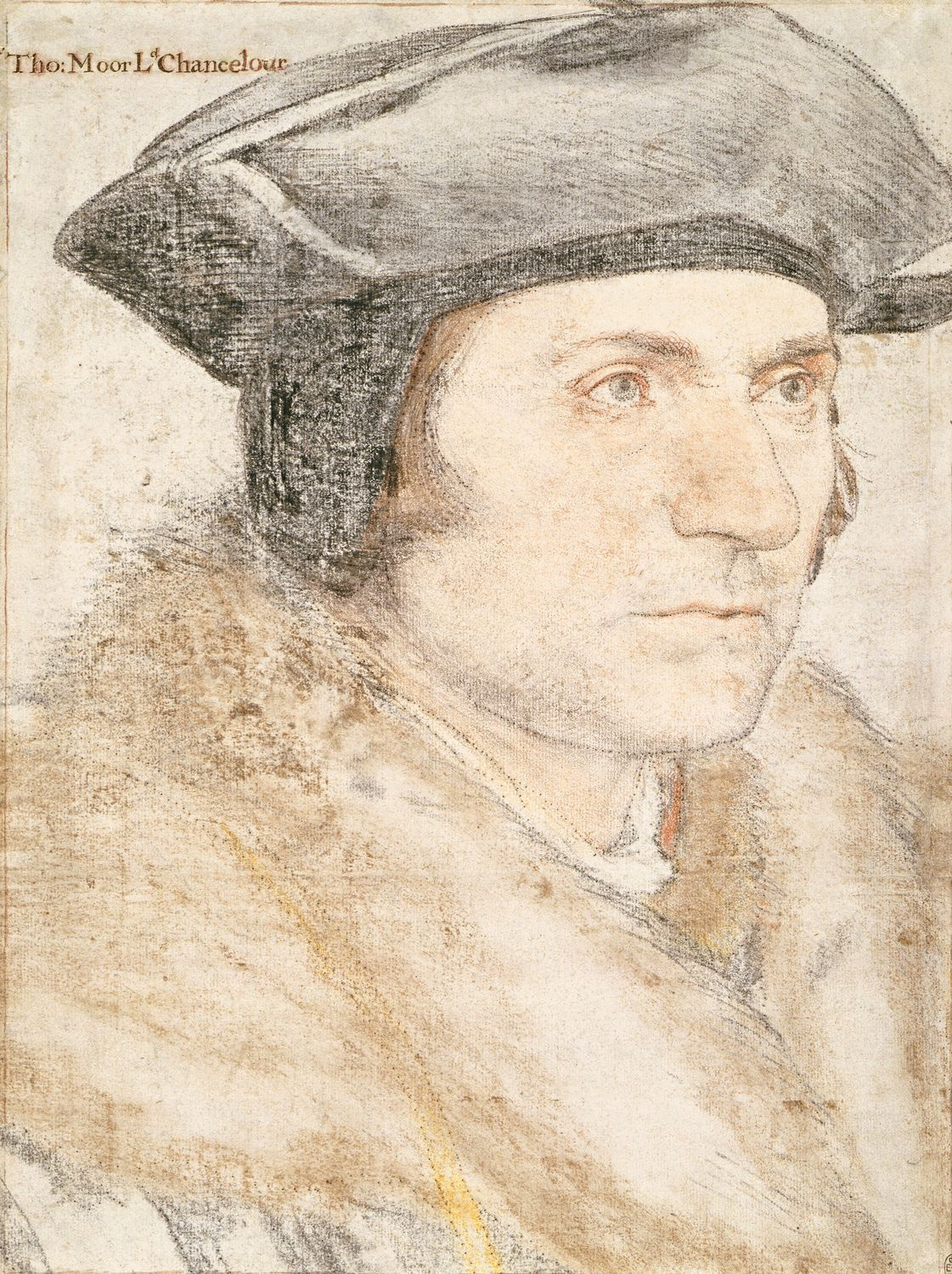
Sir Thomas More (chalk portrait drawing)
Hans Holbein the Younger · c. 1526–1527
Free account
Read every Thomas More source
Sign up free →
Ready when you are
Start chatting with Thomas More now.
20 messages free · No credit card · Available in 50+ languages.