


Secondary sourcePaintingbetween 1819 and 1849
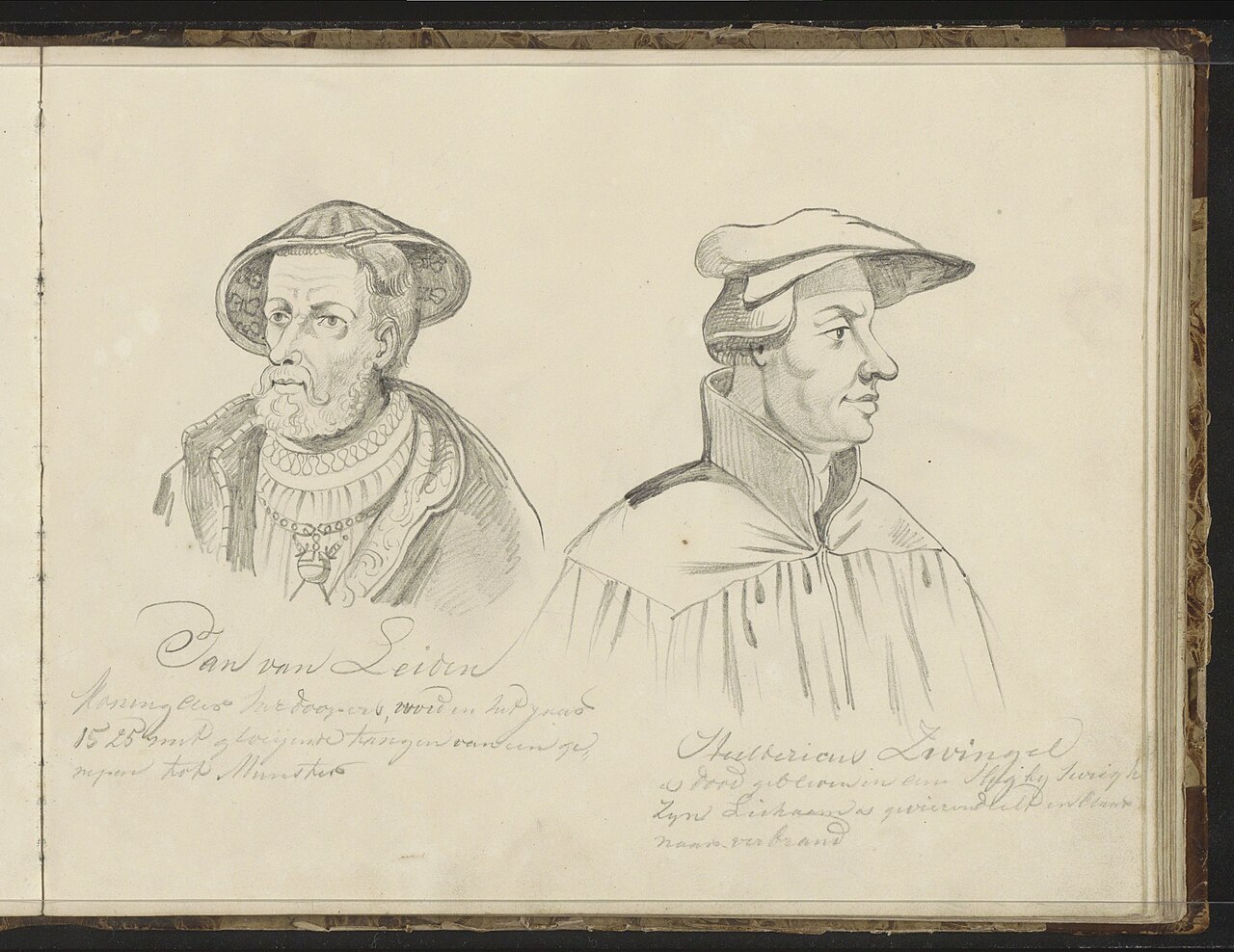
Sketchbook page with portraits of Jan van Leiden and Zwingli
Willem Hendrik Schmidt · between 1819 and 1849
A pencil sketchbook page by Willem Hendrik Schmidt showing portraits of Jan van Leiden and Huldrych Zwingli, with handwritten notes. It shows how a 19th-century artist placed Zwingli among other Reformation figures.
Shows Zwingli as imagined by a 19th-century artist, drawn beside Jan van Leiden, so students can see how his memory was shaped later.
About this source
What it is
This is a page from a sketchbook of 52 leaves, drawn in pencil by Willem Hendrik Schmidt between 1819 and 1849. It shows two portraits: a bearded man in a wide-brimmed hat labeled Jan van Leiden, and a man in profile in a flat cap labeled Huldrych Zwingli. Handwritten pencil notes beneath them, in Dutch, refer to Jan van Leiden as a king, to Münster, and to a execution in 1525. The record's transcription of the notes is partly missing. The page was given to the Rijksmuseum by A.H. de Vries in 1994.
Why it matters
Zwingli led the Reformation in Zurich. Jan van Leiden led the Anabaptist kingdom in Münster, which ended in violence. Drawing the two together shows how 19th-century viewers grouped Reformation-era figures. The drawing was made long after the 1520s, so it tells us how these men were remembered later, not how they looked.
Look closer
- What clothing and poses did the artist give each man, and what does that suggest about who they were?
- Why might the artist have written notes about executions beside these portraits?
- What does the page leave out, such as the artist's own sources for these likenesses?
This painting is part of the curated material that grounds the AI version of Huldrych Zwingli on Humy.ai — when students ask about related events, the AI can quote it and cite it.
More Huldrych Zwingli sources
Browse all 87 →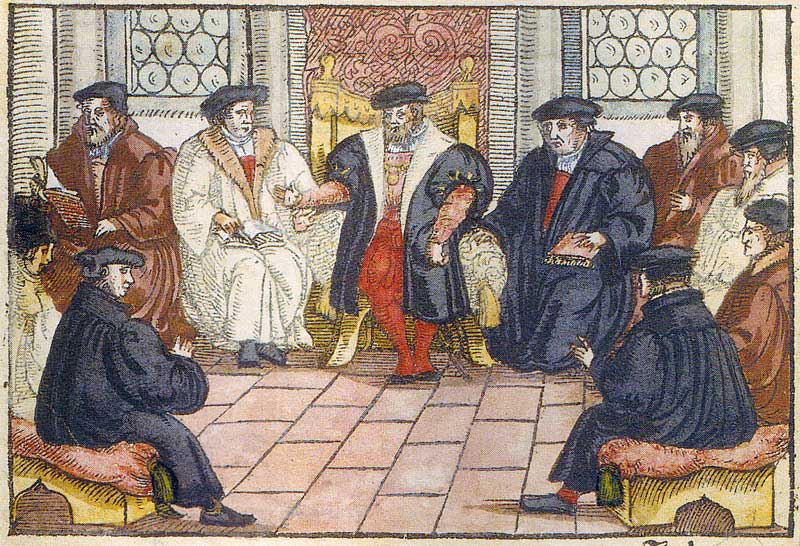 Document
Secondary source
Marburg Colloquy
1-4 October 1529
 Painting
Secondary source
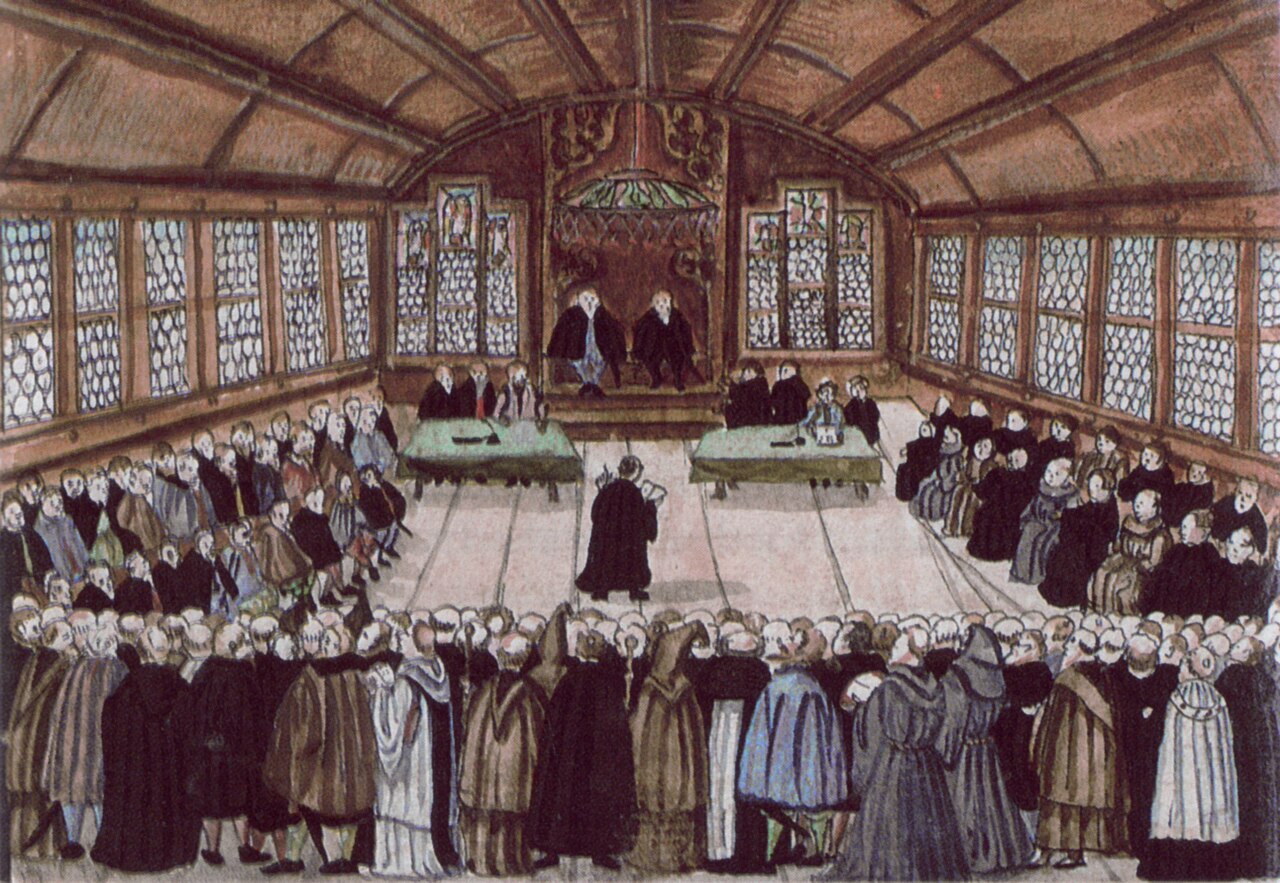
Zürcher-Disputation 1523
1523 (event); later copy
 Book
Primary source
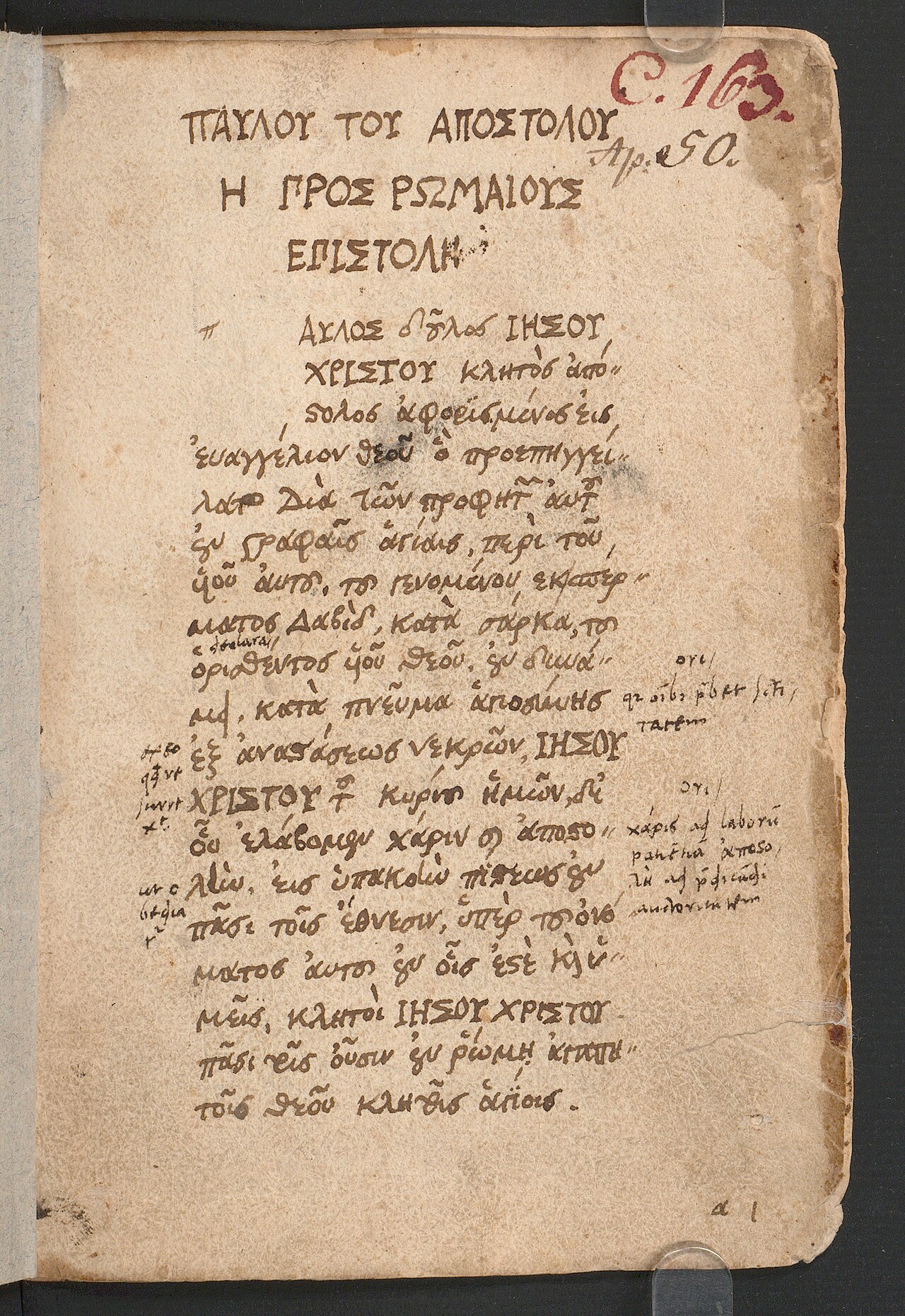
Divi Pauli Apostoli epistolae
Huldrych Zwingli · 1517
 Artifact
Primary source
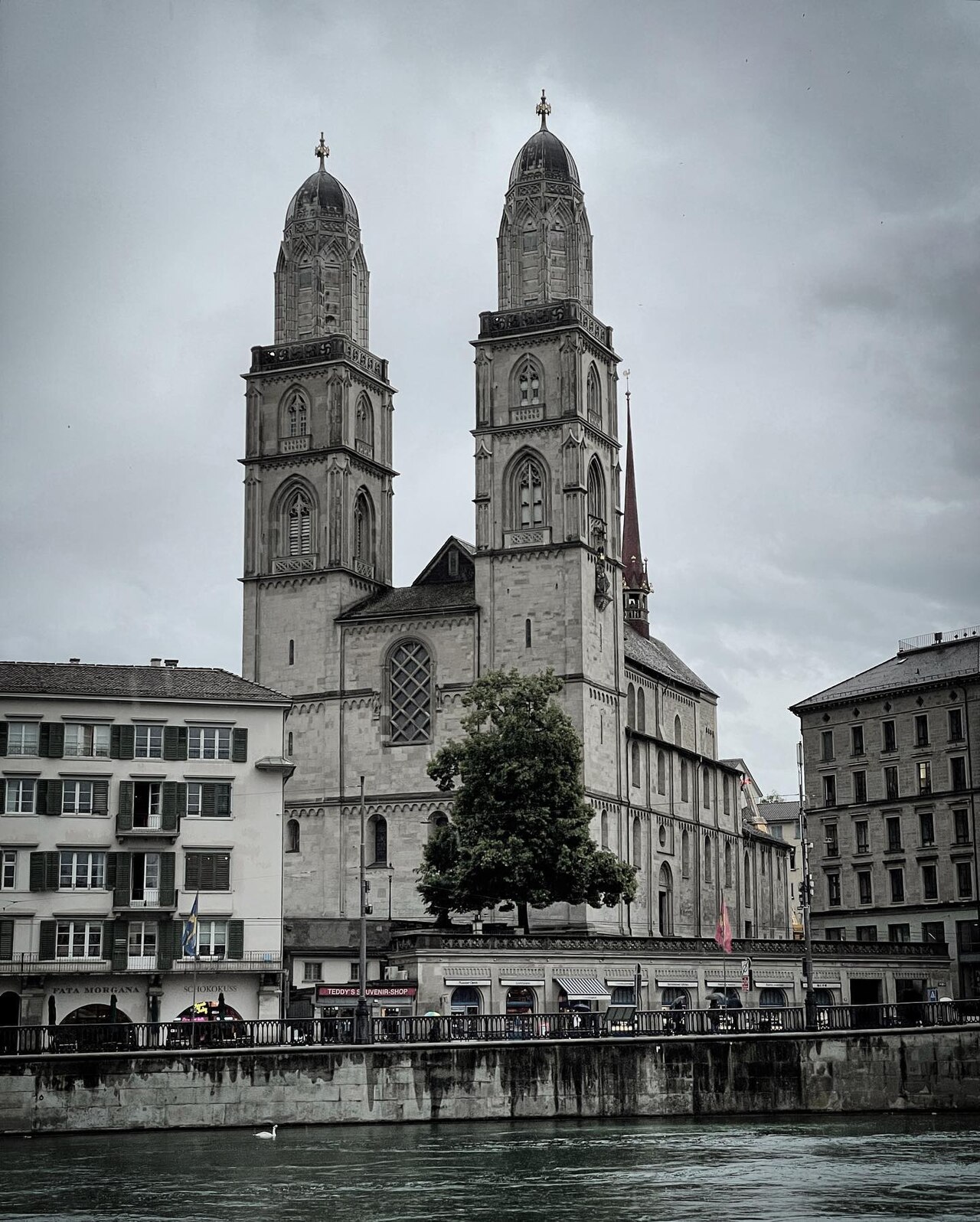
Grossmünster
c. 1100-1220; Zwingli preached from 1519
Free account
Read every Huldrych Zwingli source
Sign up free →
Ready when you are
Start chatting with Huldrych Zwingli now.
20 messages free · No credit card · Available in 50+ languages.