


Primary sourceDocument1836
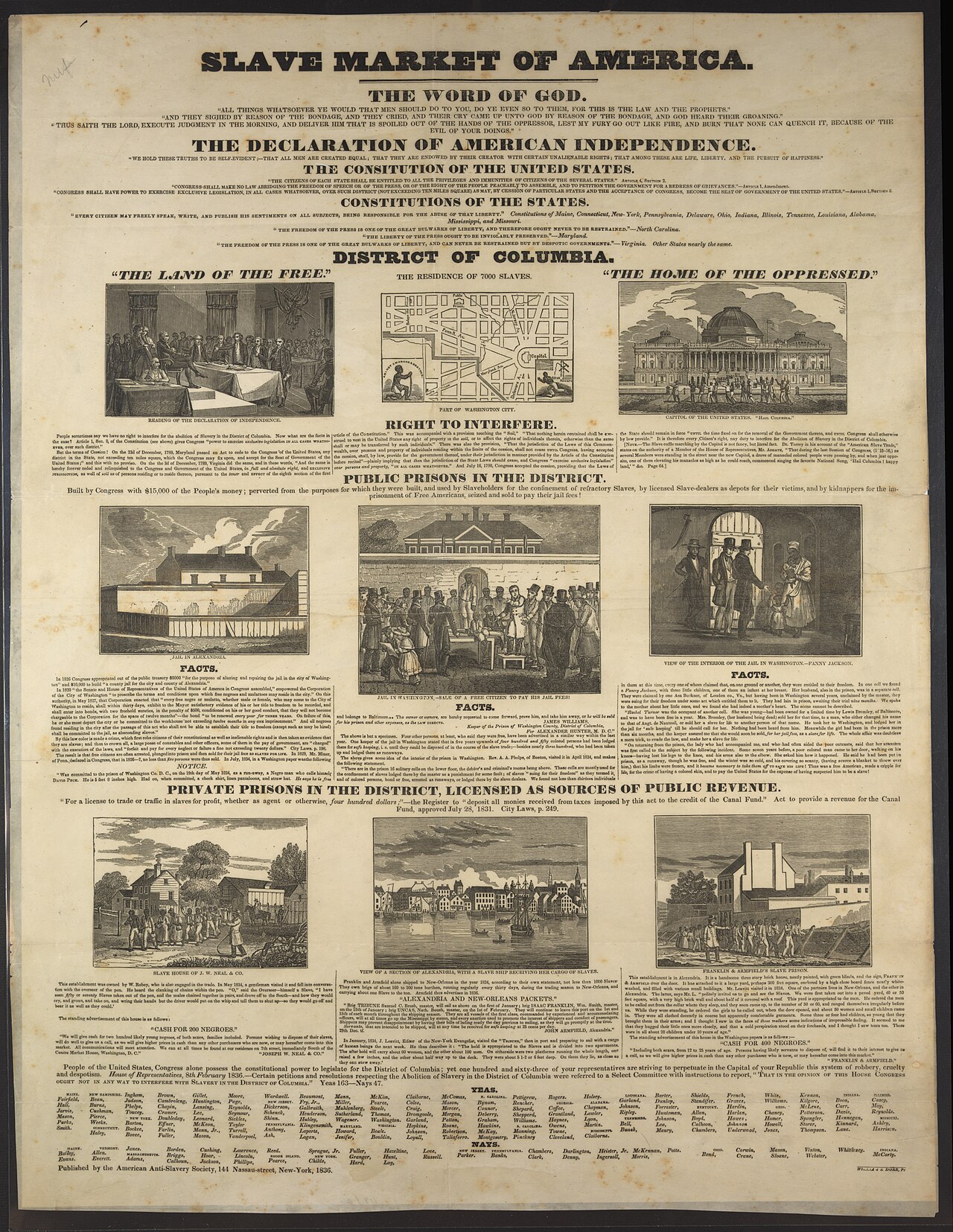
Slave Market of America
William S. Dorr · 1836
An 1836 broadside with nine wood engravings produced for the American Anti-Slavery Society, documenting slavery in Washington, D.C.
This 1836 broadside shows the antislavery print campaigns of Forten's era, though he is not depicted.
About this source
What it is
This is a letterpress broadside titled Slave Market of America, created by William S. Dorr in 1836 for the American Anti-Slavery Society. It combines quotations and a list of congressmen with nine wood engravings showing buildings and prisons connected to slavery in Washington, D.C.
Why it matters
The broadside was part of a deliberate campaign to expose slavery's presence at the heart of the federal government. It is an example of the printed materials abolitionist societies produced during the 1830s, the decade when James Forten was a prominent Black abolitionist voice.
Look closer
- Why include a list of congressmen's names on this broadside?
- What do the engravings of Washington buildings suggest about the broadside's argument?
- What might viewers at the time have found most striking about this document?
This document is part of the curated material that grounds the AI version of James Forten and Richard Henry Dana Jr. on Humy.ai — when students ask about related events, the AI can quote it and cite it.
More James Forten sources
Meet the AI James Forten →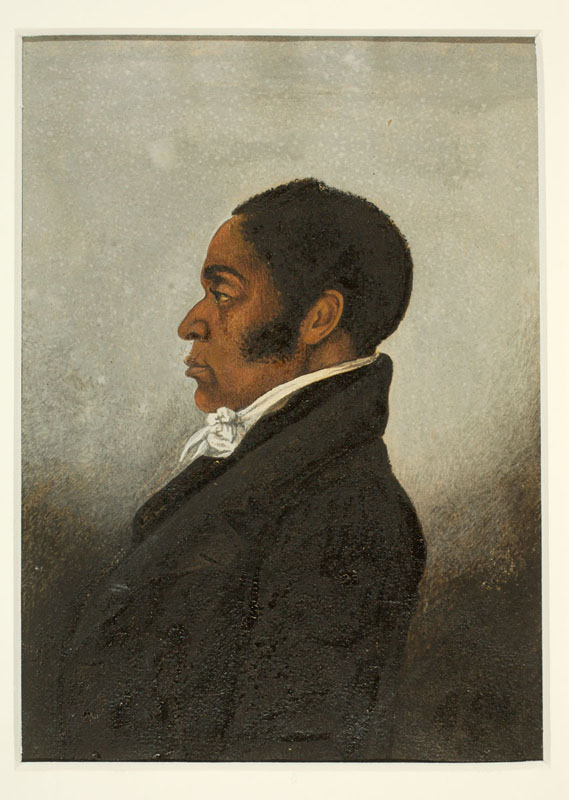 Painting
Primary source
Watercolor portrait of James Forten
Robert Douglass Jr. (probable) · 18th or 19th century, before 1842
 Painting
Primary source
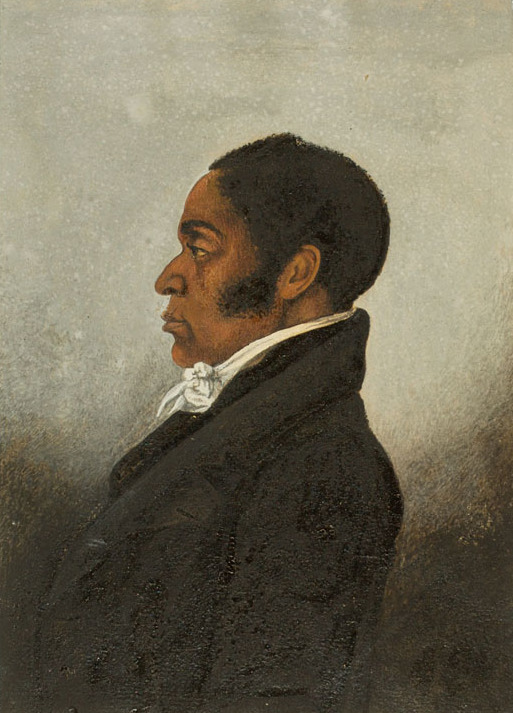
James Forten
Robert Douglass Jr. (probable) · probably during Forten's lifetime (1766-1842)
 Newspaper article
Primary source
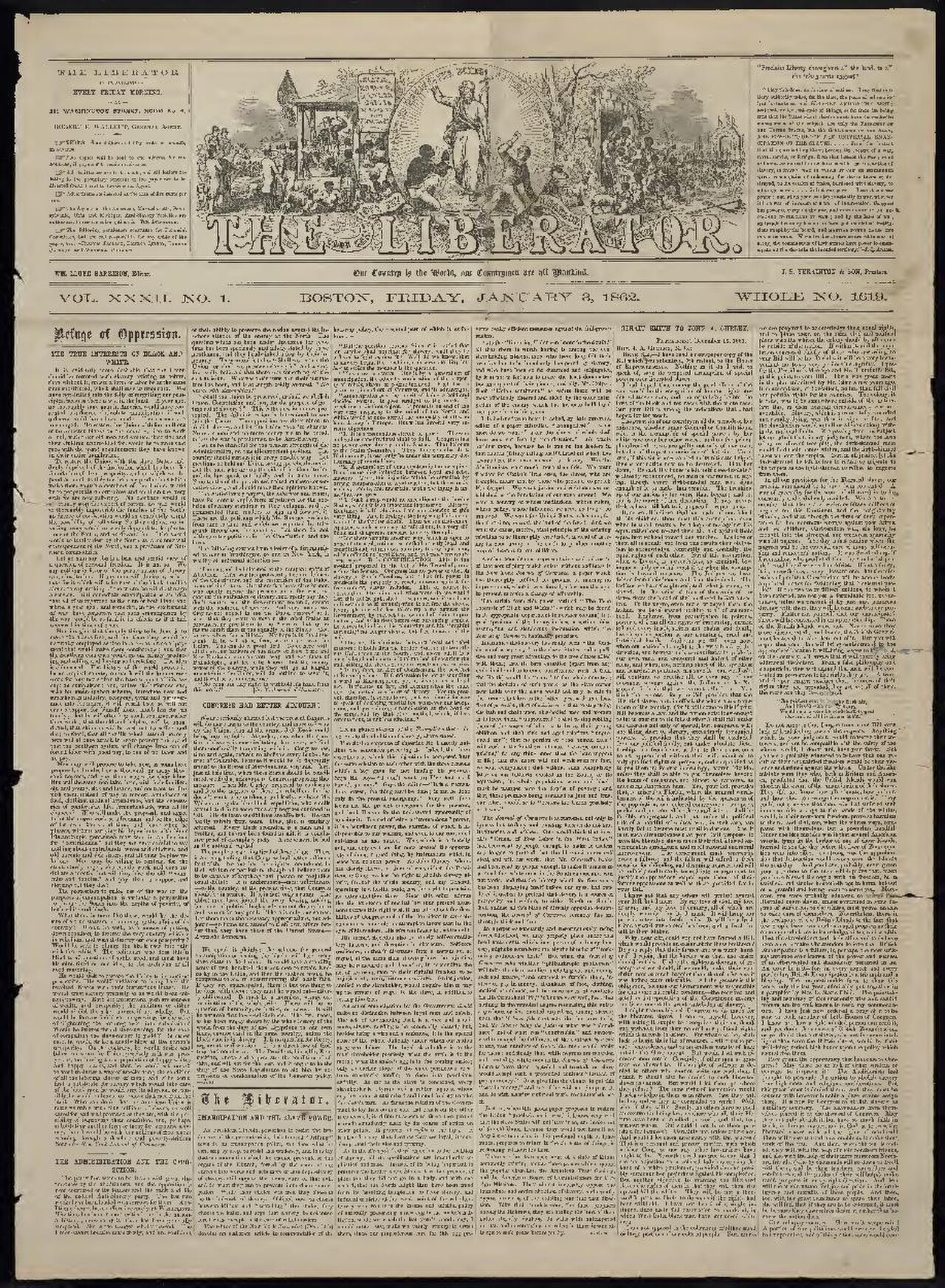
The Liberator
William Lloyd Garrison · 1831-1865
 Newspaper article
Primary source
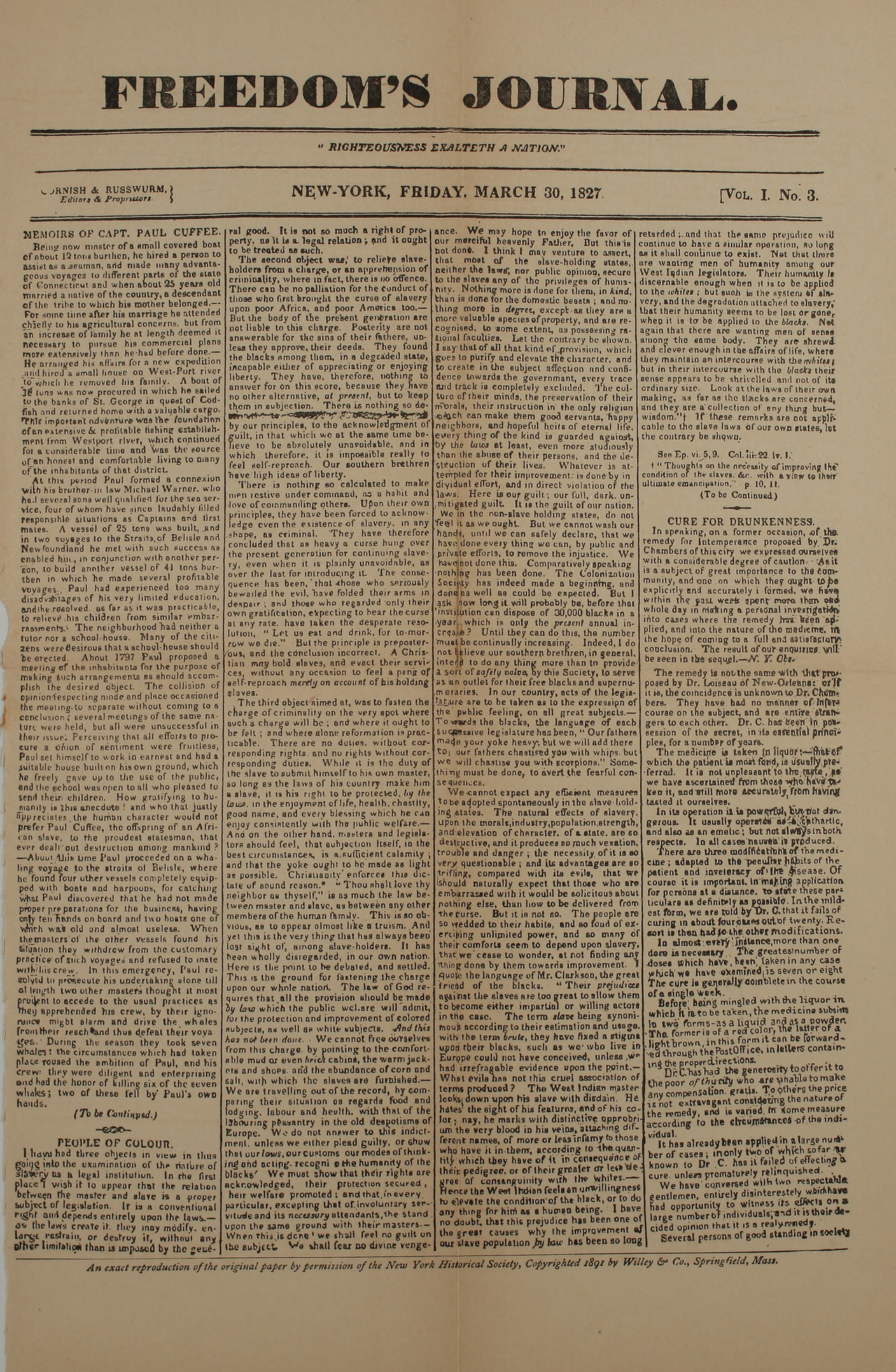
Freedom's Journal
Samuel Cornish and John Brown Russwurm (editors) · 30 March 1827
 Newspaper article
Primary source
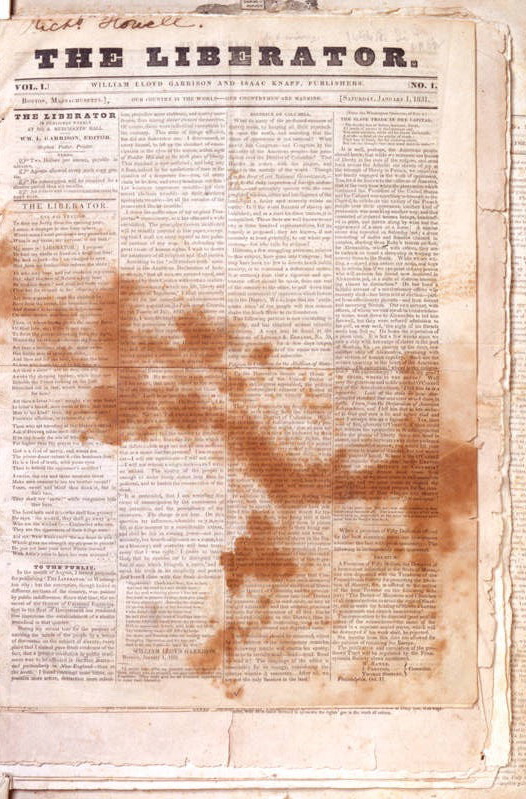
The Liberator, Issue No. 1
William Lloyd Garrison and Isaac Knapp · 1 January 1831
Ready when you are
Start chatting with James Forten now.
20 messages free · No credit card · Available in 50+ languages.