


Secondary sourcePainting1882
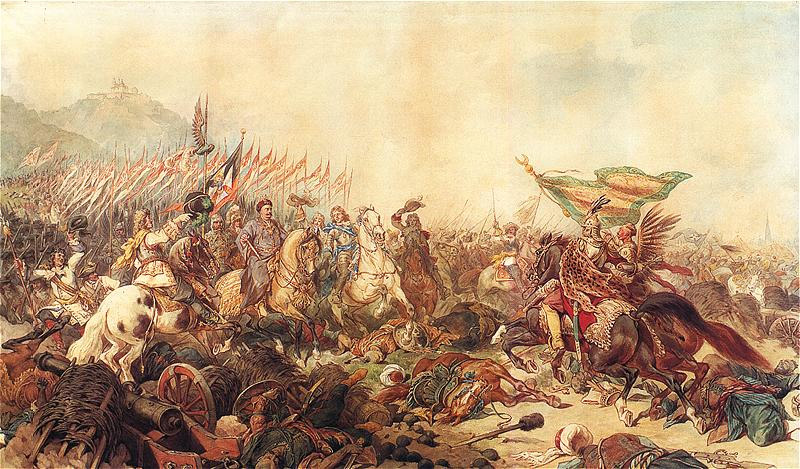
Sobieski at Vienna
Juliusz Kossak · 1882
An 1882 painting by Juliusz Kossak of the Battle of Vienna, made about two centuries after the king's victory there.
The painting shows the king leading a charge at Vienna, as later artists remembered him, not as a contemporary record.
About this source
What it is
This is a large painting by Juliusz Kossak, dated 1882, that shows a cavalry battle with a hilltop fortress in the background. Dense ranks of soldiers with banners and lances fill the left side. On the right, a rider in ornate armor with a green and gold banner leads a charge over fallen soldiers and dead horses. Smoke hangs over the field.
Why it matters
The painting was made about two centuries after the Battle of Vienna in 1683, so it shows how later Poles imagined their king and his army. Kossak was a 19th-century painter, and the work reflects the image of John III Sobieski as a national hero in the period when Poland was not an independent state. It is a later interpretation, not an eyewitness record.
Look closer
- Who is shown as the leader, and how does the painter make him stand out?
- What does the painting show about the cost of battle, and what does it avoid showing?
- Why might a painter in 1882 choose to portray a battle from 1683?
This painting is part of the curated material that grounds the AI version of John III Sobieski on Humy.ai — when students ask about related events, the AI can quote it and cite it.
More John III Sobieski sources
Browse all 94 →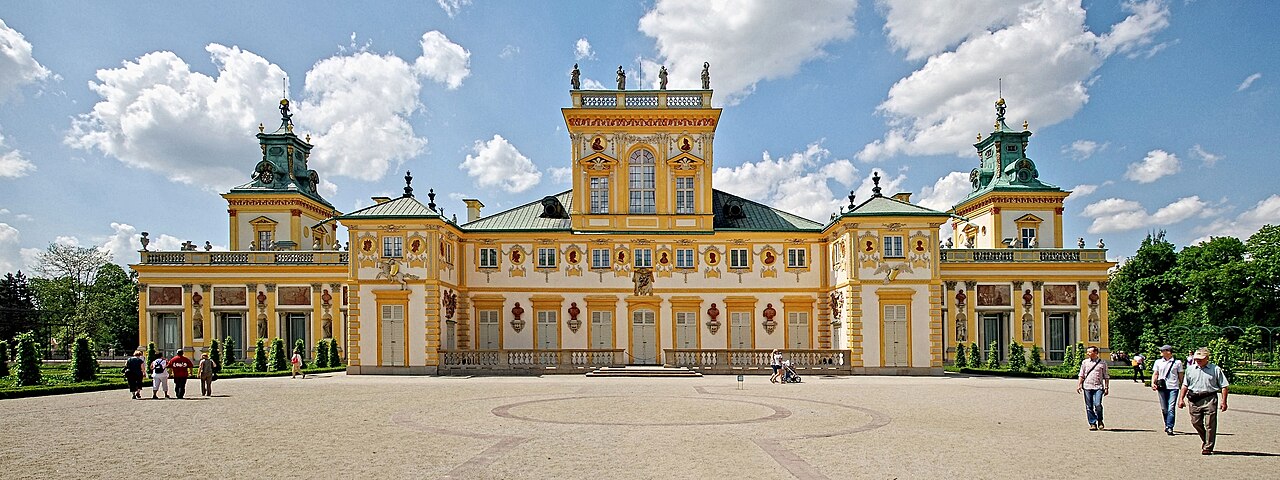 Artifact
Primary source
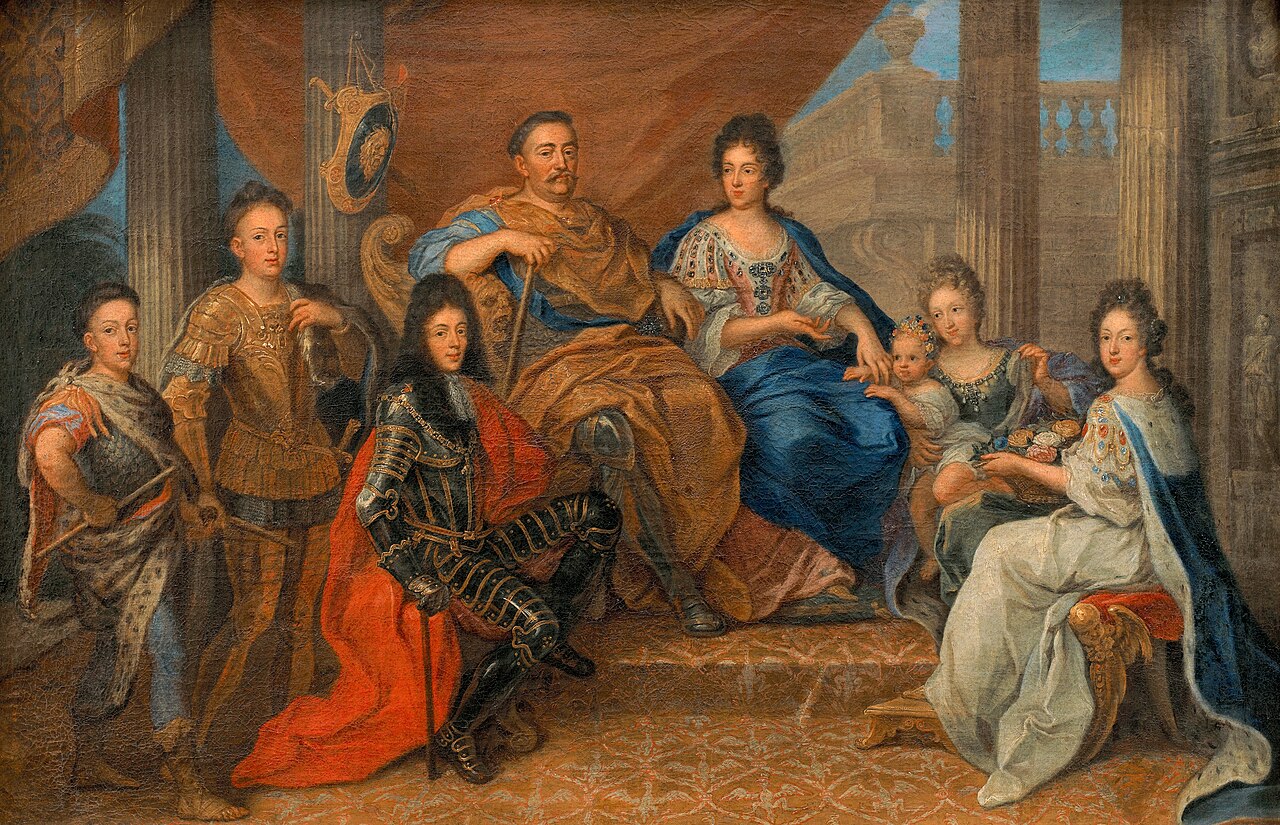
Wilanów Palace
Augustyn Wincenty Locci · 1677–1696
 Painting
Primary source
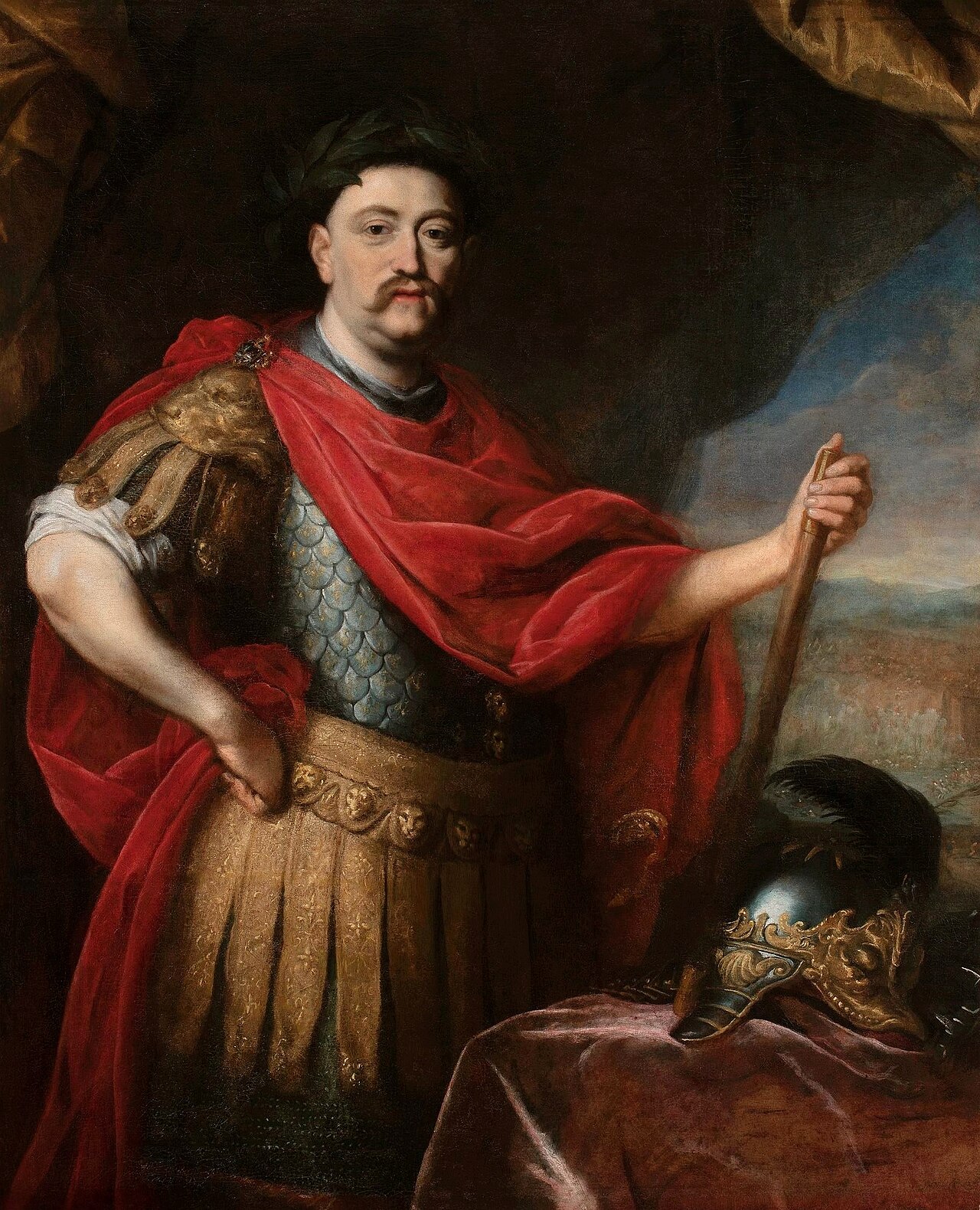
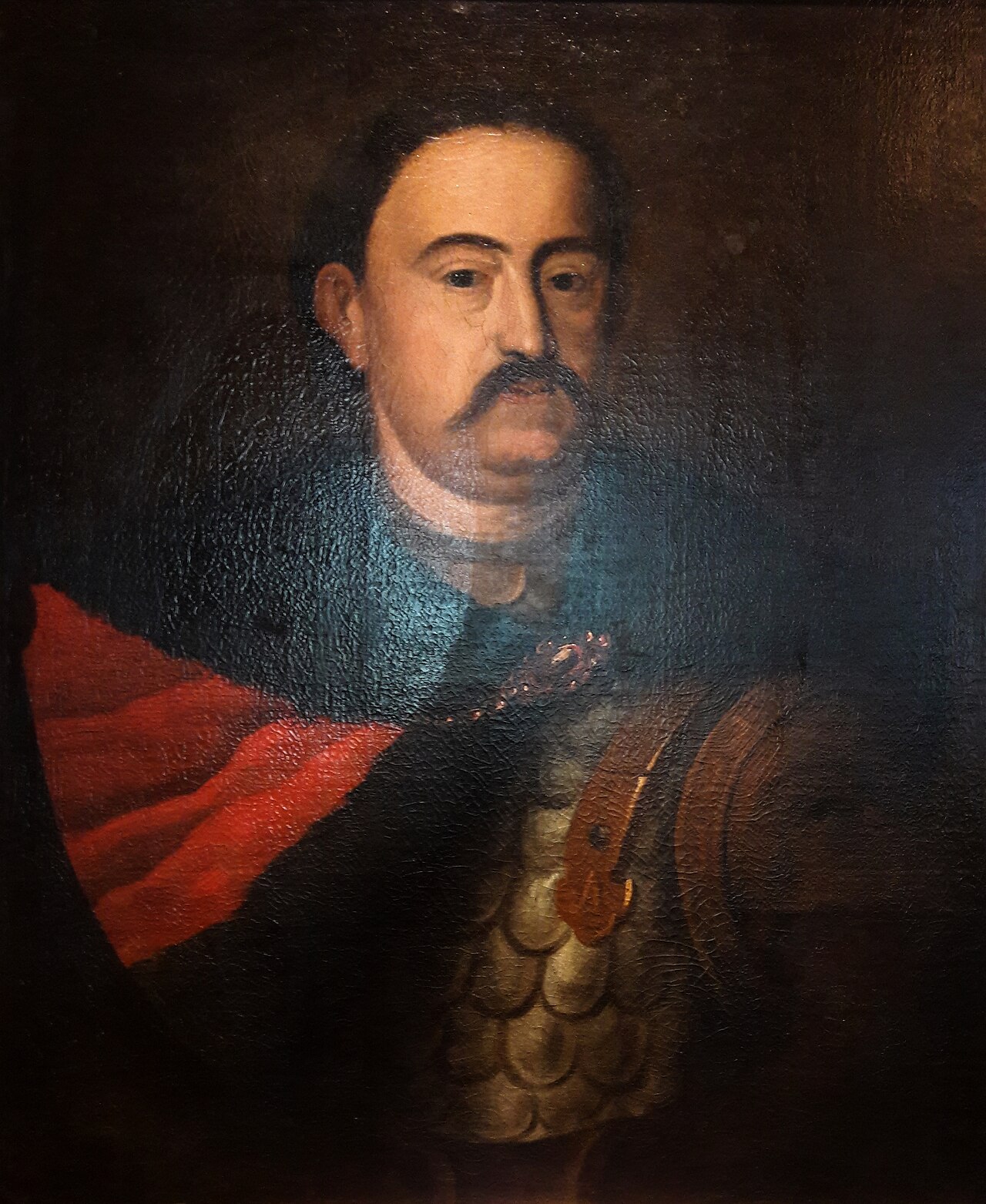
Portrait of John III Sobieski in Roman Costume
Daniel Schultz · 1673
 Painting
Primary source
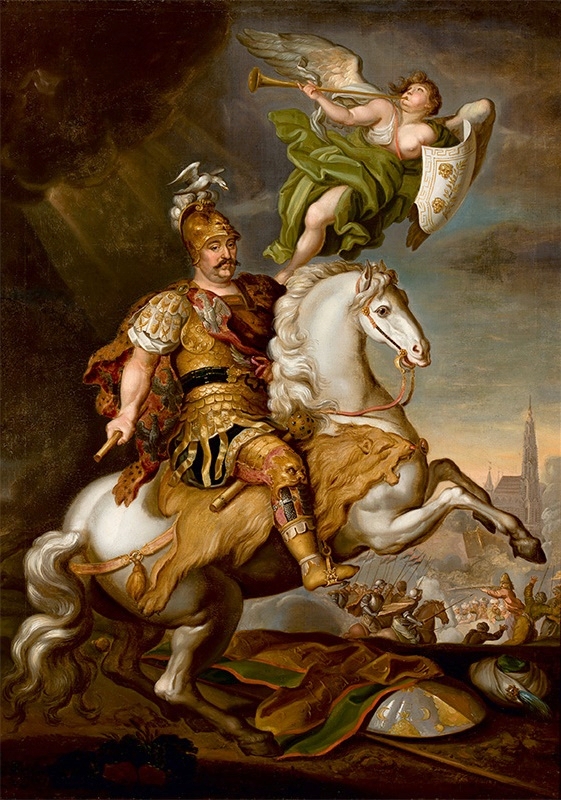
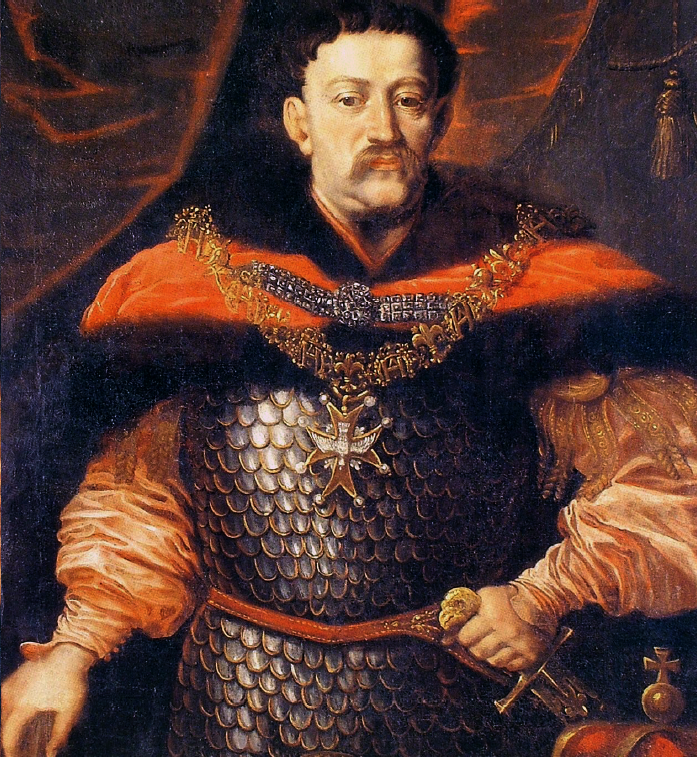
John III Sobieski at the Battle of Vienna
Jerzy Siemiginowski-Eleuter · 1686
 Artifact
Primary source
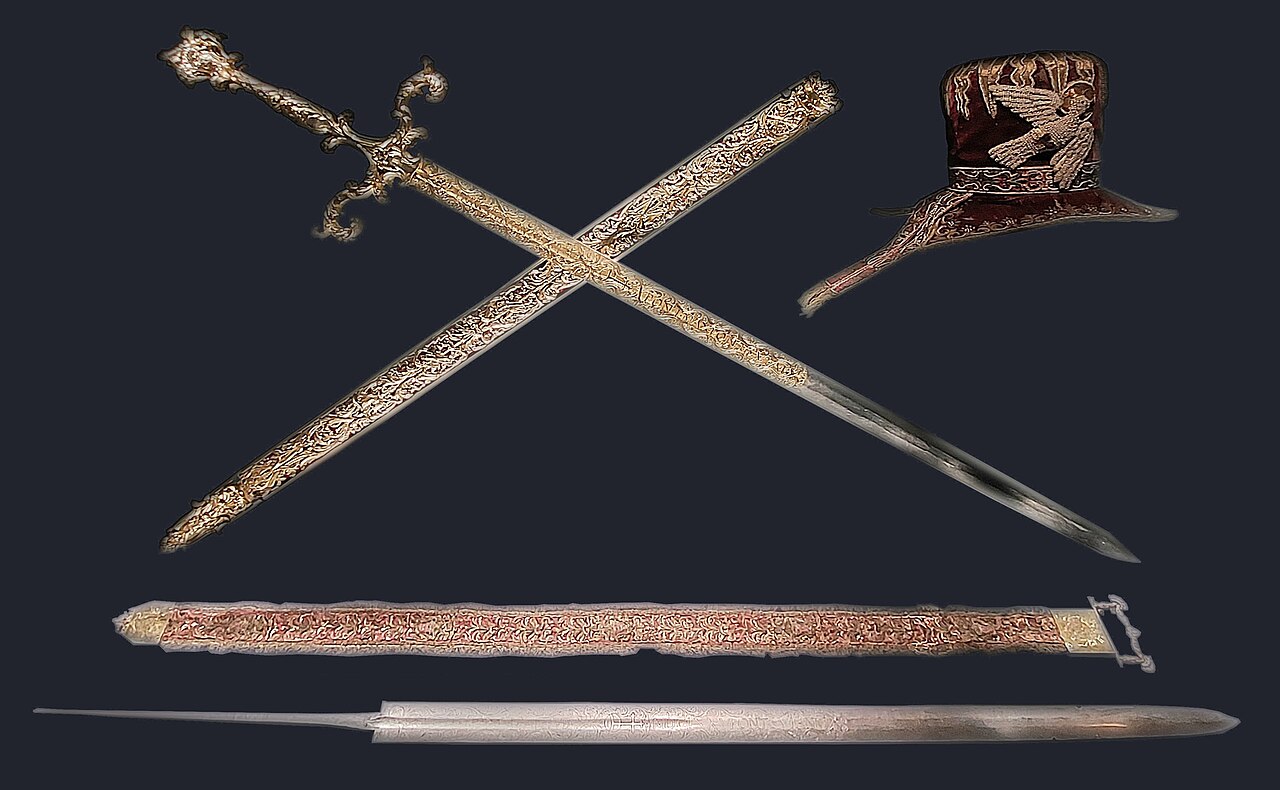
Blessed Sword and Hat of John III Sobieski
1684
Free account
Read every John III Sobieski source
Sign up free →
Ready when you are
Start chatting with John III Sobieski now.
20 messages free · No credit card · Available in 50+ languages.