


Primary sourceArtifactbetween 383 and 388
Solidus of Theodosius I the Great
between 383 and 388
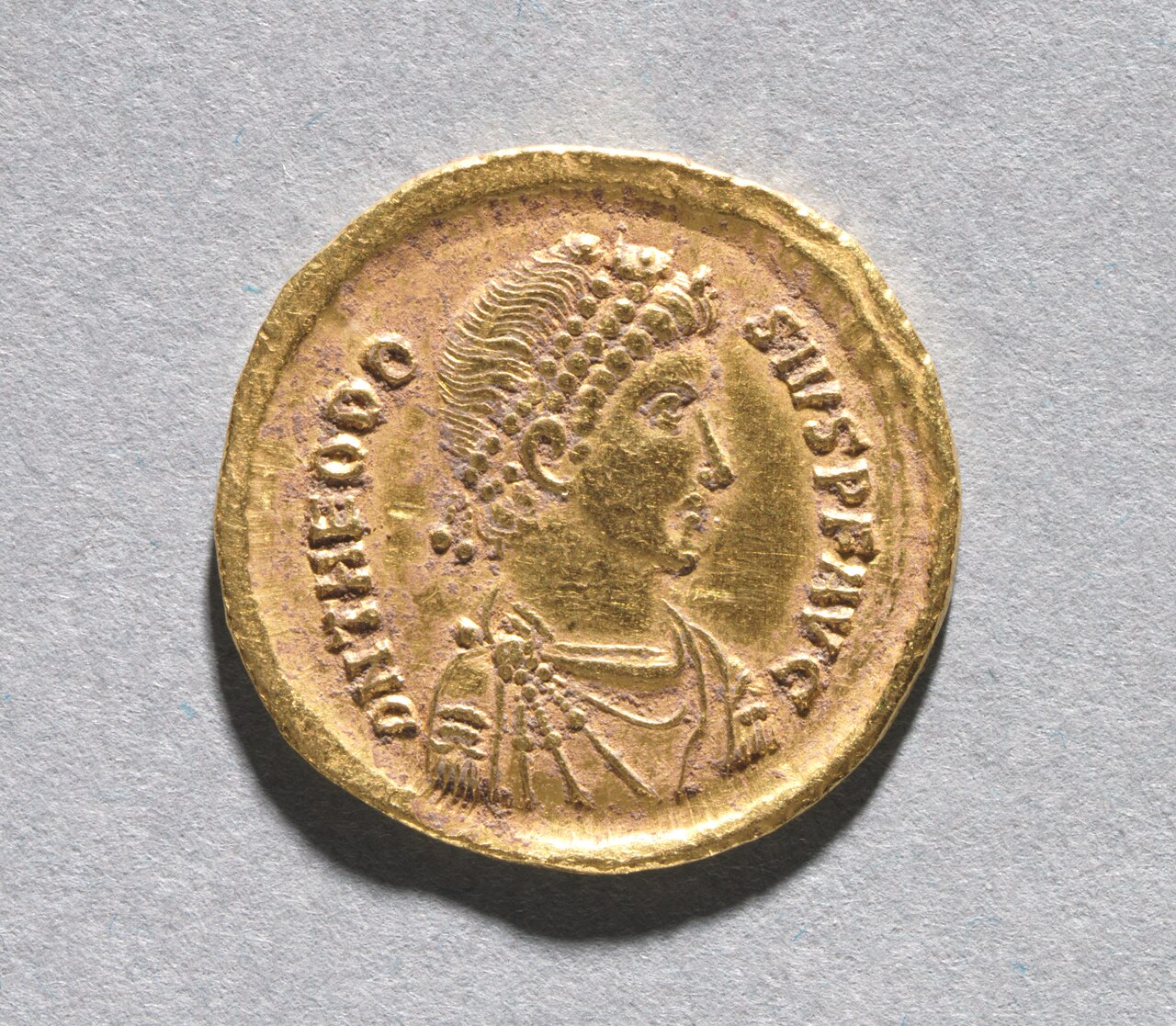
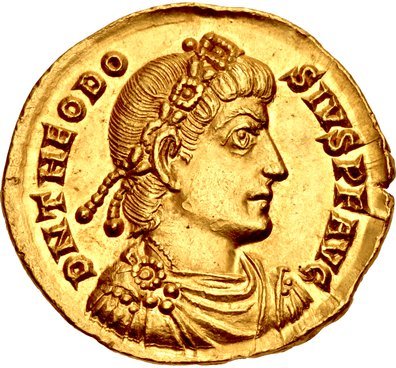
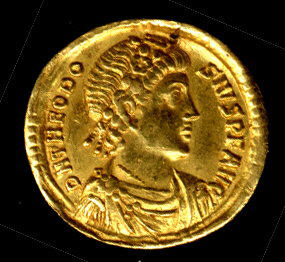
A gold solidus issued under Theodosius I, dated between 383 and 388, shown in a photograph of the coin.
A gold solidus issued under Theodosius I that carries his portrait and name, a surviving example of his coinage.
About this source
What it is
This is a gold solidus, the basic gold coin of the Byzantine world, which the record says was issued under Theodosius I and bears his portrait and name. The date is given as between 383 and 388. The photograph shows the coin face on against a grey background, with a right-facing diademed bust with curled hair and a draped garment, and Latin lettering around the rim.
The collection text is a general account of Byzantine coins. It describes the solidus as the standard gold coin of 24 karats but does not describe this specific coin in detail.
Why it matters
Gold coins carried the emperor's authority into trade and daily life. The general text explains that the emperor controlled and supervised coin production, and that the designs showed his stature. This coin is one example of that official image-making.
Look closer
- What does the bust and the lettering tell you about how the ruler wanted to be seen?
- Why would a gold coin be made with such care for its image?
- Which details of the coin are hard to see in the photograph, and how might that affect what we know about it?
This artifact is part of the curated material that grounds the AI version of Theodosius I on Humy.ai — when students ask about related events, the AI can quote it and cite it.
More Theodosius I sources
Browse all 93 →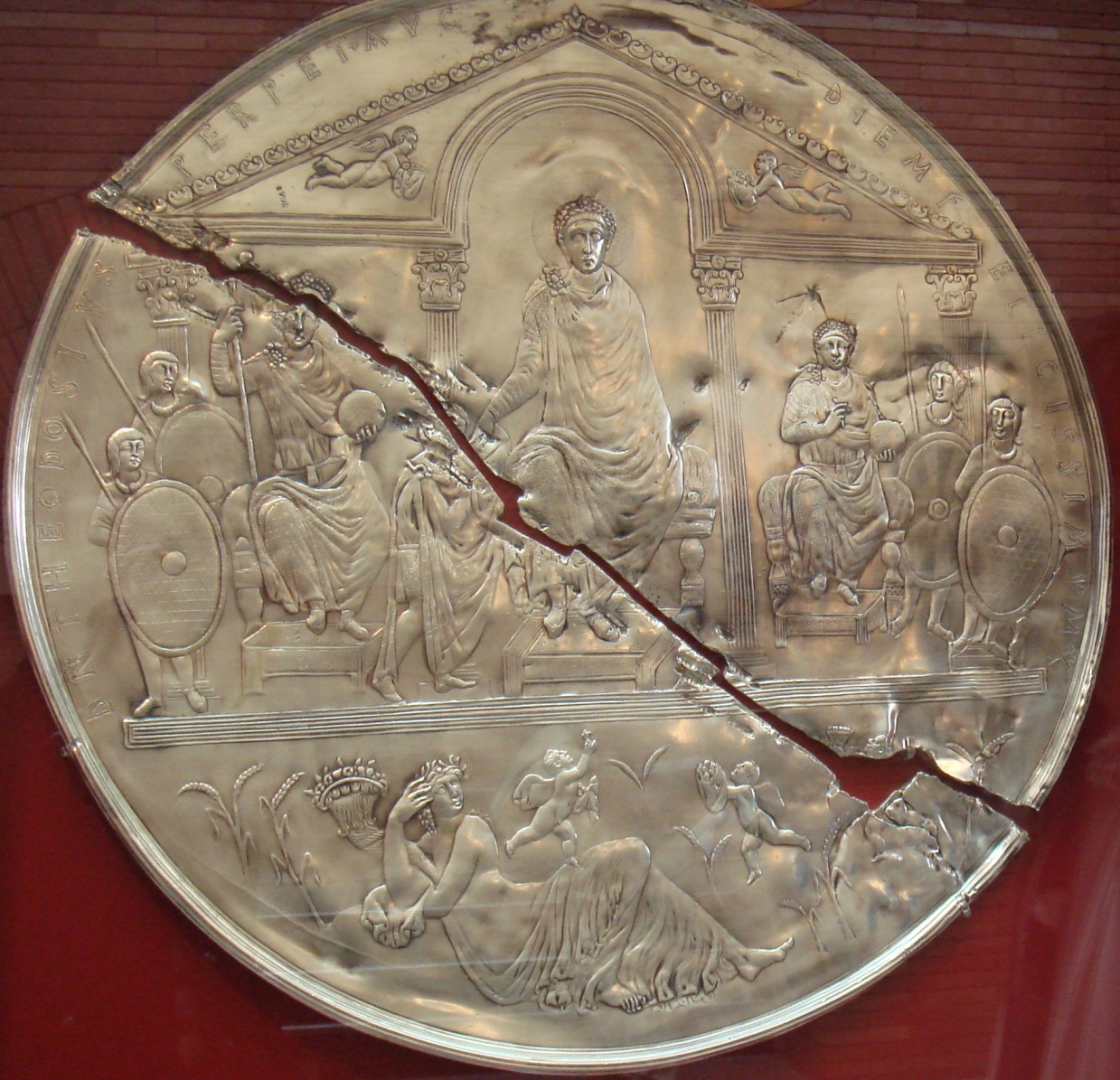 Artifact
Primary source
Missorium of Theodosius I
388 AD
 Sculpture
Primary source
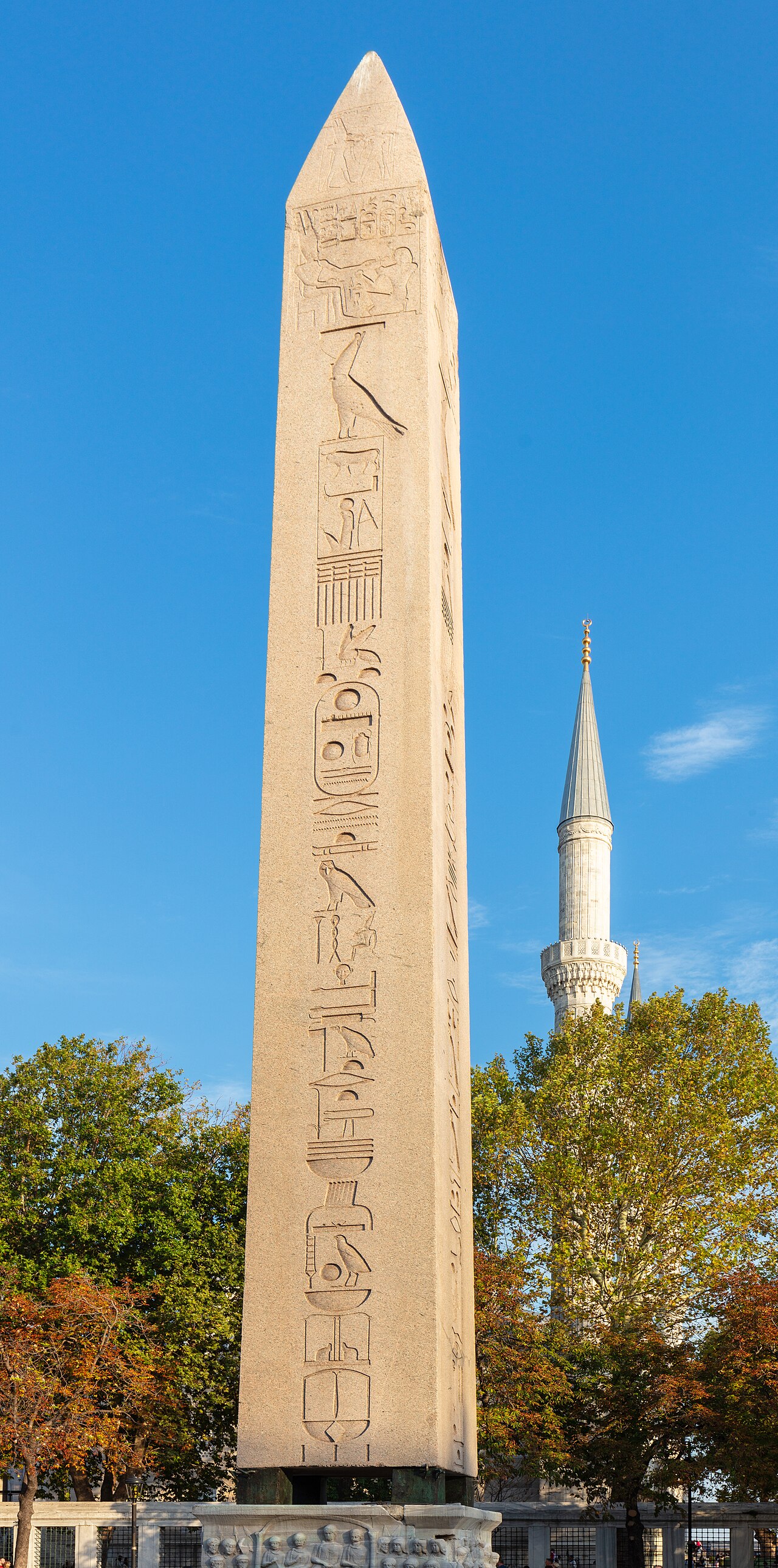
Obelisk of Theodosius
390 AD (obelisk c. 1450 BC)
 Document
Primary source
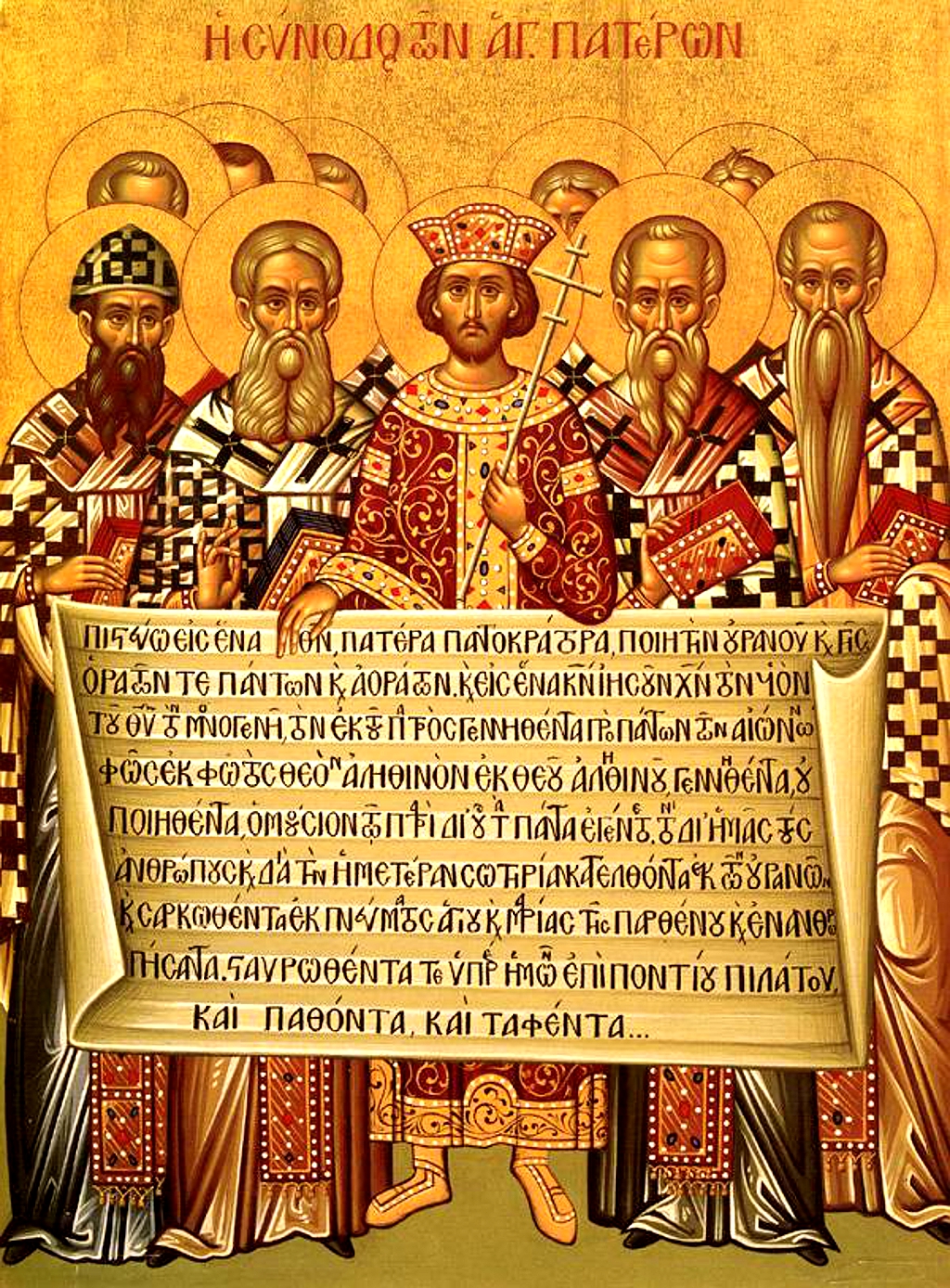
Nicene–Constantinopolitan Creed
381 AD
Primary source
Letter to Theodosius after the Massacre of Thessalonica
Ambrose of Milan · 390 AD
Free account
Read every Theodosius I source
Sign up free →
Ready when you are
Start chatting with Theodosius I now.
20 messages free · No credit card · Available in 50+ languages.